


The Lufhereng Social Housing Project: A Model For Affordable Housing In Nairobi
Rapid urbanization is transforming the cities in Africa at a rate that has never been witnessed before. The population growth is growing, the rate at which people are moving to urban areas is on the rise and the pressure to have a decent yet affordable housing has been at critically alarming levels. The strain is especially evident in Nairobi.
The lack of
housing in the city is in the hundreds of thousands and informal settlements
are ever growing at the expense of the formal supply failing to match the
demand. The increased land prices, rising construction expenses and
availability of affordable mortgage finances have made the situation worse. It
is against this backdrop that the policymakers and city planners are seeking
replicable models which can inform the large-scale and inclusive delivery of
housing.
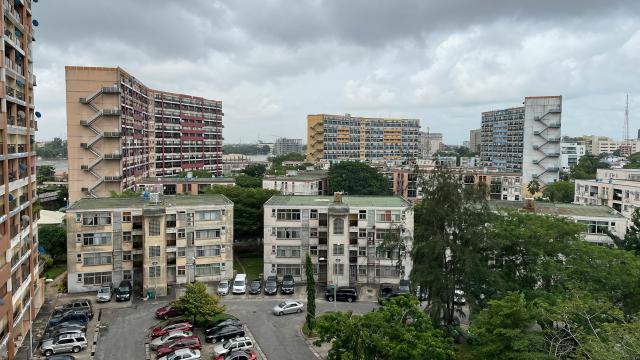
Among the interesting examples of references is the
Lufhereng Social Housing Project in South Africa (Soweto). Even though it is
not in the same national context, Lufhereng provides useful insights into
integrated planning, financing of innovation, coordination of infrastructure,
social inclusion, and long-term sustainability. Lufhereng is built as a
mixed-income and large-scale development, hence its design was not only that of
a housing estate but a complete urban development. Its focus on systematic land
use, well-established governance systems, and gradual execution make it an
applicable case study to cities struggling with comparable forces.
In the case of Nairobi, the issue is not whether the city
can duplicate Lufhereng in the same exact form but can it conform its
principles to the localities. What do Lufhereng strategies of land use,
financing, public-private partnership, integration of infrastructure and
communities development tell the affordable housing agenda in Kenya? What will
Nairobi need to do to convert the lessons of a South African model into
strategies that it can implement in its economic, political and social
environment?
This blog examines Lufhereng Social Housing Project as an
example of affordable housing in Nairobi. In six detailed chapters, integrated
urban planning, financing and partnerships, provision of infrastructure,
governance and institutional coordination, social inclusion and economic
impact, and sustainability and long-term resilience we discuss how its
principles might inform the development of Nairobi to a more inclusive urban
form. Affordable housing does not merely represent the construction of units,
it represents the construction of communities that create advantage, dignity,
and permanence. Lufhereng also provides a model that Nairobi can emulate in its
efforts to reduce the housing gap.
Combined Urban Planning and Strategic Land Use.
The Lufhereng Social Housing Project has one of the
strongest strengths, which are related to the overall approach to urban
planning and land use. Instead of housing being viewed as a row of individual
structures, Lufhereng was developed to be an urban extension that is planned.
Expansive plots of land had been acquired at an early stage of the planning
process and this gave the opportunity to organize the development in terms of a
long-term master plan. This made fragmentation minimal and the spaces (residential,
commercial, and social) coalesced.
Land shortage and land speculation is a long term problem in
Nairobi. In cities, land becomes costly, and the ownership process is often so
fragmented so that the large-scale development becomes difficult. Lufhereng
provides a good example of why it is worthwhile to be active in land banking
and planned development before prices are high. The planners of Nairobi can
also use this by consolidating large areas of land and establishing appropriate
zoning schemes to provide room to high-density affordable housing without
interfering with the work of the community.
Another important lesson is density management. Lufhereng
uses medium-density housing typologies with the highest efficiency of land use
and communal spaces are retained. Most of the developments in Nairobi are
either the peri-urban sprawl or the overpopulation of high rises in small
tracts without proper facilities. The balanced density approach of Lufhereng
demonstrates the way to make optimal use of land and still be able to live in
it.
Connectivity was considered important at Lufhereng by master
planning. The design included road networks, pedestrian traffic routes, and
transport corridors. This avoided seclusion of residential clusters and allowed
residents to be able to access employment and services. The same foresight can
be applied in Nairobi by matching the growth of housing with the growth of
roads and railways to lessen congestion and travel durations.
The implementation plan of the project on a phased basis
provides insights too. Construction was done in phases as opposed to trying to
do the whole development at the same time. This enabled developers to evaluate
performance, optimize designs as well as financial risk management. The housing
projects in Nairobi may use the phased approaches to be able to make it more
flexible and quality-controlling.
Mechanisms and Partnerships in Financing.
Affordable housing on a massive scale needs innovative
multi-layer funding. Lufhereng capitalized on blended mode of financing that
allowed integrating government subsidies, institutional funds, and private
investment into the company. The popularity of the government lowered the
upfront development expenses, especially infrastructure development and land
distribution, and made units affordable to the specific income groups.
In the case of Nairobi, funding is one of the biggest
obstacles towards scaling housing delivery. The costs of construction are
expensive and access to mortgages are limited. The model by Lufhereng proves
that when properly used government intervention can trigger off private
investment. Risk can be reduced by subsidies and incentives that can also help
attract developers to the affordable housing markets.
Lufhereng was built on the concept of public- private
partnerships. Roles, responsibilities and mechanisms of risk sharing were
clearly agreed upon. These alliances improve the efficiency as well as
accountability. By ensuring that there is transparency and that regulatory
frameworks are put in place to ensure predictability Nairobi can solidify its
own partnerships by encouraging long term investors.
The institutional investors like the pension funds and the
development finance institutions are showing increased interest in housing as a
fixed asset. The structured financial model by Lufhereng offered foreseeable
returns, as well as, quantifiable social impact. The city of Nairobi can also
make affordable housing an investment opportunity in line with the
environmental, social, and governance priorities.
Another important element was affordability safeguards.
Income eligibility requirements made sure that the units were offered to the
beneficiaries and not to speculative purchasers. Strict allocation practices
should be ensured by Nairobi in order to sustain social role of affordable
housing programs.
Sustainable housing delivery depends on financing innovation and sharing risks as well as consistency in policies. As Lufhereng demonstrates, cost-effectiveness and financial feasibility can exist simultaneously in case partnerships are properly organized.
Infrastructure Integration and Service Provision
Housing developments do not work as infrastructure is
considered as a secondary consideration. Lufhereng has incorporated basic
services such as water, sanitation, electricity, road, and waste management in
its planning system since its inception. This eliminated the development of
under-serviced areas and improved the quality of life of the residents.
The gaps in infrastructure in Nairobi tend to hamper housing
projects. The completion of the estate can be done in advance of the road
system or drainage system which causes difficulties in the long-term. Lufhereng
emphasizes the need to have harmonized infrastructure investment and housing
development.
Transport connectivity was also of great concern so as to
connect the residents to the economic centers. The transit-oriented planning
can be used to benefit the future developments of Nairobi and help provide the
city with the closeness to bus routes, commuter railways, and employment
centers.
The Lufhereng design included community amenities including
schools, clinics and retail spaces. Such facilities result in social cohesion
and lower the use of remote services. The affordable housing programs in
Nairobi should also incorporate social infrastructure that will form
self-sustaining communities.
The integration of infrastructure involves liaising of various government departments. The inter-agency planning method used by Lufhereng indicates how effective inter-agency planning is in providing holistic urban development.

Governance, Institutional Coordination and Stability in Policies.
Effective housing projects are pegged on effective and
transparent governance frameworks. The main differences in the Lufhereng Social
Housing Project included the well-established institutional roles of the
project, clear procurement procedures, and standardized policy frameworks that
informed the project throughout the implementation. Certainty in the
regulations stimulated investor involvement with developers and financiers able
to make plans with certainty knowing that the rules would not change. This transparency
minimized administrative and time wastage and minimized the conflicts, and the
project was completed in an effective manner.
On the contrary, the implementation of the housing projects
in Nairobi is mostly delayed owing to bureaucracy bottlenecks. Prolonged
approval processes, overlapping of agencies, and delayed land registration may
prove to be quite slackening. Efficiency in land records would be a significant
enhancement through streamlining approval systems and digitization of land
records. Computerized land management systems have the capability to minimize
disputes, improve transparency, as well as accelerate verification. Meanwhile,
it is crucial to preserve the stability of the policies. Regulatory or tax
changes made at short notice are an element of uncertainty and will not spur
private investment, especially long-term affordable housing projects that need
a predictable payoff.
Another important factor is the confidence of the people.
The transparent nature of the beneficiary selection and allocation processes at
Lufhereng was favored by fairness and reduced chances of corruption.
Eligibility criteria were provided and trust was enhanced by open communication
among stakeholders. Nairobi also needs to focus on such accountability actions
to maintain credibility of their affordable housing programs.
It is also important that there is institutional
collaboration between countries and counties. Planning is coordinated to make
sure that there is no duplication in infrastructure, housing, and service
delivery goals, and no wastage of resources. The success of Lufhereng in the
affordable housing business in Nairobi is based on governance reforms,
increased transparency, and inter-agency cooperation to replicate the success
in Nairobi.
Social Inclusion, Economic Impact and Community Empowerment.
Affordable housing is revolutionary when it brings social
inclusion. The Lufhereng development was focused on low and middle-income
households and had developed economic diversity in the community. The project
minimized segregation through use of mixed-income model and promoted effective
social interaction between the residents. This strategy proves that not only
shelter can be considered housing, but also the catalyst to community
integration and socio-economic development.
The economic impact was also very strong in the development.
During the construction and the maintenance process, the number of people
having employment opportunities increased, allowing the local to earn a source
of income. Residents got access to complementary training programs to gain
valuable skills, which increased the workforce capacity and long-term
employability. The existence of such efforts demonstrates that it is possible
to promote local economy through housing projects and provide residents with
practical skills. Another example is that Nairobi can make use of similar
employment-oriented approaches in order to maximize the economic value of
housing programs.
In Lufhereng, community engagement was at the centre stage.
The project boosted ownership by engaging the residents in making and running
decisions, and reduced conflicts. The presence of resident-led governance
helped in sustainability of management of the development as the form of
management would be functional and well maintained in the long run. Secure
tenure enabled families to invest in the future and also get an opportunity to
invest in education and venture into entrepreneurship. In its turn, housing
stability leads to social resilience and upward mobility, which build a basis
of long-term personal and community growth.
Lufhereng makes a case that affordable housing does not only
entail giving people a roof to live under. When carefully planned it enhances
economic freedom, social inclusion and personal empowerment. Housing can also
be a platform of socio-economic progress through the integration of
mixed-income planning, community-building, and job-oriented plans. The model
illustrates the way in which cities can use affordable housing to create more
cohesive, resilient, and inclusive communities.
Sustainability, Resilience and Long-Term Urban Transformation.
The Lufhereng design incorporates sustainability to the
environment. Energy efficient buildings, extensive green cover and proper
drainage systems make them resilient in the long duration. These green
attributes not only minimise the environmental impact of the development but
also minimize operating expenses by the residents and reduce the effects of
climate changes. Lufhereng commits to the planning and construction stages by
integrating sustainability into the project, which proves that affordable housing
can combine economic, social, and environmental objectives.
This model can give Nairobi lessons to implement renewable
energy systems, water conservation programs and use of eco-friendly materials
in new housing programs. The maintenance programs also safeguard the value of
property in the long term, maintain functions and offer stability to the
communities. Once housing is designed in a way that considers sustainability,
it forms a basis of environmental responsibility and a sustainable city life.
The ability of the planned growth is also flexible in
reaction to economic cycles. Lufhereng provides the residents with the means to
cope with changing circumstances in the future, whether it concerns radical
weather patterns or changes in the local economic prospects, through the
creation of communities that are capable of altering in response. The
resilience planning will make sure that housing developments will be useful and
accommodating to the residents over a period of decades and not that they will become
worse off in a couple of years.
Finally, Lufhereng demonstrates that ecological objectives
should not conflict with affordable housing. Careful planning, green
infrastructure and long term upkeep of the communities make them not just
habitable, but responsible towards the environment as well. Through the focus
on sustainability and affordability, housing initiatives will be able to
stimulate long-term urban change, which leads to resilient, adaptive, and
inclusive urban areas. Such a strategy demonstrates that the idea of investment
in environmentally-safe housing is an investment in the future well-being of
the population as well as urban environment.
Conclusion
The Lufhereng Social Housing Project provides a very
attractive example of housing delivery that is inclusive and sustainable to
Nairobi. With integrated planning, new sources of financing, coordination of
infrastructures, good governance, social inclusion and environmental
sustainability, it proves that large-scale affordable housing can be feasible
and transformative.
Nairobi is a special city that has individual issues such as
speedy urbanization and shortage of land. However, the values that steered the
development of Lufhereng are flexible. Nairobi can speed up the process of
bridging the housing gap by adopting strategic land use, joint ventures, policy
predictability, and community-focused architecture.
Affordable housing is more than mere building of buildings, it is a matter of creating cities which are opportunity giving, dignified and resilient. Lufhereng explains that with visionary thinking and action with a community mindset, this can be made a reality. The development brings together social inclusion, economic empowerment, and sustainable design to make them vibrant and resilient communities in which the residents can prosper. It provides an efficient example of how housing can be a platform of personal development as well as a long-term urban development and not just a shelter.





-3dkuLgKhRD.jpg)
-49HupTvwDD.jpg)









LEAVE A REPLY