

Low-Density Housing: Advantages and Drawbacks for Families
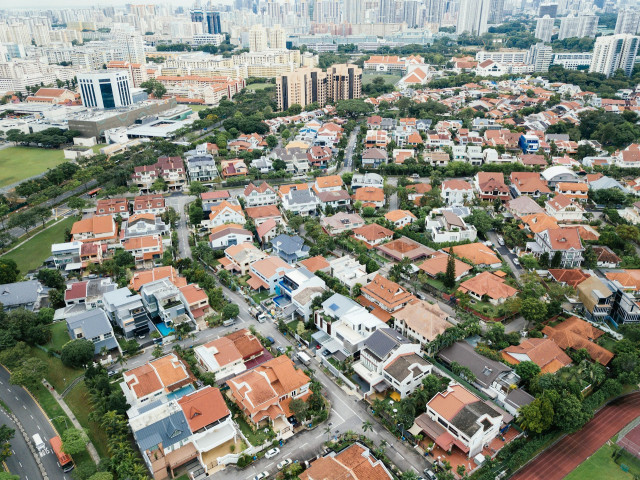
Large residential land plots with extensive homes characterize low-density residential districts where population density remains much lower than urban districts.
These residential areas appeal to families because they provide increased privacy together with calm surroundings as well as quality living standards.
People who reside in low-density areas experience multiple difficulties because of their location.
People who live in these areas need to travel further distances to access their workplace and schools and vital services because the commercial centers remain distant.
The restricted access to public transportation along with health services and stores in these areas drives residents to use their own vehicle thus increasing their living expenses.
The comprehensive evaluation of low-density areas analyzes both its positive traits together with negative aspects that affect privacy and safety as well as community connections and mobility.
Living in these areas provides residents with plenty of space and peaceful surroundings but they face challenges because of their remote locations.
The trade-off knowledge allows people to select their ideal family home located within low-density residential neighborhoods.
Prospective homeowners should use distance from neighbors together with security measures and transportation accessibility to check if their lifestyle needs match this residential area before choosing their permanent home base.
Advantages of Low-Density Housing for Families
Families choose low-density housing first and foremost because their families need sufficient space.
The typical house in suburban or rural settings features bigger yards with additional storage areas together with extended rooms than the apartments found in dense urban areas.
The extended property area provides families with multiple options for activities that include gardening and outdoor play as well as the chance for home expansions.
Children receive maximum benefit from separate spaces for rooms and play while parents benefit from workspace areas and maybe also relaxation places.
The roomy living conditions help improve mental health and promote healthful daily activities.
The noticeable benefit of buying a house in this location includes enhanced security combined with privacy protection.
Low-density residential areas tend to demonstrate lower crime rates than their urban counterparts so families with little children prefer choosing these areas.
Being in a house with its own yard space minimizes neighbor disruptions which creates both quietness and peace within the environment.
Suburban areas have less traffic so children have improved safety when they play outdoors.
The major advantage that comes with living in these areas is improved quality of life.
Low-density residential districts supply their residents with improved educational institutions and pure environmental air along with extensive areas of green land.
Numerous suburban communities organize their development around recreational areas like walking trails and parks to help residents participate in outdoor activities.
How family-centered neighborhoods promote both children's connection to natural settings and their physical activity through their development.
The noise pollution levels in suburban settings remain low because it brings improved sleep quality to adults and children alongside reduced stress.
The community feeling runs through the veins of low-density residential areas.
Fundamentally stable suburban and rural areas support strong bond development among residents because their residents live in their homes over longer durations.
Stable family demographics permit enduring neighborly bonds that lead to mutual support structures including local childcare and social possibilities and organized security efforts.
Low-density housing areas establish better community relationships through their different level of human interaction which differs from the anonymity that typically emerges in densely populated urban areas.
Impact on Children's Development and Education
When children grow up within residential areas with low housing density their development connects directly to their education and social connections and mental wellness.
The main advantage of living in suburban and rural areas provides children access to high-quality educational institutions.
The educational outcomes for students become better because these low-density residential areas maintain structured public and private educational institutions that ensure each student receives sufficient one-on-one instruction.
The education benefit for children in these areas stems from parental access to several educational options which include STEM programs and arts and athletics academies that promote educational advancement.
Children living in community developments with lower population densities are presented with additional prospects to engage in outdoor play together with physical exercise.
Outdoor play and recreational facilities along with personal backyards become available in suburban and rural areas since urban spaces typically restrict children's outdoor activities to small playgrounds inside.
The accessibility of green spaces helps people live healthily because it reduces their screen time and it leads them toward activities like biking hiking or sports activities.
Scientific research demonstrates that intellectual development requires physical exercise since body motion proves essential for better academic outcomes.
The process of social interaction stays important when making housing location choices.
In fragmented residential areas children develop close community relationships but they face more limited chances for unplanned social connections beyond school hours than their city-dwelling peers.
Users have better opportunities to encounter peers while using facilities found in playgrounds or after-school programs and cultural centers in urban areas.
Social activities in rural districts and suburbs force parents to prearrange appointments and transportation for their children to engage with friends.
Children who need lots of social interaction might experience feelings of being alone since their environment lacks many social opportunities.
The availability of educational activities and supplementary programs is generally lower in residential areas with minimal population density distribution.
An urban environment enables people to visit museums while gaining access to theaters along with libraries and specialized learning opportunities including dance classes and coding and robotics instruction.
Most activities that require advanced facilities are not usually accessible in rural communities like they are in both urban and suburban areas.
Twice monthly athletic league competitions with music classes and specialized academic sessions require extensive travel from parents for their children.
Technology combined with digital learning created bridges for this gap through educational platforms that provide online education networks and virtual extracurricular program opportunities.
Municipalities focused on rural areas sometimes deal with unstable internet connections that create barrier for using online educational assets.
The education of children heavily relies on proper broadband connectivity since digital learning continues to gain more importance.
Children benefit from low-density housing because it provides safety and spacious areas as well as access to high-quality education though such arrangements compromise interaction with others and after-school programs and cultural institutions.
Parents must actively create social connections for their children while obtaining various educational prospects.
Drawbacks of Low-Density Housing for Families
Low-density housing brings several benefits but it also introduces certain substantial disadvantages. The main problem among all others is accessibility concerns.
Public transportation remains underdeveloped in suburban and rural locations because these areas do not have complete mass transit systems thus forcing families to depend on their private vehicles.
The necessity of personal vehicles for this living style increases transportation expenditures together with travel times while causing significant traffic delays in peak periods.
Parents must devote extensive periods of time behind the wheel to transport their children to school as well as extracurricular activities and medical appointments thereby affecting their ability to balance work and personal life.
The main disadvantage is that these areas have restricted options for amenities.
The scarcity of restaurants and entertainment places together with cultural institutions makes low-density residential areas force residents to commute vast distances for all their shopping and leisure needs.
The low convenience of living in such areas creates difficulties for families especially when they want to maintain their busy social interactions or quickly reach their healthcare providers and stores.
The high expenses connected to housing at lower densities become an important problem for family economic wellbeing.
Price discounts on homes located in suburban areas and rural locations surpass city apartment values yet residents typically encounter higher cumulative spending.
The bigger size of properties increases property tax expenses and leads to higher utility bills and increased maintenance expenses.
The need to obtain multiple cars for suburban residents contributes to enhanced household expenses because of residential choices and purchasing patterns.
Households struggling financially need to understand that these monetary responsibilities create obstacles for choosing low-density lifestyle options.
The environmental effect represents an important aspect families should analyze in making their housing choices.
The construction of low-density housing generates urban sprawl that leads to raised land usage while cutting down habitats.
The usage of automobiles along with a lack of walkable urban areas produces higher carbon emissions for suburban families to contend with.
A rising concern regarding the ecological impact of suburban neighborhoods continues to develop since people value sustainability in their homes today.
The availability of job options becomes restricted in low-density development areas.
Remote work has become more widespread yet several professional fields need their staff to remain near urban business centers.
Family members experience scarce job availability that causes them to make job challenge-lengthened commutes or relocate for career advancement opportunities.
The restriction have adverse effects on household earnings and determines overall financial stability.

Future Trends and Sustainability of Low-Density Housing
Multiple economic environmental and technological elements presently remold the destiny of low-density housing as society proceeds forward.
Sustainability stands as the primary major trend observed in contemporary development.
Modern experts condemn traditional low-density housing due to its negative effects on urban expansion while simultaneously causing forest depletion and requiring more vehicle usage.
Present-day low-density housing development teams are working on sustainable designs alongside renewable power generation and environmentally friendly building resources to minimize their environmental footprint.
Smart home systems actively contribute to raising the efficiency of low-density housing developments.
Today's house builders incorporate three energy-saving elements in their constructions which include solar panels together with smart thermostats and systems for rainwater collection.
Through innovative technologies residential families achieve cost savings on utilities and environmental sustainability benefits in addition to living in suburban or rural areas.
Modern advances in electric vehicles and better public transportation alternatives contribute towards reducing commute times and pollution output.
The growing acceptance of remote work positions low-density housing for an influential role in the future housing market.
Cities used to be one of the major weaknesses of suburban and rural life because residents needed extended drive times to reach their work in the city.
The increasing number of companies that allow hybrid or remote work provides families with different housing location options.
The change in work patterns drives homeowners to seek houses in tranquil and enlarged surroundings because they no longer require easy access to urban centers.
The idea of "15-minute neighborhoods" has emerged as a new trend that developers introduce into suburban residential areas.
These planned areas provide necessary amenities including food stores as well as educational institutions and medical centers and leisure facilities accessible through brief foot or bicycle trips.
Mixed-use development from developers focuses on decreasing vehicle usage yet preserving the advantages of sparse residential areas.
Climate change influences strategic decisions about residential properties.
Low-density residential areas face increased vulnerability towards environmental hazards such as wildfires as well as hurricanes and flooding incidents.
Development projects in the future need to focus on climate resilience by building infrastructure and constructing flood-resistant structures and designing sustainable land-use strategies.
The selection of low-density housing locations by families requires evaluations of environmental risks while they ought to select sites that demonstrate long-term sustainability characteristics.
Current shifts between generations affect the preferences people have when it comes to choosing housing.
The desire for energy-efficient smaller homes outnumbers the need for big suburban houses with extensive yards because younger homebuyers seek functional residences that need minimal upkeep.
The newly constructed planned communities aim to unite the needs of evolving families through an optimal combination of private space and green areas together with convenient accessibility.
The direction of low-density housing development is determined by three main factors of sustainability alongside technological advancement and changing workplace environments.
New innovations combine to improve both the environmental sustainability and practicality of suburban and rural dwellings for contemporary families.
Low-density housing needs to transform its approach toward new societal requirements while maintaining a balance between spatial needs and convenience together with environmentally-conscious practices.
Health and Well-Being in Low-Density Housing
Low-density housing provides multiple unremarkable advantages to physical along with mental health.
Suburban and rural living environments expose residents to fewer air pollution and less noise disturbances than urban high-density dwellings do.
When air becomes cleaner asthma attacks together with allergic reactions decrease particularly among children.
Healthy living lifestyles develop through green spaces since they combine accessible parks and walking paths with opportunities for outdoor exercise and decreased sedentary behaviors.
Well-being of the mind functions as a major benefit.
People living in low-density neighborhoods experience peace from environmental disturbances which results in better sleep quality and enhanced mental health.
Research indicates that contact with natural environments as well as accessible open spaces leads to decreased stress and elevated mood and enhanced cognitive abilities.
The reduced number of traffic interruptions and lack of overcrowding and urban noise in these residential areas creates an overall peaceful domestic environment.
The implementation of low-density areas leads to various possible unfavorable aspects.
People who reside in rural areas must contend with restricted healthcare facility availability because both hospitals and specialized medical services are located at distant reaches.
A car-dependent lifestyle brings the risk of becoming less active because families tend to become less active when they do not actively incorporate physical exercise into their daily lives.
Conclusion
The housing arrangement of low density combines various benefits and hurdles for family living.
A low density living environment creates homes in generous sizes and provides security through safe neighborhoods and builds close-knit communities.
The residential setting provides children with extended outdoor areas as well as educational institutions of high quality while maintaining a family-friendly lifestyle.
People who choose low-density housing must accept longer travel durations and reduced amenities as they face elevated costs and issues with nature safety.
Children encounter developmental as well as learning difficulties because of these factors.
Parents who live in low-density zones generally have better educational options as well as outdoor options but these areas frequently have small social diversity and few extracurricular activities.
Parents must take initiative to help their kids stay connected to peers along with obtaining enrichment programs which drive their development.
The future low-density housing development demonstrates changes in sustainable practices and smart home systems along with remote work possibilities.
Improvements in sustainable development combined with advanced public transport systems and climate-sensitive planning strategies will turn rural areas and suburbs into efficient and environment-friendly destinations.
Flexible work arrangements support families to choose low-density housing because they can now choose quality of life instead of working proximity to city centers.
Every family needs to determine their living location based on their personal choices and their budget and their desired way of life.
Low-density housing options in suburban and rural locations provide the perfect environment to families seeking ample space together with safety and peace.
Cities offer better convenience alongside social facilities and environmental benefits that families might prefer over suburban housing.
Families who review both pluses and minuses will select an option that matches their long-term aspirations and general wellness.
Also read: High-Density vs Low-Density Housing: What’s the Difference?













LEAVE A REPLY