

Lessons from Singapore's Public Housing Model
One of the greatest social and economic issues of the 21st century influencing not only the developed but also the developing countries is affordable housing. The rapid urbanization, population explosion, increasing income inequality, and low availability of land have rendered safe and proper housing beyond the reach of millions of people in different parts of the world.
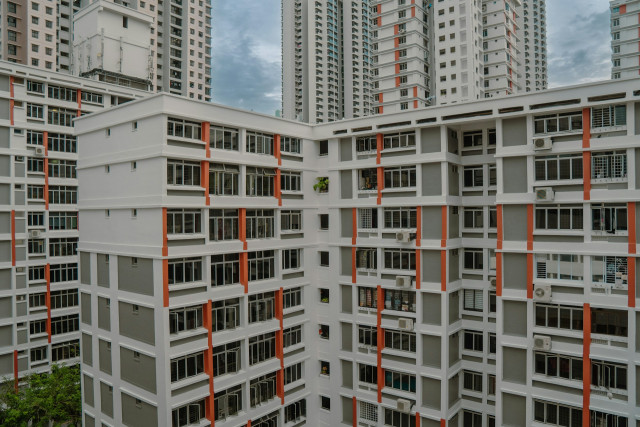
Singapore presents itself to be a great success story against the backdrop of this. In comparison to being a country with a history of housing crises and overpopulated slums in the sixties, Singapore has now turned into a world example of a massive housing system. Currently, the majority of its citizens, at 80 percent, live in government constructed flats via the Housing and Development Board (HDB), and to the largest extent, that is 90 percent, inhabitants of the flats own their dwellings. It is a phenomenal success that most countries emulate.
The housing program of Singapore did not happen to succeed; it was the result of well-designed policies, the new financing scheme, effective governance, and the vision that focused on people. The teachings in this model are world-relevant. Although each country possesses distinct socio-political and cultural settings, general frameworks of the Singapore housing system are affordable, inclusive, sustainable, and long-term planning, which can present important lessons to governments and policymakers across the world.
Our Singaporean case study will identify six fundamental areas of the model of Singaporean public housing that can teach universal lessons: the importance of robust state intervention, novel financing structures, inclusionary housing, integration of housing and urban planning, sustainability and future-proofing, and a social contract between state and citizens. Unpacking these themes, we will be able to see how Singapore not only overcame the housing crisis, but also made housing one of the foundations of nation-building and social stability.
Strong Government Intervention as the Foundation of Success
The housing transformation of Singapore was initiated by a radical understanding, namely, the market is never going to resolve the magnitude of the housing crisis. During the initial years of independence, the city-state experienced acute shortages, and high population living in overcrowded and unhygienic slums. There was not much motivation to serve the poor by the private developers and lack of land aggravated the issue. It is in this context that the government intervened with a clear stroke so as to establish the Housing and Development Board (HDB) in 1960 whose role was to offer cheap and proper housing to the majority.
The HDB was given unprecedented amount of powers to include ownership of state lands as well as powerful financial support. Laws on the acquisition of land were enacted so that the government could acquire the privately owned land at reasonable rates so that the needs of the people outweighed those of the speculators. This helped the government gain access to land on which big housing constructions could be built, which paved the way to efficient, controlled urban development.
In contrast to most countries where people regard the public housing provision as a last resort of clearing the poor, Singapore propelled its public housing provision to a general solution to everyone in all income categories. The active role of the government guaranteed not only mass provision of housing, but its quality and livability as well. With time, HDB flats were no longer linked with poverty or stigma, but with stability, community and ownership pride.
The lesson suggests the need to have robust state intervention especially where the market cannot offer fair housing on its own. Governments should not hang back on spearheading large scale housing programs. Housing crises can be intergenerational without strong political will and strong state capacity.
Innovative Financing Mechanisms That Ensure Affordability
Among the most notable facts about the public housing model of Singapore is the manner in which the housing affordability has been incorporated into the national financial systems. Another radical policy that came up in 1968 by the government was to enable the people to purchase houses with their Central Provident Fund (CPF)- a compulsory social security savings fund. This immediately turned millions of employees into potential homeowners as their retirement savings turned into a way of getting a place of stay.
The government connected long-term savings and housing affordability in order to establish a virtuous cycle. The citizens would be able to enjoy good housing without carrying huge loans and the process of repayment was simplified by their CPF contributions. There were also liberal subsidies and grants to first time buyers especially the lower-income and middle-income households. These subsidies decreased the economic burden on households as it allowed high rates of homeownership in all income brackets.
Notably, this method of financing by the government did not fall into many traps as elsewhere. Singapore did not fall into the subprime mortgage crises that ruined other nations because it made sure that housing loans were pegged on stable CPF contributions instead of risky lending. This paradigm emphasizes the need to structure financing mechanisms that are not only affordable, but also immune to financial shocks.
This is a good lesson: affordability cannot be left to the market. The governments have to develop financial systems that close the disparity between earnings and house prices and are sustainable in the long-term. A combination of housing finance and more general social security regimes, used in Singapore, provides one means of mediating a balance between individual ambitions and communal stability.

Inclusive Housing Policies that Foster Social Cohesion
The inclusivity in Singapore is another pillar of its success and this is especially in its Ethnic Integration Policy (EIP). Since its inception, the government realized that the definition of housing was not solely the aspect of shelter but it also meant the character of a multi-ethnic society. To ensure that racial enclaves or the ghettos were not formed, the government had to enforce quotas on the various ethnic groups within each block and precinct of HDB.
This policy guaranteed that the communities were homogenous, as it encouraged citizens of various backgrounds interact on a daily basis. Singapore successfully employed housing as a means of social integration and nation-building by creating diversity in neighborhoods. Even though such measures might appear to be interventionist, they have been highly attributed to ensuring social harmony in a nation that is characterized by ethnic diversity.
In addition to the ethnicity, the housing system focuses on inclusivity in the levels of income as well. Although the distribution of flats is based on the affordability levels, the neighborhoods are not segregated drastically. The physical layout of public housing estates is done in such a way that there are common facilities like schools, parks, markets which promote interactions among the various socioeconomic classes.
The wider implication is that the policies governing housing must not only focus on the economic aspect, but the social aspect of city living. Governments will be able to create more robust, more united communities by incorporating inclusivity into housing design and distribution. Housing can be used to bring people together as opposed to being a demarcate.
Combining Housing and Urban Planning and Infrastructure.
The success of the Singaporean public housing is not comprehended as it is independently of its wider urban planning approaches. Since the very beginning, HDB developments were not built in form of isolated housing complexes but rather as a component of planned towns, combined with infrastructure, transport, and other social facilities. The estate design incorporated schools, health facilities, shopping malls, parks and transport links, and therefore the residents were well served with an all-inclusive living facility.
This integration helped counter one of the main failures of other countries on the way of public housing, namely isolation. Public housing projects in most cities were constructed far away the economic centers without the proper infrastructure or services. This usually led to marginalization and urban slums. Singapore has evaded this trap by placing the housing estates as a whole, self-sustaining community.
The government has also focused on investing much in the public transport and has made sure that housing estates were well linked to employment hubs. Because of this, HDB flats were not only where people lived, but they became elements of vibrant and working urban ecosystems. The integration of green spaces, recreational areas, and community facilities further enhanced livability.
What is important to note here is that housing should be viewed as a component of a greater urban ecosystem. Housing is cheap but it cannot address the actual needs of the residents because it is not accessible to services, employment and transportation. Governments can develop sustainable and vibrant communities that enhance the quality of life by ensuring that the planning of the housing is in unison with the infrastructure.
Sustainability and Future-Proofing Public Housing
Due to the challenges of climate change, rising cost of energy, and environmental degradation that global cities have been faced with, the housing policies of Singapore have focused more on sustainability. Over the past few decades, HDB has integrated its developments with the philosophy of green design, efficient energy technologies and neighborhood-oriented environmental programs.
Newer residential estates are designed in a manner that is friendly to the environment that includes solar panels, rainwater harvesting and natural ventilation. The landscaping is well thought out to enhance biodiversity as well as cut on heat. At a community level, programs such as recycling, rooftop gardens help the community members to embrace sustainable lifestyles. Most importantly, sustainability has been incorporated in the housing policy as opposed to being viewed as a mere perception. This is the view of a long-term perspective of housing as an extension of a wider environmental plan. To a land-scarce country such as Singapore, sustainability is not merely limited to minimizing the carbon footprints but also maximizing the limited resources.
The message to other nations is that they should incorporate sustainability into affordable housing at the early stages. Eco-friendly design is not a luxury but it can lower the cost in the long term, promote healthier outcomes and greater resilience. As the rate of climate change increases, future-proofing housing should be at the forefront of housing policy across the globe.
Social Contract: Housing as a Tool for Nation-Building
The greatest lesson that could have been gained out of the Singaporean public housing model perhaps is the manner in which it has transformed the relationship between citizens and the state. Public housing was not regarded as just a market commodity or as a mere shelter but as one of the foundations of the social contract. The government helped its citizens feel a sense of belonging, stability and loyalty by providing cheap housing and allowing them to own.
The homeownership has been at the centre of this vision. This made the citizens feel responsible and proud because the government allowed the citizens to own homes. Housing ownership was also accumulated as a source of wealth giving the families a financial security across generations. This empowered the middle classes and lowered the level of inequality, making social stability strong. Simultaneously, the involvement of the government in the provision of public housing earned the state legitimacy. People learnt to see the government not as a controller, but as a supplier of basic needs. This helped to breed confidence and social unity, which helped make Singapore a successful nation in general.
Housing as a Vehicle for Economic Growth and Wealth Creation
Among the least recognized benefits of the Singaporean model of public housing is that it has been designed as a social program and as an economic policy. Singaporean housing is closely connected to the overall economic development ambitions, and it is a strong platform of wealth generation, asset accumulation and intergenerational socioeconomic safety. Although other governments consider housing as a consumption good- a mere roof above people- Singapore restructured it as an investment in individual families and economy.
The most important pillar is the homeownership through the Housing and Development Board (HDB) at the household level. The government transformed renters into owners by providing cheaply to the citizens access to quality homes and relating repayment to Central Provident Fund (CPF) contributions. This change brought in not only stability but also personal wealth. HDB flat is not merely a place to reside but a rising property and resale markets are regulated but strong. Families are able to use their homes as collateral, bequeath them to the children or sell them to buy bigger homes as their incomes grow. Housing, in such a manner, is used to create upward mobility and generation-to-generation wealth.
Macro economically, the housing policy of Singapore has been able to stimulate overall economic growth. The development of massive HDB towns employed thousands of people and produced construction materials, design and engineering work, etc. The government also opened the door to productivity gains by investing in infrastructure and housing at the same time, cutting commuting times, enhancing the health of the people and making the urban systems more efficient.
Most importantly, the Singapore model has reduced the risks associated with property speculation that has rocked most economies. As seen advantages of home value appreciation, policies, including minimum occupancy, resale prohibitions, and income-based subsidies, have kept housing more of a living and wealth-generating instrument than a speculative one. This equilibrium has maintained affordability at the same time enabling the families to establish financial stability.
The aspect of housing as an equalizer in the economy is of particular importance in the context of Singapore that is characterized by scarce natural resources. Possessing low land volumes, no oil, and few minerals, the government realized at an early stage that the human resource and social stability would be its greatest resources. Housing policy was also incorporated in this vision, which resulted in a stable middle-income that would not need to worry about housing insecurity, as it would be able to concentrate on education, innovation, and entrepreneurship.
The moral of this story to other nations is that the housing can be created as a social and economic tool. When governments make housing a central part of their national development plans, they can enhance the returns on housing investments- providing jobs, boosting industries, alleviating inequality, and creating generational wealth. Notably, in such a plan, there would be the need to balance on the cost and controlled appreciation such that homes are both affordable and valuable.
The experience of making housing a basis of wealth creation by Singapore shows that affordable housing is not just an expense to the state but an investment with compounded returns to the society and economy. Housing can be more than a refuge to countries in need of sustainable growth, and the building block of prosperity.
Conclusion
The model of public housing in Singapore is one of the most effective and thorough housing systems worldwide. Through a well-planned government intervention, clever funding, inclusiveness, integrated urban planning, sustainability and an expanded vision of social contract, the nation was able to remodel its housing environment within a few decades. What was considered a city of slums life has become a country of over 80 percent of the populace residing in affordable, quality houses.
The lessons inspire and are practical to other countries. The need to have housing solutions entails a strong political desire to act, innovative financial mechanisms, non-discriminatory policies and cautious urban planning. They also require long-term vision: housing should not only be regarded as a market product, but a social good that supports stability, equality, and prosperity.
Naturally, the situation in Singapore is different, as the small size, centralized government, and high institutional capacity influence it. Everything in its model cannot be wholesale transferred to other environments. Yet the underlying principles—affordability, inclusivity, sustainability, and state leadership—are universally relevant. To nations struggling to deal with housing problems, Singapore can serve as a beacon of hope, and as example: with sufficient dedication, ingenuity and community orientation, affordable housing can be a reality to everyone.
Also Read: Urbanization and Public Health: Challenges and Solutions



-shtTqaPktk.jfif)






LEAVE A REPLY