

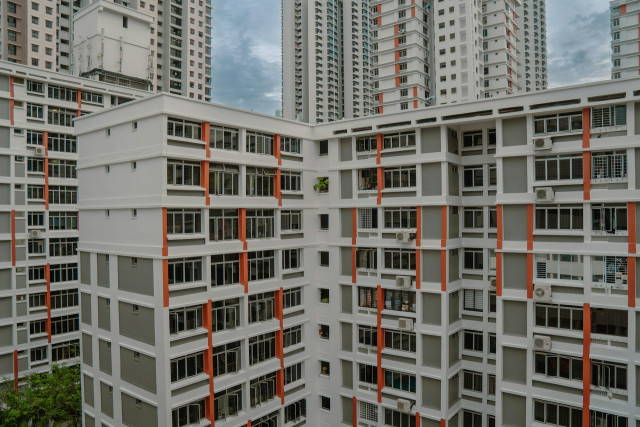
Lessons from Singapore's 50-Year Housing Plan
In regard to the housing in the urban areas, there is no country that can attract the world attention like Singapore has done. Since achieving its governance in 1965, Singapore struggled with the problem of housing. The tiny island city-state was riddled with deprived areas, a lack of infrastructure and overflowing population. Over two-thirds of the people existed in disadvantaged circumstances and there was not much room to work with given the small landmass. However, in just a bit more than 50 years, Singapore was able not only to achieve almost universal housing, but also, to design a paradigm of affordability, social inclusiveness, and sustainability. Nowadays, more than 80% of the population in Singapore reside within the housing maintained by the Housing and Development Board (HDB) and the bulk of the residents are owners of their own houses, and not tenants. This story of success is not an overnight success, but rather a holistic long term (50 years) housing strategy.
The strategy was highly interventionist, long-term oriented, and sensitive to how housing can be incorporated into the social and economic life of the country. Singapore did not treat housing as a separate sphere but rather as a focal point in the national development, with connectivity to stability of families, generation of wealth, centralization of communities, and city planning. Although no two countries have identical problems, the experience of Singapore can serve as a blueprint to policymakers all over the world who are faced with affordability crisis, inequality and rapid urbanization.
The main lessons of the 50-year housing plan in Singapore are the effectiveness of state intervention and the state provision of housing, the attention to house ownership as a form of social stability, the infrastructure and amenities integrated housing, the emphasis on inclusivity and equity of access, and the ability of the policies to be flexible in the long run when encountered with the changing social problems. All these lessons provide clues on how housing can be redefined and seen not as only a shelter, but as a pillar of national development.
State Intervention and the Strength of Public Housing
Another key learning point created by the 50-year housing plan in Singapore is that good state intervention in forming policies to solve any housing shortage remains significant. Social housing is not a priority in most countries and therefore the market remains to a large extent privatized, which has led to periodic waves of speculation, high prices and housing shortages. Singapore, in contrast, proceeded to democratize housing by the straightforward approach of treating it as a governmental asset.
The core of this strategy was the Housing and Development board (HDB) formed in the year 1960. The responsibilities of the HDB were the clearing of the slums, the development of giant construction housing and the development of such a system in which ordinary citizens were able to acquire safe and affordable housing. The nationalization of land through the Land Acquisition Act guaranteed that the state could exercise control over urban development and make sure that there would be no price spikes driven by the speculation of privately held land. This enabled mass construction of public housing to be done efficiently and in a very short time at an incomparably low cost as compared to leaving it to be constructed in the open market.
The efficiency of this intervention cannot be overestimated. A few years after the country gained independence, there were a lot fewer slums and the housing deficit had declined to a great extent. Housing taken up by the state grew to be the skeleton of Singapore urbanity. Centralising control and power and establishing one single body that would take charge of housing policy would enable the government to maintain coherence, speed and accountability in delivery.
To other countries that have been grappling with affordability, the message is always the same: the free market can never resolve deep-rooted structural housing deficiencies. A major, arm’s length role of the state is frequently necessary, either by directly building houses, by subsidizing, or control of land. The case of Singapore demonstrates that significant change can be realized when government sees housing as a right and not a commodity.
Households and the Understanding of Stability in Society
The other characteristic of the Singapore housing plan is the role the plan raised on homeownership as opposed to rental housing. In the early days of independence, the authorities felt that homeownership would be instrumental to developing a sense of civic pride, social stability and long-term accumulation of wealth. With the innovative financing methods and particularly the utilization of the Central Provident Fund (CPF) which is a mandatory savings scheme targeting the working population, citizens could now afford to buy their own housing units instead of permanently living on rental basis.
Some advantages were present in this model To begin with, it provided citizens with a realistic interest in the growth of the country. The need to have ownership in a house established a sense of belonging and investment in the future, as it was essential in the early precarious years of the Singapore nationhood. Second, homeownership was && accused of being a wealth accretion. To most Singaporeans, the HDB flat is the main investment that would appreciate over the years and give them source of income even in old age. Third, the ownership promoted better maintenance and the sense of community pride, which is the area where stigma tends to be associated with public housing to the rest of the world.
This investment in the lives of many through homeownership did not come without strife. Policymakers needed to guarantee that the prices were at an affordable level and that they did not have to deal with any speculative forces. Limits on re-sale and rules on eligibility were offered to sustain low cost and equity. However general the policy has managed to achieve one of the best homeownerships in the world, which stands at about 90%.
The lesson to the other nations is the value of the prospects required in diversifying the housing policy with respect to the overall economic and social stability. Housing is not assumed to be a mere shelter but a launching pad of financial stability, upward mobility and civil participation. Although not all countries will be able to adopt CPF, what is applicable everywhere is the need to allow ordinary citizens to own rather than rent their homes.
Combining Housing with the Infrastructure and Liveability
A major factor contributing to the effectiveness of the Singapore housing scheme is that it did not only focus on construction of homes but also on the livability and accessibility of the homes and how it could be accommodated within the wider scheme of the city. Every new HDB estate was not only envisioned as a number of flats but as an entire self-sufficient community with schools, healthcare facilities, etc. This integrated policy made sure that the residents had access to all the necessities in their local communities so there was less disparity between the various areas of the city and gives the impression of balanced growth of a city.
This was especially necessary due to the small land space of Singapore. Effective land utilization was the most desired and the government capable of coordinating the development of housing with other infrastructure like roads, railway, and water supply ensured that the urbanization took place smoothly. HDB states have developed into vibrant towns with a unique identity, green spaces and community facilities, over the years dispelling the myth of soulless public housing blocks.
Furthermore, Singapore continually modernized its housing estates so that they could be able to keep up with the emerging living standards. Efforts like the Main Upgrading Program and the Estate Renewal Strategy were able to upgrade previously old estates and they were not allowed to deteriorate. This stress on renewal made housing estates attractive and assured them of value.
The more general lesson is that housing cannot be planned along. Affordable housing development that are isolated, without access to employment, schools and other public services, do not offer a true opportunity to residents. The Singapore example demonstrates that housing needs to be incorporated within the general schemes of urban planning in order to ascertain sustainable, livable communities.

Promoting Inclusivity and Social Cohesion
Another useful lesson about Singapore housing plan is that it uses housing as a social cohesion mechanism in a planned fashion. In such a multi-ethnic, multi-religious society, there has been an early identification by the government of a possible risk to national unity because of segregation. As a response, policies like the Ethnic Integration Policy (EIP) came in place and they tried to maintain building quotas to represent the ethnic mix of Singapore. This eliminated ethnic enclaves and promoted interactions between the communities on a daily basis.
In addition to ethnic integration, the housing plan focused on inclusivity based on the income level. Subsidies and grants provided an opportunity to establish housing for the low and median income families whereas high income families could acquire bigger flats or superior ones. The outcome was a housing system that shunned the keen segregation that is often witnessed in other societies whereby public housing is perceived as something that only the poor can use. In Singapore, public housing evolved into a status quo, rather than an aberration, inculcating a feeling of communal identity and self-respect.
Inclusivity was another way in which the housing plan helped minimize inequality because everyone felt their place in society by enhancing social trust. When individuals of varying backgrounds have to co-exist, the individuals are more likely to consider themselves as members of one community. This was of especial significance in Singapore where nation-building meant creating a common identity among disparate groups.
Other countries can use the lesson that housing can be an effective tool of social integration. It can either fuel divisions or assist in bridging them up. The proactive nature of the approach in Singapore is also used to show how housing can add to unity and equity with inclusivity at the center of policy design.
Flexibility and Long-term Vision
Lastly, Singapore housing plan has been successful because of its flexible nature and its vision towards the end. The 50-year plan was not a blueprint but instead it was adapted over time to economic activities, demographic changes, and social requirements. An example is that as the living standards and income levels increased the government changed its focus to constructing modern design apartment house that were more spacious. Attempts were made to help the elderly homeowners through the introduction of policies which included lease buyback schemes and community care facilities in housing estates as the population grew older.
Another way in which Singapore has adjusted its strategy with regard to housing is in response to the environmental issues. Sustainability has recently taken a high priority, and estates are putting in measures like use of green building codes, energy-efficient designs, and environmentally friendly infrastructure in newly-developed estates. The forward-looking nature of this approach is that it steers the housing system through the risk of climate change and limitations in resources.
The lesson here is that effective housing policy needs to be flexible forward-looking. Immediate solutions can offer temporary helps and will fall far short of sustainable results. Planning decades in advance and responding to new challenges should allow governments to develop housing systems that will be resilient and changing with society.
Housing as a Tool for Nation-Building and Identity
One of the most valuable but least understood lessons of the housing story of Singapore is that it consciously embraced housing as a source of nation-building. Singapore in the early years of independence was not only combating material deficits of homes, it was also struggling with its social fragility and physical vulnerability and the need to create a shared national sense among the heterogeneous communities. It is in the housing that widened aspirations were sought to be realized.
Through housing the majority of the citizens in affordable and quality homes, the government ensured that there was a visible connection between the people and the state. A flat was not only a roof over your head but also the feeling of safety and belonging as well as taking part in the game of national affairs. Ownership to house also provided the Singaporeans with stake in stability and development of the country that spilled beyond the boundary of ethnicity, culture and the class.
Incorporating ethnic quotas into the public housing was a key to this undertaking. Rather than letting communities congregate on their own, Singapore put in place measures to ensure that neighborhoods represent the diversity in the country. This everyday sharing of national and ethnic/cultural enclosures enhanced social unity and undermined tensions that might otherwise tear a small fragile nation apart. The message was distinct, housing was more than about shelter, but it was about the creation of a united people.
Self-reliance and the idea that the homes belonged to them were also used to enhance national identity. The Housing and Development board (HDB) did not position itself as just a landlord and in fact, it was a partner in allowing citizens attain some dignity through ownership. This form of ownership fostered civic-mindedness, responsibility and loyalty. To most Singaporeans, the HDB flat served as a financial asset as well as an emotional shelter-where family life was enjoyed and where one felt attached to the state.
The greater lesson to other nations is that it must not ignore housing policy in isolation to nation-building. Housing has the capacity to foster trust, identity and civic pride when it is thought-through. It has the potential to enhance the social contract between states and their citizens as well so that development cannot only be talked about on the basis of economic growth but the experiences of citizens in terms of stability and a sense of belonging. The Singapore experience shows that housing, being regarded as part of the discourse of inclusivity, security, and progress, can be one of the most valuable instruments to create not only themed houses, but also countries.
Conclusion
The 50-year housing plan in Singapore is not only one about bricks and mortar but it is about vision, leadership, and social engineering as well. This policy of perceiving housing as a common good, the focus on homeownership, merger of development with infrastructure, inclusiveness, and the condition of long-term flexibility helped Singapore to become one of the most successful housing systems in the world as for a long time it was the city of slums.
The most important lessons arising out of this experience are applicable to other countries that face problems of affordability and urban inequality. Housing should also be looked at not only as a shelter but as an economic base of security, social stability, and national growth. Although each feature of the Singapore model cannot necessarily be copied, since they are distinct in their political organization, land size, and culture, then some of those centres of the states as leadership of the state, inclusiveness, and planning on a long term basis are all universal.
With the global challenges of urbanization, climate change, and inequality, the case of Singapore and its housing experience can give scholars many clues on what can be achieved when housing is at the center of good policy. It is a reminder that affordable, inclusive, and sustainable housing is not something impossible to accomplish, but it becomes a game changer when a proper vision and commitment are applied.



-3dkuLgKhRD.jpg)
-49HupTvwDD.jpg)









LEAVE A REPLY