

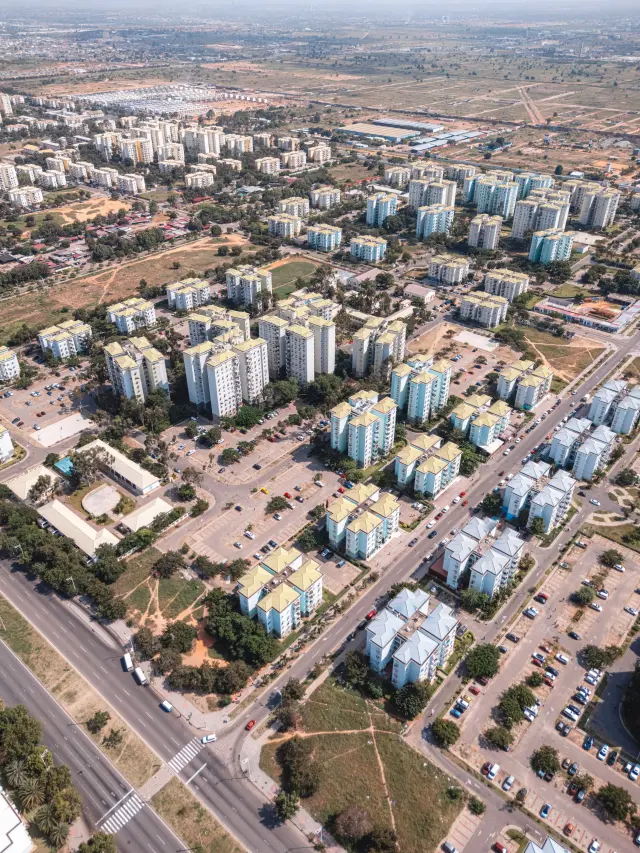
How Kenya Is Using Urban Regeneration to Tackle the Housing Deficit in Nairobi’s Slums
Kenya is experiencing a rapid urbanization in Sub Saharan Africa. The urban growth in the past thirty years has been characterized by the high rate of rural to urban migration, rise in the natural population and the increased opportunities in the cities, especially Nairobi, which have put immense pressure on the city in terms of population.
 Urbanization has increased
economic dynamism, but it has also contributed to increased inequality. The
population in the city of Nairobi has a large percentage of inhabitants in
overcrowded informal settlements, have insecurity in terms of tenure,
lack of adequate sanitation, poor drainage systems, low access to clean water
and weak housing infrastructures.
Urbanization has increased
economic dynamism, but it has also contributed to increased inequality. The
population in the city of Nairobi has a large percentage of inhabitants in
overcrowded informal settlements, have insecurity in terms of tenure,
lack of adequate sanitation, poor drainage systems, low access to clean water
and weak housing infrastructures.
These countries, commonly known as slums are
indications of severe structural housing shortage which the traditional housing
delivery paradigm has not been able to address.
Over the years, informal settlements have been reactively and haphazardly met with evictions or even one-off upgrading initiatives. Urban regeneration is however becoming a strategic, long-term solution that Kenya is increasingly embracing in order to solve the housing crisis.
Urban regeneration is not only about substituting shabbier units of housing. It is an all-inclusive, cumulative strategy that involves housing redevelopment, investment in infrastructure, tenure regularization, economic revitalization, and social inclusion.
In place of perceiving informal settlements as transient
aberrations, regeneration policies have accepted them as part of the urban
fabric, which needs to be systematically changed.
Regeneration in Nairobi aims to resettle high-density informal settlements into planned neighborhoods with affordable housing, better services, and greater economic prospects. The strategy is a combination of government investment, the role of the business sector, community interest, and policy changes.
Through partnership, new financing model, and integrated
planning, Kenya will significantly reduce the housing shortage and enhance the
living standards of low-income citizens.
The current blog addresses the issue of the urban regeneration as Kenya seeks to address the housing shortage in Nairobi. It looks into the magnitude of the crisis, policymaking structures that direct regeneration, funding structures, integration of infrastructure, community involvement and long-term sustainability.
These perspectives can be used to
improve on how urban regeneration is transforming the future of the most
vulnerable communities in Nairobi.
The Housing deficit Scale in Nairobi and the Informal settlements Growth
The housing shortage in Nairobi is qualitative and quantitative. On the quantitative aspect, the city experiences a harsh deficit of affordable housing units as compared to an augmenting population.
The demand
exceeds the supply especially among the low-income earners segment. On the
qualitative analysis, a significant proportion of the current housing stock of
informal settlements does not meet minimum safety, sanitary, and durability
standards.
The informal settlements in Kenya include Kibera, Mathare, Mukuru, and Korogocho that have been developed because of rural-urban migration, lack of formal job opportunities in urban areas, high cost of land and lack of state-initiated housing projects.
Over decades, the private
developers concentrated on housing in the middle- and high-income category with
a great gap in affordable housing supply. In the meantime, poor families turned
to informal rentals, and they could not afford permanent constructions, so they
lived in crowded buildings constructed of temporary materials.
What the outcome is a trend of extreme density. There are numerous families that live in single-room houses which are also their living, cooking, and bedroom space. Sanitation facilities are often underprivileged and as such, health risks are experienced.
The common problems are floods, fire
outbreaks and spreading of diseases because there is poor drainage and poor
workmanship. Moreover, poor land tenure will deter the inhabitants to invest in
home improvement and the inability to use property as security to access
financial services.
There are also economic implications of the housing deficit. Employees who are not working in locations near the employment centers have to travel long and expensive distances.
Unhealthy living conditions decrease the
productivity and put the healthcare systems under pressure. The children who
are raised in densely populated surroundings suffer educational impairments.
By identifying these interrelated problems, the urban regeneration plan in Kenya redefines the housing inadequacy problem as an urban development problem and not a residential problem.
Regeneration programs seek to
radically change whole neighborhoods by redeveloping them through the use of
regeneration rather than patchwork solutions. This change is associated with
the realization that structural change in land management, infrastructure
planning, financing and governance is needed to provide a solution to the
housing crisis.
The regeneration of the urban areas thus starts with the
realization of the severity of the housing shortage and the systemic factors of
the growth of informal settlements. Sustainable transformation can only be
achieved by addressing such root causes.
Policy and Institutional Frameworks Driving Urban Regeneration
The urban regeneration plans of Kenya are based on the
larger national housing and urban development policies. The government has over
the years come up with reforms that were intended to boost the supply of
affordable housing, modernization of land administration, and empowerment of
urban planning institutions.
The most important aspect of the regeneration agenda is the alignment between the national and the county government. County governments have taken on major roles over urban planning and delivery of services since devolution, and such a situation is also the case with Nairobi City County.
All
this necessitates multi-level government coordination in its regeneration. The
national ministries give direction of policies, finance structures and the
local authorities handle planning approvals, local infrastructure, and
community relations.
Urban regeneration is integrated into the overall affordable housing policy of Kenya, which aims at providing low- and middle-income households with housing units.
The regeneration efforts are directed against
old public housing estates and informal settlements to be redeveloped into
high-density, mixed-use redevelopments. This will optimize land use in
locations near the employment centres and transport systems.
At the institutional level, regeneration projects are commonly based on the special purpose vehicles (SPVs) or the public-private partnership arrangements to coordinate the implementation.
These organizations
organize land assembling, funding, building, and distributing. Open allocation
criteria should endure to make sure that the original residents are given
priority in the new housing units to minimize chances of displacement.
There have also been regulatory reforms which have simplified the processes of approval and made the land tenure arrangements clear. Secure tenure is the backbone of regeneration since it assures long-term occupancy to residents as well as access to credit.
Land regularization is done before redevelopment in certain settlements, which
guarantee the recognition of the rights of residents.
Comprehensively, the policy framework focuses on integration: housing development should accompany the improvement of infrastructures and social facilities, as well as economic opportunities.
Regeneration focuses on national urban development strategies by integrating it
into the development strategy by Kenya to design repeatable, scalable models
that can overcome housing shortages on a mass scale.
Financing Urban Regeneration: Public–Private Partnerships and Innovative Models
The regeneration of big urban areas needs a lot of capital
to finance. Public traditional budgets are not sufficient to finance the
wholesome development of informal settlements. Consequently, Kenya has adopted
new financing strategies especially the public-private partnerships (PPPs).
In PPP, the construction is financed by the private
developers on either a development rights or a revenue sharing agreement. The
governments can make contributions to land, infrastructure capital or
regulation. This cost sharing model will mitigate the fiscal strain and will
increase the project delivery process.
Another strategy is cross-subsidization. With
mixed-income developments, some of the units can be sold to the higher-income
purchasers at the market prices. The generated profits reduce the prices of
units produced to serve low-income households. This hybrid approach boosts
sales efficiency and keeps social goals.
Mortgage financing is also very important. Affordable
housing schemes usually liaise with the financial institutions to offer the
loans at reduced interest and with soft repayment schedules. Credit and
cooperative savings schemes allow residents to pool resources and obtain a loan
through housing funds.
Sometimes international development partners grant
concessional financing or technical support on the regeneration initiatives.
Machinery of climate finance could promote the elements of green buildings,
energy-efficient structures, and robust infrastructure.
Notably, financial sustainability requires tight control of
expenses. The construction of high-rise, project development of infrastructure,
and the process of relocation may increase costs. The implementation is in
phases and transparent in the way procurement is done, this assists in
controlling costs and creating investor confidence.
Kenya is trying to ensure that urban regeneration is scaled above pilot projects by diversifying sources of funds and employing the capability of the private capital. The sustainable methods of financing will make regeneration not an intervention that will be done once in a lifetime, but a model that can be repeated in various settlements.
Integrating Infrastructure and Service Delivery in Regeneration Projects
Integration of infrastructure development and housing
construction is a major attribute of the urban regeneration strategy in Kenya.
The regeneration projects are meant to offer clean water, sewerage,
electricity, road networks, drainages, and waste management amenities and
additional housing units.
Integration of infrastructure tackles the long term service
shortages in informal settlements. There are premeditated road networks that
enhance accessibility of the emergency services and public transport. Drainage
minimizes the chances of flooding. The contemporary sanitation systems enhance
the health of the people.
Sustainability is increased by energy efficient designs and
renewable energy components. Use of solar lights in common areas, rain water
harvesting and better insulation make utility expenses more affordable to
residents in the long-term. Such actions put regeneration in line with the wider
environmental objectives.
It is also important in social infrastructure. Schools,
health centers, community hall, markets and recreational areas all come under
redevelopment plans. Mixed zoning will promote local economic development by
promoting the emergence of small businesses.
Regeneration which is infrastructure-led upgrades the
property value and investor investment confidence. The housing markets
stabilize and the mortgages are taken up when the basic services are assured.
This combined model lessens the chances of returning to unofficial
circumstances.
Finally, infrastructure is a part of regeneration and not an
afterthought. Through the consideration that housing and services grow in
tandem Kenya is creating safer, healthier and economically vital neighborhoods.
Addressing Land Tenure and Legal Reforms in Urban Regeneration
Insecure land tenure in informal settlements has been one of the most complicated hurdles of solving the housing shortage in Nairobi. A high number of people live on the land without any title deeds and in other instances, the legal claims are held by absentee landlords, private owners or government agencies.
This unpredictability has discouraged past and present
investment in housing betterment both by individuals and the government. Urban
regeneration projects in Kenya are increasingly appreciating the fact that they
cannot possibly bring about long term transformation unless they deal with the
issue of tenure insecurity and legal ambiguities.
The government has also regularized occupancy rights through
land regularization processes as part of regeneration efforts. The process of
enumeration and mapping can be used to determine legitimate residents and
owners of the structures to produce credible registers of beneficiaries. Such
measures minimize conflicts and increase the confidence of the residents in
investing in their houses.
The legal changes have also sought to ease the process of planning approvals and limit the number of bureaucratic bottlenecks that postpone the process of redevelopment projects. Clarification of zoning policies and new urban master planning give directions on land use, density and alignment of infrastructure.
The government reduces risks associated with
investments by removing ambiguity in property rights and regulation processes
and enhances transparency.
Secure tenure does not only help in ensuring that the
residents are not evicted, but also opens up the economy. Homeowners are able
to put property on the line, to credit and accumulate intergenerational wealth.
By so doing, land reform is more than a legal practice, it is a pillar towards
social stability and monetary inclusion in the regenerated neighborhoods of
Nairobi.
Community Integration and Social Protection
Community trust and participation are critical to the
successful regeneration of cities. History of forced evictions gave lack of
confidence in the informal settlement dwellers. To overcome this, Kenya
regeneration programs are more focused on stakeholder involvement.
Community consultations enable residents to get involved in
planning. Documentations of the existing structures and households are done
through participatory mapping exercises which guarantees proper identification
of the beneficiaries. Open distribution processes decrease anxieties of
marginalization.
Relocation plans are temporary and are well handled so that
the disruption is minimal. Phased construction in a given project allows
residents to occupy newly constructed units without the need to be displaced in
the long term.
Social protection is applied to vulnerable populations, such
as women, older residents, and people with disabilities. The allocation
criteria can focus on residents who are long-term and low-income households.
Effective communication pathways minimize false information and confidence is
developed.
Housing delivery is done in conjunction with economic
empowerment programs. Skills training, employment generation within the
construction sector as well as assistance to small businesses will make sure
that regeneration not only improves livelihoods but also changes the physical
buildings.
Ownership by the community will promote long term
sustainability. When the residents have a sense of investment in their
neighborhoods, the level of maintenance increases, and the social cohesion is
enhanced.
Long-Term Sustainability and the Future of Urban Regeneration in Nairobi
The regeneration of Nairobi is still developing. Although
some great leaps have been made, there are still challenges. Implementation can
be slackened by land disputes, funding shortfalls and bureaucratic delays. In
order to ensure that affordable units are maintained in the long run, it is
necessary to provide policy supervision.
The sustainability in the long term will be based on the
integrated urban planning, which envisions the future development.
Transit-based development will minimize congestion and lead to environmental
friendly mobility. The technologies of smart cities can improve the efficiency
of service delivery.
Restructuring regeneration beyond flagships needs
institutional learning and copying of best practices. It is possible to monitor
housing quality, public health, and economic involvement outcomes using data-driven
monitoring systems.
Future regeneration processes will also be defined by
climate resilience. Nairobi is experiencing climatic variability hence
infrastructure has to resist floods and heat strokes. Green areas and green
drainage systems will be more important.
In conclusion, the urban regeneration model in Kenya is a
move away, albeit not inactive, in the reactive city favelas management to
efforts that actively convert cities to urban regeneration. With the
incorporation of housing, infrastructure, financing, and the involvement of the
community, the country is developing an inclusive growth basis.
Conclusion
The adoption of urban regeneration by Kenya to deal with the housing shortfall in Nairobi is an important change in urban policy.
Regeneration is not about informal settlements being treated as transient issues
but as crucial components of the city that are to be properly transformed.
Nairobi is slowly transforming the poorest neighborhoods through integrated
planning, innovative funding, infrastructure investment and community
involvement.
The regeneration model is a way forward to inclusive and sustainable urban development despite the challenges. Through the integration of housing delivery and infrastructure, economic opportunity, and environmental resilience, Kenya is not only solving its housing shortage but also reasserting the future of urban living in Nairobi.
Also read: Urban Regeneration in Kenya: Why We Need More Projects Like the Alexandra Renewal Project





-bsBmIgEW58.jpg)
-5yCS4OoVBg.jpg)







LEAVE A REPLY