

Exploring Kenya’s Community Residential Units (CRU) Programme and Its Impact on Affordable Housing
Decent, safe, and affordable housing is one of the most pressing problems in the socio-economic life in Kenya. A combination of the rapid urbanization process, population increase, rural-urban migration, and the increase in land and construction prices has led to the formation of an increasing gap between the supply and demand of housing.
 Large cities like
Nairobi, Mombasa, Kisumu and Nakuru still face an acute lack of affordable housing
especially among the low- and middle-income families. The consequence of this
has been in an expansion of informal settlements, which have been typified by
congestion, lack of adequate infrastructure, tenure insecurity, and poor living
standards.
To address these issues, the Kenyan government has come up with a number of policy initiatives that seek to enhance access to and affordability of housing. One of these is the Community Residential Units (CRU)Programme- this is a strategic intervention that targets to provide dignified and affordable rental accommodation to vulnerable populations and low-income earners.
The CRU Programme is a transition to community-based and structured
programs of rental housing, with a focus on inclusivity, sustainability, and social
integration. It is not only aimed at offering physical shelter but also quality
of life in terms of better infrastructure, services, and community planning.
This blog not only discusses the Community Residential Units Programme in Kenya in detail which includes its background, structure, implementation model, socio-economic benefits, difficulties, and opportunities, but also the implications of this housing scheme on the general affordable housing situation in Kenya.
Knowledge of the aims and the results of the CRU
Programme will help all stakeholders (such as policymakers, developers,
investors and communities) to understand the potential of the CRU Programme in
changing the Kenyan urban housing.
Housing Crisis in Kenya: Background to CRU Programme
The housing shortage in Kenya is projected to be in the hundreds of thousands of units per year with demand usually exceeding the supply. Most of this shortage impacts on the low-income families, where a large number of them receive non-regular incomes and are unable to buy traditional mortgage-based houses.
This has seen the urban centers being the locations of
employment opportunities attracting rural people to seek better livelihoods.
The development of infrastructure has, however, failed to keep up with the growth
of the population.
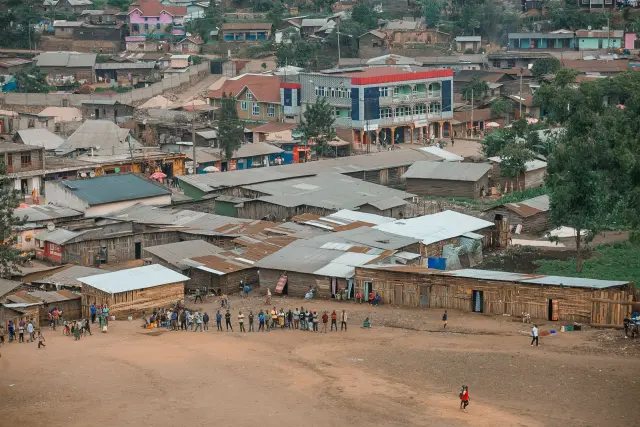
This has led to the growth of informal settlements. In Nairobi alone, there is a great percentage of residents living in informal settlements like Kibera, Mathare, Mukuru, and Korogocho.
Such locations are
usually poorly sanitized, without good water supply, waste collection and
without tenure rights. Crowding is frequent and at times families stay in
single room houses that are made of temporary materials.
In Kenya, the conventional housing delivery models have majorly enjoyed homeownership by provision of mortgage. Nevertheless, there is a high rate of mortgage penetration because of the high interest rates, strict lending conditions and lack of formal working opportunities.
Rental housing is
the best option of many low income earning households. Alas, even in the rental
sector, there is also a possibility of exploitations, as low-quality apartments
are priced extremely high in comparison with their quality.
It is against this context that the Community Residential Units Programme was conceptualized. It realizes that not every Kenyan can instantly switch to owning homes and that there is a necessity to have affordable and well regulated rental houses.
The CRU Programme deals with both
quantitative and qualitative housing shortages through consideration of
structured rental housing developments with the objective of addressing
community demands.
Through affordability, strategized infrastructure and safe
tenancy, the programme will ensure that the need to use informal settlements
are minimized. It is also in line with the larger objectives of Kenya to
affordable housing within the national development frameworks since houses are
both a social good and an economic catalyst.
Knowing the Community Residential Units (CRU) Programme
The Community Residential Units (CRU) Programme is meant to offer cheap rental accommodation to low-income earners, especially those who are living in shanties or deplorable situations. CRUs are also community-oriented, sustainable, and social infrastructure-based, unlike conventional public housing models.
The units are mostly constructed as multi-story residential buildings in planned estates, including the basic services
like water, sanitation, electricity, access roads, and common areas.
The table of the CRU Programme is a rental-based structure, one of its peculiarities. The programme does not need its beneficiaries to take mortgages or make huge advance payments but maintains controlled rent rates that are geared towards affordability.
The model is especially useful in the
households, where the income is unstable or informal, and the households may
not be eligible to get funded through mortgage options.
CRUs are usually focused to certain types of beneficiaries
such as low-income earners, vulnerable families, and victims of infrastructure
development projects or slum upgrading programs. Most of the allocation
criteria normally take into account income levels, family size and past
conditions of stay so that equitable access can be achieved.
The programme is done in partnership with the national and
county governments, the housing agencies, and in certain cases, the
participation of the private developers under the structure of the
public-private partnership. Public reserves generally provide land, which
minimizes the cost of a project and enhances affordability benefits.
CRU developments have design considerations that focus on
the functionality, safety and wellbeing of the community. The units are
normally small but constructed of durable materials to help in making them last
long as well as to maintain low costs. Social amenities like playgrounds,
community halls, and green spaces are also a source of social cohesion and
healthier living conditions.
Notably, infrastructure planning is also incorporated in the
CRU Programme. These developments are linked with sewer systems, water supply
networks, and electricity grids making the environmental health risks that are
usually linked with informal settlements to be minimized. By so doing, CRUs
will be an organized substitute to slum dwellings and be affordable.
Socio-Economic Impact of CRU Programme
The effects of the CRU Programme are not limited to housing
units in the form of physical houses. In its essence, the program is trying to
enhance the socio-economic performance of families with low income. Affordable
and safe housing is a factor that plays a relevant role in household stability,
health, education, and economic productivity.
Better living conditions are one of the main advantages of
CRUs. Sanitation, clean water and electricity ensure that people do not get
exposed to waterborne diseases and fire hazards that are common in the informal
settlements. The increased well-being will be low medical costs and healthier
living conditions.
Learner performance is also better in case the family has a
stable home. In safe residential environment, children have higher chances to
attend schools regularly, get access to studying facilities and enjoy better
neighborhoods. Availability of well-structured infrastructure and road network
also increases accessibility to learning institutions.
On the economic front, affordable rental housing causes
households to invest income in savings, small business or basic needs instead
of spending an undue amount of income on rent. Affordable and predictable
rental rates make living conditions stable and eliminate the risk of eviction
or price increase.
The construction stage of CRU projects brings in jobs to the
local contractors, artisans, engineers, and workers. This boosts the local
economy as well as the development of skills in the construction sector.
Housing development that is strategically planned will be a way of attracting
commercial activities in the long run that will lead to the generation of more
economic opportunities.
Another important result is social cohesion. The planned
estates that have common areas promote communication among residents which
promote community networks. Planned residential neighborhoods also make the
provision of services easier than in unplanned residential neighborhoods like
the collection of wastes, policing and healthcare outreach.
Nevertheless, the entire socio-economic outcome is largely
dependent on the successful management and maintenance of the units. The only
way that sustainable impact can be sustained is through constant monitoring to
avoid decay, congestion or misuse. CRUs can be an instrument of upward mobility
and urban change when done in the right way.
Challenges Facing the CRU Programme
Although the Community Residential Units Programme has a
good framework, it has a number of challenges that compromise its scalability
and sustainability. Funding is one of the main hindrances. Housing projects
that are large in magnitude consumes a lot of capital to commence and the
budget limitation would slow the pace of projects.
Another problem is availability of land in the cities. Even
though in many cases, the land is provided by the public to facilitate CRU
projects, other uses of the urban land like commercial and infrastructural
developments may restrict the area. Due to high land values, expansion is also
difficult.
Striking a balance between affordability is not simple.
Rentals should also take the form of low rates that are affordable to the
target beneficiaries and at the same time generate enough revenues to manage
and maintain. The lack of maintenance funds may cause the housing quality to
degenerate slowly, which will weaken the goals of the programme.
There may also be some administrative inefficiencies and
bureaucracies that could impede timely delivery. The communication between the
national and the county governments, housing authorities, and the contractors
entails well organized governance. Projects may be stalled by delays in
approvals, procurements or payment by contractors.
Transparency on beneficiary selection and allocation is
another of the concerns. Without a clear and responsible allocation system,
there exists a chance of political lobbying or wrong distribution to non-target
groups. The programme should be credible such that there is no unfairness and
mistrust among the people.
The culture of maintenance is a larger systemic problem. In the absence of well-organized systems of property management and education of tenants, CRU developments can experience problems with vandalism, unpaid rent, or misuse of infrastructure.
These challenges need powerful institutional
structures, open governance systems, new financing models, and political will
to ensure that these challenges are addressed.
Opportunities and Future of Affordable Rental Housing in Kenya
These challenges notwithstanding, the CRU Programme has vast
opportunities to the housing industry in Kenya. It has the potential to be one
of the pillars of urban housing with appropriate scaling. Rental housing is
also gaining popularity as a key element of inclusive urban areas around the
world, and Kenya has the potential to be successful in the long term because of
its structured approach to it.
Public-Private partnerships provide the opportunities to
mobilize the private capital and expertise. With government support in
de-risking investments, it is possible that more developers will be involved in
the affordable rental projects. More can be done to speed up growth with
innovative financing models such as housing funds and blended finance.
Costs and delivery time can be minimized through the use of
technological improvements in the construction field, including prefabrication
and the use of other materials that are alternative forms of building. Elements
of sustainability design like energy-efficient design and recycling of water
can reduce operational expenses in the long run.
The CRU model can be combined with the expanded slum
upgrading efforts as well. Resistance to infrastructure projects can be
minimized through relocation strategies that offer dignified alternatives of
renting houses, as well as making sure that families that are relocated in
these efforts do not lose access to urban livelihoods.
The allocation systems and rental management platforms can
be digitized in order to increase the transparency and efficiency. Planning can
be enhanced based on data in order to improve targeting and resource
allocation.
Finally, the CRU Programme will be successful because of
policy support, collaboration of all stakeholders, and constant evaluation.
With reinforcement and expansion, it can have the capacity to transform the
affordable housing in Kenya by making quality rental housing a viable, decent
alternative to low-income Kenyan families.
Policy Recommendations and Strategic Reforms to Strengthen the CRU Programme
To ensure the Community Residential Units (CRU) Programme is sustained over the long run and has a national effect, policy refinement and strategic reforms have to be deliberated.
Although the programme has been found
to have potential as a remedy to the affordable rental housing shortage, to be
effectively scaled, the programme needs structural changes, especially on the
funding, management, planning and stakeholder consultations.
The reforms encompass the creation of a sustainable financing structure that is one of the most critical. Affordable rentals have minimal profit margins and the annual government budgetary allocations might not be adequate to ensure future growth.
Specifically, to stabilize finances, a
special housing fund that is exclusively allocated to the development and
renovation of rental houses can be proposed. Blended finance models that use
public funds, concessional loans, development partner support, and private
capital can go a long way at increasing resources on hand, as well as
distributing risk. Tax breaks on developers involved in CRU projects can also
be used as incentives to lure the involvement of the private sector.
The other important policy agenda is enhancing institutional coordination. Housing provision in Kenya is a shared burden by several players, among them national ministries, county governments, housing authorities, planners, contractors, and community representatives. Fragmentation normally causes time wastage and overruns.
Providing a centralized coordination
structure or inter-agency task force targeted on CRUs can simplify approvals,
procurement operations and oversight. There would also be clear definition of
roles between the national and county governments that would diminish
duplication and accountability would increase.
Reform of land policy is also very critical. Availability of serviced land is also one of the biggest obstacles to affordable housing development. The government has the possibility of prioritizing an inventory of idle public lands that can be used as CRU land and especially in cases where the urban and peri-urban regions have access to transport and the job market.
The inclusion of CRU planning with other urban master plans will make sure that
the developments are not in isolation but related to social services, schools,
health facilities, and economic centers.
Being transparent when choosing beneficiaries should be institutionalized to ensure integrity of the programme. The risk of political interference and corruption can be reduced through a digitized publicly verifiable allocation system.
The eligibility criteria must be well spelt,
income checked and frequently changed in line with economic reality. Moreover,
there should be grievance redress mechanisms that are available to applicants
and tenants to encourage equity and confidence.
Conclusion
Community Residential Units Programme in Kenya is an excellent step towards addressing the affordable housing crisis in that country. The programme is aware of urban poverty and the inaccessibility of mortgages through its orientation on the delivery of affordable, formalized types of rentals to the low-income segments of the population.
It even goes beyond the
homeownership model and takes into account the concept of rental housing as a
possible and even a necessary one.
Despite the persistence of funding, land, governmental and maintenance-related problems, the CRU Programme offers a pathway close to safer, healthier, and more inclusive urban centers.
The socio-economic benefits
of decent housing are broad; they encompass improved health outcomes, increased
financial stability, and more.
New and inclusive housing programmes like the CRU Programme will be required as Kenya continues with the process of urbanization. The programme will be of great assistance in closing the housing gap and improving the overall quality of life of thousands of Kenyan families with strategic investment, open management, and participation of community.
Also read: How Kenya’s Housing Levy Will Fund Future Developments: A Closer Look





-shtTqaPktk.jfif)









LEAVE A REPLY