

Kenya’s Affordable Housing Crisis: The Struggles of The Informal Settlements in Nairobi
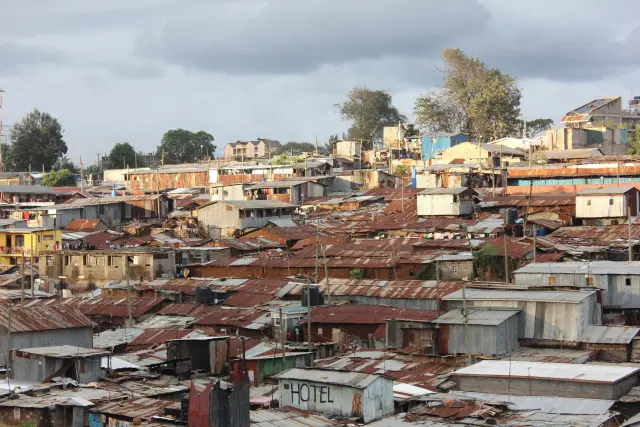
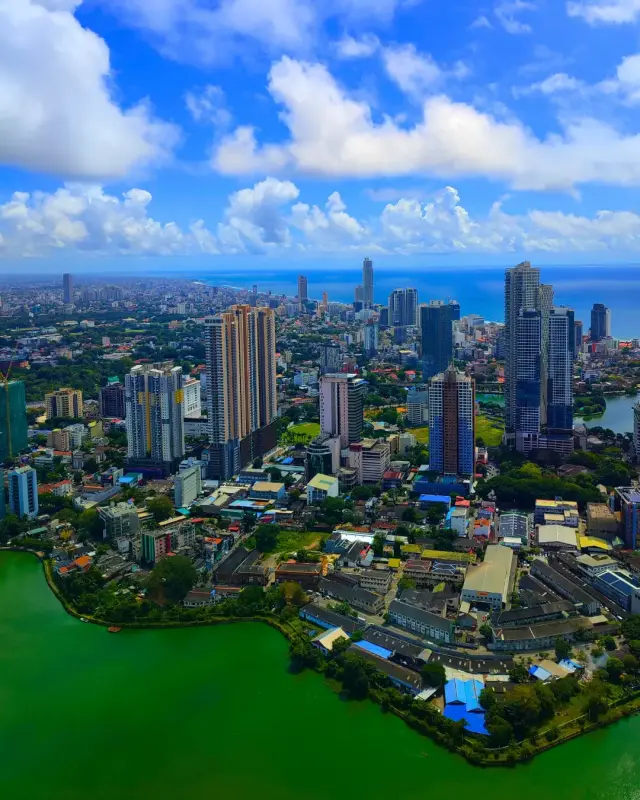
Kenya's capital city is Nairobi, a city of economic aspiration, technological development, and East Africa's regional influence. The city is progressive and promising, with a growing middle class and rising entrepreneurs, and its skyline expanding. Below this image of development, though, is a grim reality of an ongoing housing crisis.
 A large
number of people in Nairobi live in informal settlements which are densely
populated, lack proper infrastructure, lack security of tenure and have no
adequate access to basic amenities. These shanties expose the structural
predicaments of Kenya in the affordable housing sector.
A large
number of people in Nairobi live in informal settlements which are densely
populated, lack proper infrastructure, lack security of tenure and have no
adequate access to basic amenities. These shanties expose the structural
predicaments of Kenya in the affordable housing sector.
High urbanization has also exerted a lot of pressure on the supply of housing in Nairobi. Thousands of people migrate into the city every year in search of work, education and improved standards of living. Formal housing development, however, has not been able to match up this growth.
The
net effect is the growth of informal settlements which currently accommodate a
huge proportion of the urban population. The communities are stigmatized in
many cases, yet they reflect on being resilient and surviving strategies of
low-income families locked out of official housing markets.
Nairobi has an affordable housing crisis not merely because of the lack of buildings; it has roots in economic inequality, insecurity in tenure of land, incompetent urban planning, and lack of access to housing finance.
The focal point of this crisis is the informal settlements,
representing the human aspect of the poor responses of the policy and the
necessity of an inclusive solution. Their plight needs to be understood to curb
the housing future of Nairobi.
Rapid Urbanization and Urbanization of Informal Settlement
The high rate of population growth in Nairobi has been among the main sources of the spread of informal settlements. Being the economic center of Kenya, the city has been receiving migrants who are rural and smaller towns in search of job opportunities and better livelihoods.
Nevertheless, the
number of jobs created in certain areas has not kept up with the rate of
migration in cities, as there has been no corresponding increase in supply in
affordable housing.
Low income earners have been forced to the informal
settlements due to the expensive land and formal housing units. New arrivals
cannot simply afford the rent in designed regions or get mortgage loans, so
they tend to move to a place with cheaper housing but uncontrolled. With time,
these places develop into overpopulated settlements with improvised houses.
The structure of the urban planning has found it difficult
to cope with such high growth. Formal development of housing has been checked
by lack of availability of serviced land, bureaucratic procedures in the
approval process, and lack of investment in infrastructure. Consequently, the
informal settlements have turned out to be the only viable option of cheap
housing.
These villages tend to be constructed without a good
drainage system, a tarmac road network, and clean water and power supply. The
settlement of the population is so high in certain places that it exposes
people to disease outbreaks and environmental risks. In spite of these
challenges, informal settlements offer proximity to places of employment and
social networks which are key to survival.
The expansion of informal settlements is an indicator of a
structural imbalance between the housing supply and urban demand. As long as
there is no proactive planning and affordable housing development, the informal
settlements in Nairobi will keep on increasing as far as inequality will
continue to rise and resources in the city will be put under strain.
Land Tenure Insecurity and the Threat of Evictions
Insecurity of tenure to land has been one of the most urgent issues that have been affecting the people living in informal settlements in Nairobi. A good number of these communities reside on land that they do not own through any form of title, mostly on government land, railroad lands or on property that lacks legal records.
The occupants are usually without title
documents or legally recognized leases and therefore they are at risk of being
evicted.
The lack of safe tenure does not encourage long term
investments in housing improvement. Families are not ready to improve buildings
or put temporary materials in place as they are afraid of displacement. This
continues to live in poor conditions and restrains the possibilities of
development brought about by the community.
Either through court or administrative eviction, the social
and economic impacts of eviction are long-lasting. The demolitions also leave
families without a place to live, and also income, social connections, and
schools and health services. Pay schemes are poorly executed or unevenly
distributed, which contributes to the weakness even more.
The upgrading initiatives led by the government are also
uncertain by land disputes and rival claims. The redevelopment projects are
complicated and controversial in the absence of ownership records. The
investors as well as the partners involved in development are not willing to
conduct business in areas where tenure risks are not clearly established.
The land tenure is a key to solving the housing crisis in
Nairobi. Occupancy rights can be formalized, collective titles issued and clear
land adjudication procedures can be established to empower residents and
encourage investment. Devoid of a sense of tenure security, informal
settlements shall continue to spiral into insecurities and lack of development.
Poor Infrastructure and Limited Access to Basic Services
The lack of infrastructure largely influences the livelihood
of people in the informal settlements of Nairobi. The most basic services,
which include access to clean water, sanitation, waste management, electricity
and health care are inadequate or missing altogether. Such shortcomings result
in risks to the health of the populace and maintain poverty loops.
Clean water is often unavailable and costly. Lots of inhabitants rely on the services of informal water sellers who provide the water at the end of the day at higher prices than the official utility companies.
This gives a paradox, in which the worst households will pay more on
important services. Poor sanitation systems predispose the occurrence of water
related diseases and environmental pollution.
Dense housing and aisles also make the collection of wastes
and emergency response difficult. There are frequent cases of fire outbreaks
and floods, which are aggravated by inadequate drainage and use of building
materials that are flammable. Access to limited healthcare facilities also
increases weaknesses when there is an epidemic.
Where accessible, the electricity connections are usually
informal and unsafe. The use of illegal connections predisposes electrocution
and fire. In the meantime, inadequate lighting of streets is a security issue
and limits the economic business at night.
Informality is caused and brought about by infrastructure
gaps. Settlement are usually not included in planning the municipal services
without legal recognition. However, a situation whereby infrastructure is
developed without considering the tenure and planning systems may be
unsustainable.
The upgrading of the infrastructure is important in changing
the informal settlements into safe and habitable places. Joint efforts of
government agencies, community organizations, and development partners can
ensure gradual improvement of service delivery and improve the quality of life
of residents.
Economic Marginalization and Inadequate Housing Finance
The informal settlements in Nairobi have a lot of economic
vulnerability as the basis of their housing crisis. A large population in the
informal sector has irregular incomes and it is not easy to plan on a long-term
basis. Formal housing finance is very scarce to these households such as
mortgages.
The conventional lending institutions demand recorded
income, credit record, and security- very qualities that are ineligible among
the majority of the informal settlement dwellers. Consequently, families turn
to incremental construction, informal savings associations or high-interest
micro financiers in order to fund housing upgrades. These approaches are
flexible and seldom allow tremendous upgrades.
Affordability is also limited by high costs of land and
construction. Accessibility to affordable housing takes place even in the cases
when housing projects are built; the deposits and other eligibility criteria
usually bar the poorest families. Therefore, the new units could serve the
lower-middle-income population instead of the informal settlement population.
The economic marginalization also prevents residents in
making policy decisions. Their voices might not be well represented in the
urban planning processes as a result of lack of political and financial
influence. This continues to exclude them through the formal housing programs.
It is necessary to widen the availability of inclusive housing finance. Affordability gaps can be bridged by micro-mortgages, rent-to-own and community-based financing models. Household ability to invest in better houses is also enhanced by supporting income earning activities and skills development.
Economic barriers should also be addressed as well as
structural housing should be addressed so that affordable housing programs can
actually reach through to the vulnerable population of Nairobi.
The Social Problems and Community Strength
The informal settlements in Nairobi are mostly defined in
terms of deprivation and poverty. On the one hand, challenges cannot be
overridden, but on the other hand, such communities also exhibit the level of
resilience and social unity. The networks of strong social relations, informal
economies and community organizations offer support networks that offset the
services in a limited way.
Savings groups, cooperatives, and self-help associations are
other common associations that residents establish to deal with the similar
challenges. These grassroots programs facilitate housing, business
establishment and social betterment. The community leadership systems are very
important in conflict resolution and coordination with the outside actors.
But there are still social issues. Overpopulation is a cause
of stress and family strife. The unemployment among young people makes them
susceptible to crimes and substance abuse. This lowers mobility of young
generations due to lack of access to good education.
The housing experiences are also influenced by gender
differences. It is possible that women experience increased insecurity because
of poor sanitation facilities or are subjected to violence. It is necessary to
make sure that the upgrading strategies are inclusive and take into account the
gender and youth views.
It should be acknowledged that community resilience is an
asset that can help in overcoming the housing crisis. Sustainability and trust
are created through participatory planning processes which engage the residents
in the decision making process. Foreign interventions that do not take into
account local forces will tend to compromise social cohesion.
Policy Responses and the Way to the sustainable solutions
There are a number of initiatives that have been undertaken
by government and development partners in order to solve the housing crisis in
Nairobi. The increased awareness of the immediacy of the problem is reflected
by slum upgrading programs, affordable housing schemes, and policy changes.
But, there are only limited implementation gaps and resources.
Individual solutions need to be sustainable and therefore
consider land tenure, infrastructure, funding, and social inclusion; all
together. Interventions that are fragmented do not always create long-term
changes. The national and county governments should have coordinated governance
to ensure that there is ease in the processes and to prevent overlaps.
Investment and technical expertise can be mobilized through
the partnership of the government and the business. Affordable supply can be
increased by incentivizing developers to set aside some projects to low-income
households. Nonetheless, protective measures should guarantee actual
affordability and eliminate displacement.
The community involvement is still part and parcel of
effective interventions. Trust and less resistance are achieved by empowering
residents by regularizing tenure and inclusion planning. Open communication and
fair pay systems are essential in the process of redevelopment.
New informal settlements can be avoided by long-term urban
planning that envisions the growth in population. This can be relieved by
investing in infrastructure, increasing the volume of public transport as well
as decentralizing economic opportunities to ease the strain on the heart of
Nairobi.
The way ahead requires political determination,
institutional change and long term investment. The solution of transforming the
housing situation in Nairobi must be based on the understanding that informal
settlements are not a temporary aberration but are part of the city that should
be afforded an opportunity and dignity.
Environmental Vulnerability and Climate Risks in Informal Settlements
This is environmental vulnerability, which has been on the increase in the informal settlements of the city of Nairobi that has put the city in the dilemma of affordable housing. Most of the settlements are on marginal or dangerous land like floodplains, riverbanks, railway reserve, and steep slopes.
These are regions that have in many cases never been intended to
be developed into residential, however they now have thousands upon thousands
of low-income families living there because of a lack of better options. With
the increasing intensity of the climate changes, the dangers linked to such
places are growing up.
The most common hazards are seasonal flooding. The lack of proper drainage systems, blocked waterways, as well as unplanned construction, predisposes the occurrence of waterlogging during heavy rains.
Floods destroy
houses, personal goods, water source pollution, and increase transmission of
water-borne diseases. In the face of families who have already been on the
economic slope, these catastrophes can eradicate years of gradual growth over
an incident.
Another challenge that is becoming a problem is extreme
heat. Structures made of iron sheets which are piled together trap heat which
makes living conditions uncomfortable and risky. Scarcity of green spaces and
tree cover worsen urban heat islands issue on health and productivity.
There is also an overlapping of environmental risks and
tenure insecurity. Significant justification can be made in instances where
settlements are considered to be unsafe to the environment and yet the
authorities do not foresee sufficient relocation options. This subjects
occupants to a relocation and fresh vulnerability cycle.
The climate risks can be mitigated by incorporating environmental planning in affordable housing planning. Enhancement of drainage, encouraging use of climate-resistant construction materials and evacuation of the high-risk areas of household dwellings in participatory approach are essential measures.
Resilience in informal settlements is a critical factor
that can help protect housing stability and sustainability in the long term in
urban areas.
Conclusion
The affordable housing crisis in Kenya is most evident in the Nairobi informal settlements, where the nexus of rapid urbanization, lack of tenure to land, lack of infrastructure, and marginalization of the economy have met.
These neighborhoods represent the struggles and hardships as well as
the perseverance in the development of the city. On the one hand, they offer
shelter and social circles to thousands of people; on the other hand, their
living conditions are indicative of the failure to provide housing facilities
and urban infrastructure.
To resolve this crisis, it is necessary to undertake far reaching reforms that can ensure that land rights are secured, infrastructure is developed, access to finance is enhanced and inclusive governance is achieved.
Part and parcel measures will not be enough. Sustainable change
relies on the co-ordination of actions at all levels of government, involvement
of the private sector as well as general community involvement.
The people living in the informal settlements are not the victims, but they are also part of the economy and the culture of Nairobi economy.
The point to mention is that they possess an agency because they
address structural inequalities. Through proper planning, complete policies and
long-term commitment Nairobi can transform its housing crisis into an
opportunity of equitable urban development.
The way ahead of the city is to ensure that growth is profitable to all citizens of the city including the informal settlement dwellers. Kenya can build a more inclusive, strong and respectable city by solving the problem behind the lack of affordable housing in order to have new generations living in a better city.
Also read: Urban Migration and Housing Pressure: The Role of Informal Settlements in Ghana’s Housing Crisis














LEAVE A REPLY