

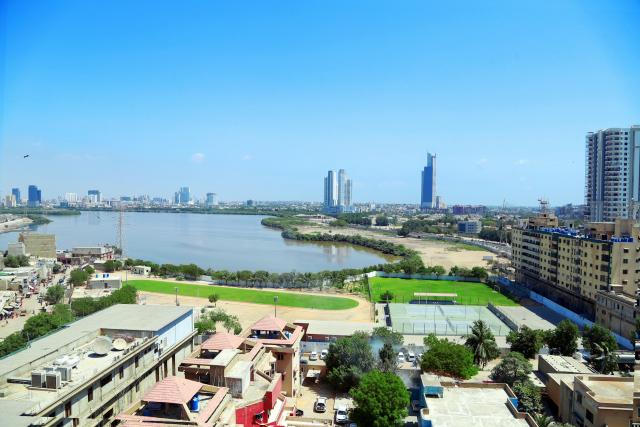
Karachi’s +10% House Price Surge: What It Means for Low-Income Buyers
Karachi, the financial hub of Pakistan, is displaying an impressive growth in the cost of housing as houses have received confirmed growth of more than 10 percent in the last 12 months alone. To a great number of people, this trend indicates prosperity since the demand rises with the entry of investments as well as international connections and physical improvement.
However, beyond the top line statistics, lurks an even grimmer reality; that this increase is making the dream of homeownership unaffordable to millions of low-income families and is only furthering inequality. The housing cost escalation in Karachi is not the only one of its kind in the country as the increase is mostly related to issue of urbanization, inflation and speculative character of real estate business not only in Karachi but also all over the country. Around more than 60 percent of Karachi population resides in informal settlements, and the insufficiency of the housing assets is up to 10 million across the country the affordable crisis of the city is getting intense.
The structural forces that have led to the +10 price increase, the pain points facing buyers, policy adjustments, grassroots solutions such as the Orangi Pilot Project, financing options, developer solutions, and scenarios in sight are all areas covered in this blog by policymakers, developers, and communities that need to do some thinking on what the +10 price increase means. Karachi will go into an even greater housing exclusion spiral without deliberate effort to change the situation--regulation, subsidy, inclusive planning, and finance innovation. These stories and characters portray threats and new solutions just as much as they do.
What’s fueling the 10% Price Increase?
The +10 per cent jump in house prices in Karachi is no accident it is a result of a combination of forces working simultaneously to add strength to each other. Firstly, there has been general inflation and loss of value of currency that has made construction materials such as cement, sand, and steel to be driven up to new heights.
Most of this has been transferred to buyers by developers with meager margins. Second, interest-rate reductions, which several years ago were above 22 percent and are currently at the 12-15 percent levels, have reduced the cost of borrowing and raised the demand as inflation has been ongoing. Third, Strategic infrastructure projects like the Green line BRT and Malir expressway are making land more attractive along their route axis, which results in price pressure in surrounding areas as property costs in places like Gulshan-e-Iqbal, PECHS and DHA have almost doubled over the last 5 years.
Finally, speculative investment, of either domestic capital, or its overseas Pakistani counterparts, has been focused, again distorting market dynamics, on gated communities and luxury condos. Cumulatively these macro and micro forces have proceeded to drive up prices very steeply, displacing affordability and intensifying a stratum above luxury enclaves, and a stratum below informal settlements.
Effects to Low-Income Buyers and Families
To most of the residents in Karachi, the price increase of +10 percent is translated to exclusion. The low-income earning families with Rs 50,000 or less per month can barely afford a small flat of less than Rs 1.5 million. Subjected to the cost of formal housing which is beyond an individual, more than 60 percent of the individuals continue to dwell in informal katchi abadis in Basic services absence. In addition to the increase in rent, the families of workers, in extreme cases even children, are typically packed together into poor rooms, which are not hygienic in most cases.
In survey results, it has been shown that neighbourhoods such as Lyari and Orangi exhibit growing household debt, education compromises and longer commutes. Even middle income groups do not escape: the people who can afford flats in North Karachi or echelon 33 of the Scheme 33 tend to strain their EMIs at the expense of other plans. This crisis is a source of creating the fragility of tenure-families in informal settings are always at risk of eviction in such cases as even productive land that is identified to be encroached is subject to destruction, and this happens in Mujahid Colony in 2022. There is a tremendous social ramification in terms of health, upward mobility, and urban fragmentation.
Policy Actions and Rules
To ease this wave, policymakers are considering near-term reprieve and long-term fix. Dawn and other publications promote tax relief, zoning easing and construction subsidies to increase cheap supply. FBR sponsored VAT reductions, stamp-duty concession and green certification are some of the incentives Karachi can use to encourage low-cost housing developers. The city can follow foreign examples and encourage inclusionary zoning--a requirement of new construction to include some low-rent units. In the meantime, the land-banking programs at municipal level and digitization of land titles can eliminate the price inflation through the activity of speculators. Such levers in the cities around the world have been utilized to cool down the housing bubbles.
To maneuver through the dangers of a runaway wave of housing prices in Karachi, responsible measures to maintain a specific balance between regulative changes as on the one hand, and selective inclusiveness on the other, calls out to a concerted effort that would be proactive instead of being reactive to the situation. Among these bright prospects is the fact that approvals of real estate projects may come with green building requirements that are directly coupled with directions about a specific amount of affordable units in every new construction.
It is an administrative mechanism that is intricately interrelated and does not solely focus on an administrative intervention, rather, it is a shooting star policy intervention that provides short-term relief, structural gains, in the long run. Enforce seriousness in project approval depending upon sustainability design policy and affordable quotas, Karachi is capable of motivating developers who must look beyond fancy markets but inclination to wider society as well.
There are two effects of this model. It saves on excessive inflation in housing prices in the first place by reducing the speculative upward-development of housing and channeling resources instead to more inclusive housing stock. Secondly, it will promote resilient construction to the environment which reduces the operation expenses to residents as well as making projects eligible to climate-based financing.
In the case of low-income earners, this can be translated to their having enhanced access not only to structurally safe and legally acceptable but also healthier and cost-efficient in the long term housing. This integrated approach will be a foundation of fair urban renovation in Karachi in case it is presented with transparency and tracked via web-based sources. It could also offer a policy model that other cities in the region can copy having the same affordability crises. The real power of this method is that it produces affordable and climate-responsible housing, which is economically feasible; and rarely do the agreements cover one sector in the current environment of disjointed urban policies.

Low-Cost Buyers Financing Pathways
The key point of restriction is housing finance to low and middle-income buyers. Banks are also not willing to offer mortgages below Rs 2 million even as rates are going down because it is seen as risky. Micro-mortgage and microfinance solutions, which are already implemented in smaller scales successful such as Orangi Charitable Trust with the OPP, are already up-scalable with donor aid and government guarantees. NADRA-verified IDs can be used by Fintech platforms to offer alternative scoring and offer small-ticket loans. Diaspora bonds can be used to encourage investments through overseas Pakistanis in affordable houses.
And, finally, risk-pooled housing fund, offered through the state and endorsed with credit assurances, could become the crucial innovation in the direction of the housing financing addressed to all. Through diversifying this perceived risk in multiple projects and among multiple buyers, such a fund would allow banks and micro-lenders to rationally take out smaller loans to persons of low and middle-income status in home purchases, particularly smaller units whose funding is not captured in the more prevalent pipeline. These smaller banks, which are frequently disregarded by large financial institutions as money losers or as too risky, are actually the foundation of urban affordability, which, over time, has been systematically underfinanced.
The involvement of the government in the provision or partial provision of this fund would de-risk the lending to the private financiers, which would make them deploy more aggressively the capital in the affordable housing without the need to increase the mortgage rates. It would be particularly useful to first-time buyers and those who earn in the informal sector who cannot earn down payments or can provide collateral. Financing schemes however, have to be carefully designed so as to ward off distortion. Unless the availability of credit is not pegged on residency or income-based qualifications, this will risk being taken over by speculative investors thus further raising prices and again locking out real-life users out of the market.
The end intention of such a fund must be to even the gap between demand and supply and make it affordable to the end-user and not to provide an arbitrage opportunity to developers or real estate traders. By being designed well, having transparent operations and regularly being audited, this model will be able to re-engineer the housing finance system in Karachi. It would provide low-income purchasers not only money, but dignity, stability and genuine investment in the future of the city.
Innovations and Responses of the Developers
There are developers who are changing directions. Micro-apartments (300400 sq ft) at new projects are being sold with payment plans that are staggered, and they are aimed at selling to first-time buyers. Local sourcing and the prefab panel approaches are saving money and helping speed up the process. The other features being made sustainable by the builders are the solar energy of water heaters, the tanks of rain waters to cut on the operational cost and to get green finance. Even in the mid-range developments, smart technology is making its way among these smart lights, smart locks.
As it was done in the Orangi Pilot Project (OPP) scheme, the role of community in participating in the process of cost containment and studying community social acceptability in a housing project is obviously an effective lever. Once people live not as the passive beneficiaries but participants in the design, implementation and maintenance of affordable housing, the resulting housing developments tend to be more efficient, better maintained and more embraced. Such participatory approach strips out administrative overhead, minimizes reliance on outside contractors, and makes sure that solutions will be created in response to the real needs of neighborhoods/towns: cost savings in the long run.
Additionally, there is also an increasing trend of the adoption of these grass-root strategies which indicates the changing trend in the mindset of real estate sector towards low-income housing. These models are slowly turning into recognised market segments with a demonstrable demand, an intrinsic resilience and scalable operating models than they are being regarded as a burden with a high level of subsin by various quarters. The educational value of those approaches on their own, the inclusion of the community members in the layout, materials, and timelines is less easy to measure but extremely potent value-added component that is the feeling of ownership and pride.
As these broad-brush models gain slow, yet indisputable popularity throughout Karachi and other major cities, the commercial world is slowly realizing their not only humanitarian value, but also valuable use as urban planning interventions to an affordability crisis. This trend is manifested in increased interest by planners, developers and other policymakers of creating lean (in terms of cost), participatory and socially embedded affordable housing environments, and if there is a model that will cost less, be more acceptable and promote the factor of community stability a bit more, then that is what should be expected.
Grassroots Housing Models
One of the best leadership examples illustrating community-based housing and infrastructure is Karachi Orangi Pilot Project (OPP). Constructed by communities, on behalf of the communities, OPP made available sanitation networks, housing improvements, microfinance to make lump-sum investments, and local governance avenues. It has exposed itself to other regions through its lane-manager model and self-financing spirit. These approaches can also be promoted and copied, via city grants, technical training and property-right legalisation, and could lead to a steady building-up of low-income neighbourhoods. This can help purchase time until formal markets adapt, and also instill dignity and property amongst citizens.
Future Outlook & Roadmap
Other than being controlled, the +10% per annum appreciation will ensure that two thirds of new urban dwellers will never afford a house within the next 10 years. However, the trend in technology, the policy labs and the community assets of Karachi provide a future way out. The regulation should be biased towards inclusions: mandates, land bank, flexibility in zoning, green finance, and banks must open their financing to the low-ticket homes. Developers should expand lean building and paying innovation. There should be support on replication of incremental housing model for NGOs and communities.
The growth of Karachi lies in a multi-pronged affordable deal that will ensure the price of residential property is kept to a bare minimum and made more accessible before it is entirely unaffordable. Such strategy needs to be a mix of policy changes, subsidies on target basis, land reform changes, and integrating with the services of the government and the corporate. These measures should be adopted to avoid a full-blown affordability crisis.
The current action of stakeholders will help make Karachi inhabitable by all strata of people, and it will promote inclusive growth and long- term stability in it. The housing situation in the city can be changed with the coordinated effort of government, developers, and the civil society to guarantee sustainable and equitable future to the people.
Conclusion
House prices in Karachi have shot up by +10 percent; it is a red flag and cannot be diminished to being part of the real estate tsunami. When this development is not met in time, it will entrench the situation of low-income and middle-income residents, advance urban segregation, and undermine social trust. Nevertheless, thoughtful policies, including fiscal boosters and zoning change, micro finance and community-based infrastructure can change the direction. The future of the city is now on the line between seeing housing as a common good or as something to speculate in.
The tendencies and paradigms that we analyze today explain the threats inherent in the development of urban housing on the one hand, and the choices that can influence its future on the other hand. The way out of Karachi, given that income inequality and property squeeze is a reality, needs to funnel together inclusiveness with innovation. A more balanced housing ecosystem can be created by combining policies that focus more on equity of access and access to affordable technologies that lower construction costs, combined with the community-level community-powered power to create a roadmap toward a more balanced housing ecosystem.
Provided the strategy is pursued intentionally, the aspects can make sure that the future of the city is not left to the rich only, but is common to both sides of economic fence. In answering the problem of inequality with the strategy of inclusion (as a result of regulatory support, the use of financial instruments, and vulnerable planning) Karachi can provide more fair, open, and sustainable housing future and opportunities to all its dweller.












LEAVE A REPLY