


Islamic Finance In Affordable Housing: Musharakah or Diminishing Musharakah Use Cases
Affordable housing is a global issue, and financing such
houses with the need to remain in line with the Islamic principles is something
that needs creative measures. Traditional mortgage plans usually have interest
(riba) which is not permitted in Islam and therefore cannot be used by
religious Muslims. Islamic finance offers new structures that are in accordance
with the Shariah law, especially Musharakah and Diminishing Musharakah. Such
contractual arrangements of partnership allow people to purchase property
without using interest-based funding and provides flexibility and affordability
over time.
Musharakah- It is a joint venture where the bank and the
customer jointly raise capital to buy a house and the resulting profits, losses
and third party ownership are divided in proportion. In reducing Musharakah, a
common type of Islamic mortgage, the customer slowly purchases all the bank
shares over the years as he or she makes rent payments on those parts still
owned by the bank. It is a good housing arrangement to afford the housing since
it offers a balance between the initial financial capacity and progressive
asset ownership, which would allow low-to-middle-income families to own homes
without infringing the Shariah doctrine.
This blog examines 9 notable applications of Musharakah and
Diminishing Musharakah in affordable housing and how the two allow home
ownership to be inclusive, ethical and sustainable. Both sections show useful
examples of applications, advantages, and factors to consider by the financial
organizations and homebuyers to assist them in realizing the potentials of
Islamic finance to change the world housing issues.
Low-Income Family Entry-Level Home Ownership.
The initial down payment that is normally required under the
traditional financing is one of the main obstacles to home ownership by
low-income families. Musharakah and Diminishing Musharakah give a solution
whereby co-investment is done by the financial institutions with the buyer
making the substantial reduction in the initial financial burden. Under this
model, the two parties provide capital to buy the property. The family
subsequently acquires an increasing share of the ownership by purchasing the ownership
share of the bank at a rate of renting on the other portion.
This progressive purchase is in accordance to monthly
payments and the income level of the household making sure that this does not
require interest-gaining loans. The rental element demonstrates how the bank
utilizes its portion of the property and the greater the equity the family has,
the less the proportion of rent is which lessens the strain of finances in the
long-term. This is especially useful in those areas where the housing subsidies
are limited, thus allowing the families to leave the benefits of renting and
become homeowners without being over-stretched economically.
Furthermore, Dilution of Musharakah inculcates a sense of
ownership responsibility at the initial stages. The families are also advised
to keep the property in good condition since they are the direct beneficiaries
of the property value increase with time. Instead, financial institutions own
the asset in a real sense, and this has helped them to reduce risk in addition
to financing social housing objectives. This model, therefore, does not only
encourage people to own their own homes, but also, it enhances social stability
by ensuring that the low-income communities enjoy safe and well-maintained
houses.
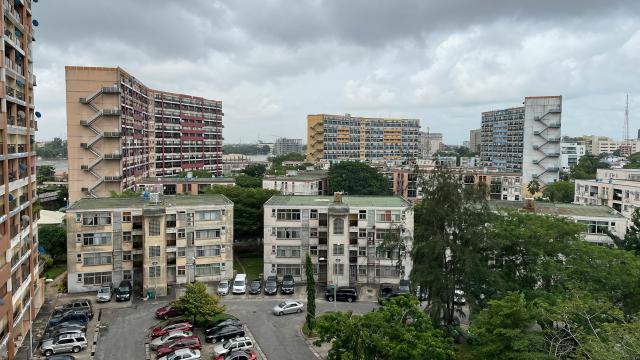
Funding Affordable Cities Apartments.
Cities are also usually characterized by elevated housing
costs, which are out of reach of most working-class citizens due to entry-level
housing rental. Practical solutions to financing multi-unit affordable housing
in such regions are provided in Musharakah and Diminishing Musharakah.
Financial institutions enter into joint venture with developers to develop
apartment complexes and the units are sold to the buyers on Diminishing
Musharakah agreement.
Buyers put in low initial capital and acquire full ownership
through renting the remaining part of the bank. This allows families and the
young professional to afford urban housing at affordable prices. On the part of
the developer, collaborating with a bank means that they are not pressured to
get finances prompting them to develop projects without having to use ordinary,
interest-based loans.
Besides, schemes based on urban Musharakah may be designed
in a way that they would encourage early equity accumulation, e.g., reduced
initial rent or alternative payment terms. This way, the residents can be able
to enjoy equity sooner and this makes them more affordable and satisfied with
the ownership. This model is also helpful in densifying urban areas and
utilizing what they have effectively, which encourages sustainable urban
development and also offers the alternative of funding which is more ethical to
Muslims who do not like using conventional mortgages.
Shared Housing Models and Co-Living.
Musharakah arrangements are conducive to the
co-living/shared housing projects, where the property is jointly invested by
several people. In these models the bank can jointly invest with tenants and
each tenant will acquire his or her ownership share in Diminishing Musharakah
agreement. This strategy reduces the entry barrier in terms of finances and
eases the process of getting a home to people who may otherwise find it
difficult to purchase a unit on their own.
Community-building principles can also be incorporated into
the shared housing models. This is because the residents become increasingly
interested in maintaining and managing the property as they gain equity
gradually. Rent and equity payments can be observed in a transparent manner by
the financial institutions which do not compromise Shariah and also guarantee
efficiency in operations. The model would specifically be applicable in urban
areas where rental rates are increasing so that young professionals and
low-income families can invest in property at a shared cost.
Islamic finance Co-living arrangements of Musharakaah
promote justice and cooperation. The net profit of the bank is also earned by
its rental share as opposed to its interest, which is also ethical. In the
meantime, the citizens can enjoy affordable housing and a prospect of long-term
ownership which serves to show that Musharakah can be modified to suit the
modern housing trends, yet, be based on the Islamic principles.
Renovation and Property Upgrade Financing.
Musharakah decline can be done not only with new
constructions, but also by funding renovations and upgrades of properties used
in affordable houses. Part owners are allowed to make a Musharakah agreement
with a financial institution to finance the improvements, becoming
progressively more of an equity partner as the building is renovated. The
strategy allows the residents to improve living standards without having to go
to the traditional loans.
The financial institution finances a particular upgrading,
including energy efficient installations, structural fix or internal upgrades.
The bank finances part of the rent, in addition to incremental equity payments
that are paid by the homeowner. In the long term, the homeowner will have the
entire ownership as he gains better value on his property.
This model promotes long term investment and the maintenance of properties which is one of the problems of affordable housing the poor condition of the houses because of the lack of financial means. Musharakah-based renovation schemes help in enhancing the quality of housing, the aesthetics of the neighborhood, and the satisfaction of the residents by providing a combination of ownership and financing incentives. Moreover, these agreements are ethical in nature, and this is the reason, they are compliant to Shariah principles, which builds trust between the clients and financial institutions.

Housing Projects with the Help of the Government.
Musharakaah and Diminishing Musharakah relations between the
governments and financial institutions and developers can be utilised to
provide more affordable housing options to governments that aim to increase
their supply of affordable housing. Large-scale projects in housing can be
financed by public-private partnerships (PPP) in which case the government
might offer land or subsidies, the bank might offer capital, and the developers
might take care of the construction. Buyers enter into Diminishing Musharakah
contracts so that they can purchase equity gradually.
These systems help to decrease the initial cost to
households who have low incomes, thereby increasing the number of people who
can afford to take houses and at the same time adhere to the requirements of
Islamic finance systems. Governments gain increased housing cover without
having to bear the entire financial risk, whereas banks and developers have
profitable and socially responsible investment options.
Moreover, such strategy can take into consideration
incentives like lower rent or rapid equity acquisition to the poor groups and
make this as cheap as possible. Public housing projects that are transparent
and comply with Shariah can be used to encourage social cohesion and financial
inclusion of Muslim communities. The government initiatives in Musharakah shows
how the potential of ethical finance support the goals of the public policy,
developing scalable measures of affordable housing.
Rural Housing Communities Financing.
There is a tendency of underinvestment in rural housing
since it is believed that the profitability of the housing sector is low.
Musharakah and Diminishing Musharakah offers the means to surmount these
problems by allowing the agreements of co-financing between the banks and local
people. Homeowners can buy land and property in installments, renting on the
part of the bank but accumulating equity.
This model promotes development and ownership of property in
the rural area without causing heavy-interest-based loans. It also enables
financial institutions to penetrate unexploited markets using less start-up
capital capital, which has contributed to economic development in the rural
areas. Tailored deals are able to take into consideration agricultural cash
flows, which gives flexible payments that are based on seasonal incomes.
Musharakah projects in the rural setting add to the
financial inclusion, wealth creation, and sustainable development of the
community. Housing is provided to the families at a secure level and the banks
are also provided with a Shariah-compliant investment platform. Furthermore,
residents gain equity and this encourages them to keep building properties,
which improves the quality of rural housing and living conditions.
Co-operations between Developers and Financial Institutions.
Musharakah is a natural structure of joint venture between
the property developers and the financial institutions. Capital is injected by
the developers in terms of land and expertise, and also banks. The
collaboration distributes profits, risks and responsibilities where both the
partners are interested in the success of the project.
Consumers then sign Diminishing Musharakah contracts to
purchase units and thus this project is a viable one to all parties in terms of
finances. This will help ease reliance on traditional interest-based lending
and enable developers to initiate less expensive housing developments with low
start-up funds. During the equity acquisition process, financial institutions
enjoy stable returns of rental incomes without violating the principles of
Islamic finance.
Joint venture Musharakah also encourages quality
constructions and on time delivery because the profits are pegged on the
success of the project. This model can lead to sustainable and ethical housing
development through aligning the interest of developers, banks and buyers,
especially the underserved segments of the market.
Green and Sustainable Housing.
Musharakah frameworks inherently have an intersection with
sustainability and ethical finance. Devolution of Musharakah can finance green
housing projects and buyers will have an opportunity to live in eco-friendly
houses with reduced carbon footprint. The green construction is invested in by
a financial institution and the buyers slowly gain equity as they pay rent to
the bank who owns a share.
Musharakah- financed housing will promote responsible
construction, lower energy expenses incurred by people, and is in line with
international sustainable development objectives. The Shariah-compliant finance
principles, which prevent exploitation and encourage social good, are also used
to supplement the spirit of sustainable housing. This type of integration does
not only contribute to affordable housing but also contributes to environmental
stewardship which generates long-term advantages to the communities and
investors.
Online Services and Fin tech Solutions.
Islamic finance has become digitalized, increasing the cases
of Musharakah and Diminishing Musharakah in affordable housing. The fin tech
platforms enable the customers to submit, monitor, and control the equity
payments over the internet, making it more accessible and transparent.
Calculations of rent, equity transfers, and compliance reporting might also be
automated with digital solutions which save money on administration of banks
and developers.
Through technology, low cost housing developments can be
more scalable and efficient. Buyers with low income will be able to interact
with financial institutions without any difficulties, track their growth in
equity, and schedule financial payments depending on their incomes.
Furthermore, online platforms allow reaching a larger audience, which means
that Shariah-compliant housing becomes available to underserved communities in
both urban and rural regions.
Financing Cooperative Housing Societies
Musharakah and Diminishing Musharakah models are very useful
in funding cooperative housing societies, whereby a group of people will come
together to collectively own and run residential homes. Under such
arrangements, the financial organization collaborates with the cooperative
society to acquire land or build residential apartments. All the members
subsequently purchase their portion share of ownership under Diminishing
Musharakah and make rents on the share still retained by the bank.
This model also reduces the initial financial cost incurred
by the members enabling housing to be affordable to middle and low-income
families. Cooperative societies also enjoy the benefits of economies of scale
by pooling the resources to cut down costs of construction and maintenance
unit. The slow equity build up would make the members to be interested in the
maintenance of the property which would encourage responsible ownership and
reduce negligence.
Financial institutions also enjoy a consistent rental
revenue throughout the buyout term and at the same time, the entire Shariah
compliance is observed because the profit is generated based on the bank share
excluding interests. Also, cooperative housing promotes involvement by the
community, with members usually taking part in decision-making on construction
criteria, maintenance, and management. This form of community participation
builds social unity and sense of belonging, which is very useful especially in
the affordable housing programs.
With the incorporation of Musharakah financing in the
cooperative societies, affordable housing is more achievable, ethical and
sustainable. The model enables the residents to move slowly to homeowners,
provides transparency and synchronizes the monetary incentives with the common
social and economic objectives. Where traditional mortgage is either
unavailable or intolerable due to religious beliefs, cooperative housing under
Diminishing Musharakah offers a viable, scalable and socially responsible alternative.
Conclusion
Musharakah and Diminishing Musharakah have become a potent
instrument in the provision of affordable housing that ensures that the Islamic
finance principles are in play. These structures give low- and middle-income
families the power to acquire equity progressively, offer ethical means of
renting, and promote sustainable development and avoid using interest-based
financing.
Starting with entry-level home ownership and inner-city
apartments, green housing, and digital fintech, Musharakah offers flexible and
scalable and socially responsible alternatives to standard mortgages. All
parties interested in financial institutions, developers, governments, and
residents profit with the partnership established based on transparency, risk
sharing, and ethical standards.
Finally, Musharakah and Diminishing Musharakah proves that the Shariah-compliant finance is not only possible, but also revolutionizing when it comes to meeting the affordable housing issues. These models will open the way to inclusive, long-term and sustainable housing solutions by balancing access to finance, ethically, and social impact.
Also Read: Asia - Islamic Financial Markets Conference & Specialized Workshops

-5yCS4OoVBg.jpg)










LEAVE A REPLY