

Is the Tiny Home Movement the Answer to Homelessness?
The problem of homelessness is still among the most alarming social issues in the 21 st century which cross all boundaries, economies, and ideologies. With urban areas becoming more costly and housing industries becoming progressively exclusionary, the poorest layers of society are thrown out to its streets and lose access to secure home. On a global scale, policymakers, activists, urban, and housing advocates are facing the necessity of the scale, sustainability, and human-centered solutions to systematize safe housing to every individual person. Among the numerous strategies that have been put to test and promoted, the Tiny Home Movement had come out as an extreme, but lovely simple concept.
The movement can provide small, affordable, efficient living solution that refutes the idea of the bigger, the better, and the movement can offer not only homes, but self-respect, mobility, and neighborhood. However, would that kind of a solution be successful against the vehement and multidimensional problem of homelessness? Or perhaps it is merely a simplistic cure romanticized by simplicity and an aesthetic of middle-class design?
When we investigate international case studies and understand the underlying causes of homelessness, one pertinent question pops up our heads like: Is Tiny Home Movement just a fad in architecture, or is it the saving grace to a century-long human epidemic? The ideas that have been obtained show that this movement is not about some minimalist life or about aesthetics, this movement is about systemic problems of displacement, affordability and dignity. As long as the broken and dysfunctional traditional housing systems cannot accommodate and care of the most vulnerable in our society, tiny houses can be a solution to a new and elegant idea of an empathetic and sustainable urban home, addressing the shortage, as well as the short-term needs.
Philosophy of the Tiny Home Movement
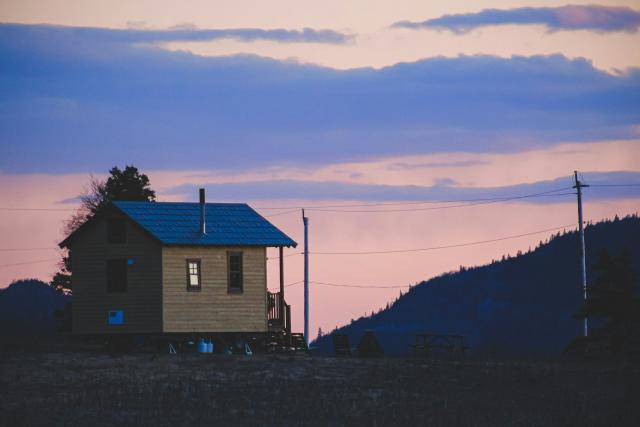
The Tiny Home Movement has a spirit that exists in its building and this spirit is part and parcel of the spirit. It promotes the ideas of minimalism, efficiency and sustainability, the same values that become more appealing in the world struggling with environmental degradation, sprawl urbanization and inequality. In its essence, this trend is a reaction to the current housing affordability crisis, where their radical decrease in sizes (- and by extension, their prices) is attempted. Measuring 100 square feet and up to 400 square feet, tiny homes make the contemporary image of success square footage.
This is not merely provision to homeless people but it should give them a way out to independence. In contrast to shelters that tend to use a strict approach, there is no curfew, and little or no privacy at all, tiny homes provide single, personal rooms that support dignity and stability in the long term. In addition, the homes could stretch urban areas to extents without compromising the human needs by rethinking the zoning laws and rehashed use of land parcels.
The advocates suggest that this small package reduces not only the cost of building but also energy costs and the maintenance expenses over long term benefits. Critics, though, caution that over simplification of the solution to physical size of individual instances of homelessness may overlook the complex nature of factors underlying homelessness and the individual may be most likely associated with mental health, addiction and systematic poverty. Yet, the fact that the movement shows the ability to combine social empathy with spatial innovation may imply that it is only the tip of the iceberg.
Case Study: The American Example of Tiny Homes as Shelter to the Homeless
Somewhere in the United States, such cities as Austin, Seattle, and Los Angeles have resorted to the use of tiny homes as a way of addressing homelessness. Community First! Is an example of such projects? Having constructed whole micro-communities of the unhoused in the form of Village in Austin or The Block Project in Seattle, the idea that tiny houses can be upsized due to policy and empathy has been proved to be more than a pygmy.
The projects can be built in collaborations between the city governments, non-profits and volunteers who combine their resources to design these long-term housing where the services are embedded in the community. Most of the time, small houses are not only distributed but rather included in more comprehensive programs providing job training and counseling and social reintegration services. People do not just receive shelter but an opportunity to restart their lives. For financial reasons, it is huge savings.
Analysis of one city demonstrated that housing a person in a small house and offering wraparound services is much less expensive than sending a person in and out of emergency rooms and shelters and perpetuating a cycle of incarceration. Also, it leads to a decrease in costs on population health and the number of emergency interventions in cities.
Nonetheless, a likely counter-reaction is seen in the form of Not In My Backyard (NIMBY) resistance, where a certain neighborhoods have come out as opposing developments due to the fear of their property value depreciating or elevated crime rates a fear proved wrong by statistics most of the times. Still, the U.S. experiments with tiny houses of the homeless can be considered in terms of scale, social acceptance, and the viability of operation as critical.

Europe and Beyond Lessons
Europe also has its solutions in terms of deployments of tiny homes to solve homelessness, but these are defined through different cultures and regulations. In such countries as the Netherlands and Germany, tiny homes are combined with the proactive social housing policy, which is not reactive.
As an example, Amsterdam had pushed the small housing units with flexible zoning regulations and city planning practices that are mainly geared towards sustainability. Such projects are usually embedded in a bigger network of social welfare schemes, and in that aspect housing is not merely an objective, but a stepping stone in the upward mobilization. The Housing First model is most in line with many of the tenets behind the Tiny Home Movement, particularly in Finland, the only country in the EU that homelessness levels have either remained or gone down in the past decade. Individuals are given long-term housing at once regardless of their being sober or unemployed and follow-up afterward through individualized services.
Though Finland is not specialized in the field of tiny houses, the logic remains the same: the priority should be given to that which restores the dignity, and then there will be a chance to regain the life. On a different note, Japanese cultural tradition of space-saving yet efficient spaces has been conducive in bringing on board the concept of micro-units in Tokyo, some of which have given close resemblance to small homes in terms of design and nature. Worldwide, the experiments show that the small house is not a magic bullet but a very flexible component of a broader housing plan.
Policy, Investment and Practical Use
Building tiny houses is also quite affordable, particularly, compared to building traditional houses. However, construction is only one problem, but the difficulties are passing through regulatory systems, obtaining land, and financing maintenance systems. Interested governments should thus diffuse their way through complicated zoning regulations that more usually do not allow constructions less than a particular area of square feet.
This has brought about the initiatives of revision of local codes to permit Accessory dwelling units (ADUs), back-yard homes, or micro-villages. Finance is one more essential thing. There are some models based on the government-private companies’ partnership, some sponsored by philanthropic foundations, or community-based grass-roots initiatives. Alternatively, in Los Angeles, unhoused people were provided with modular units as the city constructed tiny home villages with the use of emergency COVID-19 relief funds.
These houses, however, are threatened to remain temporary shelters unless there is a lot of the maintenance of these homes, wraparound services and job assistance. Those cities that have and have not succeeded in implementation alike (Austin or Eugene, Oregon) have deliberately not treated tiny homes as units unto themselves: as part of an island tribe, quite the contrary. Policy regimes have to take into account long-term financial resources, social service interventions, and land uses in the cities. In case of nations such as Pakistan looking into the possibility of tiny houses as a solution to urban displacement or climate migrants, this model could potentially be effective in the respective situation relying on appropriate contextual conversion.
Tiny Homes and the Human Element
The root cause of homelessness lies in the insecurity, loss of dignity as well as a sense of place. Tiny homes are trying to reclaim the three. In contrast to mass shelters or tent camps, they provide privacy, safety, and a feeling of ownership which are the essential elements of mental and emotional healing. People also feel pride in taking good care of their houses, in decorating them and in making ties with their neighbors in a manner that is not feasible in the conventional shelters.
The emotional change between the very space of the process of survival and living may be intense. Besides, tiny home villages may provide a sense of community in which common gardens, kitchens, and social gathering areas offer a chance to connect and to support each other.
Populations that are chronically homeless because of a trauma or mental illness may become particularly successful in this model because they cannot (or should not) pursue treatment or employment until they develop a stable position. The space constraint also facilitates an effective lifestyle as the people are motivated to get rid of clutter and concentrate on necessities. Naturally, not all people can live in tiny homes. A family with children, as an example, may not have enough space. According to individuals and couples themselves, especially those coming out of the margins, they are more than a roof, they also offer hope. Humanizing policy and design will mean that these structures can also become stepping stones towards a better life.
Case Studies of Tiny Home Villages Tackling Chronic Homelessness in Urban Areas
In several cities around the world, communities of tiny homes have become a true-life model of dealing with the chronic homeless, especially in Manhattan-like densely-populated cities where conventional housing does not exist or is unaffordable. In these case studies we see that, coupled with social infrastructure, tiny houses can not only offer shelter, but a point of recovery, reintegration and personal respect.
The Community First! is one of the most famous ones. Village in Austin, Texas, an acreage master-planned community dedicated precisely to people who have long-term homelessness. The village has more than 500 small houses which do not only provide residents with their shelters, but also make them belong.
The residents get their health clinics, benefits they get job trainings, and mental health support and also the facilities available to them are the communal spaces where they have gardens, art studios, market places. Our village has been able to empirically prove that, support stable housing along with regularity of care and community, there is a sweeping decrease in the relapse to homelessness in addition to an improvement in the quality of life.
In the West Coast, Los Angeles was shooting-from-the hip with its Chandler Boulevard Tiny Home Village. On COVID-19, constructed in less than 13 weeks, it is made of rows of prefabricated facilities in bright shades promoting psychological positivity and visual identity. The units have a capacity to offer heating air conditioning and storage with shared showers, dining and access by caseworkers. Small in terms of its permanency as some residents remain only briefly before entering a permanent supportive housing program, it has served a significant need in providing emergency and transitional shelter services in general, and to those who are lost in the cracks of mainstream housing services in particular.
The organization LIHI (Low Income Housing Institute) runs several mini versions of villages of tiny houses in the city of Seattle. The villages focus on resident run villages where individuals who are homeless are provided a voice on how their villages run. This has contributed tremendously on the issue of accountability and stability. LIHI indicates that more than 40% of residents in their little house can be successfully entered into permanent housing with the help of the organization in half a year.
Such results are especially encouraging to cities interested in ending homelessness but they are not willing to wait years to open their conventional housing projects. These villages are successful not because of the small houses by themselves, but because of such an inclusion of more services that include not only case management and employment assistance or navigation of healthcare and mental health support.
Out of the U.S., Edmonton in Canada developed a small village comprised of tiny homes to accommodate homeless veterans. Homes for Heroes Foundation built a military type of layout village together with peer support models understanding the special psychological and social needs of former service members. Creating a comfortable home-like atmosphere and providing emotional support through other veterans, the village has managed to instill not only trust but also generate some healing.
These case studies are used to demonstrate altogether that tiny home villages only succeed (or do not) when they have a multi-layered strategy: dignified design, embedded services, community and municipal support. They break the myth that the temporary shelter should relate to arid or depersonalized living. Rather, they unveil the way that architecture, policy, and compassion meet to initiate scalable and human remedy. In countries such as Pakistan, struggling with homelessness in urban settings, such models have presented worthwhile blueprints, models placing people first and perceiving housing not as a form of shelter, but a life recovery tool.
Conclusion
Tiny Home Movement will not provide a magic bullet but it is certainly a bright spot on the anti-homeless arsenal. It is a combination of being merciful and realistic, stylish and respect, economical and self-sufficient. That is what excites the tiny homes the most, and these are their flexible nature: they may be installed on unused lands, scaled down to communities, and adapted to each requirement by design. But it is not architecture alone which makes them successful.
It needs political courage, community support, and reorganization of regulations, and above all long-term investment in human services. When we think of homelessness as a systems failure rather than an individual failure, then the solution to the problem will be systemic as well. It is not that tiny homes are only effective as an isolated measure: on the contrary, they succeed when combined with a wider support net, ensuring provision of employment, mental health care and integration into the community.
When equality in the world is constantly deteriorating, and the housing situation in urban areas is getting out of control, the tiny homes concept reminds everyone that great things could be put into small packages. The experiences of the Tiny Home Movement provide a roadmap, the lessons derived not only in timber and nails, but also vision, equity, and hope, as Pakistan and other developing countries are in search of scalable, human-centred solutions in addressing their housing crisis.
Also Read: Exploring Tiny Homes as an Affordable Housing Strategy to Ameliorate Homelessness



-bsBmIgEW58.jpg)
-5yCS4OoVBg.jpg)








LEAVE A REPLY