

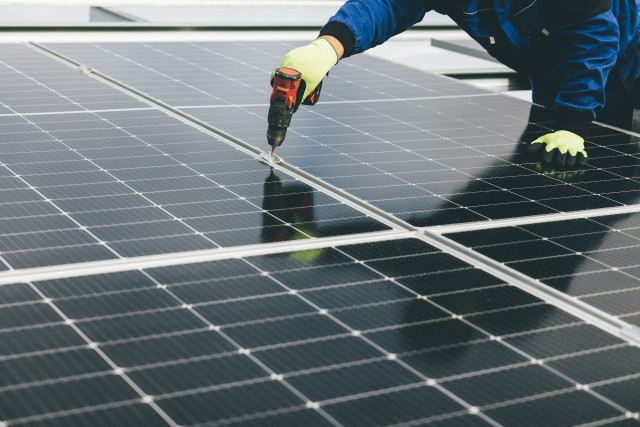
IoT-Enabled Solar Panels: Making Renewable Energy Affordable for Housing Communities
Renewable energy sources are becoming the new global standard but solar power takes the lead position in this transformation.
The high expenses needed for installation together with problems in maintenance and insufficient energy management outcomes prevent residential communities from adopting solar power Smart solar power technology emerges as a transformative solution using internet-connected monitoring systems to boost solar attribute efficiency and reduce operational costs at real-time intervals.
IoT-connected solar panels advance operational efficiency and track energy use to show solar power asan effective residential financial option according to IoT technology.
The following text examines IoT-enabled solar panels as well as their advantages for housing communities and their role in developing sustainability.
How IoT-Enabled Solar Panels Work
Traditional solar systems with technological enhancements such as smart sensors, cloud connectivity along with artificial intelligence become IoT-enabled solar panels which maximize their performance.
The system implements IoT technology through three main processes:
a) Real-Time Monitoring
Solar panel systems with mounted sensors enable operational feedback to IoT networks for continuous monitoring of electrical generation and energy demand levels and solar panel operational conditions.
These systems maintain continuous data tracking which generates important information about efficiency patterns along with possible operational problems.
Users can access their performance data through a dashboard hosted in the cloud to monitor energy production levels as a real-time dashboard displays operational weaknesses for automatic performance improvements.
Through IoT technology integration solar power systems achieve better energy management to provide more reliable and efficient operations along with sustainable performance.
b) Predictive Maintenance
Forecasting capabilities of IoT-enabled systems detect future failures before they develop within solar panel systems. IoT-enabled smart systems track dust buildup in addition to temperature changes and wiring problems which leads to immediate efficiency problems detection.
The system automatically sends alerts to household residents and operational staff who can then handle problems at the early stage before they escalate to higher cost repairs to protect energy yield.
The proactive monitoring benefits the reliability of solar panels while extending their lifetime and decreasing long-term maintenance expenses to deliver more efficient IoT-based solar power systems.
c) Smart Grid Integration
The integration of IoT technology with solar panels creates management systems that permit users and energy providers to communicate through two-way smart-grid networks.
The excess solar power which housing communities generate can either be stored in batteries or transferred to the power grid to lower electricity expenses while sustaining a greener energy solution.
Benefits of IoT-Enabled Solar Panels for Housing Communities
a) Lower Energy Costs
Solar energy remains difficult for people to accept due to its expensive initial cost. The implementation of IoT technology in solar panels enhances energy efficiency which extends the usability of solar power investments.
Residents can decrease electricity bills by up to 30% when they use IoT-enabled energy management systems to decrease their energy waste.
b) Increased Energy Independence
The deployment of IoT-enabled solar panels helps residential areas lower their dependency on standard power supply networks.
The ability for self-operation becomes vital for communities that face electricity interruption or experience price variation of energy.
Communities that implement battery storage solutions create a system to store power during times of excess to reduce their dependency on fossil fuels for peak usage.
c) Sustainability & Reduced Carbon Footprint
The implementation of IoT-enabled solar technology enables housing communities to lower their carbon emissions which supports environmental sustainability goals.
Optimal energy consumption capabilities of these systems produces efficient and waste-reduced energy utilization which makes them perfect for environmentally conscious communities.
d) Remote Accessibility & Automation
Using mobile apps in combination with cloud-based dashboards allows owners and property administrators to track energy usage and control power distribution and generate immediate panel performance alerts from any location at any time.
The automated systems enhance solar energy accessibility because they work for people who lack expertise in solar technology.

Overcoming Challenges & the Future of IoT Solar Technology
a) High Initial Investment
To pay off the initial outlay of IoT-enabled solar panels the prolonged savings from reduced electricit bills together with diminished maintenance expenses prove more valuable. Solar power installations have become cheaper due to government incentives as well as financing options and tax credits.
b) The Future of IoT in Solar Energy
IoT-enabled solar panels show an optimistic outlook for their future developments.
Housing communities benefit from improved efficiency combined with reduced costs because of AI-driven energy management systems and block chain-based decentralized trading and automated billing enabled by smart contracts.
This will enhance their power usage and financial advantages in coming years.
c) Data Security & Privacy Concerns
The use of cloud-based data storage in IoT solar systems leads to security issues.
Security concerns about data privacy in IoT systems are now solved through advanced encryption methods combined with authentication protocols.
Solar panels enabled by IoT technologies now drive the expansion of renewable energy within the housing sector because they enhance power efficiency and minimize costs while boosting sustainability.
Conclusion
These smart systems achieve peak efficiency and lower electricity expenses through capabilities like real-time observation and predictive assessments along with smart grid accommodations.
The advancement of IoT and AI technologies makes the future of smart solar energy solutions more promising and we will progressively transition toward clean intelligent affordable power systems.
FAQs
1. How do IoT-enabled solar panels differ from traditional solar panels?
The implementation of IoT technology into solar panels enables the use of intelligent sensors together with real-time data evaluation and artificial intelligence to maximize energy performance and minimize expenses and perform predictive maintenance. Traditional solar panels operate with a reduced level of automated efficiency and performance.
2. Are IoT-enabled solar panels expensive to maintain?.
No. Through IoT technology users achieve lower maintenance expenses because predictive maintenance becomes possible. The system delivers immediate alerts to users about approaching system problems so they can resolve them before complications arise.
3. Can housing communities sell excess solar energy back to the grid?
Yes! IoT-enabled solar systems often integrate with net metering programs that permit housing communities to generate extra power and get electricity bill credits through returning energy to the power grid.
Also read: Solar Panels Solutions For Energy and Construction



-3dkuLgKhRD.jpg)
-49HupTvwDD.jpg)











LEAVE A REPLY