


Inside Megapolis 2030: Will Colombo’s Master Plan Leave Room for the Poor?
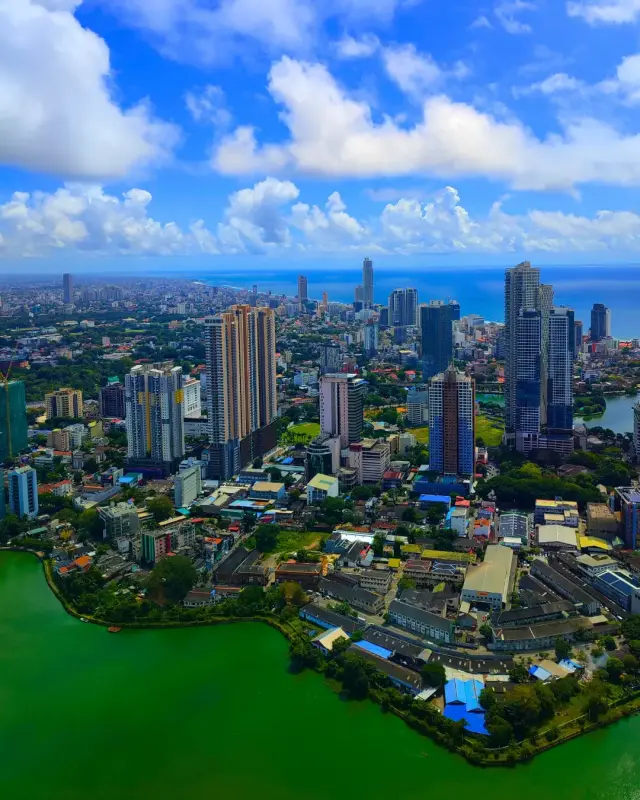
The capital of Sri Lanka, Colombo, which is also the economic center, is at a cul-de-sac of change. With an urbanization boom and the era of globalization defining cities in the world, Sri Lanka has embraced the dreamy approach of infrastructure plans in remodeling its urban center. And herein lies the transformation, the Megapolis 2030 Master plan is a huge, multibillion dollar dream to take Colombo as a smart, green globally competitive city. The blueprint mostly boasts of towering skyscrapers, technology centers, monorail systems, luxurious waterfront and green city regions.
There is however a disturbing concern behind the glamour of these designs. Whether Colombo is going to be a modern city or not is not the question--who will be able to live in it and prosper in it is the question. With bulldozers starting to make room to build the glass towers and luxury apartments, there is a fear that people who are at the very core of maintaining Colombo, the working class, the low-income population, and the informal sector workers will be sent to the fringe or to the door altogether. This paper discusses how Colombo mega city vision incorporates the poor or only evicts them in the pretext of growth.
The Megapolis Vision: Between Progress and Exclusivity
The Megapolis 2030 plan is one of the ambitious plans that have ever been implemented in the history of urban developments in Sri Lanka. The projected completion of the first stage in 2035, it was an envisaged reaction to increasing urban overcrowding, congestion, infrastructure pressure, and economic wastefulness and intends to build a globally connected city with the ability to attract capital, talent, and tourism. It also encompasses zones of financial services, logistics, IT parks, green transport corridors, reclaimed land mega projects such as Port City and internationally renowned healthcare and educational facilities.
On paper, it is a daring re-house holding of economic geography of Sri Lanka. But, the packaging of this vision usually focuses more on international competence than social inclination. The strategic areas of developments are places that have been predominantly inhabited by communities with low income. Areas such as the Slave Island, Maradana and sections of Dematagoda have already experienced some form of displacement by way of redevelopment activities. Government officials state that relocation programs exist yet most of the families that have been evicted end up being transported to distant locations thus leaving their means of livelihood and relationships.
Modernization rhetoric usually connotes displacement of the informal, be it the informal in housing, or in labor relations or in the economy. This is a method that is likely to drive away the backbone of the day-to-day operations of Colombo. Marginalised urban dwellers are low-end retailers, tuk-tuk drivers, those in the cleaning business, house help, security guards, and unregulated construction workers who provide the invisibility of city scaffolds. Unless they are specifically considered in the planning, they will be moved out, not only geographically but also econo-socially.
The official records are not very clear on how many units of affordable housing construction will be made displaced by luxurious high-rise construction. Neither is there big transparency on land-use administration, rent framing, or levelling up of slums. The uncertainty drives the strong apprehension that Megapolis 2030 may be a capital-made, rather than citizen-made city.
Displacement in the Name of Development
Displacement in urban mega-projects is not localized issue but in a country like Sri Lanka it has deeper meaning in history and culture of the people as land and community name go hand in hand. The informal housing settlements, often referred to as watta communities, have been in existence in Colombo since long time. Most of these democracies are misperceived as illegal squatter settlements, whereas they are an elaborate ecosystem of interdependence, micro-economies and reciprocity of services.
Most of these neighborhoods are redevelopment areas under Megapolis 2030. Though on the surface this term may appear to be neutral, in reality it has translated into expulsions and forced communities to relocate. The Urban Development Authority (UDA), in conjunction with the developers, has already undergone a series of evictions, some with due process where tenants have received notices and compensations, others have been done with little consultation. The consequence of this has been lost means of livelihoods, the erosion of communal methods and the psychological trauma left behind by the displaced.
As an example, in the Colombo Fort and Petta area, various communities that had long been established moved to high flats on the fringe areas of the city. Although such apartments are portrayed as an improved form of housing, many of the tenants experience increased utility bills, faulty elevators, small apartments, and loneliness. There is also the prohibitive cost of transport and missed free time on childcare or community activities.
There is ideological displacement too, a displacement that not only puts the poor out of space but out of the narrative of future of Colombo. Working-class people are hardly ever presented in promotional videos, or in official renderings of the new city. The working people are airbrushed out of the city of the future to give way to expatriates, CEOs, and tourists. This symbolic marginalization is transferred to the neglect of policies on rent regulation, social housing, and law protection of informal workers.
Unless master plan is evaluated critically, Colombo can well be on its path to emulate other so called modern cities where the poor are left to starve in satellite towns to commute to work every single day to serve the rich and be disconnected to the deliberately unbuilt infrastructure that they have contributed to create on their own.
The Role of Private Capital and Foreign Investment
Mobilization of the private funds, especially foreign direct investment is one of the moving forces behind the Megapolis energy plan. The biggest example of this method is seen with the Colombo Port City project being done by China as a joint venture. The Port City is totally constructed on reclaimed land, a luxury and business activity hub with high-tech business park to be built. It is also governed by an alternative legal and regulatory framework that is geared toward the market to lure multinational companies and international funds into Sri Lanka.
Although this addition of investment has been viewed as the most important way of reviving the economy after the crisis, some very important questions have come up as to the ultimate beneficiaries. Foreign investments undergo the tendency to invest in the projects that are potentially high-return, namely, luxury real estate, high-quality shops and malls, and business/commercial areas, instead of inclusive ones such as publicly funded schools, publicly funded housing, or publicly-funded health centers.
Democratic control is also to be undermined through special economic zones and investment enclaves. There is no control over the expenditure made or the use of land by local municipalities, which reduces the mechanisms of accountability. Further, the use of foreign capital is usually on terms and conditions such as tax holidays, laxity on the national labor legislation, and free flow of profits- none adding value to the long run interests of urban poor.
There is much in the way of tax breaks, permitting to go faster, and access to land owned by governments, even in the realms of domestic real estate developers are rewarded heavily. In the meantime, social housing works are delayed due to bureaucracy and a lack of financial sources. This difference is indicative of a broader tendency: Megapolis 2030 consists not of making the city more open to all, but rather of establishing Colombo as an investment commodity.
In a speculative real estate economy, the emphasis will always be on beauty and not accessibility. This would translate to even more buildings of luxury condominiums sitting on no-one and families living by the river banks and roadside slums being pushed out without any policy to the rescue.

Voices from the Margins: Resistance, Resilience, and Alternative Urban Futures
There has been increased resistance to displacement and exclusion even though much of urban planning in Sri Lanka remains top-down. And grassroots groups and civil society and community activists are organizing to call recognition to a right to the city, an idea which simply argues that city space is reserved for all of the people, not just those who can afford to consume it.
Such organizations as the Women Center, National Housing Forum, and Right to the City Collective have played a critical role in the voices of the concerned groups. These groups are recapturing the idea of urban planning as a democracy-focused practice, by organizing legal services to defend evicted families, the development of human blockades in the business district of Colombo, and by participating in peaceful protests to show the concern of these groups regarding planning.
Resilience in the community can also be broader in nature. Downward housing solutions are the informal housing collectives, who are implementing resource pooling-based solutions and working to achieve sanitation and safety within areas that already house them. Vendors in the streets are also going online and are making payments via their mobile apps and delivery systems. Young individuals who are part of the marginalized communities are getting into urban planning and architectural business, where they insist on turning the narrative around themselves.
All this indicates a larger reality: that the poor are not just the victims of development; they are vibrant urban players of the game. Any effective urban future has to recognize, to favor, and to incorporate their contributions. Muslims are not only disregarding them, but they are doing the unacceptable. Notably, resistance is not only concerned with resisting change. Most of the poor societies embrace the concept of development, better roads and housing. What they are against is what is known as development- without consent, consultation or compensation. It is not charity that is called on but participation.
Rethinking Inclusion: Toward a Just and Equitable Colombo
To be transformative, Megapolis 2030 should go beyond cosmetic inclusion that tends to treat the urban poor as objects and embrace structural changes, which would ensure access, dignity, and agency of the urban poor. This is initiated by the land rights. Inclusion of established communities is also necessary, not only to avoid forced migration but also to enable the communities to take charge of their living conditions.
The housing policy of the state should be changed to mixed-income and community-focused housing and stop focusing on profit-driven mentality of the current housing policy. They must offer rent control and tenant protection to avoid massive eviction that happens due to the influence of gentrification. The zoning laws will have to be revisited in order to ensure affordable housing will not just be concentrated on fringes of cities instead of being incorporated into the city neighborhoods.
Accessibility should be the main priority of transport planning, and not only speed. Social and comfortable inexpensive transport that is accessible and safe will overcome spatial inequality and make survival in urban areas cheaper. The same is true of other investments: devotion to public goods, to schools, clinics, parks, has got to be as ambitious and far-sighted as investment in skyscrapers and expressways.
The urban planning cannot continue to be the preserve of technocrats, investors and the politicians. The community planning style of the design of the future should be the rule rather than the exception. This involves the legal structures that demand public consultations, transparency in the procurement, and answerability to the social results- not the returns. Further, it is necessary to define inclusion in an intersectional way. Urban design has to cater at its heart to the needs of women, differently abled, children, and aged persons. A place where the most vulnerable succeed will succeed in every way by those who need it most.
Informal Economy and the Hidden Engine of the City
Although the Colombo Megapolis 2030 master plan emphasizes much on formalisation of the infrastructure and multinational capital investment, it ignores almost completely the informal economy, a partnership that is key in maintaining the city functional, dynamic and humane. Street sellers and food merchants, construction day-laborers, even domestic servants it is through informal workers that Colombo remains productive hence the silent economic engine that the people form, whose contribution exceeds mostly due to their unofficial status and thus not being represented or having any rights or protection.
It was estimated that over 60 percent of the urban jobs in Sri Lanka are informal and concentrations are more skewed within the service and retail sectors. But there are no social protections, insurance, or access to formal credit regimes by these workers. They have insecure employment, their services are not paid regularly and their voices and opinions are not heard in the policy making arena. Since the Megapolis blueprint revolves around financial districts, smart zones and sanitized places, it threatens to criminalize the populace who would offer day to day services to those that would make this city.
When not properly approached, modern design of cities can be turned into a weapon of alienation. An example is the beautification plans to make the region beautiful such as Pettah and Borella that has resulted in road side traders being displaced who have been trading in these places over decades. The rededication of these public spaces is done not to be inclusive but to serve high end retail, tourism and lifestyle of the elite. The informal economy is in the process of being pushed to the sidelines systematically, being considered as an eyesore instead of an important element of the urban system.
But various the cities of the world have come to terms with how to incorporate the informal labor in urban shape up. With prescribed areas of street vending in Bangkok and electronic licensing systems in Cape Town, there are models which Colombo can imported, to legitimize the existence of its informal sector and support its related rights. Instead of driving such workers to a state of invisibility, urban designers are able to establish institutional bases of informal practices such as mobile licenses, accessibility to sanitary facilities, micro-finance schemes and minimal endowment of labor laws.
Conclusion
Here Colombo is at the brink of any change. The concept of Megapolis 2030 has a tangible potential: an advanced infrastructure, intelligent mobility, international connectivity, economic recovery, among others. However, unless intentionally incorporated, it too can create a pattern of city building that is more focused on making money than on quality of life and on design rather than access.
The disadvantaged people cannot be seen as the issue that needs to be taken out of the city picture the urban landscape brightens on- they are the basis of the working process. Colombo needs to be a global city where everyone can be moved forward and not only the ones who will be able to buy in.
A just city is not determined by its skyline but how it treats the most marginal parts of the society. Megapolis 2030 could still be that city, but it can be a reality only when planners, politicians and citizens make inclusion one of the key directives rather than an appendage at the end of the document.
Also read: Why Sri Lanka Needs to Combine Land Reforms and Welfare to Solve Its Housing Deficit





-bsBmIgEW58.jpg)
-5yCS4OoVBg.jpg)



LEAVE A REPLY