

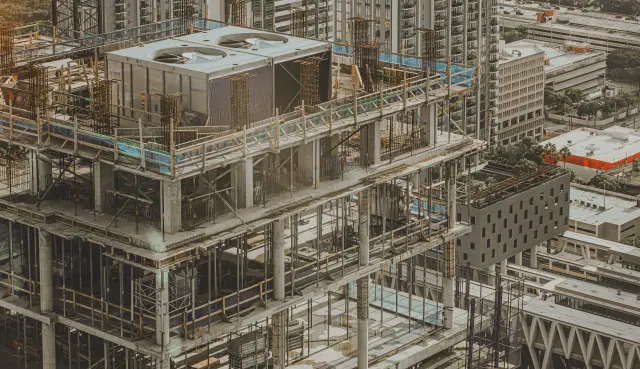
Innovative Housing Solutions by Nigerian Developers: Modular and Prefabricated Homes
The housing industry in Nigeria is experiencing extreme pressure due to a high population growth rate, urbanization, high cost of construction, and a chronic housing shortage that has been estimated at tens of millions.
 Conventional building techniques, which mainly rely on reinforced concrete and block work, are usually slow, costly and inefficient. Projects
are often plagued by delays, budget overruns, wastage of materials and
inconsistency in quality.
Consequently, most Nigerians especially the low and
middle-income earners are finding it even more challenging to afford decent
houses that are affordable.
To address these issues, developers in Nigeria are starting to look at creative ways to respond to the housing needs of the people that put speed, efficiency, affordability, and quality first. Modular home and prefabricated home are among the most promising of these solutions.
The methods of construction move much of the building operations off the traditional locations and into a controlled factory-type operation, where building components or complete housing units are fabricated and assembled at the construction area.
The world has come to appreciate this approach as a way to save time on
construction, cost control, and to enhance the performance of the building.
Prefabricated housing in the form of modules provides a revolution in the Nigerian context. However, a combination of local production, policy facilitation, and investment by the private sector can fill the housing gap and revamp the construction sector with these methods.
This blog looks at
the process of how Nigerian developers are moving towards modular and
prefabricated structures of housing, the economic and social advantages they
have in terms of their delivery and the challenges that come with it and how it
will transform the future of housing delivery in Nigeria.
Housing Shortage and Conventional Construction Restraints
The housing deficit remains unabated since the housing demand in Nigeria keeps increasing much faster than the supply. Due to rapid urbanization, cities like Lagos, Abuja, Ibadan, and Port Harcourt have been under massive pressure; land scarcity and infrastructural constraints have made the delivery of housing even more complicated.
The traditional modes of construction are incapable of sustaining this demand because they are labor-intensive and require long processes on location.
The conventional ways of building have been sequential, with the foundation work, laying of blocks, curing, roofing and finishing, all related to weather and availability of labor and supply of materials. Any delays in the cycle may be extended long project schedules.
These
inefficiencies attract the cost of financing to the developers who find it
difficult to service their loans during longer durations, and their cost is
finally passed on to the buyers or tenants.
Another important restriction is material waste. On-site construction usually leaves behind surplus concrete, broken blocks, and ruined materials, which increase the cost of projects. The quality control is not uniform as well because the workmanship differs according to the level of skills of the laborers and supervision of the sites.
In the market where there
is scarcity of skilled construction labor, it is becoming more challenging to
hold to consistent standards.
These limitations to developers in Nigeria have become bottlenecks to those who seek to deliver housing at scale. The traditional construction is not good enough to respond to the housing crisis in terms of speed, cost savings, and quality.
This fact has left room to other forms of
construction methods, especially the modular and prefabricated methods that are
set to eliminate most of these structural inefficiencies.
Learning about Modular and Prefabricated Housing Systems
The idea of modular and prefabricated housing is usually used simultaneously, however, a variety of construction methods are covered. Prefabrication is typically used to refer to the manufacture of building constituents off-site, which may be wall paneling, floor slabs, roof panels, or service modules.
These parts are produced in a factory facility and moved to
the location to be assembled. Modular construction is an even more developed
form of construction that creates complete 3-D units, or modules, with finishes,
electrical wiring, plumbing, and fixtures.
These are partially or fully finished modules in modular housing that are put together at the location of the building to create a whole building. This method permits a series of phases of construction to take place at the same time.
Although the site preparation and foundation work are still
underway, the housing units are being manufactured in the factory, which is a
major time saving to shorten the project timelines in general.
These systems are enticed by predictability and efficiency to the Nigerian developers. The production based on factory enables standard designs, efficient use of materials and standard quality control.
Disruptions
due to weather like heavy rains which tend to slow work at the site have slight
effects on the production timetable. This consistency is especially useful in
the weather of Nigeria where the traditional building may be brought to a halt
because of seasonal rainfall taking months.
The other benefit is flexibility. Prefabricated and modular
systems can be changed to suit any type of housing, ranging between a
single-family dwellings to a multi-story apartment tower. It is possible to
design buildings that are customized to the local aesthetics, culture and
climatic conditions. The systems are appropriate to both urban and peri-urban
developments in Nigeria because of this flexibility.
Economy and Rapidity of the delivery to the Developers and Buyers
Among the arguments that support modular and prefabricated
housing, there is the fact that they can help save money and deliver much
faster. To the developers, shorter construction periods imply reduced interest
payments on loan, reduced site management costs, and turnover of capital. The
time which could be spent on a project of eighteen to twenty-four months with
the traditional methods can be reduced to half with modular construction.
Another significant area of cost reduction is referred to as
material efficiency. In factory production, measurement and cutting is also
possible, resulting in a lot of waste reduction. This is further reduced by bulk
procurement of materials which helps to reduce costs especially when the local
supply chains are established. With time, such efficiencies will render modular
houses more affordable compared to traditionally constructed alternatives.
In the case of homebuyers, there is more than price of
purchase. Prefabricated and modular houses are generally constructed to high
performance levels, better insulated, tighter construction tolerances and
better energy efficiency. The mentioned features translate into reduced utility
and maintenance expenditure throughout the building life resulting in home
ownership to Nigerian families being more sustainable.
Social implications of speed of delivery are also there.
Accelerated housing would translate to accelerated occupation, less
overcrowding and better living conditions. In displacement-stricken regions,
the urban renewal, or lack of houses, modular homes should be used as they
could be deployed quickly and offer instant solutions otherwise unattainable by
other methods of construction.
Men in Nigeria Who Are Developing Modular Housing
Many Nigerian developers and construction companies tend to
invest more in modular and prefabricated housing solutions. Others are
putting up local fabrication facilities to come up with wall panels, steel
frame and modular unit, whilst others are collaborating with foreign technology
suppliers to export knowledge and change systems to fit local requirements.
The need to differentiate themselves in the competitive real
estate market is another motivating factor to these developers other than cost
and speed. Provision of quicker delivery schedules and fixed costs provides
them with a strategic edge, especially on low-end housing projects that are
funded by the government or other institutions.
It is also local innovation with regard to material
selection. The developers in Nigeria are trying hybrid systems that use
prefabricated forms with locally available materials like lightweight concrete,
compressed earth panels, and treated timber. This strategy helps to minimize
the use of imported systems, promote local production and, in the process,
employment.
Nigeria is being modernized by the developers in the
construction workforce by investing in skill training and factory
infrastructure. Production in factories provides safer working conditions,
labor productivity, and draws younger workforce that might not be keen on the
construction site based system. The developments can be regarded as a slow yet
significant change towards the industrialization of the building processes in
Nigeria.
Regulatory, Cultural and Infrastructure Issues
Although they have potential, modular and prefabricated
homes have a number of challenges in Nigeria. The regulation systems usually
accommodate the traditional building practices and as such, it becomes slow and
unpredictable to have other systems approved. Modular buildings may not be
covered by building codes to its full extent, creating reluctance in
regulators, financiers, and insurers.
Another challenge is that of cultural perception. A lot of
Nigerians identify permanent houses with concrete block constructions and they
might consider prefabricated houses to be temporary or of low quality. To
defeat this perception it is necessary to educate the population, show
projects, and make the durability and quality evident.
The role is also played by infrastructure constraints. Lack
of a good network of roads may make it difficult to handle huge modular units
especially where remote or peri-urban locations are involved. Consistency in
power supply plays a critical role in operations of the factory and any
discrepancy in electricity supply may lead to rising production costs.
All these challenges are going to need concerted efforts.
Confidence in modular housing can be built by updating building standards,
better infrastructure, and creating awareness by pilot projects. They should
also involve the financial institutions to produce products that can facilitate
new construction techniques.
Technology Integration and Digital Design in Modular Housing
The rise of modular and prefabricated housing in Nigeria
is directly relevant to the development of digital design and construction
technology. Building Information Modeling (BIM), computer-aided design,
and automated manufacturing systems are examples of tools that enable
planners to plan, test, and optimize housing units before physical
production. This digital-first approach would limit errors in design, wastage of
materials, and expensive on-site adjustments normally experienced in the traditional
building process.
In the case of Nigerian developers, digital design tools are more accurate in cost estimation and project scheduling. Each element of a modular house can be designed up to the smallest detail, which allows one to accurately determine the number of materials and manufacturing schedules.
This
degree of predictability is especially useful in a market where material prices
fall and rise, and financing structures can bring down projects. Technology-based modular construction allows developers to reduce uncertainty, thus manage
risks and control costs better.
Customization with the assistance of technology is also possible without sacrificing efficiency. Digitally adjustable
standardized modular systems can be used to fit the needs of the various layouts, cultural tastes, and climatic conditions of the regions in Nigeria.
The developers are able to
provide buyers with a variety of design choices - room layout, finishes, and
facade treatments without having to sacrifice any of the mass production
economies. This customization and standardization blending increases market acceptance
of the modular homes.
Secondly, online solutions enhance communication between the architect, engineer, manufacturer and site crew. Real-time information sharing eliminates delays and miscommunication, resulting in efficient project execution.
Nigerian developers will surely use digital tools; therefore,
modular housing will be closer to refinement, reliability, and competitiveness
in the real estate industry in general.
Employment and Workforce Development
Modification of the construction industry in Nigeria towards
modular and prefabricated houses is changing the employment nature in the
industry. Conventional site-based constructions are dependent on informal
labor that is usually characterized by irregular skill level, unsafe working
environment as well as low productivity. Modular construction on the contrary
focuses on factory production, repetitive processes, and technical knowledge.
This shift opens up new possibilities within the development of the workforce. The factory settings need qualified technologists, machine operators, quality check inspectors and managers of logistics.
Developers of modular housing in Nigeria are even more forced to educate
employees in the current construction techniques, electronic solutions and
processes. The skills are transferable and may help in career growth in the
long term in terms of job security and earnings.
Economically, modular housing is capable of promoting
industrialization at the local level. The setup of fabrication plants
increases the demand for other fabrication-supporting industries like steel
fabrication, electrical systems, plumbing components, and transportation
services. Instead of bringing in complete housing units, local manufacturing promotes the creation of domestic value and diminishes capital flight.
The social benefits of the better safety conditions that come with working at a factory are also positive. When exposure to the conditions of hazardous sites is reduced, the rates of accidents and costs of healthcare are reduced.
With time, a better-skilled workforce in the
construction industry is in a position to boost productivity throughout the
industry, which will enable Nigeria to serve its housing demands more
effectively and has the effect of providing sustainable job opportunities.
Long-Term Urban Planning and Housing Sustainability
The implication of modular and prefabricated housing is not
only limited to individual projects but to the general aspect of urban planning
and sustainability as well. The urban population in Nigeria is growing at a
high rate, which is usually unplanned and this leads to informal settlements,
over-straining of infrastructure and consequently environmental degradation.
Modular housing provides an instrument of greater organized and extensible
urbanization.
Modular units can be created within a short period of time
and assembled effectively; thus, they can be applied in proposed housing
estates, urban renewal projects, and satellite towns. The developers and the
government agencies can roll out housing in stages and ensure that construction
goes hand in hand with infrastructure delivery in terms of roads, water, and
power. This gradual strategy removes stress on existing urban structures and
helps to implement more structured development.
Another major benefit is sustainability. Modular houses can
be made energy efficient, water-saving, and waste-minimizing in nature. It is
easier to incorporate renewable energy systems, efficient plumbing fixtures, and
sustainable materials when they are standardized to produce them. These
characteristics would mean a difference in time as reduced environmental impact
and reduced cost of living to residents.
Conclusion
Prefabricated and modular housing is one of the
opportunities that the developers of Nigeria can use to re-model the processes
of delivering homes. These systems provide a faster delivery time, higher
quality, and better cost predictability by removing construction locations
as fragmented and dependent on weather and moving construction to controlled
factory settings. Such efficiencies are not only welcome in a country that is
struggling with a huge housing shortage but also needed.
Although issues of regulation, perception, and
infrastructure are not to be ignored, they are not as substantial as long-term
gains of industrialized construction. With increased investment in modular and
prefabricated systems by more Nigerian developers, the local expertise will
expand, the cost will be reduced, and more will be accepted.
Creative housing options are essential in the future of cities in Nigeria. Prefabricated and modular homes offer a way toward scalable, cheap and quality housing provision. These strategies can be a key driver to address the housing requirement in Nigeria and to develop a more effective and inclusive construction sector with a long-term commitment on the part of the developers, policymakers, and financiers.
Also read: Top Nigerian Real Estate Developers Focusing on Affordable Housing














LEAVE A REPLY