

Innovative Housing Finance: How Microfinance Is Helping Ghanaians Build Their Homes
In most developing nations, affordable and sustainable housing is one of the most desire of families. This dream of owning a house in West Africa and especially in Ghana has in the past been unattainable by low and middle-income families.
 The conventional mortgage systems tend to demand
high income levels, formal working history, and upfront deposits and many of
these requirements are beyond the ability of a large portion of the informal
sector to fulfill.
The conventional mortgage systems tend to demand
high income levels, formal working history, and upfront deposits and many of
these requirements are beyond the ability of a large portion of the informal
sector to fulfill.
This has seen millions of families either reside in
over-saturated housing, unfinished buildings or informal settlements where
sanitation, electricity and clean water access is low.
However, in the last twenty years a silent financial revolution has started to transform the housing scene. Microfinance, small, informal loans usually provided to people who do not have access to traditional banking, has grown out of financing small businesses to the housing sector.
Microfinance institutions do not need large mortgage and instead give
incremental loans so that families can build or improve their homes bit by bit.
This method makes sense to how a significant number of low income households are
already building their homes: bit by bit when resources are available.
The international organizations that have supported housing microfinance include World Bank and UN-Habitat which acknowledge the need of affordable housing to alleviate poverty and enhance urban sustainability.
Local
banks, microfinance institutions and nonprofit organizations in Ghana (such as
such organizations as Habitat for Humanity) have started to design their
financial products specifically to housing construction, home renovation, and
land purchase.
The new model is changing the manner in which homes are constructed in Ghana. Families do not have to wait several years to be eligible to a mortgage and instead, they are able to obtain smaller loans to have their roofs, floors, sanitation facilities or even extra rooms.
These small
enhancements, in the long run, result in whole, safe houses. This outcome is
better living conditions besides stronger communities, greater property
ownership, and economic stability.
This blog will discuss how housing microfinance is operating in Ghana, the institutions that have become the drivers of this operation and the social and economic effect it is having on the communities.
It also looks
at the remaining challenges and future opportunities of scaling innovative
housing finance solutions. With Ghana still in the fast process of
urbanization, microfinance might turn out to become one of the most effective
means of ensuring that affordable housing is up to date with the development of
this nation.
The issue of housing in Ghana
The housing industry in Ghana has been faced with the challenge of not being able to accommodate its increasing population. The high rate of urbanization, population explosion and inability to afford formal housing finance has resulted in a huge housing shortage in the nation.
Estimates which have been quoted frequently by development organizations
indicate that Ghana lacks over two million housing units, and its demand keeps
rising annually as rural dwellers move to urban areas like the cities of Accra
and Kumasi which are seeking economic opportunities.
The traditional issue of housing finance systems is one of the root causes of the problem. Traditional mortgage products generally need the borrower to be in steady, formal employment, earn a regular pay and have extensive credit records.
Nevertheless, much of the Ghanaian labor force work
in the informal sector which includes traders, artisans, small farmers or small
business owners. These employees tend to have good wages but they lack the
documentations that will enable them to get mortgages.
Finance institutions are also at a risk of lending money to buy houses in the markets with lower income. In Ghana land tenure systems may be difficult and property documentation is not necessarily standardized.
Lenders might be reluctant to loan high amounts of capital over a long period
of time without any titles. Moreover, the cost of construction and
constructions can be erratic and it is not easy to control the traditional
mortgage lending.
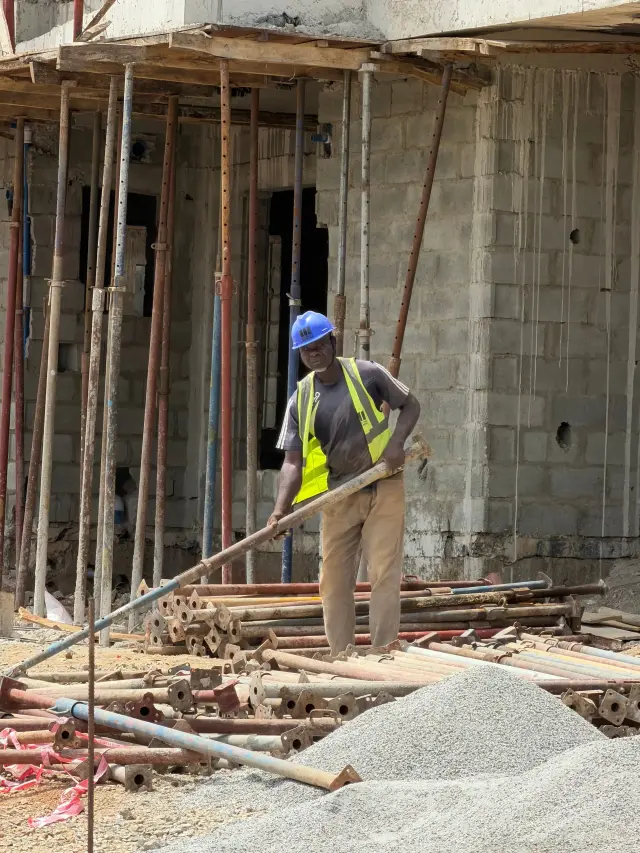
This leads to most Ghanaians constructing their houses bit by bit with their own savings. One can begin with a small room as a family and then incorporate new rooms or buildings as the budget permits.
Although this
incremental process is an embodiment of strength and perseverance, it may also
imply the fact that houses take years to be completed. Certain buildings are
not well roofed, have no sanitation systems or hard wearing materials and this
may have an impact on health and safety.
Housing deficit is also an issue leading to overcrowding in
cities. The number of informal settlements has risen in most urban areas, with
families residing in temporary houses devoid of sound infrastructure. The
restricted access to clean water, waste disposal, and electricity poses a
problem to the general population health and diminishes the quality of life.
Government projects have tried to solve these problems by
providing public housing projects and collaborating with the private
developers. Nevertheless, the large-scale housing projects are usually too
costly to the low-income families. Financing may still be a challenge even with
the cheap units that are constructed.
An appreciation of Housing Microfinance
The concept of housing microfinance is a change of mindset in the manner of financing houses in the developing world economies. Housing microfinance does not regard homeownership as a big investment that has a long-term mortgage, but the construction of homes is made progressively by many families.
Such an incremental construction strategy goes hand in hand with the
principles of microfinance that focus on small, manageable loans that are
intended to serve particular needs.
Microfinance products or housing in Ghana usually offer small loan values as opposed to the traditional mortgages. Such loans can be a few hundred dollars or a few thousand dollars according to the project in which the borrower repays the loans.
The funds can be used in many ways by the
borrowers such as buying building materials, roofing, sanitation facilities, or
they can be used to enhance the current structures.
Housing microfinance tends to use other approaches in determining creditworthiness unlike traditional mortgage systems that demand complicated property documentation. Microfinance institutions scrutinize the income flows, reputation of the community, and history of small loan repayments in the past.
Since most borrowers are already utilizing microfinance in doing
small businesses, it gives the chance of the institutions to trace the behavior
of money over time before lending money on housing related issues.
There is also flexibility in the structures of repayments.
The housing microfinance credits can be paid within two to five years instead
of long 20 or 30 year mortgages. This allows borrowers to borrow more in future
to keep on enhancing their homes effectively financing the construction process
in bits. The structure helps lenders and makes homes improvement more
affordable to the borrowers since the risk is reduced.
Technical support is also another important characteristic
of housing microfinance. Other programs enlist the services of construction
experts who guide borrowers on the cheaper methods of building, safe
construction, and quality construction materials. Incremental construction is
maintained to minimum safety requirements by this support.
Some organizations such as Habitat humanities have been
instrumental in propagating housing microfinance in the world. They also assist
in designing the loan products, training the staff, and linking the borrowers
to building expertise by working with the local financial institutions. This
kind of collaboration makes financing innovation to be coupled in construction
advice.
The Housing Sector of MFI in Ghana
Microfinance institutions have taken a leading position in the new ecosystem of housing finance in Ghana. These organizations initially existed to offer small loans to business people who could not get the services of the conventional banking institution.
With time, most institutions realised
that their customers also required a financial solution to their housing and
thus came up with micro-housing products which were specifically targeted at
the clients.
The microfinance institutions have the advantage of having a
strong relationship with the local people and this is one of their strengths.
Compared to big commercial banks, microfinance institutions in some cases tend
to be in communities inhabited by the poor. This is because of the closeness,
which helps them comprehend the monetary situation and housing issues of their
clients.
In Ghana Reports indicate that number of microfinance institutions have added housing loans to their portfolios meant to be used in incremental construction. These institutions evaluate loan applicants on the basis of income security as opposed to official employment position.
As an
example, a market trader or an artisan can be approved of a housing microloan
provided that he or she has reliable earnings and a good history of repaying.
Financial education is also another significant input of
microfinance institutions. Most of the programs offer training in budgeting,
savings and responsible borrowing before offering housing loans. This training
enables the borrowers to spend their money wisely and lessens the chances of
defaulting on the loans.
The collaborations with foreign entities have also made the
industry stronger. Institutional support such as that of the World Bank has
served to create regulatory frameworks and financial products to suit housing
microfinance. Such partnerships also offer technical skills and financial
resources that would help local institutions to increase their coverage.
MFI is also involved in linking borrowers to building materials and construction workers. Other programs have deals with suppliers on the prices of materials such as cement, roofing sheets and bricks such that construction costs become cheaper to the borrowers.
Others provide technical
advice to make sure that the building improvement is up to the safety standard.
Social and Economic Impact of the Microfinance of Housing
Housing microfinance is not just revolutionizing single
households but it is also creating more social and economic impact throughout
the Ghanaian society. The availability of safe and secure housing has extended
implications on health, education, economic productivity and community
development.
Among the most direct effects, better living conditions may be named. Families utilizing microfinance funds are able to use them to use durable materials instead of temporary ones in building, provide good roof installations, and increase ventilation.
Such modifications greatly minimize
exposure to the weather and environmental risks. There is also an enhancement
of sanitation facilities hence better health outcomes of the population since
waterborne diseases are minimized.
Educational results can also be affected by safe
accommodation. Academic performance is achieved by children living in stable
homes as the environment is favorable to study and sleep. With proper space and
lighting in the family, the students will be able to do homework and even
prepare to go to school.
The economic impacts are also not limited to households. New
housing development usually generates a demand of local construction workers,
carpenters, and suppliers of building materials. This business brings about the
growth of local economies and creates jobs in societies.
A completed home is also a significant financial resource to
many households. Owning property can make householders wealthier and gain some
financial security. Homeowners also incur other rooms which are used to operate
their own small businesses or accommodation to tenants which generate new
sources of income.
Women especially have been beneficiaries of the housing micro finance programs. A large number of microfinance institutions are interested in lending to women due to their good repayment habits and the fact that they are the decision-makers in the household.
Availability of housing
loans gives women the power to invest in the well-being of their family and
better the living standards of their children.
Obstacles in the Future of Housing Microfinance in Ghana
Ghana Housing microfinance in Ghana has numerous
opportunities that can be achieved, but is still faced with numerous challenges
which it must overcome to make full use of its potential. Such obstacles are
the lack of funds, regulatory hurdles, land tenures, and increased construction
prices.
Access to long term funding of the microfinance institutions
is one of the main challenges. Mortgages involve higher loan and longer
recovery durations than normal microenterprise loans. The institutions might
not be able to scale their housing finance programs without sufficient capital.
Another major problem is land tenure. The land ownership
systems in most regions of Ghana are traditional, family structures and
informal ownership systems. Such complications may complicate the establishment
of property rights which are usually required as a security on loans.
There is also an increment in the construction expenses
because of the escalation of the price of building materials like cement and
steel. These cost Gazes have a potential to diminish the cost of housing
enhancements and especially to low income families. Microfinance institutions
have to constantly redesign the loan items to suit these changes.
Bank of Ghana regulatory oversight is also significant to
the stability of the sector of microfinance. Although regulation safeguards
both the borrowers and investors, it may also impose compliance costs to
smaller institutions. The dilemma between innovation and financial management
is still a persisting policy question.
With these challenges notwithstanding, the future of housing
microfinance in Ghana is bright. The use of digital finance, mobile banking and
data analytics is making it increasingly easy to determine the creditworthiness
and to manage the loan repayment. Technology can also increase the access to
finances in rural regions that lack proper banking infrastructure.
The partnerships between the government and commercial
companies can also boost the development in the field. As a partnership among
government, international development organizations, and financial
institutions, it is possible to establish new financing sources, technical
assist systems in relation to the housing microfinance programs.
Conclusion
Housing affordable population is one of the most urgent problems of the developing nations nowadays. The traditional mortgage systems have failed to serve the low and middle-income households in Ghana especially those in the informal sector.
But the advent of the housing microfinance has
brought with it a viable option that is now a strong force that depicts the
true way the families construct their houses, step by step.
Microfinance institutions have created new avenues to owning
houses by giving small and flexible loans to individuals based on their
construction requirements. Families that previously were able to only rely
on savings are now able to use such financial tools, which would enable them to
step by step improve their living conditions. In the long run, these
enhancements have been known to convert partial structures to safe and sturdy
houses.
The World Bank, UN-Habitat and Habitat for Humanity have
also partnered with housing microfinance thus contributing to growth of the
sector. Such partnerships offer technical knowhow, financing, and policymaking
assistance that enable the industry to be reinforced and be extended.
The benefits go beyond individual households, and are
extended to whole communities. Housing enhances better health, promotion of
local economies, and social stability. Property ownership also forms assets in
the long term which may improve the financial security of the family.
Issues such as the lack of funds, land tenure complications,
and increased construction expenses are still a problem. However, there is an
opportunity of further development with the further development of digital
finance, the presence of favorable regulations, and innovative formulas of
lending.
The example of housing microfinance shows that massive
construction and costly mortgage systems are not necessarily the only way to
address the housing crisis. In some cases, the best solutions are ones that
will enable individuals to have practical tools and chances to make their own
houses better.





-shtTqaPktk.jfif)







LEAVE A REPLY