

Millions of slum dwellers and informal settlers around the
world throughout the world generate interesting economic life with abject
poverty, small infrastructure, and lack of state assistance. These people,
street-vendors, micro-business owners, artisans, waste-collectors and home
based-producers are generally considered as marginal or survival workers.
However, they play a crucial role in economic engagement: in several less
developed nations, informal labour makes up an enormous majority of the total
workforce, and a considerable share of the economy. In Pakistan, as an example,
it is estimated that no less than 73% of the labour force is performing
informal labour in dozens of industries that are neither registered nor covered
by traditional economic institutions.
Most modern studies are becoming more aware of the fact that
entrepreneurship in slums is not simply a matter of survival, it is creativity,
survival, community network building, and economic resourcefulness in the
presence of uncertainty. The analysis of slum networks in Kenya has shown that
entrepreneurs exchange community resources and develop economic relations that
cannot be simply understood as poverty as stagnation. Just like in the case of
the study of identity and strategy in the informal economy, it is observed that
people are making entrepreneurial roles and tactics that enable them to adapt
and even develop in the face of resource scarcity.
This blog is a tribute to these heroes of the informal
economy entrepreneurs who have changed the meaning of being able to operate a
business outside a formal system. Both components explore the different facets
of slum entrepreneurship and each unravels the economic contribution,
difficulties, innovation, and the general lessons that deal with agency and
dignity in low-income urban settings.
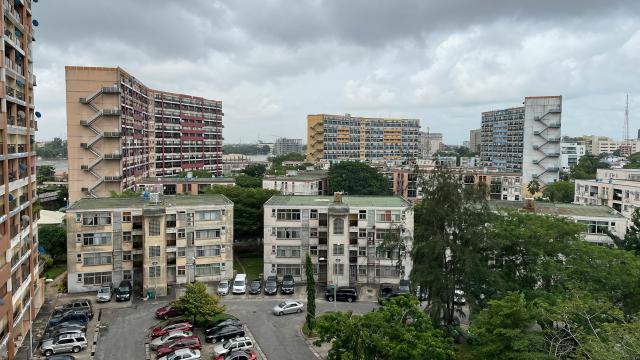
Reframing Slums: Not
Just Poverty, But Economic Hubs
The slums are simply described as areas of poverty, which
come with the lack of proper housing, sanitation, and facilities. Although
these sufferings are facts, and harsh facts, this one-dimensional presentation
hides a more vibrant reality: slums are centers of economy whereby different
types of enterprise are created on a daily basis. Scholars have suggested that
in slums, clients, workers and entrepreneurs are involved in elaborate exchange
networks that make livelihoods workable and enhance communal bonds.
At the economic level, most of the slum dwellers are
micro-entrepreneurs. They have food stalls, repair shops, informal transport
and waste recycling services, home-based manufacturing, and innumerable other
small firms. These businesses, though not registered and not regulated, cater
to the most crucial domestic demands and offer themselves and other people
income. Informal economic activity is often seen to absorb labour which formal
markets fail to absorb: in rural-to-urban migration, low-educated youths, and
women combining household tasks all have to resort to informal entrepreneurship
as an option.
In addition to personal income, such slum businesses form
localized economies. Money flows in the society, the supply chains are
developed and the social relations are transformed into economic resources.
This is the opposite of the models which regard informal economies as grey
areas beyond mainstream development. In its place, numerous scholars have come
to think about slums as creative, resilient and adaptive spaces, where
entrepreneurship is a reaction to structural exclusion and not a last resort. Under
this re-conceptualized perception, slum entrepreneurs are not mere victims of
the poverty condition, they are players in the economic existence of life under
constraint.
Networks and Social Capital Everyday
Entrepreneurship.
Even though the slum entrepreneurs have limited access to
formal markets, capital, or institutions, they create very strong social
networks and systems of exchange that keep the economy going. A recent study on
slum networks in Kenya indicates that there is amazing network of transactions
where thousands of slum entrepreneurs are involved. These networks are founded
towards common community resources and mutual economic exchange that makes it
possible to transfer goods and services even without traditional financial
tools.])
It is a kind of everyday entrepreneurship, which is not
based on personal accretion but on a relationship exchange. Slum entrepreneurs
use trust, reputation as well as community relations to establish their
customer base and resource mobilization. Economic and social purposes are
fulfilled by these networks, which distribute risk and enlarge the capacity to
absorb shocks (price changes or health catastrophes).
These networks also tend to blur the personal and work life.
Economic resources are created through relationship formed due to similar
sufferings, as the neighbors are the customers, suppliers, and informal
partners. This social capital is in most instances more valuable than
traditional capital since it offers a cushion against insecurity of life in
informal settlements.
This study disputes the stereotypes of self interest in
slums and isolation. Rather, it demonstrates the degree to which economic life
in slums is interrelated, and how informal community organization is really the
driving power of innovation and self-help.
Creative Strategies
Amid Resource Scarcity
Slum entrepreneurs work in a setting where there is a lack
of resources such as a shortage of capital, credit access, infrastructure and
formality. But such a lack can be very creative instead of disillusioned.
Research on the entrepreneurial identity of informal economies singles out
various classes of slum entrepreneurs, including those who act in survival
mode, improvising to provide daily income, and others, who are growth oriented
and will seek new opportunities to increase market reach.
The innovative entrepreneurs adopt intuitive tactics to
evade risks. Others make use of cheap materials, wastes or locally available
materials. Some use the digital option when they can get the digital
technology, i.e. they use mobile phones and social media networks to get to
customers, to order and organize delivery. Even limited digital tools can
bridge the two worlds between informal supply chains and bigger demand
networks, which gives the entrepreneurs an opportunity to grow out of their
direct localities.
This flexibility is an address to a critical point: the
informal economy businesspeople are not a mere product of circumstance. They
are solution finders, and they redefine their ability to utilize what they
have. By so doing they defy traditional beliefs regarding what it means by
business capability. In most slums, formal education or capital does not
establish entrepreneurship behavior, but flexibility, initiative and networked
creativity.
Breaking Barriers:
Women in the Informal Economy.
The number of women who constitute the informal sector
workers and entrepreneurs is high. Despite frequent gendered barriers to access
finance, property rights, and mobility, most women in slums establish
successful micro-businesses, whether selling food, clothing, home goods or
services that satisfy the daily needs of their communities. The opinion of
women in slum economics does not only serve as a source of household income,
but also changes the social paradigm concerning gender roles in economic life.
Internationally, other research networks such as Women in
Informal Employment: Globalizing and Organizing (WIEGO) have been used to point
out the structural underestimation of women contribution in the informal sector
of the economy. WIEGO supports policy recognition, support and social
protection of informal workers- emphasizing that they have a key part in
economic sustainability.
Women in cities of Africa, Asia, and Latin America tend to
combine care giving with businesses, overcoming strict dichotomies between
working and home. Their creativity in the creation of a balanced economic
involvement and social obligations redefines the local economies and the
resilience of the communities. To any wider conceptualization of slum
entrepreneurship, it is important to recognize the role of women as the
economic actors.
Child Entrepreneurs
and Intergenerational Impact.
Children are usually the entrepreneurs who are involved in
entrepreneurial activity in slums, not as exploited workers but members of a
family enterprise. Studies indicate that the slum entrepreneurs often have an
ambition to educate their children so that they can escape poverty cycles
despite them using family labour to perpetuate their businesses.
This two-sided complicity of being an economic actor and a
dreamer parent can show strong motives of slum businesspeople. Most people
consider entrepreneurship as a transitional step: a way of ensuring short-term
economic security and long-term prospects to the next generation. Community
research has indicated the way entrepreneurial parents do not just invest on
goods and services, but also on education, training and role modeling to their
children.
These intergenerational desires enhance the social structure
of slum neighborhoods. Young children who acquire business will be innovative,
diversify, and contribute to the growth of micro-enterprises. Instead of
perceiving child involvement as a negative matter of informal economies, it is
relevant to realize that it converges with more comprehensive resilience and
upward mobility objectives.
Technology and the
Informal Gig Economy.
Informal economies are becoming more and more determined by
digital technologies. The research dedicated to the sub-Saharan African region
suggests that mobile phones, social media, and gig platforms can assist
informal entrepreneurs to expand their customer base, make the process
straightforward and reach new markets.
But, technology and informal sector have a complicated
relationship. As much as digital tools have the potential to increase reach and
efficiency, they may also increase disparities because of digital access and
barriers to digital literacy. The entrepreneur who is more technologically
skilled or has network access has an upper hand over others in the same
neighborhood. Moreover, the dependence on gigs can create the boundary between
self-employment and under-paid and undervalued labor, and this issue is under
consideration by researchers.
Nevertheless, slum entrepreneurs overcome such difficulties,
and some manage to implement technology in the economic model of their economy-
it proves that innovation in the informal economy can be low-tech and
high-impact.
The Shadow Economy
and Its Magnitude.
Informal entrepreneurship is frequently overlapping with
so-called shadow economy or underground economy in the eyes of economists, the
economic activity that is not reported to authorities and is thus not regulated
officially. In Pakistan, shadow entrepreneurship is far much more than the
formal business registration; there are over 100 informal entrepreneurs to each
registered business.
Although shadow economies may pose certain difficulties,
like depriving the state of its income and other social protection, it also
exposes structural disjunctures within the official structures. To a great
number of slum entrepreneurs, formalization is not a possibility, but rather an
impossibility because of various obstacles in the form of high licensing fees,
complicated procedures, and institutional failures.
The studies are calling on the policy makers to redefine the
economic measurement and regulation in order to consider these immense, valid
contributions. Instead of making the informal work illegal, the supportive
policies can absorb such entrepreneurs into the wider economic systems and
provide them with training, access to credit and opportunities of recognition
into the formal systems.
Microenterprise and
Poverty Alleviation
Longitudinal research of the slum microenterprise indicates
that small business operations can alleviate the poverty of households
significantly. An example is a study conducted in the informal settlements of
Nairobi where it was discovered that the enhanced functioning of household
microenterprise is linked to the enhancement in living conditions as well as
minimized poverty.
Microenterprises also employ people who would otherwise not
be employed as formal jobs are rare in such areas. This is an economic role
that is important in fast urbanizing cities whereby formal job creation is slow
to match the increase in labour force participation.
Slum entrepreneurs therefore serve a dual purpose, which is
by not only directly sustaining their families in terms of incomes, but also by
keeping the economic structure of whole community afloat, since they cease to
rely on foreign aid or the loose wage labour market.
Challenges and
Opportunities in Policies
Nonetheless, slum entrepreneurs do not have a smooth sail:
they lack access to credit, social protection, tenure, and are virtually
unrecognized by the law. Informal entrepreneurs can be empowered with
structural reforms that may enable them to grow and stabilize their businesses
by simplifying registration procedures, providing microcredit schemes, and
having legal security.
Some regions have tried innovative policy strategies such as
community-based licensing, neighborhood business incubators and digital ID
systems through which informal workers can be absorbed into formal economic
systems. In the case where these efforts are victorious, they open up new
opportunities to growth, minimize vulnerability, and boost civic engagement.
Resilience in Crisis:
Slum Entrepreneurs and Shocks
Slum entrepreneurs are frequently remarkably resilient in
response to crisis, be it economic crises, natural calamities, or pandemics.
Their business models are flexible and they are well integrated within local
networks hence, are able to easily adapt to any changing situation. Resilience
studies demonstrate that entrepreneurial activity can tend to grow during times
of instability as households expand the range of income streams and develop
novel services.
This strength underscores a significant policy implication:
the existence of support systems allowing informal entrepreneurs to shift, like
emergency credit, digital payment systems, or local business collectives, can
make the community more resilient to a crisis well before the formal
institutions come into action.
Informal to Formal:
Bridges and Obstacles.
Achieving the status of the informal to the formal economy
is often seen as an objective of sustainable development of the economy.
Nevertheless, the process of this transition is full of obstacles:
high-compliance costs, hard labour standards, and the fear of taxation
discourage many with formal registration. The study of informal
entrepreneurship demands more permissive formalization routes that lower the
cost of entry, offer a compliant option that is not particularly high, and
indicators of registration.
With formalization becoming available, slum entrepreneurs
receive access to credit, government contracts, and legal protection-
increasing the level of economic security and providing new development
perspectives.
Beyond Income
Community Impact
Slum entrepreneurs have more than income generation. Their
enterprises can also become centers of the community, offering services that
would not otherwise be available to the community the provision of food, repair
services, education materials and childcare among others. The slum economies
are interrelated such that when one of the entrepreneurs succeeds, the others
will achieve supply or demand linkages.
Once formalization becomes available, the slum entrepreneurs
can also access credit, government contracts and legal guarantees- increasing
economic security and expanding prospects of growth.
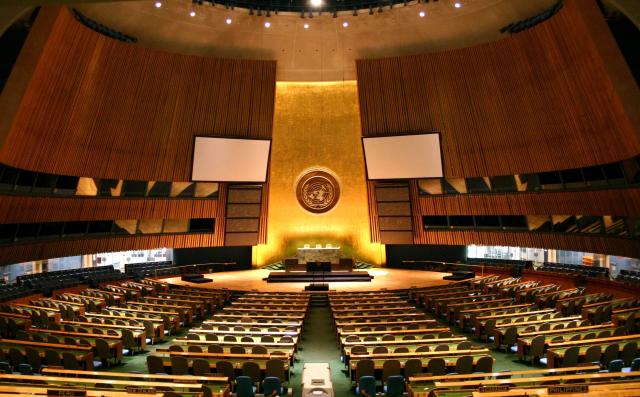
International
Awareness: Worshiping Heroes of the Informal Economy.
Governments and international organizations in various
continents are increasingly appreciating the worth of the actors of informal
economy. Some development agendas like the Sustainable Development Goals at the
UN focus on decent work and economic development and recognize the role of the
informal sector in terms of work and poverty alleviation.
Contributions of informal entrepreneurs today are emphasized
in global networks, research programs, policy inclusion is advocated and more
accurate measurement of the economic data is demanded that can demonstrate the
true living conditions.
Conclusion
Informal economy heroes who are slum entrepreneurs are the
sources of resilience, innovation and community survival. Their work questions
normal economic discourses in which the slum dwellers are reduced to victims.
Instead, they reveal a greater truth, which is that even in the most
unfavourable conditions of absolute scarcity and structural disinvestment,
people generate, modify, and make economic life. Supporting these entrepreneurs
through the assistance of friendly policies, access to technology, and chances
to official status is not only a smart way of development but also one of the
sign of human ingenuity and human dignity in spite of adversities.









-3dkuLgKhRD.jpg)
-49HupTvwDD.jpg)









LEAVE A REPLY