

India’s Affordable Housing Deficit: A Snapshot of the Growing Crisis
Everyone needs a place to live, yet for many people in India the right to an affordable home, and the dream of one, is becoming more and more unattainable. The most astonishing thing about this is that one of the most rapidly growing economies of the world is still facing a dire shortage of affordable housing. The mismatch between the demand and the supply is glaringly visible. Multiple studies and government estimates point out the glaring absence of millions of homes, especially among the low-income and economically weaker sections of society. This shortage doesn’t just point out a mismatch in demand and supply but also more fundamental issues related to urban planning, land allocation, housing finance, and governance.
These challenges are not just about deficits in housing policies but are also about people. About people living under constant distress and insecurity because of the absence of a stable shelter, migrant workers forced to live in cramped make shift housing, and urban poor households forced to make unbearable choices of rent, food, education, and health care. When lacking affordable housing, people often find it difficult to work and live within the systems of poverty and inequality. This also makes it difficult for Indian cities to achieve the most basic of urban planning objectives - becoming inclusive and accessible to all.
The government has launched large-scale initiatives like the Pradhan Mantri Awas Yojana (PMAY) with the vision of “Housing for All.” Although these initiatives have progressed, they are still limited due to challenges such as land shortages, increasing construction expenses, lack of private sector involvement in housing that has low profit margins, and bureaucratic red tape. Furthermore, the COVID-19 pandemic highlighted the vulnerability of the urban poor in India—millions of people were either evicted or were living in unsafe housing conditions that compromised health and dignity.
This blog attempts to map India’s housing deficit, focusing on affordability, the scale and root causes of the problem, urbanization impacts, the policy and government response, issues in financing, the participation of the private sector, and the societal impacts of lack of housing. From the above, it is clear that solving the housing problem in India is more than just building additional houses. It is needed to reconfigure the entire housing ecosystem, including land usage, financing approaches, housing construction, and community involvement, coupled with the ecosystem's sustainability.
This is the only path that will allow India to move towards the achievement of fair and balanced housing. This will ensure that all cities are improved, enabling all people, of all economic classes, to have a safe and dignified house that is affordable, and most importantly, a home.
The Scale of India’s Affordable Housing Deficit
The housing shortage in India is enormous and it is disproportionately impacted on the urban poor. It is estimated by government and independent reports that India has a deficit of in the order of 19-30 million homes, of which over 95 percent of this demand lies in the Economic Weaker Section (EWS) and Lower Income Group (LIG) segments. Such imbalance in demand and supply creates a paradox, as, at the time when the luxury housing projects and high-rate apartments are flooding the market, the area where the demand is actually the highest, the low-cost housing, is being grossly under-serviced.
The causes of this imbalance are found in building and property economics. People who develop projects mostly focus on high end projects as they provide greater margin of profits whereas low cost housing projects have an issue with limited land, low returns and complicated government clearance of the project. Consequently, there is an upward bias in supply leading to the poor having to be satisfied with informal solutions to their housing which may be slums, illegal colonies or overcrowded rentals.
The other reason that focuses the housing deficit is the rapidly growing population in India and the migration to the urban areas. Millions of people leave villages to come and work in cities looking after opportunities and better jobs every year. Such migration is drawn to cities such as Mumbai, Delhi, Bengaluru, and Hyderabad but these cities are not prepared to absorb the influx of housing needs. This forms a two-tier economy of housing; formal housing, which is of the middle and upper classes and informal housing, which is of the poor.
Unutilized or vacant housing also contributes to the magnitude of the deficit. Ironically, even as millions of Indians continue to stay in substandard houses, lakhs of houses that have been built but are not sold languish in the urban markets. Such homes are however above the affordability of low-income households, which further highlights why the housing industry is structurally skewed.
The deficit is also a measure of a greater crisis of equity and inclusion. A house is more than a roof, it is a base to economic activity, education and health. Lack of access to affordable housing exposes the family to a cycle of insecurity and exclusion which contributes to poverty.
The immense magnitude of the housing shortage in India cannot be solved by a mere increase in the number of structures but a reassessment of priorities, in which affordable housing becomes a vital part of infrastructure and not a low-profit sector. The housing deficit will keep on increasing unless there is a concerted effort on how policymakers, developers and financial institutions can work together to achieve the greater objectives of economic growth and social justice in India.
Urbanization and Its Impact on Housing Demand
Urbanization is characteristic of modern India. Today, roughly 35% of India’s population lives in urban areas; this is expected to increase to about 40% in the next decade. This migration poses new challenges to the housing market. The vision of cities as growth and modernity poles has transformed, and cities are now grappling with urban sprawl.
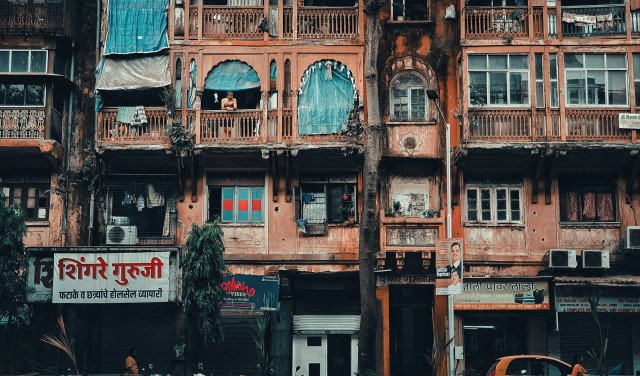
Ironically, these workers are socially and economically excluded from the formal housing market. Rising rents, the need for large security deposits, and lack of formal documentation compel migrants to the outskirts of cities to find housing in informal settlements and slums. The cities' failure to provide adequate, affordable housing is evidenced by the 65 million people living in slums.
Land scarcity is worsening primarily due to urban sprawl. Exorbitant prices for prime urban land forces developers to locate affordable housing projects on the outskirts of cities. These outer developments may add to the housing stock, but they suffer from the problem of distance to employment opportunities, schools, hospitals, and public transit. This creates a spatial mismatch, forcing the poor to undertake long and often unsafe commutes or live in overcrowded and dangerous conditions on the outskirts of town close to their workplace.
Unplanned shifts in population also have to be dealt with in urban housing, as the encroachment of housing developments on wetlands, green belts, and floodplains increase a city’s risk to climate disasters. Informal settlements that situate themselves in dangerous locations are often the most vulnerable.
Urban growth that is unplanned and unsustain with the necessary basic capacity of utility supplies contributes to the situation worsening. In many Indian cities, utility infrastructure of water supply, sewage disposal, and electricity supply is insufficient, leading to the rejection of affordable housing projects. This conveys the reality that the unplanned construction of houses does not ultimately result in livable communities.
The task is to quantify the expectations but, more importantly, avoid building siloed and disconnected housing. There must be integrated and systemic approaches to building inclusive cities. The linkages to the developed and serviced public and integrated sustainable transport, health, education, and socio-ecological infrastructure must be made to the affordable housing built. Without these systemic adjustments, inequitable and deepening challenges related to urban housing will be a harsh reality of urbanization in India.

Policy Interventions and Government Initiatives
As the affordable housing crisis grew increasingly severe, the Indian government recognized the need for targeted, landmark initiatives designed to address the issue. The most ambitious of these initiatives, the Pradhan Mantri Awas Yojana (PMAY), was announced in 2015 and aimed for the ambitious target of “Housing for All” by 2022. Although the deadline has been extended, the program has promoted significant administrative, subsidy, and incentive coordination across the central, state, and local government interfaces.
PMAY provides for rural and urban housing needs. In urban centers, housing construction assistance is provided through four streams: in-situ slum redevelopment, affordable housing in partnership, the subsidized credit scheme, and the beneficiary-led housing construction program. The credit-linked subsidy scheme (CLSS) has been groundbreaking, allowing lower-income households to obtain home loans and gain access subsidized interest rates.
There are additional state sponsored affordable housing programs, for example, slum rehabilitation focused housing policy in the Maharashtra and land pooling in Delhi. These local initiatives are tailored to the distinctive housing situations of each of the country’s states.
There are still challenges for Polity implementations. These are due to bureaucratic stagnation, inadequate inter-agency coordination, issues with land acquisition, and difficulties with financing. Although millions of houses have been constructed under the PMAY scheme, there are also unresolved questions on the quality of these houses and the location, and livability in the future.
To stimulate the Interest of the private Sector, the government has provided Incentives and classified affordable housing as infrastructure, thus giving them easier access to financing. There are also tax Incentives and relaxed regulations on housing construction, but private developers still are reluctant to engage due to low profit potential.
New Policies for the future, should concentrate on three areas. These areas should focus on land reforms to provide access to more affordable land, the expansion of construction through public and private cooperation, and the more comprehensive integration of housing and urban planning. There are also underdeveloped policies in the rental housing market, which has a high potential for serving low-income and migrant populations.
As a result of these coordinated government activities, there has been a great deal of progress, but the gap between the anticipated outcome and the actual result in affordable housing shows the need for Innovations in policy, coordinated approaches, and accountability.
Financing Challenges in Affordable Housing
Financing remains one of the most prominent bottlenecks in the development of affordable housing in India. Developers and homebuyers experience challenges in acquiring financing and this challenge is, of course, more pronounced in the case of affordable housing. The absence of viable financing alternatives is a key contributor to the overall housing deficit.
For the low-income segment, the challenge is acquiring formal credit. Banks and housing finance companies require a number of documents, such as proof of income, stable employment, and credit history. These exclusions explain the homeownership challenges facing India’s informal sector and the informal housing finance sector that predatory lenders offer. Rental housing, in many cases, is also a reality.
Microfinance institutions have provided some relief by offering small loans for home improvement and incremental construction, although this only benefits a small number of families. The credit-linked subsidies under PMAY shifted some benefits, but the most vulnerable continue to be excluded.
From the supply-side, developers experience financially burdensome capital. The housing market overall is low-margin and, in the absence of development financing, there is even less incentive to pursue affordable housing projects. The declaration of affordable housing as infrastructure does not seem to shift the perceptions and realities of financing.
Location costs worsen the problems related to financing. Most of the time, in the cities, land costs account for 60% of the overall project costs. Thus, making it very difficult to provide affordable housing. Consequently, lack of infrastructure forces housing projects to the cheap outskirts of towns.
There is no doubt innovative financing models are productive for projects. Easy examples are blending finance, where the government or philanthropic funding “de-risk” private funding sources, and rent-to-own plans in which families gradually shift from tenancy to ownership. Most importantly, the financing leg of the rental housing is essential since millions of urban migrants need affordable rental housing, flexible rental arrangements are the priority, and ownership is not.
Addressing financing problems lastingly requires an overall ecosystem, which integrates development rental housing and low-income household financial inclusion, inexpensive loans for builders of housing, and development finance institution brought in financing. Reconstruction of affordable housing legally or not is a pipe dream.
The Social Consequences of Housing Inadequacy
The lack of affordable housing is a social problem. Housing is a platform for all fundamental needs that includes health, education, work, and social life. We cannot separate housing problems from all other problems in life.
Health problems are aggravated by poor housing conditions. Families in slums and overcrowded rentals are more likely to suffer from tuberculosis and other respiratory diseases, gastrointestinal diseases, and overcrowding increases the spread of infectious diseases, as was the case during the COVID-19 pandemic. We need to understand how poor housing conditions expose families to great risks during a health crisis.
Inadequate housing makes it more difficult for children to get an education. Schooling is likely to be interrupted by frequent moves that are the result of unaffordable rent and evictions. When living conditions are poor, it is easy to fall behind in school, resulting in the lack of education that a child needs to get out of poverty.
No economic stability is possible without housing security. When families are forced to pay an excessive rent, a large portion of their income is lost. The rest is probably already gone to food and health care, and savings are impossible. The threat of eviction that hangs over informal housing arrangements is a great source of psychological instability, and a diminished sense of belonging.
These effects culminate and demonstrate the social implications of considering the right to "affordable" housing as a market commodity. The right to shelter acts as a vehicle to many other essential components within a society, and the lack of it perpetuates violations of fundamental human rights. The social implications of such inequities are inarguably a matter of human development.
Conclusion
The deficit of affordable housing in India is not only a crisis of enormous proportional levels, but it is also a crisis of change. Solving the shortage does not merely involve building millions of new houses but requires a change in the way housing is planned, funded and provided. Urbanization, poverty, social equity and sustainable development are all closely intertwined with the crisis.
The government interventions including the PMAY have provided a good base, however, there are still gaps in the implementation, financing, and inclusiveness. An incentive has to be given to the private sector that has the possibility of being innovative and efficient and has to be aligned to the objectives of the people. Simultaneously, the financing mechanisms will also have to be restructured to accommodate the huge informal workforce which constitutes the backbone of the Indian urban economy.
The way forward is not easy and yet it is a path of too much to lose. Affordable housing is not just about shelter- it is about creating inclusive, equal and resilient communities. To achieve the developmental envisions of India and guarantee dignified living to the entire population, the affordable housing deficit has to be a national priority. India can be closer to the future when all families in this country will have the security of a safe and affordable home by bridging the gap between vision and implementation.
Also Read: Strategies for Financing Green Affordable Housing Projects





-3dkuLgKhRD.jpg)
-49HupTvwDD.jpg)










LEAVE A REPLY