

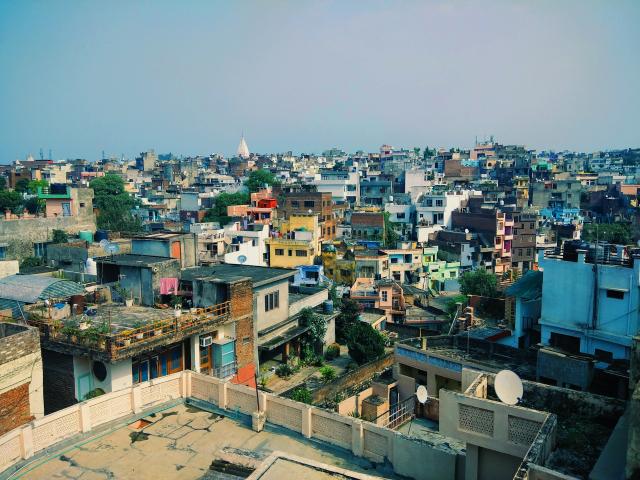
India’s Incremental Housing Success: The Pradhan Mantri Awas Yojana
The essential human requirement of obtaining proper shelter faces India's developing economy as its most substantial social challenge for delivering adequate yet affordable living spaces to its citizens. The housing crisis in India worsens as the country experiences fast urban development alongside growing numbers of people and poor people and those with low income need homes the most. The Pradhan Mantri Awas Yojana (PMAY) established itself as an important program in 2015 to solve the housing mismatch through an operational framework that is sustainable.
The PMAY housing initiative includes incremental approaches that succeed in providing housing opportunities to populations who require them most. This blog delves into the success of incremental housing under PMAY, its impact on urban and rural communities, and its potential as a model for global housing solutions.
The Vision and Framework of Pradhan Mantri Awas Yojana
To ensure "Housing for All by 2022" the Pradhan Mantri Awas Yojana (PMAY) entered the market with its ambitious mission. PMAY established a cross-cutting solution to address the housing crisis because one method could not solve all problems by encouraging the development of incremental housing. PMAY-Urban and PMAY-Gramin represent the two fundamental elements of this program which serve housing requirements in both urban and rural areas.
PMAY enables beneficiaries to build homes through incremental development by avoiding requirements for complete funding or resource donations at once. The method benefits low-income households by permitting them to build from the basic structure toward more substantial improvements when their financial situation improves. PMAY-G delivers resources including monetary aid with interest reductions coupled with land security for householders during their housing advancement.
The PMAY scheme introduces beneficiary-led construction by giving direct financial support to households to develop homes through their own preferences. Due to its user-driven strategy PMAY enables individual control in construction which leads to personal and culturally appropriate outcomes adaptable throughout time.
The Impact of Incremental Housing under PMAY
Through PMAY's incremental housing project millions of Indian citizens receive better and adaptable housing options at reasonable prices integrated with sustainability principles. The program provides continuity of housing security through incremental construction since families can build homes in stages thus creating economic stability and social empowerment.
Multiple outcomes from PMAY’s success include financial aid and workforce creation together with community progress. Through the use of government-funded home loans and monetary support programs low-income people now have access to decent residential spaces. The beneficiary-led construction model gives homeowners freedom to direct their housing development making it adaptable for individual needs. The program begins housing beneficiaries with minimal units which they can enhance into bigger or better homes when their financial stability develops. Such flexibility leads to lasting stability since it stops families from being forced to leave their homes.
Having a secure home base leads families to accumulate financial stability which enables them to dedicate resources to educational pursuits and health care services and business start-ups. Female beneficiaries construct their homes into successful business sites which enables them to generate supplementary household earnings.
The Home Loan Facility under PMAY enables residential construction in small increments which decreases pressure on town services and prevents sprawl of slums in cities. The proper planning of new housing creates organized residential areas that become suitable for living.
PMAY has launched a labor-intensive housing program through which it generated large-scale employment opportunities for the population. Local economies experienced economic growth because of the material suppliers together with construction workers operating under the incremental housing model. Homeownership brings about greater civic engagement which leads to enhanced community development participation among residents. Home buyers who expand their house while upgrading maintenance in turn complement their neighborhoods by strengthening community infrastructure while creating social networking systems.
Challenges and Opportunities in Implementing Incremental Housing
The success of incremental housing within PMAY has expanded but multiple obstacles require solution for further effectiveness enhancement.
- Numerous rural beneficiaries encounter financial problems when trying to borrow money to enlarge their houses. Financial institutions demand official paperwork and steady earnings from their borrowers though most members of low-income households lack these requirements.
- The construction quality of houses might suffer from substandard materials along with insufficient structural planning when homeowners implement incremental home construction methods. Proper technical guidance needs to exist together with assistance programs to guarantee both safety and durability of built homes.
- The majority of urban poor inhabit areas with uncertain land ownership since their settlement status is informal. When documentation is absent families face challenges to receive financial aid together with construction permits.
- The construction of houses alone does not create a habitable community therefore basic services like water supply and electricity and roads are essential components to achieve sustainable humanity in urban areas.
The incremental housing model provides multiple opportunities despite dealing with its various disadvantages. The combination of financial technology-based inclusion strategies and microfinance programs with regulatory improvements can tackle funding solutions and new building industry tools and private sector collaborations will deliver better quality and cheaper homes. The implementation of PMAY housing solutions establishes an excellent model for other developing countries which aim to build cost-efficient mass housing programs.

Comparing PMAY’s Incremental Housing with Global Models
An evaluation of India's PMAY incremental housing model exists through examination of successful global initiatives which build affordable housing solutions.
- The housing program of Chile under architect Alejandro Aravena provides half-complete homes along with necessary infrastructure which enables residents to make additions contingent upon their financial development. The model follows the same approach as PMAY by delivering affordable homes that allow households to personalize their spaces.
- Brazil operates Minha Casa Minha Vida as a large-scale housing initiative that aids low-income families yet favors massive housing construction over self-built housing expansions.
- South Africa through its RDP Housing program built numerous subsidized homes but failed to implement the expansion features found in PMAY's incremental design method.
- Thai policy supports residential development in Indonesia by promoting residents to build minimum structures which they can enhance over time.
The essential lesson from these examples demonstrates that incremental building systems establish enduring price stability alongside adaptability thus providing a sustainable public housing choice. The PMAY framework of India proves how cooperation between government funding and public engagement combined with financial backing results in residential success that benefits individual homeowners along with overall urban development objectives.
The Future of Incremental Housing in India
Plant-based development will continue to serve as an essential method for India to deliver guaranteed home ownership to all its citizens. Several policy measures alongside technological innovations should be implemented to enhance the effectiveness of PMAY in the future.
- Digital platforms integrated with beneficiary services will provide better automation of housing applications alongside land record management operations while easing financial transactions.
- Exclusively green housing solutions featuring sustainable materials with solar power and rainwater harvesting systems installed in incremental housing plans decrease both operational costs and environmental harm throughout the building's lifetime.
- Microfinance institutions together with housing cooperatives should expand their financial support programs to let families use easier access to credit so they can make efficient upgrades to their homes.
- Local citizens who participate in urban planning share their ideas about housing development to create residential projects that fit neighborhood requirements and build communities which sustain independently.
- Housing delivery speed and construction quality improvement can be achieved through Public-Private Partnerships where government works with private developers along with nonprofit organizations.
The Role of Government and Policy in Strengthening Incremental Housing
PMAY's achievement and expansion relies fundamentally on supportive government action through well-designed policy frameworks for incremental development. Sustained housing accessibility for all needs ongoing policy improvements coupled with streamlined funding mechanisms along with dedicated technical support for beneficiaries. The program's effectiveness will increase as it improves financial inclusivity together with regulatory effectiveness and infrastructure development. Housing expansion requires persistent government support along with flexible approaches so we can solve both metropolitan and countryside concerns and create enduring sustainability. As PMAY advances through continuous improvements the program will push India toward achieving universal access to housing through cost-effective inclusive residential solutions.
The PMAY Credit Linked Subsidy Scheme (CLSS) assists economically weaker sections (EWS), low-income groups (LIG) and middle-income groups (MIG) by providing subsidies on their home loan interest payments. The financial assistance enables thousands of families to build house improvements by stages. Additional policy solutions need implementation to enhance the effectiveness of this model.
A significant problem exists in urban and rural housing development because of unstable land ownership. Slum and informal settlement families struggle to obtain housing loans or government aid because they hold no legal ownership of their land. The PMAY incremental housing approach will experience greater operational effectiveness when governmental agencies promote stronger land title regularization efforts and documentation simplification initiatives.
The availability of construction materials together with skilled worker resources represents a significant factor that requires attention. The structural strength of self-built homes will increase when the government provides both financial support for affordable construction materials and training for experienced workers. The PMAY program should provide tax advantages together with lower-priced raw materials which will let low-income families afford home construction.
State governmental entities along with municipal legislatures need to work together in seeking appropriate land areas for housing purposes. The timing of urban housing projects gets delayed because of problems with land acquisition thus delaying housing scheme implementation. A combination of private and public partnership investments known as PPPs helps both speeds up land development projects and facilitates natural integration between new residential units and current urban and semi-urban environments.
The success of PMAY depends on awareness campaigns which enable all residents to benefit from its programs. The government funds remain underutilized because eligible families lack awareness about the entitlement of financial aid programs. Through digital platforms and combined with community programs and local awareness initiatives these gaps can be resolved by educating residents about incremental housing benefits together with loan application steps and construction guidelines.
India must refine its policies for the realization of its "Housing for All" objective to deliver inclusive sustainable growth. The incremental housing model of PMAY will benefit millions of families nationwide when legal systems receive strengthening and support mechanisms for financial aid combine with proper infrastructure planning.
The Social and Economic Benefits of Incremental Housing
The sustainability aspect of incremental housing extends past safe accommodations to benefit both people and families and society members as a whole. Homeownership security establishes economic empowerment by creating financial stability that unlocks better career opportunities across communities.
The creation of wealth stands as one main benefit incremental housing provides to families with low income. PMAY provides families with the opportunity to acquire property ownership because they pay rent in rental housing but never obtain permanent ownership. The real estate value of these properties rises as homeowners make successive improvements to their homes thus creating a financial reserve for upcoming generations.
Under PMAY women along with other beneficiaries experience the most substantial advantages when they become homeowners. Research indicates a woman's individual house registration increases household financial empowerment and societal rankings while expanding domestic control. Women PMAY beneficiaries turn their home property into profitable businesses that include tailoring services alongside food businesses and childcare businesses to produce family earnings.
From a social perspective, secure housing fosters greater community cohesion and stability. Houseowners allocate their resources towards high-priority local infrastructure projects and join both community development actions and neighborhood organization events. Local governance and public safety together with urban resilience become stronger because of this combined community action.
Secure housing produces two essential advantages by improving education quality and children's physical wellness. People who reside in unsafe environments like informal settlements confront sanitation problems while having to share limited space with others and face health complications that prevent children from attending school. Under the PMAY program children obtain a safe residential home that improves their student opportunities as well as enhances their health and academic success.
The implementation of incremental housebuilding techniques functions as a valuable tool to eliminate urban slum areas. The PMAY program promotes community-based house development instead of relocating families while they stay in their familiar environment. The approach enables urban growth to occur sustainably while protecting community relations while preventing forced population movements.
The economic influence produced by PMAY's homeownership expansion generates impacts throughout the construction business and banking sector and local economic activity. The employment market expands through the need for building materials and home improvement services and skilled workers and financial inclusion of low-income borrowers works to strengthen the banking sector.
The housing approach of regular growth offers advantages which stretch beyond basic shelter provision because it activates economic advancement along with social advancement together with community empowerment. The construction progress under PMAY's incremental housing approach helps families become financially independent through controlled home extension and supports construction activities and job creation and stimulates the local business market. Homeownerships built on secure ground lead individuals to make long-term investments in educational institutions and health services and startup businesses to create better social opportunities and lower deprivation levels in society.
The approach strengthens local communities through its design that helps residents stay next to their established support networks to maintain shared culture ties and build joint regional advancement. The initiative will keep raising its deployment of incremental housing programs.
Conclusion
Through the Pradhan Mantri Awas Yojana (PMAY) India attained a paradigm shift in its affordable housing tactics by adopting incremental housing as an enduring and all-inclusive solution. This approach lets families improve and extend their homes gradually which renders housing affordable yet enables homeowners to develop better horizons. PMAY has achieved success by resolving the main housing sector challenges involving financial obstacles and land title issues and urbanization pressures to create economic expansion and societal equilibrium.
Under the PMAY scheme incremental housing has effects which reach further than basic shelter provision. Through this program the population has achieved advanced living conditions while also establishing new positions for work and boosting equality between genders and making neighborhoods stronger. The program enables low-income families through its BLC model to determine their housing decisions that result in culturally suitable and adaptable homes which match their specific needs.
Even though PMAY succeeds in its mission certain hurdles persist especially regarding access to loans together with construction standards and insufficient infrastructure. The program's future expansion will require three critical factors: financial inclusion support together with technical expertise improvements and public-private partnership development. Toward greater efficiency and reach in PMAY projects both technology and sustainable materials as well as smart urban planning require integration.
The incremental housing approach under PMAY has become a worldwide example demonstrating how to achieve “Housing for All” objectives in India. Through a strategic blend of state backing with community engagement and market partners PMAY confirms that house construction goes beyond physical development because it creates both sustainable financial opportunities and personal human value and economic sustainability. The socio-economic character of India will significantly evolve through continued policymaking combined with innovative strategies that guarantee every family entry to secure homes that can grow over time.
Also Read: Evaluation of the HDA’s Khuda-ki-Basti (KKB) Incremental Housing Scheme


















LEAVE A REPLY