

Why India’s Affordable Housing Deficit Could Reach 30 Million Units by 2030
India is on the crossroad of urbanization. Being one of the fastest-growing economies with the largest population in the world, the country is under a heavier pressure than ever on the housing ecosystem. An increasing trend of urbanization, baseless increase in land prices, and stagnant wages in low-paying fields and a growing construction cost have led to an increasing difference between housing demand and affordability. What was a relatively small developmental niche, affordable housing now is a national priority and part of policy agendas, economic planning and social welfare requirements.
The supply of affordable units has always been low in comparison to the increasing demand over the years, even though the government has initiated several schemes such as Pradhan Mantri Awas Yojana (PMAY) and state-level housing schemes. Experts today caution that by the year 2030, the shortage of affordable housing in India may be pegged at 30 million housing units, which is an indication of endemic socioeconomic inequalities and structural market issues.
The deficit is not just a number, it is a complex crisis that includes life quality, health conditions, and economic stability in the labor market, cities, and society. Low and middle income home owners are still residing in crammed slums, rented informal rooms or in a bad shape, structures which do not provide any basic amenities like water, sanitation and electricity. With India on the verge of entering the stage where high-level infrastructure ambitions, digital innovation, and international economic ambitions are the order of the day, the capacity to deliver dignified, affordable housing will define the growth path of this country and its future sustainability.
Rapid Urbanization of India and the Implication to Affordable Housing Demand
India has experienced one of the most radical demographic changes in the 21st century in the form of urbanization. Millions of people every year leave rural areas and move to urban areas in pursuit of better jobs, education, health facilities, and improved career growth. Urban population in India is forecasted to have increased by 600 million by the year 2030 which is almost twice what it was in the beginning of millennium. This migration process has initiated the high housing needs in metropolitan areas, tier-II cities, and even the growing towns. This demand is, however, very skewed towards the cheaper unit as the majority of the migrants are categorized within the economic weaker section (EWS) or lower-income groups (LIG).
The Indian process of urbanization is special, in the sense that it has surpassed formal planning of infrastructure. Cities are growing up and down without much growth in affordable housing provision. The demand of affordable housing, which has been concentrated close to the city centers where industries are situated, is heightened. Scarcity of land and soaring land prices have however rendered it almost impossible to develop housing stock which would be affordable to low-income families. According to developers, who are interested in profitability, they would not want to build low margin affordable units in prime locations.
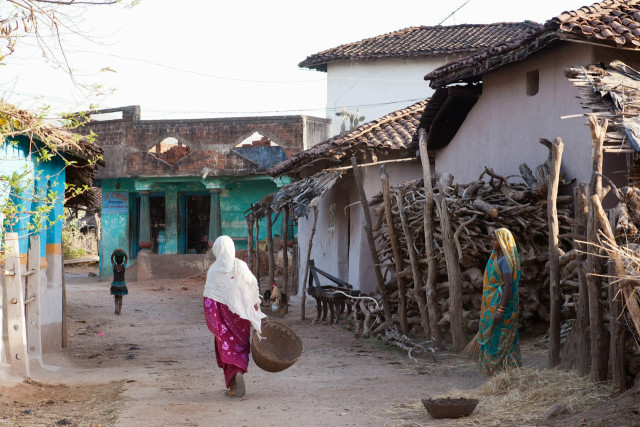
This demand and supply mismatch has had the effect of putting millions of people in informal settlements and slums. Based on multiple estimates, more than 65 million people in India are slum dwellers nowadays, which are not always safe, overcrowded, and unsanitary. As the rural-to-urban migration is likely to continue, the strain on the already stressed urban space will be even higher. The acute challenges are experienced in cities such as Mumbai, Delhi, Bengaluru, and Hyderabad, but small cities are also rapidly following due to the diversification in internal migration patterns.
Demand is also informed by rising aspirations. Newer generations, nuclear families and inter-state migrants are in search of more desirable standards of living, stable utilities and tenure. The long-term stability of renting small rooms in informal colonies is no longer possible, but the home ownership is also not an option because of high initial expenses, credit restrictions, and frozen incomes.
The impact of urbanization goes beyond the figures. It influences the transport patterns, household structure and the work vicinity. The long commuting situations in the peri-urban regions lead to economic and psychological pressure, diminished productivity, and deteriorated living standards. Cheap housing which is distant to employment centres cannot commendably attract people and their properties end up being idle as witnessed in some states following government-led housing programs.
The urban sprawl will be toppled to a great extent by 2030. There is a chance of the deficit reaching up to 30 million units; this will happen in case housing demands remain higher than supply at the current rates. The pace of urbanization is not going to decelerate, on the contrary, it will only increase because India is changing its economy to service, and manufacturing based. Until the city housing systems also adjust, the cities of the future will become more polarized, with posh high-rise towers looming over the expansive slums. It is not just about building more houses but about matching the construction with the affordability, access and sustainability.
The Affordability Gap is Growing, Economic Inequality, and Income Stagnation
The economic inequality is one of the key factors that contributed to the expansion of the affordable housing shortage in India. Although the growth in the GDP of the country has been impressive in the past decade, the same has failed to translate into corresponding wage increment on the low-income earning households. The increase in housing costs vis-a-vis the lack of growth in earnings has resulted in acute affordability problems. Preferably, affordability of housing is measured using the price to income ratio and in most Indian cities, the ratio is one of the high in the world. To a family with low income, it is hardly possible to acquire a formal house on the basis of conventional financing schemes.
The greatest imbalance is between the cost of construction and the purchasing power. Cement, steel, sand, and bricks are among the construction materials whose prices have increased by 30-50 percent over the last few years due to inflation, supply chain related problems, and rising production costs. Cost of labor has also increased as the laborers move across states. With rise in input costs, developers would transfer them to the buyers. However, the wages of the informal sector labor, domestic workers, driving, factory workers, and service workers have not been comparable. The gap continues to widen.
The poorer Indians are also exposed to structural financial limitations. Numerous families do not have any recorded income evidence or credit report and thus they cannot obtain formal housing loans. Banks are generally demanding permanent income and credit guarantee -Demands that lock out large percentages of the informal labor force. The dream of owning a home is still out of reach without financial inclusion.
The cost is further complicated by the high interest rate charged on a mortgage. Any little increase in the lending rates will greatly increase the monthly payments making homes unaffordable to the EWS and the LIG families. The rental markets do not have superior alternatives too. In the large cities, the growth rate of rent is surpassing the rate of growth in wages, and this leaves the family with little to save or invest in the future. This leads to a cycle where the households keep on renting and never get enough capital to make a purchase.
Housing deficit is also worsened by unemployment and underemployment. As its population of the youth is increasing, the increasing population of young citizens in India is an advantage to the country, however, the growth in employment opportunities has failed to match the new entrants into the labor market. In the absence of predictable, stable incomes, people will have no assurance to make long-term housing loans or other significant investments. The strain on rental accommodation and hence shortage will be increased as more young people continue to migrate to the cities.
In the year 2030, the affordability will worsen further unless there is an increment in income levels as much as the price of the housing as a result this would result to the estimated 30 million units deficit. Structural reforms will be needed to fill this gap: wage increases, financial inclusion, housing subsidies and rental assistance. It is not only developmental but also economic. The affordable housing crisis will persist without any obvious attempts on inequality.

Land Scarcity, High Land Costs, and Limited Urban Planning Capacity
One of the most costly portions of housing development in India is land. The cost of land in large urban areas has gone through the roof in the past twenty years due to the rising population density, speculation and lack of proper planning in these areas. Acquisition of land to develop affordable housing projects is a major challenge to developers because they tend to find lucrative pieces of land occupied by high end commercial/ luxury residential developments. The imbalance disfigures the housing market and it becomes hard to supply the low cost units in the city limits.
The scarcity of land in the city centers drives the affordable housing development projects into the peri-urban or fringe lands. Although such a strategy will lower initial expenses, it will lead to difficulties in the long term. Such peripheral locations usually do not have sufficient infrastructure: there is no proper transport, drainage, schools, hospitals, and jobs. This has led to low occupancy in most of the affordable housing programs in such areas which is the opposite of the intent of the investment.
One of the barriers is the complexity of land records. Acquisition is tedious and expensive due to outdated land titles, poor mapping and time consuming legal battles. Project delays add to the costs of projects and decrease their feasibility. To the government, the purchase of land to build mass housing will also be a challenge because there are compensational issues, prohibition of conversion of agricultural land, and political interference.
The city planning ability is also in lag behind the demand. Most Indian cities do not revise their master plans frequently or do not reflect the housing requirements. Consequently, a random construction, encroachment and the unplanned expansion restrict the chances of affordable housing in the future. Weakness in the implementation of zoning regulations to control development results in distorted patterns of development; over-commercialization of residential areas and lack of attention to the maintenance of land to accommodate the masses.
The deficiency in the coordinated planning of the municipal bodies, the development authorities as well as the state governments adds to the problem. As an example, when infrastructure development like metro railway or expressway occurs, it boosts the value of the surrounding land by a huge percentage, the cost of living affordability in those regions becomes impossible without prior land acquisition.
Respect speculation also increases the prices of land. Investors usually buy land as an asset but not to develop it but retain it until the price increases. This lowers the supply of land to be used in the construction of real housing. Inflation in land prices in some cities has increased by up to 300 percent over a period of ten years through speculative purchases.
Slum Growth, Slums, and Neglect of cheap Substitutes
India has been characterized by slums and informal settlements which have become a characteristic of its urban environment. Their growth is both the symptom and cause of the growing affordable housing shortage. As cities spread, and the formal housing provision has not kept up, the poor earn low-income families are inevitably tempted to construct improvised dwellings on empty land, river banks, railroads, or the edges of industries. Their development is fast due to the fact that they offer nearness to work, cheap housing and flexible tenure even without the basic services.
A significant cause of slum growth is the inefficiency of low-cost housing options. Housing schemes initiated by the government have provided millions of units, yet a number of challenges have remained: construction tardiness, poor place, lack of community amenities, and substandard building work. Most families are opposed to moving to such projects since they are distant to places of work, there is no transport facility, or are very expensive to maintain. There are cases of low occupancy of certain projects even when there is acute shortage of housing.
There have been also problems with slum rehabilitation programs. Though they expect secure, formal housing, implementation difficulties such as corruption, political opposition, vague eligibility, and poor rehabilitation packages act as frequently as a drag. The high-rise rehabilitation buildings prevalent in urban areas such as Mumbai have caused apprehension regarding the maintenance in the long run as well as social disintegration as well as lack of architectural designs that do not suit low-income families.
The deprived informal settlements usually have well-built community networks, which the households depend on. Movement of individuals without taking into account social organization may cause loss of livelihood and social cohesion. Most of the families do not want to go to far and unknown housing colonies since it is better to stay in informal settlements.
In addition, informal housing is in constant growth due to the fact that the planning of urban areas has never focused on affordable rental houses. The migrant workers, students and floating populations need the short-term rental services, not the long-term ownership. The unofficial nature of the rental housing drives them into the crammed informal rooms with high rents and poor conditions.
The high rates of slum development put strains on urban centres. It puts strain on water, sanitation, solid waste management and health systems. It poses environmental risks- especially when there is a flood or in places close to the polluted industries. It also causes social injustices where millions of people daily live undignified lives in stuffy areas.
Unless affordable options are availed, the number of slums in India may increase many folds by the year 2030. The housing shortage may be 30 million units not only due to unmet demand, but also due to the current inability to convert informal settlements into liveable and safe communities. The answer does not only reside in building new houses but also in improving slums, formalizing tenure, building rental houses, and incorporating low-income houses into the mainstream urban development. Absence of such measures will mean that the growth of slums will keep corresponding to the increasing housing shortage.
Conclusion
Deficit in affordable housing in India is a multidimensional issue because of the fast urbanization, economic disparity, scarcity of land, the growth of slums, delay in construction and policy gaps. Without control, these forces will potentially move the deficit to 30 million units in the year 2030, which will jeopardize social cohesion, economic output and quality of life of millions. Affordable housing is not just a brick and mortar building but one of the foundations of urban dignity, health of the people and holistic country building.
The narrowing of the divide will take a concerted effort between the state, the business sector, civil society, and the society. Through integrated planning, novel financing, transparent governance, and climate-resilient design India can develop an ecosystem of housing, which will not only fulfill their current needs but also be ready to the needs of tomorrow.
Also Read: Affordable-Housing-in-India-24072012















LEAVE A REPLY