

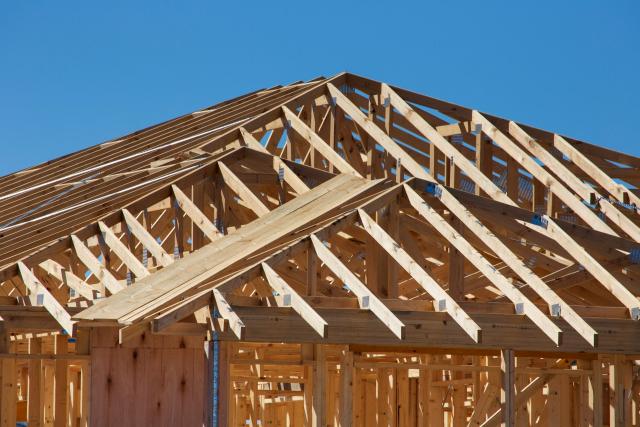
The Importance of Sustainable Practices in Affordable Housing Development
Affordable housing is usually discussed in terms of financial accessibility - developing homes which are afforded by low- and middle-income families. Nevertheless, in the modern world of ever-changing time, affordability needs to be considered in a wider perspective that incorporates long term sustainability. A housing that is not expensive to construct yet expensive to maintain, inefficient in its use or is environmentally poisonous cannot be referred to as affordable. Affordable housing development is not only a luxury and a trend, but sustainable practices are necessities, which have a direct effect on social equity, environmental protection, and economic stability.
Sustainability in housing is a form of designing, erecting and managing buildings in a manner that minimizes adverse effects of the environment and maximizes the quality of life of the inhabitants. It is the ability to better the energy efficiency, waste minimization, the use of environmentally-friendly materials, water conservation, and the ability to withstand climate change. When affordable housing is implemented using the principles, the operation costs are not only minimized, but the buildings also last longer and environmental footprints are minimized.
Housing industry is among the biggest users of natural resources and one of the biggest producers of greenhouse gas. In most developing cities, the fast urbanization has seen the practices of constructions being quantity-oriented rather than quality-oriented. Consequently, a high level of energy consumption, inadequate indoor air quality, and access to green spaces has become some of the problems in many affordable housing developments. Sustainability practices can solve these problems through the incorporation of innovative design, renewable technologies and community-based planning strategies.
In addition to that, sustainability and affordability go hand in hand. A green house is less expensive to maintain, healthier to live in and more resistive to environmental and economic shocks. To the governments and developers, sustainability incurs less maintenance expenses on the long run, as well as boosts the value of the property. To residents, it translates to reduced utility bills, increased comfort and health outcomes.
Sustainability is critical in the development of affordable housing, which is discussed in this blog. It analyzes the economic, environmental, and social aspects of sustainable housing; highlights difficulties in the implementation process; covers innovative practices and technologies; and looks into the future of green and affordable communities. Making sustainability part of affordable housing is not only concerned with construction of houses- it is concerned with creating a future that is a just, habitable and sustainable.
Revisiting Affordability by Sustainability
Affordable housing has long been defined mostly in terms of the cost of initial construction and monthly rent. Nevertheless, this definition does not take into account the long term costs incurred by the residents, including the energy bills, water consumption, and maintenance and healthcare expenditures in the living conditions. Real affordability should not only provide the operating and life-cycle costs, but also initial costs. Basing sustainability housing on these long-term factors, sustainable housing determines a new approach to affordable housing.
The use of energy-efficient structures, such as those used in buildings, save a lot of money on heating, cooling, and electricity bill. Green houses can reduce utility costs by 30-50 by means of more efficient appliances, improved insulation, and renewable energy sources, such as solar energy. The savings made by this directly improve the affordability of people with low income levels. Besides this, property managers and owners with the maintenance costs minimized by use of durable materials and efficient design; enhancing the financial sustainability of the board at large.
Health and well-being is another aspect of sustainability. Substandard housing is also a source of respiratory diseases, allergies, and stresses caused by molds, inadequate ventilation, and no thermal comfort. Sustainable housing takes into account the indoor air quality by implementing non-toxic substances, ventilation, and natural lighting, which provide healthier living conditions, minimizing medical bills and absenteeism. Sustainable housing, in this regard, leads to the physical and economic health.
Sustainable affordability should also be water efficient. Rainwater harvesting, low-flow fixtures, and gray water recycling systems can be used and enable to save on consumption and utility costs. In areas where water is limited, such measures turn the communities into more resilient ones as the precious resources are saved.
The notion that sustainability is an augmentation of expenses is being slowly questioned. Green materials and technologies may increase the initial construction cost by 255 percent, but in the long term, it will save a lot. The research always indicates that sustainable affordable housing can pay back in between five to seven years with energy and water saving alone. Additionally, sustainable building is becoming more accessible due to availability of green financing, tax incentives as well as government grants to the developers.
Sustainable affordability does not only concern efficiency in costs but rather stability and resilience over time. Energy and water prices are bound to increase as the effects of climate change increase. Sustainable housing can protect the vulnerable groups against such changes so that affordability is not only maintained in the current time but also in future generations. By transforming the understanding of the word affordability into the idea of sustainability, we are shifting away a short-term transactional paradigm towards a long-term perspective of housing as the basis of equity and even resiliency.
Sustainable Housing Development has several environmental Benefits
Sustainable homes play an important role in fighting the environmental degradation and climatic change. Buildings and their construction contribute to close to 40% of the total carbon emission on earth. Through the incorporation of sustainable developments affordable housing projects can be instrumental in ensuring that this footprint is minimised as well as ensuring that the natural resources available to the future generations are not wasted.
One of the most immediate means of minimizing the impact on the environment is energy efficiency. Passively designed buildings which take advantage of solar principles, i.e. making the most use of natural lighting and ventilation, do not need as much artificial lighting or air conditioning. Emissions are further reduced by the use of energy efficient appliances, use of LED lamps as well as high level of insulation. By incorporating renewable energy sources like solar panels or wind micro-turbines, the buildings will be able to produce clean energy, thus avoiding the use of fossil energy.
The choice of materials is also a significant factor. Sustainable housing pays special attention to the use of locally sourced or recycled, or renewable resources like bamboo, old wood, or recycled steel. Such decisions decrease the environmental impact of the production, mining, and transportation. Moreover, sustainable construction practices aim at reduction of wastes by taking the form of precision design and modular construction practices.
Water conservation also leads to sustainability by preventing the degradation of ecosystem and the pressure on the local water resources. The use of low flow fixtures, energy saving irrigation systems, and collection of rainwater minimizes the use of water without creating unfriendly stewardship of natural resources.
Another relevant environmental issue is waste management. Sustainable construction is attained through proper planning to reduce the level of site disturbance, as well as recycling construction wastes. Such attributes as composting programs and recycling programs motivate residents to become greener in their lifestyles during the existence of the building.
Biodiversity and resilience of community is also improved through sustainable site design. Green roofs, community gardens and landscape native to their areas all provide habitats to wildlife and enhance air quality in urban areas and lessen the heat island effect. These features not only conserve the environment, but also add to the quality of life of the residents.
Most importantly, a sustainable housing development will enhance community resilience to climatic conditions. The construction of the buildings is a way of minimizing the effects of floods, heat waves, and storms. Renewable systems of energy independent housing can even be operational during power outages, which will keep the housing safe and stable during crises.
In this way, affordable housing sustainability is a two-fold approach: it not only helps to save the environment but also makes houses more sustainable. By adopting the principles of sustainable design in the housing sector, it will also help in the global struggle against climate change and also show that affordability and environmental responsibility are not incompatible with each other—they are complementary to the challenges they will face.

Social and Economic Effects of Green practices
In addition to the environmental advantages, the sustainable practice in affordable housing has been producing strong economic and social impacts. Deeply rooted in them are stability, financial, social and community-based, which is far beyond the confines of individual buildings.
Sustainable housing is economically viable by generating long term savings to both the residents and developers. A reduced utility and maintenance cost will translate into higher disposable income available to the families, decreasing financial pressure and increasing the general level of life. The developers on the other hand enjoy the lowered operating costs, decreased vacancy rates and increased property worth. Sustainable projects are known to have reduced long-term risks and greater returns as more and more investors and government agencies have realized.
People are also employed in the process of building and maintaining the sustainable housing. Green building projects demand competence in the installation of energy systems, recycling of materials, and intelligent building technology. The new roles are beneficial in improving the local economies and enhancing workforce development, particularly among the underserved communities.
Sustainable housing encourages health, inclusion, and community integration socially. Availability of green areas, clean air and natural light promotes mental and physical health. Sustainable, mixed-income housing initiatives promote social mixing and eliminate segregation patterns that tend to be part of conventional affordable housing.
The other social good is education. Green housing projects often include community education programs, which educate people on recycling, energy savings, and working in a garden. These programs enable communities to have knowledge and be collectively responsible in the management of the environment.
In addition, sustainability is in line with social equity. Most of the time, poor people are the ones who suffer most due to the environmental risks, including inappropriate air quality, floods, or heat waves. Through incorporation of sustainability, affordable housing will lead to a reduction of these risks and provision of safer and healthy living conditions to the marginalized communities.
Sustainable housing sustains intergenerational equity in the long run, as the future generation will enjoy stable and efficient homes as well as cleaner environments. Sustainability benefits, both economically and socially, are therefore far wider than the project at hand and lead to the development of more resilient societies.
Challenges in Implementing Sustainable Practices
The advantages of sustainability with regards to affordable housing are quite obvious but the way to achieve mass adoption is not easy. The perception of increased of initial costs is the greatest hindrance. Sustainable construction is still regarded by many developers and policymakers as costly even though long-term savings have been realized. Such a perception is usually based on the absence of information, insufficient technical know-how, and outlived cost estimates.
Another challenge is financing. Housing projects that are affordable are usually based on intricate funding schemes with a number of public and private investors. Several factors (e.g., solar panels, high insulation, or green rooftop) are sustainable technologies which demand extra financing which might be not realized by traditional financing mechanisms. In most areas access to green loans or incentives on sustainability is still restricted.
The barriers to progress can be regulatory barriers as well. The uncertain state of developers is defined by inconsistent building codes, long approval process and ambiguous sustainability standards. Rigid zoning laws in certain situations do not allow the incorporation of renewable system energy or green design features.
Lack of qualified professionals also makes the situation worse. Green building practices need unique expertise in the modeling of energy, material science, and green certification. A significant number of affordable housing developers (particularly smaller nonprofits) also do not have access to trained professionals or the means to pay them.
Cultural and behavioral aspects are also influential. Any technologies that are not green by the residents may be underutilized, reducing the possible save on the energy. The sustainability must not be merely passed into the framework but must also be infused in the culture of the community and this requires continuous learning and involvement.
Finally, the opportunities of the sustainable design can be constrained by the land availability and urban density. In large cities, it might be hard to locate a place to put green roofs, gardens or renewable installations. To address these space limitations, out of artistic design and government subsidies are necessary.
The increasing climate change awareness and social equity is initiating change despite these challenges. Governments, financial institutions and industry leaders are working more to overcome these barriers- because they have come to realize that sustainable affordable housing is not something to choose but something to need.
Innovative Technologies and Strategies for Sustainable Housing
Sustainable housing revolves around innovation. Developers are now more equipped than ever to create affordable homes that are energy efficient, strong and economical with the introduction of new technologies.
Prefabricated and modular construction represents one of the best opportunities to sustainability. This is done through the production of building components in controlled conditions, consequently waste is reduced and quality is enhanced. Modular construction is also very fast and can be assembled onsite which saves on labor and the environment. This has particularly been helpful in the case of affordable housing where time and budget are constrained.
Smart thermostats, LED bulbs and high performance insulation are energy saving technologies that will reduce the energy used drastically. In combination with renewable energy sources, such as solar panels, micro grids, or geothermal heating, these systems would allow building virtually self-reliant communities. Other developments even sell surplus energy to the grid and this creates revenue to subsidize the system of maintenance and community programs.
The industry is also being changed by sustainable materials. New technologies such as hemp Crete, recycled steel and cross-laminated timber integrate durability and reduced carbon footprint. These materials usually do a better job than their traditional counterparts besides being eco-friendly.
Saving water technologies such as rainwater harvesting systems, gray water recycling and drought resistant landscaping enable saving of valuable resources and reduce utility bills.
These technological solutions go hand-in-hand with community-based strategies. Communal gardens, car share and community solar projects enable the residents to be actively involved in sustainability initiatives. Such joint efforts boost social cohesion and lower the use of resources.
Innovation is transforming sustainable affordable housing into more a niche idea to a realistic reality that can be scaled. With the increasing availability of technologies that are more affordable, it is likely that sustainability will become the new face of housing development in the future.
Conclusion
The concepts of sustainability and affordability are not contradictory, one is the flip side of the other. With the increase in construction costs, scarcity of resources, and the increase in climate effects, the need to develop affordable housing with the incorporation of sustainable practices is more of a moral and practical necessity. The benefits of sustainable housing are extremely far-reaching, which include, but are not limited to, lower energy and water bills, enhanced comfort and health, environmental protection, and social empowerment.
Sustainability will not come easy, yet there is a significant change in the right direction through innovation, policy changes, and intersectional cooperation. The knowledge gained today will determine the way that the generations to come will live, work, and prosper.
Ultimately, the sustainable construction of affordable housing is not just about building houses but taking care of neighborhoods, the environment, and making sure that all people no matter their income earn have a right to live in a safe, healthy and sustainable environment.
Also Read: A Case Of Sustainable Low-Cost Housing Projects In Kenya


-3dkuLgKhRD.jpg)
-49HupTvwDD.jpg)



LEAVE A REPLY