

The Impact of Rising Construction Costs on Affordable Housing Projects
Affordable housing has been considered one of the greatest factors of a healthy and just society. It guarantees that all families irrespective of income levels will live in safe, stable and decent homes which will make the communities stronger and the economy more balanced. However in the recent years, this necessary purpose has been threatened out more and more. The trend of increased construction cost is changing the face of affordable housing globally, pushing construction budgets to the edge, slowing down construction and even making it entirely unfeasible.
The construction costs are increasing at a very high rate as a result of a combination of factors such as the global supply chain disturbances, inflation, scarcity of labor and new environmental regulations among others. Costs that used to be manageable, predictable are now volatile and uncertain and it has been getting harder and harder to plan effectively by the developers and housing authorities. Cost overruns in most situations compel the developers to reduce the number of units or even compromise quality, which is a direct sabotage of the social mission of affordable housing programs.
The effects spread throughout whole communities. Families stay on waiting lists years, neighborhoods fail to get the much needed revitalization and governments are finding it hard to achieve their housing goals. To the nonprofit developers and community housing organizations, who are already operating on razor-thin margins, the financial burden is devastating.
This blog examines the cause and effect of the rapid increase in construction costs, how the increases affect affordable housing projects, and what can be done to control the effects of the increases. With a better comprehension of how the forces of the market can interplay together with policy imperatives and creative reactions, we have a better chance of mapping a way forward, one that protects the hope of affordable housing in an age of escalating prices.
Economic forces that contribute to increasing the construction expenses
The causes of the rising costs of construction can be described as multifaceted and international in essence. Among the most apparent sources of contributions is the skyrocket in the cost of materials. The major construction materials, which include steel, lumber, concrete, glass, and insulation, have recorded a significant increase in price over the last ten years. In part, this inflation can be attributed to the disruption of the global supply chains that have become even stronger as a result of the COVID-19 pandemic, the conflicts between geopolitical powers, and trade barriers. Prices were skyrocketing when production was not so fierce during the pandemic and demand increased at a faster rate than supply could go up.
Moreover, fuel and energy prices have been on the steep and this has raised transportation and manufacturing cost of building materials. Even minor supply network issues in a globalized chain in a shipping or energy market can cause a ripple effect throughout the construction industry. As an illustration, the cost of freight can be high and the number of shipping containers may be insufficient to serve the demands of imported raw materials which affects the cost of materials in a rather noticeable way.
Another problematic factor is labor shortages. The construction sector is confronted with an aging workforce with less young employees joining skilled occupations. The pandemic has seen a lot of experienced professionals retiring and in some countries immigration restrictions decreased the influx of skilled labor. This shortage, which has increased the wages, has further increased the cost strain as housing construction remains in high demand.
Environmental and regulatory factors are also of great concern. Governments are well justified in making demands that are more sustainable and green in the construction process- with new building codes, new energy efficiency requirements, and new environmental compliance requirements. Although these regulations enhanced the sustainability in the long term, they frequently involve more investments in special materials and technologies, making a company more costly in the short term.
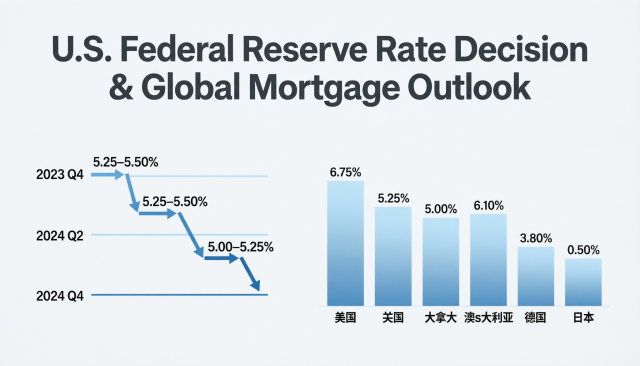
The problem has been aggravated by interest rate increases and inflation. The increased costs of borrowing make the cost of funding project more expensive to developers, particularly long term development of affordable housing which tends to be based on complex financing arrangements. Meanwhile, inflation diminishes the purchasing power of the private and government budgets, devaluing expended funds before construction of the projects even commences.
A combination of such forces results in a feedback loop that pushes the cost of construction gradually upwards. It is a deadly combination of expensive materials, labor shortage, stricter regulations, and unpredictable financing, which all developers are going through a perfect storm of difficulties. These terms are particularly brutal in the case of affordable housing projects, in which profitability margins are already slender.

The impact of Cost Escalation on Budgets of Affordable Housing
Developers of affordable housing are constrained in a special way in terms of finances. The affordable housing is usually constrained by fixed-price models with income-based affordability guidelines, unlike market-rate projects which can absorb any rise in costs by increasing rents or sales prices. It implies that developers will not be able to merely transfer any extra costs to tenants or purchasers.
In situations where the costs of construction are increased unexpectedly, the budget breaks can be colossal. Any 10 15 percent rise in materials or labour can lead an entire project into infeasibility. The outcome is usually a necessity to re-consider project scope, to encourage more finance, or painful trade-offs in design and facilities.
Cost volatility especially is sensitive to funding mechanisms of affordable housing. There are numerous projects, which are dependent upon a mix of these, subsidies of the government, low-income housing tax credit, and grants which are sanctioned months or years prior to construction. In case of a higher material price spike during such period, the funding package might stop paying all the costs. Finding additional funds may also be a time consuming process that postpones projects even more.
Delays in themselves are expensive. Every month of idle time contributes interests, overhead administrative costs, and inflationary decadence of project budgets. Developers can get in a vicious cycle where costs are raised, project stalls and the additional delay results in additional cost increases.
Other projects strive to reduce costs by doing value engineering- using substitutes of some materials or design elements with cheaper ones. Although this may assist in balancing budgets it tends to in most cases compromise on long term quality and sustainability. The cost of maintenance of lower grade buildings would be increased later on, which would have conferred a cost on short term savings.
Moreover, several of the cheap housing developments depend on the collaboration between governmental bodies, the development companies, and non-profit entities. The increasing cost stretches these partnerships with each of the partners possessing varied financial constraints and risk sensitivities. The difficulty in balancing funding time and responsibilities increases with the tightening of the budgets.
Finally, the increase in costs decreases the total supply of low-cost units. Developers can decide to construct fewer apartments, move to the smaller unit sizes, or give up the projects altogether. It has social consequences in itself--in particular in the cities where homelessness and housing insecurity are already becoming a matter of concern.
Affordability crisis is not merely a byproduct of housing shortages or land prices, however, and more and by product of the inflationary pressures inherent in the very construction process.
Difficulties of Developers and Non-profit Builders
The recent increase in building prices has presented a sheer level of operational and strategic implications to developers and nonprofit housing organizations. These organizations, which are usually mission-driven and limited in their budgets, are being compelled to change very fast in a highly unpredictable world.
Financial viability is one of the issues. Layered financing models, which involve tax incentives, grants, municipal bonds, and private loans, are important in affordable housing development. All these sources of funds have their application schedules, reporting and limitations. Renegotiation of these sources of funds turns out to be a nightmare logistically when the costs increase in the middle of the project.
Particularly, nonprofit developers are deprived of financial flexibility in comparison to the private companies. They find it hard to digest overruns or to get in new capital. This has meant that most projects are either postponed or downsized down to 60 or less units- the planned 100 unit development in some cases being cut down into 60 or less.
Procurement and supply chain management has also emerged as one of the greatest impediments. Any material shortage may create a delay in the project by months or even years. Builders who previously had certain delivery times are now faced with unstable lead times, and erratic prices. Non-profits are usually the last to receive limited supplies because they are smaller and do not have the purchasing power of larger commercial developers.
These problems are then worsened by administrative obstacles. Low cost housing developments can involve a lot of compliance reports, zoning permits and community consultation all of which are time and cost consuming. Minor administrative costs can be heavy when project budgets are already stretched to their limit.
The factor of human cannot also be ignored. The rate of staff burnout, staff turnover, and stress levels have increased throughout the industry. Project managers have to operate in a state of constant uncertainty, balancing the expectations of stakeholders and reducing financial and logistical risks.
Finally, the challenges are posing to sabotage the mission of the affordable housing providers. It is the market forces that are squeezing the very organizations that are trying to bridge the housing gap themselves. Without structural changes or more public support, most of the nonprofit developers will be forced to reduce operations or leave the affordable housing market altogether.
Policy, Funding and Programme Governmental Implications
The spill-over of increasing construction prices goes far into the public policy and government programs that aim to assist in the creation of affordable housing. The majority of the public housing programs are financed by fixed amount, tax credits or long-lasting grants. The actual value of these funding instruments reduces when the increase in costs is higher than projected.
Budgeting of housing programs is done by governments years ahead and cost estimates used is the historical data. However, in the age of inflation those estimations soon become obsolete. Projects previously appearing viable when budgets were more optimistic can get funding deficits almost overnight compelling policy makers to either inject more funds in it or cancel the projects.
In most areas the housing authorities have been forced to limit the units that are to be constructed in one year just because construction became too expensive than their budgets. It is socially important as such, waiting lists in affordable units become longer, and homelessness prevention services lose essential resources.
It has also impacted on public-private partnerships as one of the mechanisms of offering affordable housing. The less willingness of developers to engage in projects supported by the government might arise because of cost inflation and reduced profit margins. Governments might have to provide more attractive subsidies or tax incentives to maintain the interest of the private partners, which puts an extra burden on government budgets.
Matters can also be complicated by the local zoning and permitting laws. As much as these policies are meant to make the construction safe and sustainable, they may also increase time and costs of construction. There is a new review of regulations going on in places to see how they can streamline approvals and still maintain quality.
The policymakers at the federal or national level are now realizing that the existing funding paradigms need to change. Indexed subsidies Indexed subsidies, or subsidies which automatically vary according to the state of the market or inflation, are becoming a popular solution. In the same vein, governments are considering direct investment on material production and training of the workforce to stabilize their supply chains.
Finally, the escalation of construction prices is also pushing the re-assessment of the design and realization of the public housing programs. Even the best intended efforts can find it difficult to keep up with what is happening in the market without adaptation of funding formula and procurement policy.
New Solutions and Cost Reduction Policies
In spite of the above challenges, innovation in the affordable housing sector is encouraging. Developers, architects, and policymakers are looking into new avenues to create smarter, faster and cheaper yet maintain quality.
The emergence of prefabricated and modular building is one of the most promising trends. The waste can be minimized, the construction schedule can be shortened, and the delays caused by weather through the production of building components in controlled factory conditions. The modular housing also gives the opportunity to predict costs more accurately and expand more easily.
The planning and design process is changing due to the digital technologies of Building Information Modeling (BIM) and 3D printing. BIM allows the optimization of materials, the timely detection of conflicts in the design, and the enhancement of the work of the contractors. The beginnings of 3D printing already show the possibility of producing affordable housing units within a short time and at relatively low costs.
Green building is also becoming useful in the long-term. Although green materials might be expensive in purchase, renewable energy systems and energy efficient designs can save a lot of money in the long run. Other developers are using the carbon credits or sustainability grants to counter these initial investments.
The other potential solution is the use of public land. Governments can offer land at lower prices than the market rate on affordable housing developments and this aspect is the biggest element in the development cost. This can also be combined with more efficient permitting and density bonuses, thereby making projects much more viable.
Monetary innovation is also important. The blended finance approaches, that is, the mix of the government subsidies and private investments and philanthropic funds, are becoming more popular. Other areas are trying social impact bonds, which have investors gaining returns pegged on quantifiable social outcomes like the number of families accommodated.
These solutions revolve around collaboration. With enhanced collaboration among governments, the developers, and community organizations, the stakeholders are able to distribute the risk and resources more effectively.
However, these innovations are not a panacea to the affordability crisis; nonetheless, they all point to the direction of a stronger housing system that is more adaptable to the market pressures.
Conclusion
The increasing construction cost is one of the greatest threats of affordability housing projects sustainability. These costs have transformed the way developers, governments and nonprofits deliver housing due to volatile global market conditions, labor market issues, and complicated regulations. The outcome has been a crunch of strained budgets, projects are delayed in completion and policy makers are under mounting strain to come up with new solutions.
But here there is opportunity in difficulty. New technology, creative financing, and more effective policy structures are creating the path to a more robust and adaptable housing ecosystem. The future of affordable housing lies in the capability of the sector to implement these new technologies without negating the essence of the sector delivery, which is to ensure safe, dignified, and affordable accommodations to everyone.
The solution to the crisis of escalating construction prices must be undertaken on all levels: among the governmental institutions, between the individual investors and the community. The commitment to affordable housing, and the creative approach to problem-solving, can help to make sure that affordable housing stays one of the foundation blocks of inclusive and successful societies.
Also Read: A Holistic Approach to Supporting Resilient Reconstruction in Remote Fiji











LEAVE A REPLY