

How Slum Dwellers Earn Without Bank Accounts
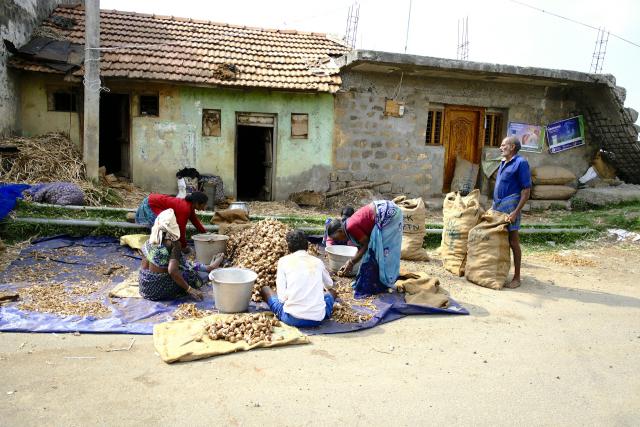
Around the world, slums are commonly associated with poverty, violence, and a lack of opportunity. However, within these densely packed, neglected areas of the city is an economic oasis that sustains whole metropolitan regions. One of the most intriguing yet overlooked features of slum economies is how people living there manage to sustain their livelihoods, especially in the absence of modern banking systems. Millions of people living in slums function without bank accounts, credit cards, and loans, and still manage to earn, save, and spend in a self-sufficient manner.
The lack of banking infrastructure in slums is not only a logistical challenge, but also stems from social and economic exclusion. This is the reality for many of these informal settlements. Many residents remain unbanked for a number of reasons; lack of personally identifiable documentation, a general aversion to institutions, minimum balance stipulations, and mistrust from prior dealings. However, banks do not help the cause by choosing not to operate in such localities due to perceiving them as high risk, low return zones. Regardless of these hurdles, life does not stand still in the slums. Residents adapt and sometimes even thrive financially in inventive ways to the available resources through community-based systems, informal credit, mobile money, and entrepreneurship.
Grasps the extent to which slum residents earn without the convenience of a bank is important for multiple reasons. Firstly, it goes against the assumption that if there is no bank, there cannot be any economic activity. It highlights the existence of informal subsistence economies whose contribution to the economy’s output is far greater than its appreciation.
Most importantly, it demonstrates the reality of a financial system on a policy level that is blind to people at the margins of the economy serves. In this paper, I will analyze the methods employed by slum dwellers or residents to earn a living payment, banking structures absent, and what measures need to be set in place to also move them towards more beneficial financial systems.
Informal Work and Daily Earning
The most innovative solution to solving the problem of getting paid or earning a living is through informal employment. All over South Asia and even Africa, and Latin America, payment is made for work done to under-skilled, low-education positions that are very easily accessible for them. These roles includes manual and domestic work, street vending, collection of refuse, transport work, as well as many other services. Because of the extraordinary nature of these claim to payment there is no payment by cheque or deposit.
For instance, males venturing from the slums have easy access to construction sites where they could find jobs. These workers are paid on a daily or weekly basis and are perpetually paid in cash. Women's work is usually relegated to domestic work where payment is made in salary envelopes on a monthly basis by the employers directly. This type of economy, though informal and fraught with danger, is both flexible and versatile. Workers are able to freely quit or accept jobs at will, choose their working hours, and, in many instances, find work through informal networks.
Another important source of revenue for window vendors is selling fruits, vegetables, clothes, and other household products from stands, carts, or even blankets laid out on the ground. They are able to make the sales immediately, get the cash right away, and buy more stock immediately With vendors facing police guard raids and eviction, and competition, this business model best fits them financially—it operates on a daily cash cycle and does not depend on formal financial institutions.
Driving rickshaws, doing some odd jobs, and even street collecting are other more relaxed forms of work on the informal side. Recycling, which includes collecting plastics, cardboards, or metal scraps, is surprisingly profitable within urban settings that are characterized by high waste production. There is a bustling market where waste pickers sell their junk for money, which acts as a cornerstone in that region's waste management ecosystem. Even though slum dwellers who work in this sector spend a lot of their time, often over 12 hours, working under grueling and challenging conditions, a significant number of them are still able to fulfill their daily requirements without ever having to interact with a bank.
Though this sector is entirely uncategorized has no formal regulations, it does prove important for one’s social and healthcare safety nets. Such an approach helps slum inhabitants maintain a stable economy and sustain themselves throughout difficulties which are otherwise unattainable when adhering through stringent financial systems.
Financial Skills Developed in the Community
Without banks to assist them, slum residents often form their own community-based systems to earn, save, and manage money. These informal networks function on the basis of trust, social understanding, and relationships, allowing them to work incredibly well where there is no institutional support. Some of the most popular are rotating savings and credit associations (ROSCAs) where participants put together a common money pool that is periodically drawn from or informal lending circles. These systems not only help to make income, but make it easier to save, invest, and get credit all without the banks being involved.
In a typical ROTSCAs, a set number of people is formed and each of them contributes a certain set amount weekly or monthly into a common contribution fund. The total fund collected is given to one member of the group in each cycle, in a rotatory manner, with every member getting a turn. This system provides participants with lump deposits that can be used towards a business, emergencies or household expenses. Since the group is composed of neighbor's, co-workers or relatives, trust becomes an important factor and as such, defaults are surprisingly uncommon.
In addition, money lenders perform a specific function in the community that is quite important. While commonly acknowledged for their expensive interest rates, they provide a basic service that enables swift and easily accessible loans without any required collateral. Such lenders have a personal relationship with their borrowers and tend to work in specific geographic areas, which makes the entire system of loan repayment more interpersonal and immediate. Without ever stepping into a bank, borrowers can secure pocket money loans to purchase stock for vending, repair a rickshaw, or even settle school fees.
These also include informal employment referrals wherein some individuals with more advanced financial status assist others in getting employment or share clients. In certain societies, successful vendors or even small scale businessmen double as unofficial employers for other vendors, thereby creating a local interdependent system. Items of lesser value, too, can be sold to other neighbors and paid for by installments, all based on confidence and mutual understanding.
These systems have their risks too. There is the possibility of disputes, defaults, and theft, and none of these have legal recourse. Nonetheless, the close-knit community dynamics tend to keep most individuals in check. More often than not, the informal financing mechanisms are custom designed for the needs of the slum residents and provide immediate results far more than any formal institution can offer. They show that even in the most deprived settings, the most ingenious forms of finance emerge not through technology or regulations, but rather due to the sheer need for human empathy and interaction.
Entrepreneurship and Microbusinesses
Micro businesses often provide necessary goods and services in slum regions, showcasing remarkable self-driven initiative and a strong business sense. This phenomenon is not limited to poverty-stricken regions, but serves as an example of the uncultured potential of entrepreneurship. Tight finances lower the requirements on these micro enterprises, leading to a culture of small proprietorship that taps into community needs. Since the lack of formal employment opportunities makes self-employment a necessity, people are stimulated to give birth to new ideas.
Venturing out on the streets often leads one to set up shop on the sidewalk where they can earn a living selling different products. Food and grocery items along with clothing are at the tips of one’s fingers when walking down the street. Everything is priced low to increase sales while volume remains high, providing enough income to support families. Cash transactions are preferred and goods are purchased through other non-paying sources making payment to suppliers optional while providing them a buyer’s market.
Launching a business from home serves as an important additional income stream. For instance, women often run salons, cater, or provide sewing services from their homes. Unlike other businesses, these have relatively simple and low entry requirements. Such economic activities operate outside the bounds of the formal economy. For marketing, they rely on social networks and personal recommendation. It has been noted that savings are utilized to either support families or reinvested into the business thus enabling a continuous cycle of self-sufficiency without requiring formal loans, bank help, or other traditional financing methods.
Some residents of the slums also provide mobile phone repair, mechanical work, tailoring, and tutoring services. Such services do not require a significant amount of structure but do rely most on a strong reputation and skills. Cash is the most prominent form of payment while they set prices that are open to discussion regarding the customer’s ability to pay. This market responsiveness ensures the market remains dynamic and more accessible.
An emerging form of micro-entrepreneurship assist those living in slums, allowing them to use mobile phones and social media platforms to conduct business. People living in slums may lack a bank account but a large number do have access to mobile wallets or SIM card money transfers. A functioning form of digital financial involvement is made possible through these devices, allowing entrepreneurs to widen their reach to areas beyond their immediate surroundings.
Entrepreneurial activities in the slums are powered by necessity, imagination, and a combination of hard work and problem solving. It enables people to earn a living on their own terms and escape the constraints of traditional financial systems. While lacking access to banks might seem as an additional burden, for many slum inhabitants, it nurtures self-reliance and innovation. .
The emergence of mobile money and digital wallet services helps those living in slums earn and manage their money without being tethered to a formal bank account. Unlike the residents of the slums, who do not have access to formal banking due to lack of documents and other sustaining factors, mobile technology greatly subsidies access to banking services, even in the most remote areas.
It is now possible to send, store and receive money even with basic mobile phones due to mobile money services. No bank account is required—only a registered mobile SIM—making it a safe and convenient way to manage cash. For slum dwellers, mobile money serves as a more secure alternative to storing physical currency at home or carrying large amounts of cash through unsafe areas. In countries such as Kenya (M-Pesa), Pakistan (Easypaisa, JazzCash) and India (Paytm) these mobile money services have become vital financial resources for millions of unbanked citizens.
Mobile wallets are widely used for payments by small business vendors, rickshaw drivers, and even home service providers. It is now common practice for people to accept payments directly into their mobile wallets, thus making cashless transactions simpler. Some mobile platforms also extend basic credit, bill payment and saving services, giving slum residents the ability to perform a variety of financial activities that were previously limited to traditional banking institutions.
Mobile money aids in domestic and international remittances. Those working in cities or overseas are able to securely and easily send money to their relatives residing in slums. This consistent transfer of funds can improve the financial condition of slum households by helping them meet essential needs or by providing the opportunity to invest in small businesses.
Mobile money remains a step short of attaining complete financial inclusion, and serves as a link for the unbanked individuals to the digital world. It enables individuals residing in slums to access resources that proficiently aid in economic participation while providing them a sense of what future support tailored to their conditions would if adapted inclusive to marginalized populations on an existence looked like.

Barter, Trust, and Non-Monetary Exchanges
In the slums, where financial and banking services are available in restricted capacity, trust and barter systems dominate the economy. These systems operate at the level of families and small businesses, using community trust and established bonds. In such resource-poor regions, individuals attempt to fulfill responsibilities in a sophisticated manner without using money or advanced technology. In certain cases, food vendors offer lunch in exchange for laundering clothes while tailor services for groceries may also occur. Such arrangements depend heavily on trust and social credit. They are also based rot on legal frameworks of contracts but on deep cultural self-regulations.
Labor is also sometimes taken in lieu of monetary wages, Children are strategically assigned household chores to enable them to receive tutoring services from their neighbors. Or, one may assist an individual with home construction work and receive help in return for other repair works later. Such relationships, although informal and often undocumented based on mutual understanding, foster community togetherness, empowerment, and a sense of social union which no bank or formal institution can establish.
Although such systems are not scalable or reliably universal, they act as a vital cushion during difficult times. They focus on a self-help economy that is based on solidarity instead of profit making. In regions that completely isolate currency and economic activities, trust functions as the currency and relations become a bank that yields the most primitive but highly indispensable resources: Worth, Credit, Trust—albeit in an incredibly local and profoundly humane manner.
Conclusion
The informal economies and support networks that enable slum residents to manage their finances alongside providing service saves sent cap from which seeks work and turns to lend enables to yields undergo area. The unprecedented ability of slum dwellers to earn a living without the traditional support of a bank is perhaps best illustrates for ingenuity, adaptation, and remains resilience alongside innovations.
Examples of diverse economic activity that occur within the framework of slums include informal work, self-employment, participation in community-based savings clubs, and the use of mobile payment systems. Such informal practices enable individuals to earn a living, but even more important, they provide an opportunity for solidarity and social support in contexts where formal social protection systems do not exist or are insufficient.
These informal systems should not be romanticized, however; these gaps come at a cost. The absence of adequate legal frameworks, social protection, and scalable credit facilities hinders the possibility of attaining long-term stability and growth. Residents of informal settlements are susceptible to exploitation, illness, and abrupt financial shocks. The challenge, then, is not how to replace informal finance but how to strengthen these systems with supportive policy frameworks, digital access, and participatory development strategies.
The narrative on financial inclusion has to shift towards the lived experiences of earning without the support of banks. Incorporating the informal economy into the broader financial system should not translate into eradicating the informal economy, but rather invite us to appreciate its dynamics and build supportive structures. Slum residents have demonstrated their ingenuity in creating and sustaining operational economies within their means. Now, they need institutions and policymakers to embrace them.
Also Read: 10 Biggest Slums In The World: Understanding Urban Poverty



-3dkuLgKhRD.jpg)
-49HupTvwDD.jpg)









LEAVE A REPLY