

How Public-Private Partnerships Are Helping Expand Social Housing in Ghana
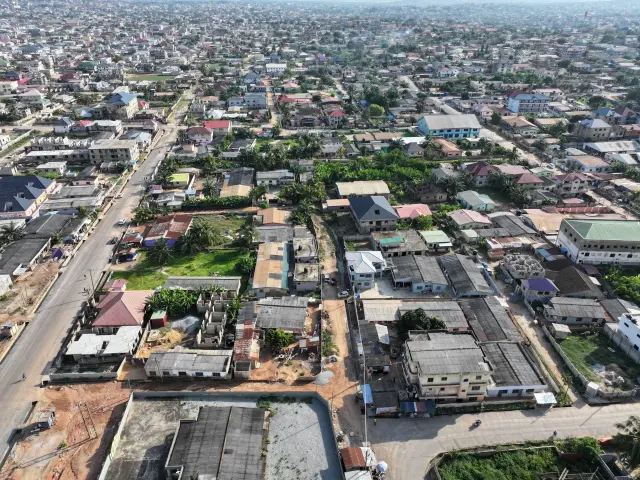
Housing is also one of the greatest developmental problems of Ghana today. The need of affordable housing has been in high demand as the population of the country keeps on increasing and the urbanization process gathers pace.
 Accra, Kumasi and Tamale are some of the cities that are
developing so fast due to migration of people from rural areas who come to
seek jobs, education and good living conditions. Nevertheless, the rate at
which houses are being developed has failed to match this growth, meaning that
there is a huge housing deficit which is hurting millions of people in Ghana.
This deficit has become a major policy concern that social housing is meant to fill. Social housing is a housing program that aims to supply low- and middle-income earners, unable to afford housing in the market, with affordable accommodation.
Governments in most countries have
supported social housing programs to provide access to safe and decent living
conditions to the vulnerable groups. The government in Ghana has made a number
of efforts in expanding social housing by involving the public sector but the
efforts have mostly been hampered by financial, logistical, and institutional
problems.
Public-Private Partnerships (PPP) is one of the most promising strategies that can be used to deal with these challenges. Public-private partnerships refer to the grouping of government institutions and companies of the private sector to fund, build, and operate infrastructure or developmental projects.
PPPs in the housing industry
would allow governments to capitalize on the existing private capital,
technical expertise and project management expertise to hasten the acquisition
of affordable housing.
The idea of PPPs has become more and more popular in Ghana where policy makers are trying to find new methods of resolving the issue of the housing shortage without overloading the state budget.
Government
collaboration with the private developers, financial institutions and investors
will enable it to increase the scale and efficiency of the social housing
projects more than would have been possible under the government funding alone.
This blog examines the role of public-private partnerships in increasing social housing in Ghana. It looks at how PPPs help in resolving the housing shortage, how partnership agreements are formed, executed, the advantages and difficulties of such partnerships and the overall economic and societal effect of housing projects that are driven by PPPs.
By comprehending the operations of such partnerships, stakeholders are
likely to value the potential of such partnerships in changing the housing industry
in Ghana and its ability to provide affordable housing to millions of citizens.
Ghana’s Housing Deficit and the Need for Collaborative Solutions
The housing deficit in Ghana is not a new issue, and it has
faced the same problem over the decades as the population of the nation
continues to rise. It has been estimated that Ghana still requires more than
two million more housing units to accommodate the existing population that
requires housing. The deficit is more significant, especially in urban centers
where every year, large numbers of people are attracted by the economic
opportunities.
One of the main causes of housing demand is urban
migration. Most people leave the rural areas and relocate to urban areas to
find jobs and improved living standards. Nevertheless, the growth of housing
facilities in urban areas has not been able to match the migration rate. This
causes the majority of families to find low-cost accommodation in urban areas,
which causes overcrowding and the growth of informal settlements.
The Ghanaian government has been at the forefront of housing development in the past. The public housing projects came in phases following independence to offer accommodation to civil servants and urban dwellers.
Those efforts covered the development of residential units
under the control of the government and housing estates. Although these
projects offered good housing opportunities, they could at times be small and
incapable of meeting the increasing housing demand.
Financial constraint is one of the primary issues
encountered by housing initiatives that are led by the government. To construct
high quantities of residential units, large capital is needed and the
government budgets have to cater to other sectors that are very vital like healthcare, education and infrastructure. This has led to the inadequacy of the
use of public funding in the development of housing.
Besides issues of finances, land acquisition and
construction costs are also seen as issues in the housing sector. The Ghana
land tenure system is complicated, which may slow down housing development
plans and add to the development cost. Equally, increased prices of
construction resources and workers create challenges when it comes to the
construction of affordable housing in large quantities.
These issues demonstrate the necessity to develop new types
of housing development. Multi-stakeholder collaborative solutions have become a
promising approach to increasing the supply of housing. One such approach is the public-private partnership, which enables governments to collaborate
with the actors of the private sector to exchange resources, risks, and
expertise.
Understanding Public-Private Partnerships in the Housing Sector
One of the mechanisms that have gained more relevance today
in terms of infrastructure and development projects is the concept of
public-private partnerships that are being imposed in different parts of the
globe. Within housing, PPPs entail the establishment of formal contracts
between government bodies and corporations to design, fund, construct and even
operate residential estates.
The very essence of PPPs is the distribution of roles and
resources between the state and the businesses. Governments normally give
policy direction, regulatory frameworks and occasionally land or infrastructure
support. The monetary capital, the construction know-how, and the project
management skills are provided by the partners in the private sector.
The PPP arrangements are common in the housing industry in
Ghana with government agencies and the real estate developers and financial
institutions cooperating with each other. The government can provide land to
build housing in the area and streamline regulatory licensing; the development
of housing units, and project funding is done by the private developers.
The build-and-transfer arrangement is one of the common models
applied in housing PPPs. Here, the housing units are developed by the
private developers and they and then sold to the government or the specific
housing authorities after the development. The other model is the build and
operates model, whereby the partners of the housing project stay involved in
the management of the housing project over a given time.
PPS have a number of strengths over the traditional public housing programs. The ability to attract huge sums of private funds in the development of housing is just one of the key advantages.
Governments usually
experience budgetary limitations, yet the private investors can be ready to
finance the housing projects in case, corresponding incentives are provided and
the risk sharing schemes are offered.
The participation of the private sector also brings in more
efficiency in undertaking a project. Developers are usually highly experienced
in construction management, purchase and plans of the project, a factor that
may help to minimize setbacks and higher costs.
Moreover, PPPs promote convenience in building designs and
construction. The developers can also embrace the new building technologies
like prefabrication or modular constructions to minimize costs and expand the
project schedules.
Irrespective of these benefits, effective PPPs need
effective governance and regulation. Partners should have clear contractual
agreements which specify the roles, responsibilities and financial
arrangements. It is also necessary to be transparent and accountable to find
out that the housing projects are offered at the affordability level and in
practice to the benefit of the targeted beneficiaries.
Benefits of Public-Private Partnerships for Social Housing Development
The advantages of public-private partnerships are many,
which is why they are suitable in particular when it comes to dealing with
social housing issues. Integrating the advantages of the two sectors, PPPs
allow for increasing the supply of housing units,
enhancing the efficiency of the projects, and raising the quality of
residential developments in general.
Accessibility to more financing of housing projects is one
of the greatest advantages of the PPPs. The social housing projects are usually
costly projects that need initial capital and the government budgets might not
be adequate to finance large scale projects. PPPs make it possible to mobilize
more financial resources to build houses by enlisting the support of other
financial institutions and individuals willing to invest.
The other major benefit is an increased project efficiency.
The nature of the business is that the competitive markets of private
developers require efficiency and cost control in order to be profitable.
Therefore, they tend to inject good project management and new construction
technologies into housing projects. This may result in shorter building
schedules and decrease the development expenses.
PPPs also enable governments to share project risks with the
partners in the private sector. The housing developments are associated with
several risks such as delay in construction, cost increases, and market
volatility. PPP arrangements will lower the number of stakeholders with which
the risk is shared and, therefore, the burden on the public institutions
decreases.
Besides the financial and operational advantage, PPPs
promote integrated housing communities. Most of the partnership projects
involve provision of the necessary infrastructures like roads, schools, health
centers and commercial areas. The developments that are integrated will help in
making urban development more sustainable and better living conditions to the
people.
Housing design and quality of construction can also be
improved by the contribution of the private developers. The developers usually
introduce the contemporary architectural designs, low-energy building materials
and better construction standards in their projects. This leads to more durable
housing units that are comfortable to the occupants.
Moreover, PPP-based housing developments can create jobs in
different industries. The construction works provide employment to engineers,
architects, construction workers and also the providers of building materials.
These economic gains do not only end in the housing sector but those also
spread to the wider economic growth.
All in all, the partnerships between the government and the
non-government are an effective tool of implementing social housing expansion
and capitalizing on the advantages of government and non-governmental
participants.
Difficulties and threats of applying Housing PPPs
In as much as there are great advantages of the
public-private partnerships, there are challenges associated with it. PPP
housing projects entail planning, good institutional capacity and sound
regulatory frameworks to implement the projects with positive outcomes.
The difficulty of the partnership agreement is one of the
biggest challenges. The relationship between the government agencies and the
private developers in PPP contracts need to be well detailed on the sharing of
responsibilities, funding and risk-sharing. Such negotiations may take a long
time and need expert legal and financial skills.
The other issue is connected with the problem of land
acquisition. Ghana may also have a complicated system of land tenure, which
makes it hard to find land to construct residential houses. The problem of land
ownership or the time lag in getting land titles can slow down the
implementation of the projects, and may raise the cost of development.
PPP housing projects also have the challenge of financing
risks. The advantage of this is that private investors may not be willing
to invest their money because of the perceived financial risks of housing
projects. It is important to plan financially to ensure that the housing
developments are affordable and at the same time make decent returns to
investors.
Another important issue is transparency and accountability.
Unless there are effective oversight mechanisms, the PPP projects can be
exposed to corruption, mismanagement, or non-compliance with affordability
requirements.
The success of PPP housing initiatives can also be affected
by public opinion. Social groups can raise issues regarding the housing
allocation procedures, the costing systems, or the participation of the
commercial developers in social housing developments.
Governments have to overcome these challenges by setting clear regulatory frameworks, institutional capacity and transparency in the implementation of projects. It is also imperative that and effective communication is done with the stakeholders and communities to build trust and ensure that housing projects are up to the expectations of the people.
Future of
Public-Private Partnership in Ghana Social Housing Sector.
It is also possible that the future of social housing in
Ghana will rely on the further expansion of the public-private partnerships.
With an increasing housing shortage and the rise in urban areas, new financing
and development trends will be of increasing significance.
Policymakers are considering options of strengthening the
legal and regulatory framework for PPP projects. Better legislation would
allow a better understanding of investors and developers and make sure that
housing projects are in accordance with national housing policies.
Assessment of construction technology is also an opportunity
of developing housing development. There are prefabricated building
systems, modular construction, and environmentally friendly building materials that can help save on cost and shorten construction periods. These innovations
are usually the pioneer in the use of private developers in PPP projects.
There is an increased awareness also on the necessity of
making housing projects to be incorporated in wider urban development schemes.
The next generation of PPPs housing projects can involve residential buildings
that integrate commercial areas together with residential buildings,
transportation and social infrastructure.
The financial innovation will also be instrumental towards
housing PPPs. Additional sources of capital with respect to housing projects
could be through housing funds and infrastructure bonds and mortgage financing
programs.
Finally, the effectiveness of the social housing programs
based on PPP will require cooperation between various stakeholders, such as
governmental agencies, private developers, financial institutions, and residents.
Conclusion
The housing shortage in Ghana is a multifaceted issue that
has to be addressed through new and cooperative measures. The development of
public- private partnerships has become an influential resource to the growth
of social housing with the help of the government and the experience of the
private sphere, as well as the involvement of investment.
Under PPP arrangements, the government has a chance to tap
on the private capital, positive housing construction, and enhance project
efficiency. The partnerships also foster innovation, generate job opportunities
as well as sustainable urban development.
Nevertheless, effective execution of housing PPPs should be
in place through good governance, clear contractual grounds, and good
regulatory supervision. Land acquisition, financing, and community engagement
challenges are some of the issues that should be addressed to ensure that PPP
housing projects meet the intended objectives.
As Ghana keeps considering new strategies in housing
development, the future of the housing sector is likely to consider more
prominence of the impact of public-private partnerships. Through
establishing a partnership between the state and the business sector, the
nation will be able to provide more people with affordable housing and enhance
the quality of life of millions of citizens.
Finally, social housing projects created following PPP are a chance to change the housing situation in Ghana, which will allow safe and affordable housing to be provided to more people who need such assistance the most.




-bsBmIgEW58.jpg)
-5yCS4OoVBg.jpg)








LEAVE A REPLY