

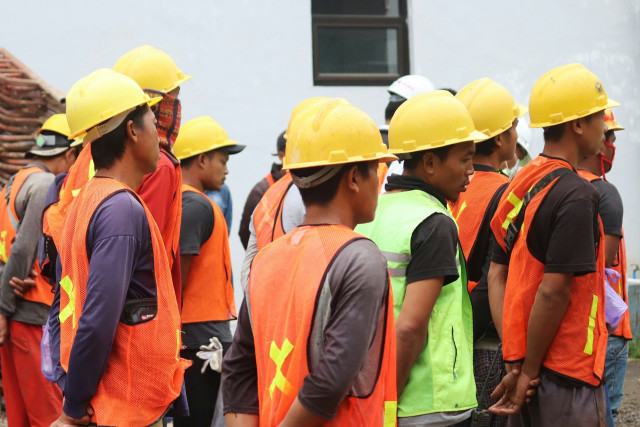
Housing for Migrant Workers: Policies and Challenges
The world is very much dependent on migrant workers in most economies. They construct the skyscrapers in the fast growing cities, harvest in the farms, offer most quality services in manufacturing and domestic work, and support industries that depend so much on cheap, mobile labor. Although migrant workers play a very important role in enhancing national development, they frequently experience extreme difficulties in housing, and their living conditions can be either overcrowded compartments or unofficial settlements on the edges of urban centres. Their living status is indicative of wider economic, social and policy failures. Housing this population is not only a shelter issue but also a social justice, human dignity, economic productivity and sustainability issue in the long run.
The policies of migrant housing highly depend on the specific country of residence, however, the problems are universal: the inability to afford houses, the absence of control, exploitation by the landlords or employers and the lack of attention in the national housing policies. The solution of these problems is essential to the well-being of migrant workers as well as the social and economic well-being of the countries receiving them.
The Historical Context of Migrant Housing
In order to get a picture of the current issues, it is critical to look at the historical foundations of migrant housing. The industrial revolution in Europe and the oil boom in the Gulf countries and then the wave of globalization in the late twentieth century gave rising momentum to migrant labor flows. In both of these settings, migrant workers tended to be configured in temporary, cheap housing, and were viewed as disposable, and not permanent members of society.
As an example, migrant workers in fast-growing urban centers were put in slums or housing managed by the factories where the conditions were poor and crowded. The labor migration policies in the Gulf States tended to connect the residency of workers with their employers and many of these systems (such as the so-called kafala) restricted their opportunities to move freely and to choose their places to live.
With time, the governments of many countries have enhanced their general housing policies but in most cases, migrants have not been included in such frameworks. In other nations such as Singapore, there were organized residential quarters to house foreign workers, but they ended up lacking social facilities or privacy. Likewise, seasonal camps of agricultural workers of migrants were constructed in some regions of Europe and North America, with the temporary nature being stressed.
Historical marginalization of the migrants in the housing policies has established an inequality and marginalization pattern that is now experienced. Migrant workers continue to be excessively perceived as temporary guests, rather than as permanent residents who require high-quality housing, even though they can have decades of their lives in the countries where they move.
Existing Policies on Migrant worker accommodation.
The policies applied to migrant workers towards housing differ among the host country, its economic reliance on migrant labor and its political goodwill towards dealing with the problem. In the gulf countries such as United Arab Emirates and Qatar, where migrants constitute major proportions of the population, governments have come up with reforms that require employers to provide accommodations.
As an example, there are the labor camps of controlled standards, and the inspections are conducted to check the living conditions. Nevertheless, they tend to be below the international standards of housing, with overcrowded rooms, the absence of privacy, and poor recreational areas. Elsewhere in the world, the policies are not very strict or they do not exist at all.
The agricultural workers in the United States are usually housed in employer-created housing which is poorly controlled and lacks connection with urban services. Eastern European migrant workers in Europe who work seasonally in the agricultural fields have the same problems.
There are progressive models, such as Singapore, which have built purpose-built dormitories equipped with medical and recreational facilities, but the COVID-19 pandemic revealed weaknesses in their construction as it demonstrated the ease with which overcrowding could spread the infection. In India, there is no coherence in the housing policies of internal migrant workers and initiatives such as the affordable rent complexes are still in the development stages. On balance, there has been a continuing disconnect between the policy discipline and realities, with policy largely favoring the economic usefulness of migrant workers as opposed to the human worth.

The Challenges of Implementing Effective Housing Solutions
The problems of implementation are substantial even in cases when policies exist. Affordability is one of the most urgent problems. Migrant workers are frequently in the lowest wage groups of the labor force, so even with rent subsidies they cannot afford cheap houses unless their employers or the government subsidize them.
This pushes many to informal settlements or slums or even renting a room in unstable constructions. One of the other challenges is regulation and enforcement. Although housing may have minimum standards that are required by law, absence of accountability and strong inspection mechanisms means that employers and landlords can shirk their duty. The migrant workforce also makes the issue more complicated, because seasonal or temporary workers are not necessarily presumed to be eligible to be provided with a long-term housing. Social stigma too is a factor.
The migrant communities are also seen as strangers which make them to be segregated in the mainstream districts hence social isolation. The fear of cultural transformation, xenophobia, or the reaction of citizen pressure as a result of the fear of losing housing to migrants can be the reasons why politically, there is resistance in integrating migrants into national housing plans.
Furthermore, gender tragedies like the COVID-19 pandemic demonstrated the extent to which the disregard of migrant housing can lead to long-term impacts since poor housing not only posed a threat to the workers but also posed health hazards to the whole country. These difficulties explain why good housing among migrants cannot be solely linked to policies but rather it needs political goodwill, funding, cultural tolerance, and change of attitude towards migrants in societies.
The Human and Social Impact of Inadequate Housing
The impacts of poor housing among migrant employees go way beyond the personal scope. The habitat conditions prejudice the well-being and health of workers and overcrowding, absent ventilation, and under sanitation serve to support communicable illnesses and long-term illnesses. It also has a mental health impact because isolation, a lack of privacy, and the inability to connect with families may cause depression and anxiety.
On a social level, inadequate housing perpetuates inequality and exclusion. Migrant employees just hang on the outskirts of urban areas, they are separated and isolated by mainstream society and they have very low chances of integration or even improvement. They have a hard time accessing education and social services and their children (where they exist) are trapped in poverty cycles. The low living standards of migrant workers weaken productivity by diminishing the efficiency of healthcare services and pose inefficiency effects in the long run to host nations.
Social cohesion also has implications. Any visible marginalization of migrant communities leads to resentment within the migrant community and among the host communities and migrants. This may worsen xenophobia, social tensions and even unrest. Finally, poor houses deprive migrants of their human rights and negate the host countries human rights promises. In such a way, by overlooking this problem, the societies fail the migrants, and also undermine their economic and social stability.
Innovative Approaches and International Lessons
With all the hurdles, however, there are creative ways that bring hope and guidance. It is possible to include migrant housing as a part of social housing by countries that have already incorporated it into the general housing system. As an illustration, some European regions have had housing co-operatives and non-profit making organisations collaborate with governments to offer low cost community based housing to migrant families.
The focus of these initiatives is integration, and mixed communities contribute to the overcoming of social stigma. The flaws of Singapore model of purpose-built dormitories, nevertheless, show that government-regulated large-scale housing projects of a specific migrant workers nature are possible. In Canada, temporary foreign worker programs are becoming more conscious of the fact that regulated housing, which complies with health and safety standards, should be used, and that such housing should be inspected by government agencies.
There are also opportunities that are presented by technology. Maps of migrant settlements and tracking of housing conditions can be mapped using digital tools and linked to workers and their access to legal and social services. Organizations like the international labour organization (ILO) and UN-Habitat have come up with standards of decent housing to the workers giving priority to safety, affordability and inclusion. One of the lessons is that migrant housing cannot be addressed separately but be related to labor rights policies, urban planning policies, health policies, and social protection. It is more likely that the countries will attain sustainable and fair results when they consider migrant housing a collective good and not an individual duty of employers.
The Way Forward: Re-conceptualizing Migrant Housing as Human Rights.
The future direction needs a paradigm shift of how the societies perceive migrant workers and their housing requirements. To begin with, the accommodation of migrants should no longer be seen as a privilege but as a human right. This is shifting to minimum standards to offering safe, affordable and dignified living conditions.
The governments need to lead by incorporating migrant housing as an aspect of national and urban housing policies to make sure that it is not left in the hands of the employers or the market forces. Mechanisms of financing like subsidies, public-private partnership, and community-based models should be tried to make housing affordable. Laws need to be tightened and inspecting and enforcement systems should be strong to punish employers and landlords.
Social integration is also paramount- migrant settlement must be set up in such a way that it promotes interaction with the host communities to eliminate segregation. The international cooperation plays a role as well, with labor migration most of the time being transnational. Housing standards and monitoring mechanisms may be set through bilateral accords between the countries that are sending and the ones that are receiving. Above all, the voices of migrant workers should be added to policymaking. The hearing of their needs, experiences, and aspirations will make housing solutions responsive and human. Through a new approach to migrant housing as a right and dignity problem, societies will be able to shift to models that are just and sustainable.
Community-Based and Worker-Led Housing Initiatives
Although the policies of the government and the obligations of the employers take the center stage of discussion on migrant housing, community-oriented and worker-driven efforts in solving housing problems are a growing and potent option. Such efforts change the discourse of migrants as the passive subjects receiving aid to active agents in the determination of their living standards. Migrant communities have formed groups to share resources, develop cooperative housing forms or guard their rights in most regions of the world. This form of collective action does not only offer short term relief to substandard houses but also builds on the sense of empowerment, solidarity, and integration.
An example is evident in Latin America, where migrant workers in cities have formed self-help, housing co-operatives. Through collective savings and effort, they can build cheap housing units, which is usually under-girded by local non-governmental organizations and liberal city governments. These co-ops focus on collective ownership and a democratic form of governance that provides the migrants with permanence and agency in urban areas which tend to treat them like transient foreigners. Likewise, migrant-led grassroots organizations have assumed a housing advocacy role in Europe, lob belling local councils to offer affordable rentals and resisting evictions. In other instances, the collective efforts of migrants, activists, and community allies have resulted in re-using abandoned buildings into housing.
Such initiatives have been enhanced by technology. Digital platforms enable the migrant workers to exchange information on safe and cheap housing, report on exploitative landlords, and networks of community support. Migrant communities in places such as India have started leveraging mobile applications to link workers to law services and accommodation facilities, which would make them less vulnerable in new cities. The role played by trade unions has also played a critical role. Unions have also intervened to lead to the negotiation of better housing terms under collective bargaining agreements in areas like construction and agriculture so that the rights to housing can be incorporated alongside wages and working time.
Housing solutions, which are community based also assist in bridging the gap existing between the migrants and the host societies. It will diminish social tensions and establish trust when migrants are perceived as being active participants in the development of their neighborhoods and not as passive residents of distant dormitories. Integration, alleviation of stigmatization, and provision of inclusive communities are achieved by collaborative housing schemes involving migrants and the locals. Notably, such campaigns underscore the power and strength of migrant workers, who defy the label of dependency.
But these attempts are met with serious obstacles such as the legal prohibition of migrant organizing, inadequate access to financial resources, and the opposition of authorities or employers who can perceive the independent housing projects as a threat to their power. To address these barriers, there is need to have supportive policy environments that identify and facilitate migrant-led solutions. The resources, technical support, and legitimacy can be accorded through partnership with the civil society organizations, municipalities, and international agencies.
Community-based and worker-led housing programs are not an alternative to governmental responsibility, but an important supplement. They show that given a chance, migrant workers can influence the dignified housing solutions that will respond to their needs and empower social fabric. These efforts must therefore be encouraged, supported and incorporated into larger housing policy models, as a demonstration of empowerment, sustainability and inclusion towards housing justice amongst migrant workers.
Conclusion
Migrant workers play a critical role in the operation of any economy across the globe, but their living conditions are one of the least considered in policy. Informal settlements, which are crowded in places of residence, are one of the manifestations of inequalities in the system and lack of consciousness in society. Most countries have policies, however, the implementation is usually inadequate, and migrants are exposed to exploitation, ill health, and socio-cultural exclusion. The impacts extend to the outside world, impacting not just the employees but also communities who host or the economies of the nations. But there are hope models.
New policies, cross-border standards and grassroots solutions demonstrate that dignified and inclusive housing among migrant workers can be developed. It is not a technical problem, it is a political and social one: it is necessary to acknowledge housing as a human right, and migrant workers as members of society. Whether it is through the housing needs of migrant workers being taken seriously and compassionately, countries can develop stronger, fairer and resilient societies, where those who contribute so much in terms of economic development will also enjoy the dignity of safe and decent housing.
Also Read: Affordable Housing for Rural Migrant Workers in Urban China



-3dkuLgKhRD.jpg)
-49HupTvwDD.jpg)



LEAVE A REPLY