

How Hong Kong's Housing Policies Can Inform Global Strategies
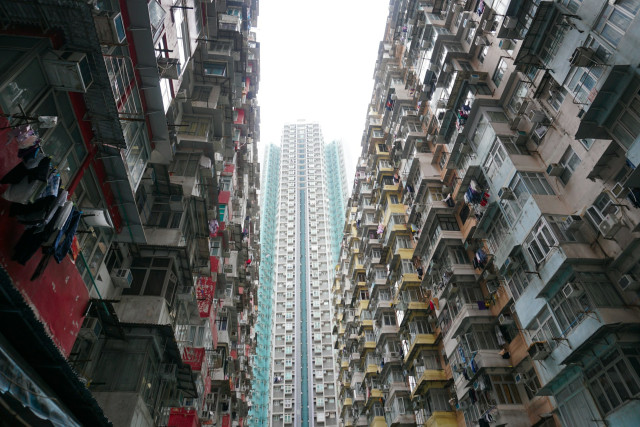
Housing is inherent part of the city life. It does not drive about providing a place to reside but it is more on what can they offer them such as dignity, stability and opportunity. But in the modern era of global interconnectedness, one of the first challenges confronting cities all across the globe has been how to ensure that housing is available, accessible, and affordable to all whilst trying to manage population increase, physical sustainability, and maintain financial prosperity. One of the most extraordinary of the housing debates that is seen in the world is Hong Kong. Hong Kong is commonly associated with skyscrapers, death-defying population density, and prohibitively high property prices, but it has actually led the way in a number of housing policies that other countries may find instructive.
Hong Kong has a paradoxical situation in the field of housing. On the one hand, it is one of the least affordable private homeowner markets in the world, the average price of the new house often being several times larger than the median household income. Conversely, more than 40 per cent of the population resides in some type of subsidised accommodations, either in a form of a public rental housing, or a government-supported ownership program. The fact that there is a drastic lack of affordability combined with far-reaching government intervention makes the Hong Kong case fascinating to evaluate. Although its experiences are unique, the city has a few innovative policies, land management strategies and a large-scale approach to the provision of housing that can provide practical lessons to other countries that are facing housing existential crisis.
This blog makes a case of how policies on Hong Kong housing can be used to inform strategies around the globe by examining their weaknesses, strengths, and their flexibility. Observing public housing programs and land use planning, the integration of financial tools, community development and the long-term sustainability of the city of Hong Kong, we may identify the path of making the housing more affordable and available in other countries all over the world.
Hong Kong’s Public Housing Legacy and Its Global Relevance
The main contribution that Hong Kong has had to world housing policy is the legacy of its public housing. Since the 1950s, government has invested massively on construction of public rental houses to house the low-income families. As triggered by a devastating fire in Shek Kip Mei in 1953 that left tens of thousands homeless, the government introduced long-term housing strategy that essentially marked the city urban development. This gradually gave way to one of the biggest and most exhaustive public housing systems all over the world.
Today, nearly a third of the population constitutes the residents of the public rental housing with another one in six of them living in the subsided home ownership scheme. These figures are outstanding in terms of global scale of comparison. In the vast majority of countries, public housing is a minor thing, it is several percent of the population. By comparison, Hong Kong has incorporated it as one of its primary social and economical pillars. This model presents the fact that in the large-scale public housing is far more than conceivable, but feasible in the background of the activity of a government eager to devote sufficient resources and resourcefulness.
The international applicability of this strategy is associated with the scale. Most of the countries especially those in Asia, Africa, and Latin America are experiencing fast urbanization and increasing slums. The experience of Hong Kong reveals that state-based intervention, when well planned and executed, has the capacity to intervene in slum proliferation, stabilize housing markets and is seen as the safety net of millions. The dilemma facing the other countries is to manage to adapt the model to their context, making it affordable as well as avoiding the scourge of un-maintained, as well as, socially segregated housing estates.
As an example, Hong Kong has developed its housing estates with facilities such as community facilities, schools and transportation links to support the whole housing estate. This integration has made it that public housing becomes something that is not stigmatized as a ghetto. This strategy can be applied to the policymakers around the world since they should not think of public housing as a standalone one but rather as an element of community development and urban planning.
Land Use and Supply Management as a policy Measure
The Hong Kong housing system is characterized by one very distinctive aspect; its land policy. All lands in Hong Kong are ownership of the government by an exclusive lease to current developers and individuals with definite terms. This system has given the government the power to directly focus on land supply and control which few other cities are able to do. Controlling the land release into development the government has created stability in revenues via land sales and tried to achieve a balance between supplies of housing.
Hong Kong offers leadership to global policymakers on the one hand, and a lesson in circumspection on the other. On the one hand, centralized control enables integrated planning. The fragmentation of the land ownership, hoarding, and ineffective use of land are common problems experienced by cities all over the world. Hong Kong leasehold system curbs some of these burdens because the government is the ultimate landowner. This will enable planning and matching of housing policies and urban development policies.
Nevertheless, the model is also weak. This strong dependence of the government on land sales as income has, at times, hampered its readiness to make available adequate amounts of land to meet housing demand thus contributing to shortages and sharp rises in prices of land. This raises the useful lesson to global housing policy: that although centralized land apparatus can be an effective measure, other policies that take the social preeminence over the fiscal reliance must be in balance.
Other nations can emulate this lesson by restructuring its land use policies towards a more efficient use of land. As one example, poorly developed government-owned land can be reused to accommodate affordable housing, and zoning could be changed to permit greater density. The case of Hong Kong suggests the centrality of land as a basis of housing affordability and that proactive land policies that are transparent and in the best interests of the population are essential.
Subsidy Models and Financial Mechanisms
Besides land and housing issues, Hong Kong has been the first to introduce a range of financial instruments to target the problem of making housing more affordable. The Home Ownership Scheme (HOS) was introduced in the 1970s to enable middle-income households to buy homes at below-market prices, and with resale restrictions so as to prevent speculation. This created a sandwiched class housing solution to families that do not provide for public rental housing but cannot avail to the prices of the private market.
These translations of subsidy models have valuable lessons of global strategies. The trend affects many nations where solutions are not provided to the families with middle income since they can easily fall between the gaps in the established systems. As HOS in Hong Kong indicates, a selective subsidy with resale restriction can make an effective balance between any instability about prices and affordability.
Also, the city has tried out the mortgage assistance, rent-to-own programmes and other financial initiatives to help out the home buyers. Although these schemes did not address all the affordability issues, they indicate the significance attached to making financial mechanisms fit with varying income groups. The requirement to accommodate everyone in housing should prompt multi-layered approaches to housing people; not only the poorest need to be considered; the struggling middle-income classes should also be accommodated.
Meanwhile, the experience of Hong Kong cautions that an over-reliance on subsidies cannot be an adequate substitute when there are hindrances to supply. Direct financial support is not a panacea to solve housings problems unless the imbalance in the supply and demand is addressed. Thus, the global policy should integrate its financial strategies with the processes of land reforms and construction to enable the effect of long-term affordability.

Building Communities, Not Just Housing
The other lesson that can be used globally is the focus that Hong Kong has on community building. Public housing estates are not simply blocks of apartments, they can typically be planned and provided with schools and clinical facilities, community centers and transport infrastructure. This integrated experience has built strong communities where a resident can access most necessary services without feeling irrelevance to the general city.
Most affordable housing projects all over the world have failed due to the fact that affordable housing will only live a standalone product without the social infrastructure embedded in communities that constitutes healthy communities. This tends to lead to poor maintenance of stigmatized residential zones that create vicious cycles of poverty and marginalization. Including social services and infrastructure and infrastructure with it, as is the case in Hong Kong, governments can produce affordable housing with sustainable communities where people prosper.
A lot of global relevance of this lesson can be stated. Due to the increase in population in cities, there is an urgent need to ensure inclusive planning. These houses should not be left to wilderness areas where there is lack of transport and basic amenities. Rather, it should be a key point in the planning of the cities and create inclusivity and integration. This is where the example of Hong Kong can be emulated by other countries: there should be housing policies but these policies are to construct societies and not houses.
Long-term Planning and Sustainability
Last of all, the Hong Kong housing policies emphasize the significance of sustainability and long-term perspectives. The city has its peculiar challenges because of the restricted supply of land, high population density, and susceptibility to climate change changes. Consequently, sustainable design, vertical construction, and effective land use became a part of its housing plans.
Cities across the world are experiencing the same pressure: limited land and the environment, rapid urban growth. In Hong Kong, high-density, transit-oriented development can be seen as a possible model in maximizing space minimization in environmental impact. By vertical expansion and combination of housing and public transportation, the city has heavily cut down on the use of individual cars and maximized use of land.
Besides, long-range planning has been very important. Although shortcomings could be identified, the experience of committing to multi-decade plans to build housing in Hong Kong is a good lesson to other governments who are often limited in planning by short political cycles. Housing affordability is not a problem which can be resolved within a short period of time but it will take vision, determination and flexibility as time goes by.
Policy makers in the global context, should take key lessons to the effect that, sustainable housing is not just anything to do with environmental design but it also depends on institutional capacity in long-term planning. Hong Kong illustrates both the possibilities and the problems of this kind of planning, giving a model of how anticipation and flexibility should be combined.
Challenges and Criticisms of Hong Kong’s Housing Model
Even though the housing policies in Hong Kong offer numerous lessons to the world, they are not devoid of serious weaknesses. Among the most urgent ones is a dismal lack of affordability in most instances where there are governmental initiatives to address these issues going back decades. Queues at the public rental housing are very long as applicants can wait more or five years before receiving the housing. This has made thousands of low-income households to reside in unsatisfactory housing, such as subdivided and so-called cage homes, which have become part of Hong Kong inequality in one of the wealthiest cities of the world.
Furthermore, there is a built-in conflict of interest since government has been depending on land sales as the main source of revenue. By suppressing the supply of land, the government can obtain a high amount of revenue at the same time increasing the prices of houses further worsening housing affordability. The lack of flexibility of public housing schemes to meet the needs of a changing family, the elderly and the migrant labor force is also argued to create a problem as well.
The second important issue is the high levels of Hong Kong urbanification largely focused on high-rises constitutes high density spaces but has failed to comprehensively address urban livability issues like green spaces and community facilities and mental health effects of living in extremely dense cities. It is even believed that the model puts quantity above quality that produces drab yet functional surroundings. Moreover, the younger generations have the feeling of losing hope of ever owning a home to live in hence their social dissatisfaction.
The above problems abroad have a common lesson, that is, although large-scale investment in housing is necessary, it should be coupled with fast implementation, equal allocation, and balanced policy to cater to various people with diverse needs. Addressing these issues, even housing systems with good intentions may promote a certain degree of exclusion and inequality instead of resolving it..
Conclusion
The measures proposed by Hong Kong on the question of housing can teach the world a complex but useful lesson. A big public housing system displays that large state intervention is not only possible but needed in handling housing crises. The power and dangers of centralized authority come out in its land use policies. Its financial processes provide great examples of how important it is target all income groups, and the role of housing itself within the wider fabric of social infrastructure is also addressed in its community process. Lastly, the long-term vision and the sustainability of the company should emphasize the role of vision in addressing housing issues.
The Hong Kong housing experience simply cannot be transferred to other situations, because its historical developments, its geographical location and its governance have had amazing influence in making the housing experience what it is. The dense population, low land supply and the use of state-led planning make the model unique to the city so it cannot be simply applied elsewhere. What is important is the fact that the principles underlying its approach are generally applicable. Its focus on mass action, successful land management, inclusivity, community-based development, and sustainability present important learning points to policymakers across the globe. Although the precise model might not be adaptable, the ideology behind the Hong Kong housing policies can easily translate into workable responses to the housing affordability issue in different global contexts.
The case of Hong Kong can trigger inspiration as well as settle a warning on other cities facing increasing housing affordability problems around the globe. It exemplifies how government can dramatically change a housing field, but it also remarks on the risk of asymmetry, speculating, and lack of supply. The international housing crisis is never isolated over any individual project as the problems needed to be solved should be shared through global learning, adaptation, and new techniques. Learning and adopting the Hong Kong experience, the whole world can take a few steps closer to the ideals of housing as a human right to have secure and affordable housing, which every person can access now.
Also read: Hong Kong's Housing Policies



-bsBmIgEW58.jpg)
-5yCS4OoVBg.jpg)







LEAVE A REPLY