

High-Rise vs. Horizontal Growth: Which Urbanization Model Suits Pakistan?
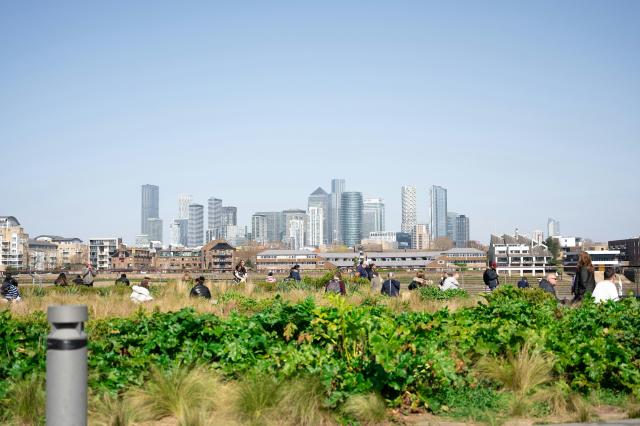
Because Pakistan’s cities are getting larger because of rapid growth, people moving in from other parts and increased urban activity, everyone wonders how this will be handled. Deciding between vertical and horizontal urbanization has come to be at the heart of discussions about development. Proponents of the high-rise model believe it is small, space-saving, and modern and considered economically favorable. Alternatively, houses may be built horizontally nearer the ground, reflecting traditional culture and the way people like to live. There are people who back each model and each model has its positives and negatives.
In Karachi, Lahore and Islamabad, people have moved to cities using both models, causing the unplanned growth common in Asian cities. We see lots of tall residential and commercial towers living side by side with suburban areas, gated communities and squatter homes. However, we need to ask: is one model more sustainable, more inclusive and closely tied to Pakistan’s existing characteristics than the other?
This blog analyzes how urban models influence land resources, challenge public services, affect society, impact the economy and environment and shape cultural trends. Given that Pakistan’s towns and cities are expected to grow a great deal in the coming years, the choice of approach is just as urgent as survival itself. Today's decisions in urban planning will determine the appearance of cities as well as the well-being and opportunities of many people.
How Productive Land Is and the Weight of the Population
Pakistan struggles to deal with land scarcity as its towns and cities continue to get larger. As people migrate to the city looking for work and better living, the need for housing grows greatly. High-rise development lets builders solve the problem by making more space available in limited land by going up instead of spreading out. Since Karachi has limited land space and high property prices, building upward can house many people in smaller areas.
Constructing tall buildings gives urban cores the chance to make use of empty spaces. Because of this, they have the potential to combine living places, companies and entertainment areas in a small area. This leads to shorter commutes and lighter use of public transport. Vertical density increases the efficiency of mass transit and encourages people to walk, both of which are key to stop urban sprawl and maintain worker productivity.
Even so, there are difficulties linked to building tall structures in Pakistan. Not properly controlling zoning rules, not preparing well for disasters and not ensuring buildings are maintained properly can cause major urban areas to become full of slums. There are plenty of unkempt apartment buildings in Pakistan that do not have elevators, clean water systems or working sewage pipes. Regularly, gaining efficiency is hampered by municipal bodies’ limited skills and the shortage of spending on essential safety and infrastructure.
Alternatively, spreading out of cities by building housing schemes and suburbs allows most Pakistanis to relate quickly. In most cases, many in these areas prefer to purchase land and houses that are not attached to others. Still, operating this way requires a lot of land, resulting in environmental harm, lost farmlands and increased costs for infrastructure.
It cannot be fully relied on long-term, mainly because land is limited in cities. As urban areas in Lahore and Islamabad keep growing into nearby rural land, farm fields are now becoming covered in concrete with not much planning. Since there isn't enough space for neighborhoods in urban areas, the government might find it useful to build upwards rather than spreading out. Even so, it needs careful planning, enforceable measures and a supportive public to reach its potential.
How Infrastructure Affects Service Delivery
An increase in cities places added demand on the roads, water sources, drainage services, power lines and waste handling facilities. Studying how each type of city causes different pressures is crucial to selecting a suitable model for Pakistan. Buildings in dense cities that are many storeys tall need reliable infrastructure that can hold up to many challenges.
To support a growing height, vertical buildings require dependable waste, septic and drainage, electricity, good water pressurization and emergency services that can help many floors. Yet, Pakistan’s urban centers are generally not equipped with the main infrastructure needed for these developed projects. Lots of affluent areas deal with load shedding, poor water pressure and poor firefighting resources. If such buildings are placed close within high clusters, the problems can get too severe to control.
In addition, the fast construction of unregulated skyscrapers in Karachi has caused the city’s basic services to become overloaded. If tall buildings are allowed to rise without better infrastructure, there will be shortages of water, spilled sewage and more chances for fire. However, the model can only succeed if urban infrastructure is widely improved and all construction rules are followed—something that is missing in several Pakistani cities.
In another way, horizontal growth leads to a different set of issues. As residents move further from the center, the price for building necessary infrastructure also rises. It is difficult and usually costly to create roads, water pipes, electric grids and sewage systems over large regions. As a result, the construction of cities is fragmented and people might not receive basic services on time or at all. In many cases, low-cost housing areas far from the city centre depend on water from tankers, septic systems and generators.
The jumbled pattern of urban growth makes it challenging to create effective public transportation. Because neighborhoods in some areas are far apart, good mass transit is too costly for the government, meaning many rely on vehicles instead. The outcome is traffic jams, more air contamination and trips taking longer. There is no real difference in how easy both models are on infrastructure, but densely built high-rise neighborhoods, when carefully planned, are simpler and less costly to serve. The main issue for Pakistan is not which form of decentralization is used, but making sure infrastructure is advanced at the same speed.
Cultural Compatibility and Social Cohesion
Besides being a physical process, urban development is also a social change. How people are housed affects their lives, their relationships and how they create community. Since Pakistani culture is deeply rooted in families, a rise in vertical housing means changes for how close-knit society remains and for how people perceive their living conditions. In Pakistani culture, where many people live in joint families, single-family or low-rise houses fit well. The design allows several generations to live together and everyone enjoys outdoor courtyards, gardens and rooftops. Being attached to a tract of land creates a type of ownership, stability and belonging that a lot of people value.
On the other hand, high-rise apartments do not follow the usual rules. Sharing space and privacy becomes tough in a joint family because of their limited rooms. Many families need to separate into smaller living spaces which leads to differences among age groups. You may have people living only a few steps away who you’ve never met. Living vertically usually means there isn’t as much of a sense of community; people do not meet on the streets, cannot relax in groups on verandas and kids do not have nearby public spots to play.
Still, when high-rises have spaces for families to come together and share such as gardens, fitness areas or rooms for prayer, new types of communities form. In Pakistan, they are usually not given enough importance or kept up. Because many people object to living in apartments, high-rises are frequently used as short-term housing before someone buys a house. It is more difficult to build a tight community in vertical settings unless steps are made to connect people.
Not interacting with each other leads to strangers being neighbors and when something important happens, those neighbors might be too shy to act. For vertical living to succeed in Pakistan, high-rise buildings should feature areas for big families, gathering areas for all and architecture that honors our culture. Beyond design, it’s important to protect the social links that hold a city together.
Environmental Protection and Global Climate
Because of climate change, Pakistan experiences extreme weather, does not have enough water and pollution is increasing. Environmental results greatly depend on urban planning and how cities develop, whether tall or spread out, has implications for sustainability. Development spreading out horizontally causes much harm to the environment. While cities grow, they take over the green belts, woodlands and farmlands around them. As a result, there are less opportunities to store carbon, more cars on the roads and the destruction of habitats. Many suburban areas use more energy because of longer commutes, the energy used in single-family homes and weak public service systems.
Living tall, in energy-saving structures, can actually lower the buildings’ effect on the environment. Combining spaces in a vertical way helps public transportation, results in less land use per person and less energy is needed per space due to common structures. Still, creating and looking after tall structures tends to use carbon-filled building materials and methods. In countries where building green isn’t required, tall buildings may make heat problems even more severe in urban areas.
With poor planning in either model, the environment suffers greatly. Karachi has experienced terrible flooding due to unmanaged building which has restricted the natural drains for rainwater. Without trees, problems with garbage disposal and too many factories, the air and water have become even more polluted. The way cities grow should be sustainable, but it is also important to pay attention to the standards that direct their development. No matter the directions, new developments must use green technologies, managed waste, save energy and use water wisely. Working to create climate resilience must be an important part of urban strategy in Pakistan. What we build is important, but more important is the future we are trying to create.
Economic Accessibility and Housing Affordability
It is estimated that Pakistan has a shortage of more than 10 million housing units. Concerns about how much development costs are a main focus of discussions on cities. There are economic upsides and downsides to both vertical and horizontal supply chains, but not everyone has equal chances to use them. In urban areas, most high-rise apartment units are promoted as premium or mid-income housing. Developers want salaried workers, expats and investors to settle there which causes gentrification.
The vertical model does not benefit the urban poor, as they are often forced into slums or poor quality, uncontrolled high rises. High-rise living also comes with bills for maintenance, property tax and utilities that people on low incomes often struggle to cover.
Government-sponsored homebuilding programs and unauthorized slums expand housing affordably for many Filipinos. Even so, most of these are placed apart from where people live, resulting in transport and job challenges. A lack of registered titles, infrastructure or utilities in these schemes makes them risky for the low-income population.
In China, rental housing of any kind is mostly without regulations. Some landlords evade taxes by not registering their rentals and keep companies unregulated. Secure and affordable housing for Pakistan’s urban poor is not provided by either the vertical or the horizontal housing model. Having affordable housing policies is important for every city planning process. Mixed incomes and rent-to-own opportunities should be part of tall building planning. When planning, ensure there is more connectivity, secure titles for the land and more public attractions in order to benefit everyone. It takes more than the market to solve the housing problem. To avoid a situation in which only the elite benefit from urban growth, the government needs to be involved.

Governance, Regulation, and Urban Planning Capacity
How governance responds to an urbanization model determines its success or failure. Many urban planning organizations in Pakistan operate without enough funding, adequate numbers of staff or support. Poor management will result in dangerous, unsustainable and very unequal cities, regardless of how cities expand. Developing high-rise buildings requires strong building rules, proper preparation for emergencies and diligent upkeep. A lot of Pakistani areas have building regulations that are not current or are little followed. Unapproved floors, unsafe elevators and not enough fire escapes are normal issues. Foreign corruption in government agencies further endangers the public.
There are special types of governance challenges with horizontal growth. Usually, real estate developers are left unsupervised, finding it acceptable to buy agricultural land and build housing plans that lack basic infrastructure. Almost always, these schemes get advertised and sold before they have gotten official approval. Because neighborhoods are city planning, everything is scattered and inefficient which contributes to environmental problems.
In Pakistan, planning in cities tends to focus on problems rather than on creating alternative solutions. The old master plans aren’t used and municipal bodies have trouble cooperating. Currently, housing, transportation, utilities and environmental issues are not fully connected in how they are planned together. As a result of political problems, an urge to act quickly and inertia among city officials, city planning and projects are now led by commercial groups rather than important community needs.
Before deciding on a preferred urbanization model for Pakistan, the basic issue of governance must be handled. No model, vertical or horizontal, can achieve success without having institutions reformed, information made transparent and skills improved. It is about more than architecture; it is also about making institutions that can direct, regulate and maintain urban development into the future.
Conclusion
The country is experiencing an important transition in city development. Whether cities grow vertically or horizontally now shapes how the country will work in terms of the economy, environment and society. The sales process models each have pros and cons, but neither one is a complete solution. The solution is found in approaches that mix different styles, include many people and are well managed which helps improve each method’s shortcomings.
Towers allow for better use of land, can help the environment and are friendly to bus and train services. Horizontal expansion agrees with popular culture and is possible to create for fewer costs. Should infrastructure, regulation and planning fail, taxi networks and ride-sharing could all contribute to rising inequality, weaker communities and more environmental harm.
Instead of planning urban development in a top-down manner mainly guided by government and large groups, Pakistan needs to listen to its people. Citizens’ usual lives, problems and ambitions should guide urban planning, rather than just relying on what bureaucrats or businesses want. In order for this change to occur, the country needs to boost its governance, design innovative rules and encourage active involvement from its public.
If citizens actively take part in making their cities, these communities become more diverse, useful and environmentally friendly. When people come first, urban crowding could be matched by respect, growth and green spaces could be balanced and cultural traditions could survive along with progress. The steps Pakistan takes now in building new cities will largely affect the lives, peace and sustainability enjoyed by people living there over the future. Planning for our future cities starts with careful urban architecture.
Also Read: “Women, Housing & Development: How Affordable Housing Impacts Female Empowerment In Pakistan”



-ySWGlp0vgc.jpg)









LEAVE A REPLY