

The urban environment in Pakistan is transforming very
quickly. Cities such as Karachi, Lahore, Islamabad and Faisalabad are expanding
at an unprecedented rate due to rural to urban migration, increase in
population as well as economic opportunities that are being centralized in
cities. As much as this growth is an indicator of development, it is also a big
challenge which is how to affordably house the millions of people living in
urban areas without undermining quality, livability, and sustainability.
The bone of contention here is the controversy of
high-density versus low-density affordable estates. High-density housing can be
effective, on the one hand, there is more housing per square foot, a lower unit
cost, and the presence of urban infrastructure. Low-density estates on the
other provide open spaces, privacy and quality of life but usually take up more
land and are incurred at a high initial cost.
In Pakistan where land is already limited in urban centers
and where infrastructure is already strained, it is important to find the right
balance. High-density solutions can be attractive in such mega-cities as
Karachi where land prices are soaring. On the other hand, low density planning
might suit the culture and social aspects in developing regions and Tier-2
cities.
This blog considers the specificities of the two approaches,
the way each of them has economic, social, and environmental implications. We
are going to examine Pakistani cities, examine policy frameworks and propose
how a more moderate, place-specific response can meet the increasing housing
demand in the country without undermining affordability, human occupational
sustainability and livability.
At the end, you will clearly understand the trade-offs that
will be involved and why the optimal solution may not be an either-or option
but a well-designed combination between high-density and low-density solution
that fits the specifics of the urban conditions in Pakistan.
High-Density
Affordable Estates: The Concept.
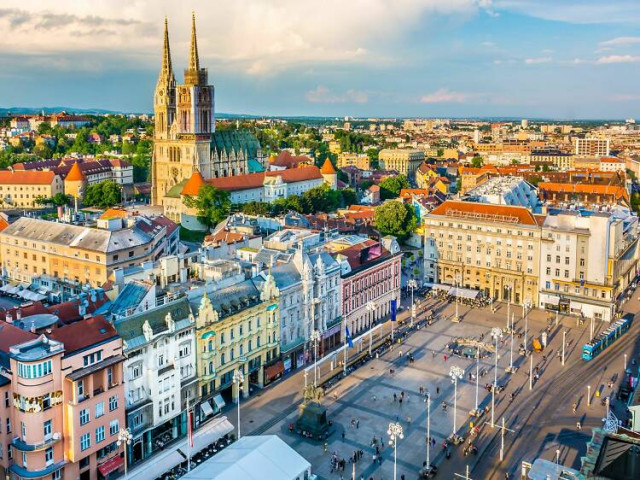
High density affordable estates are defined with small
residential plans, usually multi-story apartment buildings, and row houses or
even stacked housing units. The main aim is to maximize the housing units
within a small area of land thus these estates are viable in the urban areas
that have small areas.
The benefits of
High-Density Estates.
Efficient land use is among the greatest benefits of the
high-density estates. In such cities as Karachi or Lahore, where land in the
city center is prohibitively expensive, high-density building guarantees the
ability to provide a higher number of families with opportunities to live near
the employment center, schools, and hospitals. This closeness helps save money
on commuting and accessibility of crucial services.
The other advantage is reduced per unit construction and
maintenance costs. Vertical construction, compact layout and shared walls
minimize the use of materials and infrastructure costs. High density estates
are much easier to manage in terms of utilities like water, electricity and
sewage systems, reducing the costs borne by the municipalities and the
residents.
The interaction between the communities is also promoted by
high-density living. Social amenities like playgrounds, people halls and car
parks allow residents to get to know each other, socialize, and work together,
which helps in social unitary in the densely populated neighborhoods.
Dilemmas of
High-Density Estates.
Nevertheless, not everything is rosy with high-density
estates. Overcrowding is an issue that is ongoing especially when the
infrastructure fails to match the population density. In case roads, drainage,
and utilities are inadequate, people might experience frequent power failures,
water supply, and traffic jams.
Privacy may be also violated. Small layouts usually imply
that there is less living space, less personal space outdoors and that there is
noise pollution by neighbors. In the case of density that is higher than the
ability of the community to sustain common amenities, social tensions can be
experienced.
Lastly, the high-density estates can impose strain on the
urban ecosystems. The green areas might be small to influence the quality of
air and the psychological state of residents. Such estates might turn out to be
centres of environmental degradation and health problems of people without
proper planning.
To conclude, high-density estates are economically and
spatially effective, so they are appealing to mega-cities and land-starved
regions. Nevertheless, overcrowding should be averted by proper planning,
infrastructure development, and consideration of the needs of the community to
ensure that it is something people can live in.
A Visit to
Low-Density Affordable Estates.
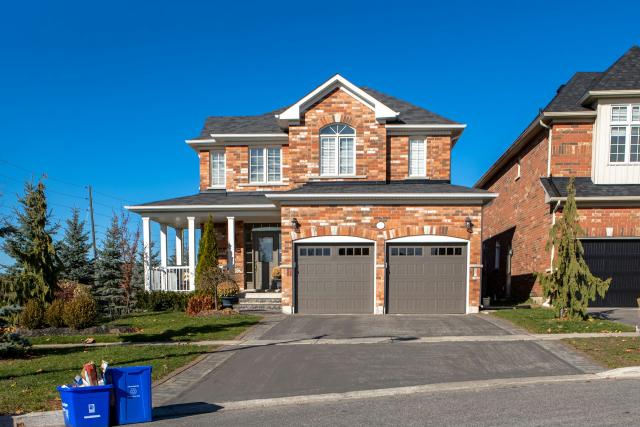
The estates are spaced out, there is privacy and comfort
rather than the maximization of housing units per hectare. They are usually
characterized by single family homes, semi-detached houses or villa-like
apartments with gardens, open spaces and broader roads.
The benefits of
Low-Density Estates.
The obvious advantage of low-density estates is quality of
life. The citizens have increased space, a greenery and better air circulation.
These designs lead to healthier living conditions, less stress, greater outdoor
activity and better mental health.
Flexibility in construction and design is also possible in
low-density estates. Single houses would be customized to meet family
requirements, cultural tastes, and neighborhood buildings. Open spaces promote
community gardens, parks and recreational facilities which help to build better
relations within the neighborhood.
These estates tend to be more resilient to catastrophes
especially in floods or earthquake prone areas. Reduced density of buildings
implies less risky and easier evacuation and emergency reaction.
Difficulties of
Low-Density Estates.
In the Pakistani cities, low-density estates have serious
problems in spite of these advantages. Consumption of land is a huge problem
especially in the urban areas whose land is costly. This increases the unit
cost of the housing making such estates unaffordable to low income earners.
The costs of infrastructure are also high. The roads,
sewage, water and electricity networks have to be spread over more lands,
enhancing the cost of construction and taking care of the systems. The
efficiency of public transport is less likely to be efficient and this may
cause increased use of personal cars and congestion.
Lastly, the low density estates may also add to the urban
sprawl, which in turn eats up good agricultural land and raises the
environmental effects. As much as they are comforting, they may not be
sustainable in fast growing cities where there is limited land and resources.
Finally, the low-density estates are preferable to be
located in suburban or Tier-2 cities where land is not scarce, and the
lifestyle choices would be to live in large spaces. Nevertheless, they might
not be the most effective and inclusive way of providing affordable housing in
a high-demand urban center.
The Pakistani Cities
and Economic and Social Impact.
High- and low-density estates are a decision which is highly
economic and social.
Economic
Considerations
High-density estates lower unit land and building costs,
thus, houses become affordable to low- and middle-income families. High density
also gives the municipal governments the ability to supply utilities and
services at high efficiency reducing the maintenance costs in the long term.
Low-density estates on the other hand are more costly in
terms of land and infrastructure investment, and are more expensive per-unit.
As much as they create temporary jobs during their construction, the municipal
expenses, both in the short and long term are greater since the networks are
long in the provision of water, electricity and roads.
Social
Implications
Dense residential areas have the potential to create a
dynamic environment where people can socialize. Overcrowding can however bring
conflicts, social stress, and privacy issues in case it is not managed
properly.
The density of estates helps to foster personal space and
comfort, which is related to mental health and family unity. Outdoor
recreation, gardening and community events (out of doors) takes place in open
spaces, creating social cohesion in a less congested and more leisurely space.
Employment and
Local Economy.
The two forms of housing generate employment although in
different ways. There is a high density construction that involves intensive
work on vertical construction projects, and low-density estates have more
decentralized construction projects like landscaping and home finishes. Both
models have gains in the form of local material suppliers, contractors, and
artisans, but in the case of low-density projects, economic gains can be
distributed to larger geographic areas.
Finally, cities will have to balance between price, social
welfare, and economic efficacy to select the optimal combination of housing
densities.
Environmental
consideration and Sustainability.
Sustainability of the environment is becoming a major issue
in urban housing.
Energy
Conservation and parklands.
Small individual units tend to be present in high density
estates but this enables sharing of green areas and achieving energy efficiency
due to compactness. Low-density estates need large amounts of land per unit,
yet they provide personal gardens and tree cover, which are part of the local
microclimates and air quality.
Resource Usage
Densely populated cities are more efficient in terms of
resources. Clustered population can be provided by water, electricity, and
waste management system at minimum losses. Fewer density estates used more
materials on roads, pipeline, and utilities and could have a greater effect on
the environment.
Long-Term
Resilience
Both types of estates should be climatically resilient.
Intense residential areas require strong infrastructures to manage the floods,
heat waves and garbage disposal issues. The low-density estates should be
planned with great care in land-use to avoid the sprawl and ecological
disturbance. The high-density cores should be combined with the low-density
areas to ensure the efficiency and sustainability of the environment.
Sustainability is not only on the construction materials but
the urban planning, transport, energy consumption and social structures which
are influenced by density decisions.
Lessons and Case
Studies in the Pakistani Cities.
Karachi
High-density urban core solutions have mostly been adopted
in Karachi because of the high cost of land. The affordable unit that is
provided by apartment complexes and gated communities is near employment hubs
but there are still problems with overcrowding and lack of infrastructure.
Lahore
Lahore has a combination of high and low density estates.
Dense apartment buildings are used to serve the people in inner cities, and the
low-density estates in the suburbs serve the middle-class families. The lessons
at Lahore point out the significance of infrastructure scaling and mixed-use
planning.
Islamabad
Islamabad is also more inclined towards low-density housing
and huge plots and green belts. As much as this increases the livability, the
increasing cost of land reduces affordability of low-income families,
indicating that there is a trade-off between space and cost.
Key Insights
Such instances indicate that density decisions should be
situational. The high-density cores are to be enjoyed by mega-cities, whereas
low-density layouts may be used in suburban or Tier-2 cities. Mixed density
models are usually the most suitable in terms of cost, sustainability, and
quality of life.
Policy, Planning and
Recommendations.
The government policies are very important in determining
housing density. The affordable housing incentives, zoning codes, and
infrastructure planning guarantee the success of high density or low-density
estates.
Balanced Urban
Planning
Mixed-density designs, which are hybrid high-density cores
and low-density suburbs, should be employed by the urban planners. This makes
them affordable in urban centers and they maintain livability and green area.
Infrastructure and
Services.
Dense residential areas need to be well serviced in terms of
utilities, transportation and garbage collection. The low-density estates
require their proper land distribution, transportation choices, and facilities
within the community.
Developer
Incentives
Tax breaks, fast track approvals, and subsidies can be used
to encourage the developers to use sustainable and affordable housing models.
The use of local materials, energy-saving designs, and community spaces makes
living and affordability more enjoyable.
Public Engagement
Design and planning, in which the community is involved,
will ensure the housing is responsive to the needs of the residents of the
community, enhance social cohesion, and also enhance the uptake of sustainable
practices.
The Pakistani cities can solve the housing shortages by
ensuring that the density decisions are made in line with the policy, economics
and community requirements and still be environmentally and socially
sustainable.
The Role of
Transportation and Connectivity in Housing Density Decisions
In the case of high and low-density affordable housing,
transportation and connectivity is very important in deciding whether it is
viable or not. The development in urban planning, a home is not merely about
the definite building but about the ease with which the residents of the
building can reach their work, their education, their health care, and other
necessary facilities. The distance to the transport systems like buses, metro
lines or commuter trains is significant regarding high-density estates. Compact
living is sustainable, and connected high-density areas can decrease commuting,
transportation expenses, and traffic jams, contributing to compact living
attractiveness.
Conversely, low-density estate can be found in the suburban
or peri-urban locations where the accessibility of public transport is minimal
or absent. The people living in these regions are generally dependent on
personal motor transportation, which adds to the household costs and urban
traffic jam and pollution. Although low-density areas are more spacious and
natural, the lack of connectivity can reduce their overall livability,
especially when it concerns low- and middle-income families that cannot afford
a long ride.
This gap has to be filled with strategic planning. As an
illustration, incorporating mixed-use projects in the development of retail,
schools and healthcare in or around low-density estates can bring down the long
distance commutes. On the same note, making low-density housing more viable can
be achieved by expanding effective public transport to the suburbs.
Besides, transport planning has an impact on social
interaction. In densely populated areas with good connections, the residents
find access to community facilities, parks and other communal facilities much
easier, leading to better social cohesion. In low-density areas, low
connectivity may alienate the inhabitants and mitigate the advantages of shared
areas.
After all, transportation and connectivity are impossible to
detach out of the housing density decisions. In the case of Pakistani cities,
it is important to balance accessibility, commuting time and availability of
infrastructure. Well integrated transport systems can make high-density and
low-density housing estates even more affordable and sustainable and a success
in that the residents will have a home, but a place to live in connected and
functioning cities.
Conclusion
There are advantages and disadvantages to high-density and
low-density estates. High-density estates are efficient, cheap and compact in
their infrastructure thus being suitable for mega-cities where there is limited
land. Low-density estates are more comfortable, open, and have a better quality
of life although they will need more land and greater infrastructure investment
and are more appropriate in a suburban or Tier-2 city.
The best way to address the situation in Pakistan is
balancing and context-sensitive that would combine these two approaches to
satisfy the various needs. Through combining smart city planning, sustainable
design and community involvement, it is possible to make affordable housing not
only affordable but also habitable, resilient and environmentally friendly.
The housing prospects of the Pakistani people will be
determined by the new policies, careful planning and joint implementation that
will eventually see to it that all people will afford to have a home which will
be sustainable at the same time.




-bsBmIgEW58.jpg)
-5yCS4OoVBg.jpg)






LEAVE A REPLY