

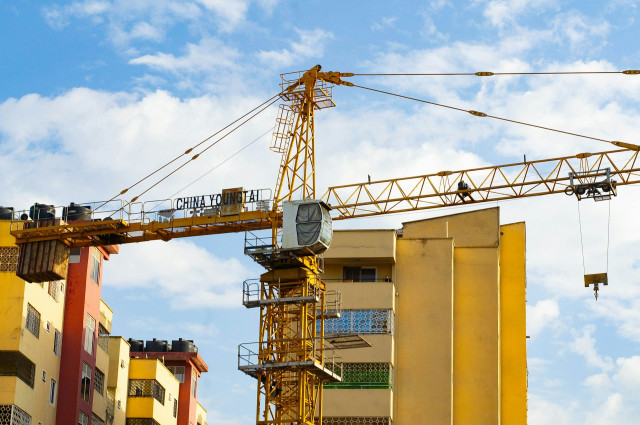
The High Cost Of Construction Materials: Why Kenya’s Housing Projects Are Slowing Down
The housing industry in Kenya has been in stress in an
attempt to support the needs of the fast growing population and increased
urbanization. As big cities grow and new cities develop, the demand of
affordable and quality housing has never been greater. Housing projects by the
government and the private sector have been geared towards closing the housing
gap, but the developments have been slow than expected. The increasing prices
of construction materials are some of the greatest factors that have led to this
slowdown.
The housing project consists of construction materials as
its foundation. The cement, steel, timber, roofing materials, tiles, glass,
plumbing, electrical, and finishing products are all necessary in assessing the
total cost of the building. The developers experience increased financial
strain when prices of these inputs shoot up. Projects are postponed, reduced in
size or terminated in most instances.
Increasing cost of materials does not only impact on
developers but also on homebuyers, contractors, suppliers and financial
institutions. The rise in the cost of projects means that the housing prices
have increased and ordinary Kenyans will no longer be able to afford to own
homes. Simultaneously, the housing projects cannot be planned and have their
budgets because of unpredictable changes in prices.
The high prices of the construction materials in Kenya are
caused by a number of factors such as disruption in the global supply chain,
reliance on imports, currency fluctuations, taxation, cost of energy, and local
production restrictions. All these interrelated issues make the environment a
complex one which is inhibiting faster housing development in the country.
This blog delves deeper into understanding the reasons why
Kenya has been experiencing a slow pace of housing projects because of high
cost of construction materials, the economic, structural, and policy aspects of
this matter and the implications of the same to the housing sector at large.
Global Supply Chain Disruptions and Import Dependency
The reliance on imported construction materials and
vulnerability to disruptions in the global supply chain is one of the key
factors that make construction materials in Kenya very expensive. Despite the
fact that Kenya manufactures some of its construction materials domestically, a
number of the key materials, including the specialized steel products,
machines, finishing materials, and some chemicals, are obtained in the
international markets.
The effects of the global supply chains are felt almost
immediately when they are disrupted in the local markets. The availability of
raw materials and the costs of transportation can be decreased due to such
events as pandemics, geopolitical conflicts, shipping bottlenecks, and trade
restrictions. Delay in shipping, lack of containers and increased freight rates
are some of the factors that make imports costly.
Since Kenyon imports majority of her products through
maritime transport, changes in the world shipping rates have a great impact on
the construction costs. Increase in freight costs is translated to the supply
chain by importers to wholesalers, retailers and finally to developers. The end
result of this chain reaction is the inflation of the housing projects.
The issue is also aggravated by currency volatility. The
depreciation of the Kenyan shillings against the major currencies in the world
increases the costs of imported materials. The amount of money developers spend
on the equivalent amount of materials goes up in the local currency which tops
up the total cost of projects.
Construction costs are also influenced by the global
commodity price changes. International prices of steel and cement may be
increased because of the demand in the global level or limited production.
Given that Kenya is an importer of some grades of steel and other specialized
materials, the local developers still are at the mercy of the world market.
Such external shocks bring uncertainty about project
budgeting. Estimates of costs are made by developers months before construction
commences. Financial projections may however be broken by sudden increases in
prices that necessitate contract renegotiation, postponement of procurement, or
acquisition of extra financing by the developers.
Therefore, the housing sector in Kenya is vulnerable to
global economic uncertainties due to imports of construction inputs in Kenya.
Increased local production and diversification of the supply chain would reduce
the dependency on imports, and stabilize material prices and provide a stable
housing development.
Rising Energy Costs and Their Impact on Local Manufacturing
Construction materials are largely involved with energy. The
manufacturing of cement, and processing of steel and bricks, among other
building materials, use a lot of electricity and fuel. In Kenya, the increased
cost of energy has also made a huge contribution on the increased material
prices.
The cost of electricity and fuel prices affect the costs of
operations of manufacturers. Increase in the cost of electricity leads to
increased cost of production in the factories. On the same note, the volatility
in world oil prices has the direct impact on transportation and manufacturing
processes that are oil-consuming.
An example is the use of cement which is highly energy
consuming. It consists of heating raw materials in enormous high temperatures
using kilns that are fuelled by fuel or electricity. Any rise in the cost of
energy will raise the cost of production which will be transferred to the
market price of cement bags.
Energy is also highly required in steel manufacturing and
processing. To import scrap metal, melt, refine and roll steel bars, there must
be a constant source of power and consumption of fuel. In case the price of
energy increases or supply is no longer reliable, then the cost of production
increases.
The effect is further contributed by the cost of
transportation. The construction materials should be moved either in ports or
factories to the building sites. There is an escalation of fuel prices, which
raises costs of logistics particularly the heavy materials such as cement and
steel. Most areas far away the manufacturing centers may lead to a high cost of
transportation which may form a large part of the final price of the material.
Local manufacturing is also not encouraged due to energy
related issues. Manufacturers have low profit margins because of high operating
costs that restrict growth and innovation. Kenya is still import based, and
this ensures that the high costs of materials are further perpetuated without
competition in local production.
Costs of production could be cut by addressing the issue of
energy inefficiency, increasing the usage of renewable forms of energy and
stabilizing the cost of fuels. Reduced energy costs would bring the locally
produced materials cheaper, serving the housing construction nationwide.
Policies and Regulatory Costs of Taxation.
There are the taxation and regulatory frameworks that have a
huge impact on the prices of construction materials. Value added taxes (VAT),
levies, and taxes charged on raw materials and finished goods are imported
duties, excise taxes, and other taxes that have a direct market impact on
prices.
Some of the construction inputs are imported at a certain
duty that is meant to safeguard local industries. Although these kinds of
policies are meant to promote manufacturing at home, it might also represent a
cost when the local manufacturing facilities are not able to produce enough to
match demand.
The retail prices increase because of VAT charge on building
materials. The developers who buy in bulk in terms of materials have to include
these taxes in their project budgets. Although the cash flow amount can be a
burden in construction stages even with recoverable VAT in some instances.
There is also the regulatory compliance costs which add to
the price. To manufacture and import products, manufacturers and importers
should comply with quality standards, licensing, inspections, and
certification. Although quality control is necessary in safety and durability,
compliance cost may increase the cost of production.
It can take long to get the materials imported or
distributed due to the lengthy approval process and bureaucratic inefficiency.
The delays translate into storage expenses, port demurrage expenses, and
penalties in the contract all which are ultimately absorbed in inflated prices.
Constant changes in policies bring about uncertainty in the
market. Unexpected changes in the tax rates or regulatory norms disorient the
supply chains and make the long-term planning more unsuccessful. The policy
risks are potential and have to be included in the budgets of developers, which
leads to higher contingencies in the projects.
There should be a moderate policy approach towards promoting local output at affordable levels. The simplification of the regulatory procedures, examination of the tax schemes, and the stability of the policies may decrease the material costs and contribute to the development of the housing.

Inflation, Currency Depreciation and Economic Pressures.
Inflation and currency depreciation all are macroeconomic
factors that have major effects on the cost of construction materials.
Inflation increases the overall price in the economy which impacts on the raw
materials, labor, transportation and manufacturing inputs.
Increases in inflation lead to a response by the suppliers
to preserve the profit margin. The developers have to deal with rising costs of
materials, salaries and services. Projects even in progression would be
affected by the increasing costs and might need changes to the budget.
The situation is worsened by the depreciation of currency.
The lower Kenyan shilling makes imported materials costly. Their financial
uncertainty is due to fluctuations in exchange rates since most of the
construction inputs are foreign currency transactions.
There are also high costs of financing due to high inflation
and currency instability. When developers borrow more funds to finance more
material prices, there is a likelihood that they will incur high-interest
rates. This may make it very expensive in terms of money to undertake a project
that will not be viable.
Long term investment in housing is not encouraged by
economic instability. Developers can wait until the economy stabilizes until
the money supply is slowed down and shortages are worsened. It is now important
to maintain the macroeconomic stability in order to regulate the cost of
construction. A more predictable environment to the housing development can be
brought about by sound fiscal policies, stable exchange rates and inflation
management.
Limited Local Production Capacity and Market Concentration
The nature of construction materials business in Kenya is characterized by structural issues, whose major cause is the low capacity to produce and the existence of high market concentration. In some of the industry segments, just a few manufacturers control the supply, and thus the situation is characterized by minimal competition and price dynamics that these competitors have a key role to play. When a small number of companies monopolize the production process, the competition in the market decreases, and the necessity to maintain the prices at the competitive level is also minimized.
Such low competition may also result in an immediate response to
price adjustments in regards to rise in the cost of raw materials because the
manufacturers with high market power can avoid imposing extra costs on
consumers as they can readily transfer extra costs to consumers without a lot
of opposition.
Additionally, the non-competitiveness has a wider
implication in other aspects other than price. The companies in highly
concentrated markets are not always motivated to invest in innovation or
operational efficiency. With competitive environment, the firms are compelled
to embrace new technology, optimize their production processes, and produce
products that are of a better quality in order to retain or increase their
market share. Nevertheless, when a small number of actors control the market,
having little incentive to be innovative and efficient is likely since they can
be relatively safe in their market even without making any improvements. This
has the potential to drag back the total industry development and lessen the
supply of sophisticated construction solutions at an affordable cost.
The other issue that is critical to the market is the lack of enough production capacity to cater the increased demand. Urbanization and the development of infrastructure has been so fast in Kenya leading to a high demand of construction materials like cement, steel and aggregates. In the event that the production capacity falls behind this increasing demand, shortages are created and this exerts pressure on prices upwards.
The limited
availability in the supply chain will be an engine towards increasing cost,
especially in the regions that have rapid development. This is made worse by
the fact that when the availability of raw materials or finished goods is not
easily increased as a result of the logistical factors, high production costs,
or investment in extra production facilities.
Prices become more vulnerable to changes depending on the
cost of inputs and the lack of supply, and innovation and efficiency benefits
are restricted. With the constant rise of demand, and the subsequent
development of infrastructures as a result of urbanization, it is important to
control such structural problems to stabilize prices, ensure a more reliable
supply, and create a more dynamic and competitive industry.
The costs of investment in manufacturing facilities are
high. Risks in the uncertain demand, regulatory risks and high operating costs
may discourage expansion. It still depends on imports due to the lack of local
capacity, which puts the market at risk of global volatility. Probably by
promoting competition, encouragement of small and medium manufacturers, and
investment in the industrial development, the supply can be increased and the
prices stabilized.
The Impact on Housing Affordability and Project Timelines
The overall impact of expensive construction materials is
slow development of housing and affordability. The developers who encounter
increased costs tend to raise the prices of their properties to make profit.
The increased selling prices make the homes unaffordable to a large number of
prospective buyers.
Budgets of some projects are overrun and lead to delays or
even suspension. Contractors can renegotiate contracts or stop the construction
until prices stabilize. All this type of delay interferes with the supply of
housing as well as bringing in doubt in the market.
Housing programs are a weak one especially those that are
affordable. These projects are run on thin margins and attract price sensitive
consumers. The viability of the latter can be compromised due to high cost
increments. Finally, the material costs are high thus reducing the rate at
which housing is delivered, increasing the lack of housing and frustrating the
prospects of urban development.
Conclusion
Construction materials are relatively expensive and this is
one of the reasons that the housing projects in Kenya have become sluggish.
International supply chain interference, energy expenses, taxes, inflation,
currency devaluation, constrained production volume, industry consolidation are
all incorporating to the upsurge in prices.
These issues are escalating the cost of projects,
construction schedule, and affordability of houses. The solution to the problem
lies in the concerted policy changes, local manufacturing investment,
stabilization of energy prices, regulation simplification, and macroeconomic
stability.
The Kenya can focus on the underlying causes of inflation in material prices and hasten the development of housing, increase affordability and get closer to having no housing deficit. However, when the housing projects are sustainable, it will mean that they will be conducted effectively to help in economic development and social stability in the coming years.





-3dkuLgKhRD.jpg)
-49HupTvwDD.jpg)








LEAVE A REPLY