

Green Roofing and Waste Recycling With NGOs Like Gul Bahao
The worldwide trend of sustainability has provoked the development of new ways in the city building sphere, and one of the leaders of the movement back up to the classical vision of housing, waste disposal, and ecological safety are community organizations, which change all of the mentioned systems. The Gul Bahao NGO located in Karachi, Pakistan is one such strong example that has emerged as a light house to architecture lovers that look after the environment, and recycling of resources. Under those principles, the organization, whose founders are Nargis Latif, has transformed the idea of waste into an asset and created usable models capable of addressing both the environmental and socio-economic issues.
Living in the world facing the problems of climate change, increasing the cost of the construction process, and unhealthy consumption procedures, the activities of Gul Bahao such as the use of modular housing materials built of recycled material and the process of green roofing are the radical alternative to urban planning and community well-being. The interesting part of Gul Bahao is that they use science, civic conscience, environmental concern to counter the threat of urban poverty and environmental destruction that go hand in hand. It uses innovative method that not only recycles solid waste, but also re-invents it into energy-efficient living structures, in-motion buildings and container-gardens in the city.
The environmental ethics and social action combination would serve as a guide of governments, urban planners and citizens seeking to develop sustainable urban habitats. The Gul Bahao story does not only teach one how to recycle garbage but the re-evaluation of what society considers as waste. The climate crisis is getting worse, and it is more and more important to find eco-friendly solutions that can be expanded in terms of capacity and modules. This blog exploits how green roofing and waste recycling within NGOs such as Gul Bahao is rewriting stories of urban development and how the practice of community-led innovation can be emulated across the world.
Waste Management Modular Housing
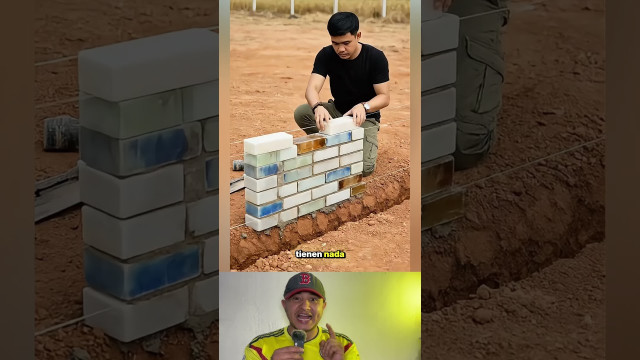
The idea of modular housing popularized by Gul Bahao can be explained by its strong adherence to the environmental care and innovative reuse. Central to it is the process of transforming "Chandi" blocks which consist of highdensity blocks produced with the use of recycled plastic wastes, into building materials that could compete with normal construction methods. Such blocks are, however, light in weight, long lasting, water resistant in addition to offering heat and cold insulation; a reason why they are ideally suited in living in places with extreme weather patterns. The affordability of this method is not the only factor that makes it unique; the process of construction is also quite fast and flexible in nature.
Chandi block houses have the ability to be assembled within a short time attributing to it being a perfect choice in constructing shelters in times of disaster relief, low-income houses as well as educational or medical institutions serving the poor areas. This method uses the waste produced in large quantities to make something out of nothing; a problematic waste matter becomes a structural capital.
This is an added feature of the fact that the housing is modular in design, since it can be pulled apart and transported to another area. It is particularly important where there is a problem of a permanent infrastructure, such as in urban slums or refuges. In addition, some materials such as cement, bricks and steel are not used during the construction, which means that the carbon footprint of these blocks is very low.
Other than being green, this model also happens to be democratic- it allows communities to have a hand in the construction process and this gives them a sense of ownership and responsibility. Workers are also equipped to work on recovered goods hence creating jobs and skills. This is a participatory framework, which runs in stark contrast to top-down planning model which is mostly displacement and marginalization. The model of Gul Bahao hence qualifies as the prototype of a new architecture which is ecological, inclusive as well as adaptable.
Green Roofing as a Climate Solution
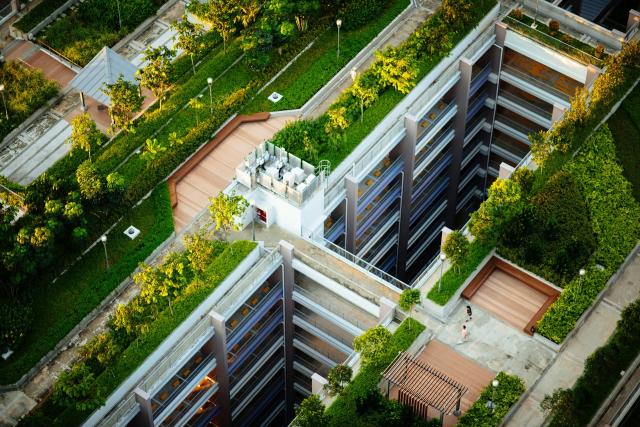
Along with its housing projects, Gul Bahao has also been experimenting on green roofing- a method of growing greenery on the roofs of buildings in order to provide a natural layer of insulation. Green roofing is as such equally a feasible, economical offer to thermal comfort and atmosphere pressure in urban lifestyles, such as Karachi, where scorching heat and dreadful air ruthlessly harass the population.
The usage of this idea by Gul Bahao with the help of recycled containers and organic wastes is especially remarkable. The rooftop gardens do not only make the rooftops less able to absorb the heat so reducing the indoor temperatures, but also offer fresh fruits and herbs, producing a food security level to the urban poor.
Green roofs have a cooling effect that cuts back on the use of air conditioning hence reduces electricity consumption and carbon emission. This is in complete line with sustainability in energy and less dependence on fossil energy. In addition, green roofs can also be considered as natural filters which capture rain and curtail run off, a factor which is essential in flood prone cities. The green roofing techniques used by Gul Bahao also create an educational effect; green rooftop schools and community centers are an actual laboratory in which both children and adults can learn something about organic farming, composting, and environmental responsibility. T
he psychological advantages of green parks in metropolitan areas, where people get stressed by the severity and the stopping and going the city is present, are not new, and rooftop gardens can give an escape in the concrete wilderness. Policy wise, the success of such green roofing patterns may come to inform city zoning code to require or encourage the use of green roofs in new buildings.
These models of Gul Bahao are not very expensive to implement, which is another aspect that enables them to reach a broad category of people, whereas the high-priced green architecture may remain a prerogative of the rich. By doing this, green roofing does not only become a process of climate adaptation, but a democratization of ecological health.
Community Involvement and Environmental Awareness
The most interesting part of the work Gul Bahao is the embedded definition of working with communities. The NGO does not work in solitude, instead of that it considers people as the partners who transform the ecology of the neighborhood. It is its participation model that makes it successful and sustainable. Whether in the collection of waste or in the building of such modular homes or even in the management of rooftop gardens, the community members are engaged at every stage.
This agency is important in creating sustainable resilience and environmental consciousness. Environmental education is also one of the parallel activities being undertaken by Gul Bahao especially among school children and women so that they feel a sense of responsibility towards the waste management and urban greening.
These sessions usually involve practical workshops, awareness campaigns and field visits and this will help in filling the gap between theory and practice. The recruitment of the youth helps the organization in entrenching the process of environmental stewardship early enough in their lives thus enabling the development of generation of environmentally conscious citizens. Women who are usually the unsung heroes of domestic waste management also have a say in this and it is empowering. Gul Bahao empowers them by giving them coaching and work in the waste segregation, composting, and construction sections, thus converting them into the leaders in green development.
Moreover, that the organization also cooperates with local governments, universities, and international institutions highlights the fact of its model scalability. It can drive systemic change more generally by simply providing data and supporting best practice. The knock one effect of this involvement is enormous. When a group of people can observe that waste is turned into decent houses or beautiful green parks, there can be a mind-set reversal, waste is not the concern, but a possibility of a solution. This change of paradigm is important in its sustainability of environmental movements.

Policy Implications and Urban Planning
What happened with Gul Bahao has important implications to the policy and planning of cities. Modular houses and green roofing are some of the important interventions that can be taken in developing regions where the infrastructure is not built in-line with the growing population. Local governments may deploy the solutions in affordable housing programs, practices of emergency shelter, as well as urban reconstruction plans. Rebates in taxes, subsidies or integration into cost of building or public procurement contracts should be used as incentives to using recycled materials in construction.
Additionally, the effects of such well-known NGOs as Gul Bahao could be enhanced with help of policies providing decentralized waste management systems. As an example, there may be recognised areas in the cities to sort and recycle wastes as part of the urban planning to assist with community led efforts. Also, the building codes need to be redesigned to make room in modular construction and green roof building. Strategies towards urban resilience should also consist of environmental literacy campaigns that would be a grass root like Gul Bahao. When joined by the hands of local NGOs and municipal authorities, the implementation gap, which usually affects the top-down policy initiatives, can be covered.
Worth mentioning, the focus of the work of Gul Bahao is also related to the problems of humanitarianism. Its housing solutions can be mobility lifesaving in areas hit by disaster or in refugee camps where scalability is life-saving. This throws light into whether it is necessary to consider such models into the national disaster management policies.
Furthermore, the achievement of Gul Bahao has the capacity of influencing international donors and development agencies in order to fund community based sustainable construction. The wider message is that green may not be a capital-intensive business, it can and will operate on innovation, the involvement of the local community and the clever utilisation of available resources. The urban planning that does not recognize this is not only inefficient, but it is unsustainable, too.
Problems and Prospects
Irrespective of its great accomplishments, Gul Bahao does not travel the only smooth road. The main challenge is the issue of funding because most conventional donors tend to favor those projects that are associated with the established criteria of success. Extreme models such as this Gul Bahao model which do not fit into any category and merge both environmental, social and economics components may be difficult to quantify and therefore even more difficult to finance.
In addition, recycled plastic materials are also risky and they must be checked regularly to enhance their safety and durability. Innovation may be squashed by regulatory barriers as well.
The construction codes in most of the cities are strict and they do not recognise the use of unconventional products and designs. This restrains the one-storey housing capabilities of modular houses. Societal cynicism of the idea of living in trash houses is coupled with the resistence of local authorities making the acceptance difficult. Nevertheless, the potential of the future is huge. The pressure on climate and the inability of cities to support the blossoming populations will only grow, which will lead to the further increase in sustainable low-cost housing demands.
The model that Gul Bahao developed may become a franchise-based one as trained communities are encouraged to implement the same in other cities and countries. It would demand creation of training centers, open-source building guides, and coalition with city builders.
The NGO can also consider exploring commercializing its building block and green rooftop kits whereby the earnings will be utilized in the development of the community. Academic institutions could be partnered with in order to increase the scientific validity of the way the materials were used and the structures kept safe, thus increasing the validity.
It can also be integrated with digital options apps and waste collection, modular design simulators, and AI-enhanced waste sorting systems can bring an additional efficiency and outreach level. What is needed is a change in attitude: organizations such as Gul Bahao were no longer to be perceived as marginal actors, but as pioneers in a new paradigm of the city. The cities of tomorrow can potentially be constructed using the wastes of today, and being aware of this possibility is the green light to the green city of tomorrow.
Conclusion
The move toward green roofs and recycling of waste by Gul Bahao may be regarded as more than a mere environmental innovation process, being a guide to a green, inclusive and resilient city of the future. In a period when Cities are straining under the pressure of excess population, climate change and economic inequality, models such as these, are scalable and cost-effective solutions based on the realities on the ground. Gul Bahao redefined the meaning of environmental stewardship by changing an individual duty into a common cause by recycling the waste as a resource and engaging communities in the entire process.
The house and green rooftops built by Gul Bahao in the Chandi block do not merely reflect sensible environmental solutions, but they reflect a more robust change in thinking about sustainability, equity and innovation. They are shaking up some traditional beliefs about constructing, recycle and urban pattern making with their demonstration that inexpensive, natural materials may be handy and gorgeous. Their entrance into the disfavored populations not just enhances the living standards but it is also a strong declaration on the inclusion and resourcefulness. Besides their local consequences, the innovations become disorienting in the global city planning and development discourses.
They make the policymakers, architects and ordinary people reconsider the classical constructions pattern and think about the possibilities of irregular materials and people-owned community projects. In helping to show that successful solutions to urban problems can be born of grass roots action and reusable materials, Gul Bahao gives the lie to the notion that progress has to be costly or high technology.
Rather, it introduces new opportunities of sustainable urban living which are flexible, affordable, and all-inclusive. Such initiatives are not limited to changing physical environments, but they are about changing attitudes and motivating the cultural move toward a more creative, resilient, and environmentally-responsible approach to designing and hosting our urban areas.Notably, such initiatives enable us to recognize the importance of high-tech solutions and models which rely upon abundant use of capital, as secondary to enabling the communities to achieve the desired change by using the resources that they possess.
With the world struggling to find ways of addressing the issue of climate change and ways in which growth can be achieved in a sustainable manner, the experience of Gul Bahao can be seen as the wake-up call, or wake-up call, rather innovation does not necessarily have to be initiated at the top, instead, it can, and in many cases, it originates at the bottom, or at what we as a society cast aside.
Also Read: Adapting Cities For Climate Change: The Role Of The Green Infrastructure


-shtTqaPktk.jfif)


LEAVE A REPLY