

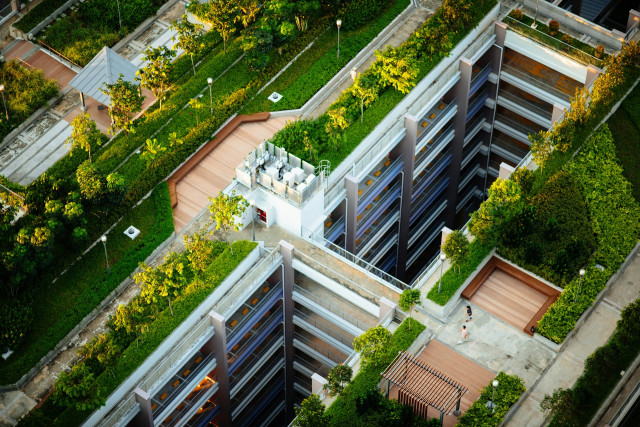
How Green Building Standards Are Shaping Affordable Housing Policies
With an international housing crisis lingering, the discourse on affordable housing has focused on not just the quantity of houses that can be constructed but also, the quality, sustainability and long-term sustainability of the housing units. Increased attention to the global issue of climate change, as well as the growing interest in energy costs, equal access to energy, and the health of people, have stimulated the incorporation of green building standards in housing policies. Green design and green building practices won s no longer be treated as a luxurious addition to luxury housing, but will form a core part of affordable housing.
Policy and funding attractors are increasingly imposing or rewarding energy efficiency, renewable energy adoption, healthier building materials and reduced environmental impacts. The outcome is an epochal change in the structure of housing: housing affordability has been inextricably linked to sustainability. The post on this blog will consider how green building standards are influencing the affordable housing policy, why it is important in the long terms in ensuring housing stability, and what potential obstacles to and opportunities that will arise.
Green Building Standards in Affordable Housing Rise
Over the last twenty years, the environmental concern in the industries has grown in leaps and bounds with no industry being more urgent than the housing industry. Homes contribute to almost 40 percent of global energy related carbon emission; they are therefore, among the biggest producers of greenhouse gas, but also a big solution. Housing that is usually looked at as purely economic, affordable housing has also entered the green building discourse. Policymakers and housing advocates also acknowledge the evidence that low income households are more likely to experience high energy burdens, over-spending on space heating/cooling and electricity.
Green building initiatives, including LEED (Leadership in Energy and Environmental Design), Passive House, ENERGY STAR certification and Well Building Standard have been a big part in the redefinition of quality housing. In addition to aesthetics or initial cost savings, such structures are focused on durability, energy efficiency, good indoor air quality, and long-term cost savings. The cost of low-income housing projects that have embraced such standards not only minimizes greenhouse gases, but also offers better quality of life to residents because the residents will have reduced utility costs and healthier place to live.
This match between environmental initiatives and social equity has led to the expansion of policies that explicitly incorporate a matching of funding and approval of an affordable housing development to its compliance with green building standards. As another example, much of the Low-Income Housing Tax Credit (LIHTC) dollars awarded by many U.S. states contain sustainability provisions in their allocation criteria, essentially tying green building standards to the largest source of subsidized-housing dollars. Cities and national governments around the world are also incorporating green building standards into their residential policy, making sure that low costs do not mean low eco-responsibility.
Green Affordable Housing by Policy Innovations
Governments across the world are realizing that this does not only involve adoption of rigorous policies on housing, but the alignment of housing policies with environmental concerns. Affordable housing has been the main priority in this change of policy since it is the place where the need of cost-effectiveness and climate adaptation coincide most distinctly.
In the United States, some state-qualified Allocation Plans (QAPs) that effectively control the distribution of LIHTC credits now express energy efficiency benchmarks or offer competitive scoring to projects certified green. This strategy offers the greatest number of benefits not only because it promotes sustainable practice among developers but also because it introduces systematic incentive to save energy and costs in the long run. Possibly on parallel, there are projects, such as the Green and Resilient Retrofit Program initiated by HUD, which support the retrofitting of affordable housing buildings, with a view of cutting down on their carbon footprint with the concomitant boost in resiliency against bad weather.
Countries like Germany and Netherlands have made ambitious action by putting Passive House standards into the affordable housing policies. The very energy-efficient buildings reduce heating and cooling loads to a minimum, lowering both energy costs and carbon emissions. Other cities such as Singapore have gone further to include green building requirements into its Housing and Development Board developments, making large scale public housing take advantage of the lower energy bills and healthier livelihoods.
These policies are signs of a realization that the concept of affordable housing cannot be disassociated with sustainability. As weather patterns worsen through climate change to increase the number of heatwaves, floods, and storms, green building standards are not the luxury, but the requirements necessary to safeguard vulnerable groups against the growing danger. Policies are also being tailored with the aim of promoting not only affordability but also a long-range resilience factor.

The Benefits of Green Building Standards for Residents and Communities
The strongest argument in favor of the inclusion of green building requirements in the policies of affordable housing is the benefits presented to their residents. Affordability does not only apply to rent or the mortgage; it applies to the cost of living. Heavy energy bills, bad Indoor Air quality and inefficient infrastructure make those living in poor households go further buried into the financial hole. Green housing goes directly to the heart of these concerns with a reduction in the use of energy, enhancement of health, and community well-being.
One of the most obvious positive effects is energy efficiency. Green building is a more powerful feature of affordable housing since it will have excellent insulation systems, effective windows, new HVAC systems and even renewable energy as wind energy and solar energy. These characteristics convert into considerably reduced utility bills which can be used in purchasing food, medicine, education and other basic needs. To those families that already live hand to mouth, they can be the difference between staying above water and stress.
The health prospects are also augmented with green houses. The poor population is overrepresented in low-income homes with asthma, allergies, and other diseases associated with poor temperature, ventilation, and humidity of domestic spaces. Green building standards that allow prioritizing the aspects of ventilation, non-toxicity of building materials and the prevention of a mold level contribute to healthful living conditions. This saves on medical cost and enhances the lifestyle of residents, especially children and the elderly.
Green affordable housing schemes at community level usually have wider social Ramifications. They may help to boost community-based neighborhood redevelopment, make societies more resilient in case of climate disasters, and social cohesion because of shared access to green areas and community facilities. By incorporating the concept of sustainability into affordable housing policy, governments are no longer in short-term mode just redistributing but inviting long-term reward of healthier and stronger, not to mention more resilient, communities.
Challenges and Barriers to Implementation
Even though the movement towards adoption of green building standards in affordable housing is gaining momentum, the process does not come without its problematic issues. The most quoted barrier is cost Eco-friendly construction methods and materials are usually more costly to use as compared to traditional ones and this can be a major impediment to developers on tight budgets. Although long-term savings in terms of utilities and maintenance have been well-documented, it is still a stumbling block to get the initial financing.
The other problem is that of the complexity of certification. Third party qualification programs such as LEED or passive house are complex to document, test and manage, and thus impose heavy burdens on smaller developers. Complying with these requirements imposes an administrative burden with time lag, potentially hurting adoption.
There comes the problem of knowledge and capacity. Contractors, housing authorities and not every architect know about green building practices. Such skills gap may result into uneven implementation, which undermines both societal and environmental performance. This needs to be approached by creating investment in workforce and a wider education on the advantages of green housing.
Moreover, an impression that green building works as a luxury still remains in some policy and popular discourses. Critics reply: Resources need to be geared toward the construction of as many affordable units as possible, not toward quality improvement through sustainability. This false dichotomy, however, fails to recognize the fact that it is inefficient housing, not high-income housing, which is more costly in the long run not only to residents, but also to governments, and to the planet.
Any of these barriers will need to be circumvented through specific policies, financial inducements, and popular education. These standards need support to avoid the danger of inconsistency in enforcing green standards, leaving the most vulnerable communities without appropriate protection.
Green Affordable Housing Policies of the Future
The green building standards associated with the affordable housing policies are in a direction of deeper incorporation and wider innovation. As the pace of climate change increases, it is more important than ever to harmonize affordability and environmental sustainability in housing. Governments, developers, and communities are now focusing on green standards as a necessity rather than an add-on to housing stability in the long-run.
Technological progress means that such an integration is becoming more viable Energy-efficient materials, modular buildings, renewable energy systems and innovations are bringing down the cost and simplifying going green. An example of this is prefabricated housing elements which has been made to Passive House standards can now be produced in large quantities effectively making the ultra-efficient housing affordable to low income housing projects.
Policy frames are also transforming It is probable that future affordable housing programs will expand beyond the voluntary incentives program and approach green building standards requirements. Funding mechanisms and zoning codes are becoming more shaped by carbon reduction targets, net-zero energy targets and resiliency requirements. In those jurisdictions where sustainability has been established, failure to meet sustainability benchmarks could deny government support to such a project.
Equity principles will still be the main consideration in this future. It is becoming clear to policymakers that climate justice and housing justice are interrelated. The most vulnerable parts of the population which mostly involve low-income households, minorities, and vulnerable populations need to be prioritized in sustainability integrated housing policies. This will mean that the advantages of green homes will be enjoyed by all and they will not translate into feeding the already present disparities.
Affordable housing depends on the continued development of homes that are not only affordable but healthy, resilient and sustainable as well. The standards provided by green building practices are the model behind which policymakers are changing accordingly to the interrelated situations of climate, health, and equity.
Equity, Climate Justice, and the Social Dimension of Green Housing
It is one of the most significant ways in which the green building standards are influencing the policies of housing the disadvantaged part of the population as it is the unification of environmental sustainability and social equity. There used to be a frequent criticism of the green building movement as one that delivers to a higher-income population who can afford to invest in high-end eco-friendly design, or energy-efficient retrofit.
The meaning of equity in this situation is more than merely righteousness- it is a reversal in the structural inequality that has existed hitherto. Low-income families have seen electricity rates unrelated to the low incomes they earn and poor indoor air quality, and prior exposure to climate-related risks, which are characteristics of urban flooding and heat emergencies.
By mandating or encouraging green standards in affordable housing, the policies will enable these communities to get access to less-hazardous homes with lowered energy loads. As an example, the renovations of older affordable housing used to be energy-efficient, and this can reduce utility costs by 30%, and this money can be used elsewhere, such as food, healthcare, and education. This tendency has significant social consequences, as it makes residents not only stable, but also gives them chances of achieving an upward social mobility.
Climate justice becomes a critical player as well Vulnerable populations tend to live where they are more exposed to environmental hazards- urban heat islands, flood prone areas or neighbourhoods that have high rates of pollution. Green building norms that are meant to create resilience by improving insulation, resistant materials after floods, renewable energy systems, and water management are highly protective. The cost-effective housing policies that incorporate these aspects are not only working towards the achievement of environmental objectives, but are in the process of reducing the risks of vulnerable populations. E.g., affordable housing development that includes solar panels not only reduces energy expenses but also offers resilience to power losses, which negatively affect vulnerable people especially.
In addition to the small household level, green affordable housing projects also have a place in the resource allocation of a broader social mandate. Sustainable dwellings in communities also tend to positively influence various other factors, which include lower greenhouse emissions, better air quality, and increased access to green space. Such benefits increase the health levels of the population and decrease the healthcare burden, resulting in a long-term cost saving to the general society. When equity and sustainability are prioritized collectively, housing policies offer some sort of ripple effect that is felt beyond the residents to the neighborhoods and cities.
The changes should also be inclusive in resident participation, critically. Equity cannot be complete when societies are mere consumers of green housing without having a say in how green housing can be developed. Including the views of the tenant in policy guidelines creates a guarantee that sustainability objectives keep in touch with culture, social and practical requirements. Community-initiated plans have been found to be more successful when they include residents in the decision making process of energy system, building design and provision of amenities as community participation results in a tremendous amount of increased adoption and contentment.
Ultimately, equity, climate justice, and the green standard are aligning in such a way that they are changing not only policies on affordable housing, but what society can mean by building sustainable societies. Employing a joint focus on both people and the planet, government and developers are recognizing that alone are affordability and sustainability not whole, and that sustainability and equity unequal. The merger results in an inclusive and resilient housing model that will be more relevant to the future in which no group or community has to be left behind in their struggle against climate change.
Conclusion
Green building standards are no longer the fringe of affordable housing policy--they are in the heart of how affordable housing policy is being re-invented. Sustainability in affordability is a step toward ensuring that sustainability is evident in the affordability as policymakers and developers are focusing not only on the short-term solution of shelter but the ultimate goals of resilience, equity and environmentally sensitive endeavors. Green housing can reduce energy bills, lead to health improvements, boost community resilience and much more, which means the positive impact of green housing cannot be overestimated.
However, obstacles still exist including start-up cost, complicated certification procedures, and the misconceptions that still exist. These obstacles may only be overcome by continued innovations and finance, as well as a societal understanding that affordability also must include a less polluting environmental cost.
It is only going to increase as the relationship between housing crises and climate crises only grows stronger. Fragments to live in are not enough anymore the future requires homes that form the basis of sustainable, healthy and equitable communities. Green housing concepts make affordable housing a reality and it provides people with a route to resilience and the planet too.



-3dkuLgKhRD.jpg)
-49HupTvwDD.jpg)






LEAVE A REPLY