

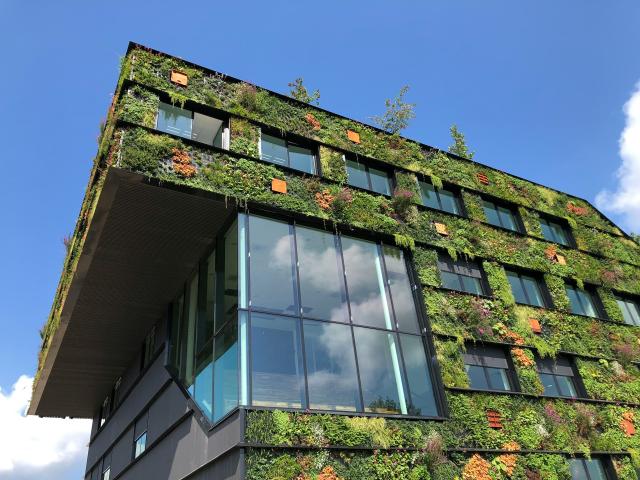
Green and Sustainable Affordable Housing Explained
The presence of qualified housing at low prices and the necessity of environmental non-destructiveness are the two most burning global challenges of our 21st century. These two concerns have the tendency to seem to be in conflict because most of the environmental characteristics were linked to increased expenses but to be affordable, prices are supposed to be at low prices.
The assumption of a gap between the two comes to an end, however, with the idea of green and sustainable affordable housing. It is an innovative method of development, which attempts to offer not only affordable housing, but also housing which is energy-efficient, environment-friendly, and even socially equitable. It is a great task, but it promises to change the relationship between urban and rural life in a new way. It explores the value, vision, context and practices of green and sustainable affordable housing and demonstrates that it is possible to combine economic viability and environmental responsibility.
Understanding Green and Sustainable Affordable Housing
Green and sustainable affordable housing is an interdisciplinary phenomenon involving environment science, architectural design, social justice, as well as social policy to come up with houses that appear to be affordable to people of low and moderate earnings and reducing causing harm to the environment. These houses are geared by architecture, building and management on management towards resource conservation and reduction of greenhouse emissions and healthy living conditions. Housing sustainability is not just about energy efficiency but covers water management, reduction of waste, indoor air quality, and use of non-toxic materials, and even the ecological footprint of the building process in general.
The conventional affordable housing tends to compromise on environmental care in an attempt to cut down on building expenses. But upon long term analysis, it can be realized that due to such sacrifices there is a high chance that utility bills also go up, the indoor Environmental quality is low and there is also a high probability that residents fall ill all which causes a chain of poverty and environmental destruction. In contrast, the green affordable housing looks into the life-cycle cost of a building. Investing in superior materials and systems at the initial stage will help to cut operational expenses in the long-run, creating more stable and controllable living costs to the residents.
Whether it is the solar panels, rain water harvesting systems or high performance insulation or low VOC paints, there are many elements incorporated in green affordable housing that add to sustainability. In addition, it frequently features considerate land location like the closeness to the transport network and green areas to minimize car use and improve the quality of life in a specific locality. This is intended to be about producing a housing that is not only an excellent investment to the developer but also healthier, cheaper, and sustainable living space to the tenant.
The Social and Economic Impact of Sustainable Housing
Green affordable housing has one of the strongest arguments to support it, which is the ability to fight climate change and alleviate poverty at the same time. The cost of housing in the economy is not only limited to the price of rent or mortgage. The costs of utility bills, repairs and healthcare expenses can be cumulatively higher on low-income minds due to poor quality housing. These incremental expenditures are mitigated by sustainable housing which minimizes energy and water usage, enhances indoor air quality, and does not need much maintenance since they have construction materials that are durable.
Green affordable housing can create a community development force. Sustainable design usually aims at the well-being of the entire community, using community gardens, recreational spaces and access to services. These also benefit the residents by enhancing the quality of life as well as stabilizing neighborhoods, crime, and social cohesion. These things are likely to increase the maintenance of the property and extend the tenancy of residents, which decreases the turnover operation costs on the housing providers as well.
Moreover, the building and support system of green affordable housing, especially energy efficiency retrofitting, renewable energy systems as well as sustainable landscape repair systems create employment opportunities. It has especially the potential to make an impact in economically deprived regions. The advantages of such a situation are double-fold as when the locals are involved in the construction and maintenance of greenhouses; not only environmentally sustainable homes are being built, but the local economy opens up as well.
At a more macro level, the inclusion of sustainability in housing policy will cost the government much less in energy subsidies, health, and climate mitigation. Investments done by governments with regard to sustainable affordable housing usually emerge in the form of substantial savings that are realized through lower government expenditure spent on housing and improved tax collection due to economically thriving city neighbourhoods. Therefore, green affordable housing is not a niche idea, but a part of a bigger equation of social and economic equity.
Challenges in Implementing Green Affordable Housing
Green and sustainable affordable housing is not without its fair share of challenges that are difficult to resolve and it may still impede its popularity. The first and the most quoted obstacle is cost. Granted that sustainable materials and energy efficient systems are cheap in the long run, the initial cost may be of excessive amounts of money compared to the use of conventional systems. This does not help make the case of inexpensive accommodation developers who generally run on stingy budgets and limited profit margins. Tax credits, grants and low-interest loans are among the means of getting finances to bridge this gap though they do not always cover or are evenly distributed.
Many other problems come with ignorance and technical know-how among developers, architects, and policymakers. The potential of green building methods and its integration without excessive expenses is not properly informed in many circles of people working in the sphere of affordable housing. Such knowledge will lead to missed opportunities or sub-optimal designs that do not even reach sustainable levels. There is also the regulatory aspect: sustainable development can be supported or suppressed by building codes, zoning regulations and land use regulations. Elderly or restrictive codes in most jurisdiction hamper the implementation of new green technologies or compact transit-oriented developments.
In other instances, it is the challenge of resistance of stakeholders such as developers, investors and even residents. In the case of long-lasting characteristics, developers might feel that they provide unwarranted degrees of complexity, or risk. New technologies can be considered with a lot of suspicion of their performance due to lack of a long history of performance. Locals are not likely to be eager to use new arrangements, especially people who have never heard about green living, or worry about some negative changes associated with the regime. To overcome these barriers on perception and culture, we need to think technical and have good communication, education as well as serving the communities.
Another key challenge is information, data gathering and performance tracking. Measures and measurements that are longitudinal should be used in order to demonstrate the effectiveness of green affordable housing. The problem is that not all the projects are fortunate enough to have the resources or infrastructure to perform such an assessment, thus missing a chance to make data-driven decisions and obtain funding in the future. That evidence is lacking, which makes the case of sustainable affordable housing anecdotal in most policy circles, making more institutional backing exceptionally difficult.
Global Innovations and Case Studies in Sustainable Housing
The world over, new green affordable housing developments are demonstrating that there is a way to harmonize sustainability and social equity. The city of Freiburg in Germany has been leading the world as a city that has been very environmentally-friendly when it comes to urban planning. Its Vauban neighbourhood is a place with solar-powered houses, Non-car Street, and energy-positive buildings producing more than they use. Though initially targeted at the middle-income families, the changes in the policy design have allowed a certain share of its housing stock to stay affordable, thus allowing the existence of a socioeconomically diverse population living in a sustainable community.
The Enterprise Green Communities initiative in the United States provides a national model green affordable housing that has adopted certification criteria as well as financial incentives to developers of green affordable housing. The success of projects have been exhibited in cities such as Seattle, Portland, and New York that community development of the green principles to affordable housing can result in energy and water usage cuts by up to dramatic levels, as well as turnover of residents. This can be seen in the Via Verde development in the Bronx, with solar panels, green roofs, and community gardens, as well as affordable renting and ownership, putting a new standard on urban sustainability.
In India, social enterprises such as the Mahila Housing Trust are enabling low income women to make their homes more energy efficient with cool roofs, solar lanterns, water saving appliances etc. Such grassroots movements point toward the significance of local action and context driven responses. Such projects contribute not only to the living conditions but also to the capacity building and the resilience of the community since the residents are trained to deal with green systems and maintain them.
Concurrently, in Latin America, the development of the so-called houses of the future is taking place in Brazil, where in the favelas of the city of San Paulo, the “Casa Nova” project has created laboratories of providing sustainable houses. The project is enhancing the quality of life of the thousands of families and at the same time minimizing the environmental impact by retrofitting existing homes with an informal character with efficient insulation, solar water heater, and better sanitation. These cases reinstate the fact that green affordable housing is not an indulgence of the developed world it is a global necessity with multi-purpose and versatile solutions.
These case studies show that with the aid of policy and community work, innovation can be used to break most of the classical obstacles to sustainable housing. They even demonstrate the point that green affordable housing does not fit all. Success will be reached when trying to be in approval with environmental aspirations, local needs, culture, and economics.

The Future of Green and Sustainable Affordable Housing
What the future of green and sustainable affordable housing holds in store is clear, and it is not only bright, but also is pressing. The housing crisis is characterized by climate change, urbanization and economic inequality which are all coming together to force a new and bold thinking and action. Housing which will be affordable and environmentally friendly will be even more demanded as the cities increase and the populations grow. Fortunately, new technologies, new models of financing, and changing policy frameworks provide avenues of scaling up what already works.
Improvement in technology in construction, including prefabricated modules homes, and 3D printing, is making green construction cheap and less time consuming. There are cost-effective and user-friendly smart home systems that allow optimized withdrawals of energy and water. Materials science is coming towards new non-toxic, less costly and durable eco-compatible materials. In combination with digital assistants in design and performance tracking, these innovations are increasing the capability and appeal of sustainable housing.
Critical roles are also being played by financial innovation. Impact investing and green bonds alongside climate finance are new sources of funding that eco-minded developers are pursuing. Meanwhile, cooperative housing groups, land trusts and community development financial institutions are testing alternative models whose ownership structure is geared toward long-term affordability and environmental responsibility. Governments are starting to pick up on the strategic investment of investing in green affordable housing, considering it not just socially just as an investment, but as a means of meeting other climate and economic objectives.
In the future, sustainable housing will literally be a matter of policy. Some of the structural impediments, like inefficient zoning, outdated codes, and poor urban planning can be eliminated by looking into the future, smart zoning, modern codes, and smart city planning. The market can be skewed in the favor of sustainability and so incentives to build green, enforcement of energy efficiency regulations and fines on over utilizing resources can help do this. The role of education and advocacy cannot be left out. With the increasing awareness of the people, more demand of green housing will be produced, thus leading to a circular chain of innovation, investments, and influence.
Importantly enough, the affordable housing of the future has to be inclusive. This implies that marginalized groups should not be left out in the green transition. The design aspect requires participatory planning, equal supply of financing, and inclusion of culture in designing green housing, so that it is not limited to people who are able to pay to become part of it. It does not only aim at the construction of greenhouses but focuses on the construction of just resilient and thriving communities.
Policy and Governmental Role in Advancing Sustainable Affordable Housing
No matter how innovative the design and how driven the developer is- the successful scaling and realization of green and sustainable affordable housing depends largely on good policy frameworks, proper governance and active intervention of the public sector. Local, national and international governments have a vital role to play in the establishment of conditions under which sustainable housing may flourish. They can be felt in terms of financial aid, regulatory policy, city planning, popular awareness as well as the long-range housing approaches.
At financial level government measures like tax credits, grants, subsidies, and low-interest loans can be provided to cover the initial cost of investment and save in long-term in green building. Such instruments have the capacity of bringing green construction within the reach of low income developers who tend to work on small capitals. Such Programs as the green Retrofit Program of the U.S Department of Housing and Urban Development (HUD) and the Affordable Homes Programme of the United Kingdom are good examples of how the use of the public funds can be directly used to promote the implementation of sustainable processes in housing projects that target state citizens who can afford low-income housing only.
Regulatory frameworks also happen to be crucial. Closely related to this is outdated building codes and zoning laws that inadvertently work as barriers to sustainable development. As an example, the limitations on the realized installations of solar, specifications of minimum parking spaces, or restrictions on the density of buildings would create conditions that make it hard or even illegal to build energy-efficient, transport-oriented, or compact housing. The modernization of these codes to meet sustainability objectives is capable of eliminating the obstacles and paving the way towards more innovative, economical, and eco-friendly arrangements. Other cities have already passed green building requirements or expedited permitting of green projects and this trend is a foreshadowing of more sweeping regulation.
Conclusion
Green and sustainable affordable housing is not the oxymoron, instead it is an effective way of combating some of the worst issues of our era. It addresses this issue by combining environmental policy with social fairness, and, as a result, provides a path towards healthier, more resilient and more inclusive communities.
Despite the issues that still prevail, implementation of sustainability in housing has already been a success in other parts of the world including cost barrier, regulation obstacles and with the help of innovation, collaboration and dedication, it is possible to achieve sustainable housing. The way we live in our homes is going to determine our future in the cities we live in, our climate and our well-being as a society. Going ahead, green affordable housing should not be treated as a choice, but rather it should be the norm.
Also Read: A Critical Success Factor Framework for Implementing Sustainable Innovative and Affordable Housing



-3dkuLgKhRD.jpg)
-49HupTvwDD.jpg)





LEAVE A REPLY