

Ghana’s Role in the Un Habitat Agenda: How Housing Policy Is Aligning with Sustainable Development Goals
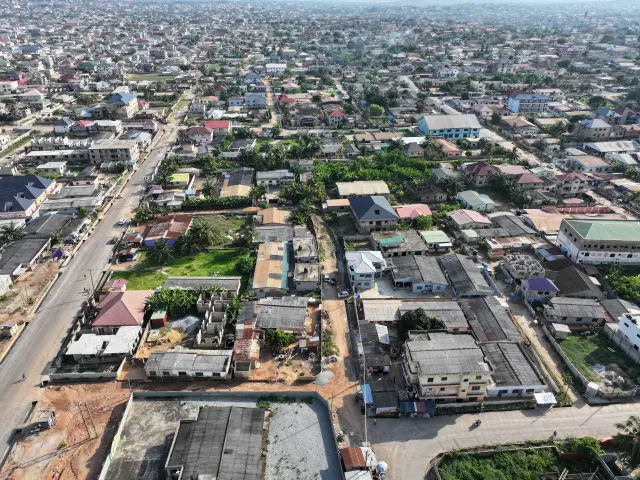
The process of urbanization in Ghana has been dynamic and challenging in the last thirty years. The high rate of population increase, growth in metropolitan areas and rise in rural-urban migration have put strain on housing and infrastructure as well as land management systems.
 In
this respect, the involvement of Ghana in the world urban structure, especially
the UN Habitat Agenda, has taken the focus in influencing national housing
reforms. The ideas promoted by UN-Habitat and supported by the New Urban Agenda
are inclusive, safe, resilient, and sustainable cities. The housing policies in
Ghana are increasingly being modeled to be responsive to global
commitments as well as to local realities.
Sustainable Development Goals (SDGs), and SDG 11 in particular, which is titled Make cities and human settlements inclusive, safe, resilient and sustainable, have set realistic milestones of achievement.
The inclusion of SDG goals in national development planning in Ghana shows that it has appreciated that housing is not a sectoral issue but a transversal basis of economic opportunities, environmental sustainability, and inclusion.
The
Ministry of Works and Housing and metropolitan assemblies in Accra and other
institutions have gradually contextualized the delivery of housing under the
concept of sustainability.
This is not just a figure of speech. It has an impact on
land-use planning, building standards, financing mechanisms and reforms in
urban governance. Introduction of green building techniques, growth of housing
schemes aimed at affordability and focus on people-involving planning are all
indicative of the further penetration of foreign ideas into domestic
policy.
The present blog discusses the changing role of Ghana in the UN-Habitat Agenda in nine dimensions, and how the policies concerning housing are recalibrated to address the Sustainable Development Goals.
Through urban governance
changes to climate resilience and social equity, Ghana's practice has shown both
improvement and current challenges. It is important to note that the analysis
draws on the convergence of global structures and domestic focus and provides
an understanding of the growing role of housing policy as a strategic
instrument of sustainable tourist development in Ghana.
Ghana and the UN Habitat Framework: Commitments and National Adaptation
The involvement of Ghana into the global housing regulation is much older than the SDGs have been adopted, yet the participation of this nation in the Habitat conferences defined its current attitude towards urban policy to a great extent.
The New Urban Agenda that was adopted in 2016 at
Habitat III solidified the pledges to sustainable urbanization, integrated
planning, and fair housing access. Ghana as a signatory committed not only to
localize these principles in its national development structures but also to do
so.
The New Urban Agenda advocates the compact urban design, mixed-use development, safe land tenure, and participatory governance. These pillars are reflected in the National Urban Policy of Ghana and consequent housing strategies.
Ghana shows signs of adaptation as opposed to wholesale
adoption by entrenching the global norms in the domestic policy documents.
Global standards are viewed in the prism of local systems of governance,
traditional land tenure systems, and financial facts.
Indicators of SDG have been integrated into the systems of
monitoring by national planning bodies. As an illustration, housing
sufficiency, access of basic services, and slum cutting indicators have taken
over the yearly progress reports. This integration provides accountability
systems which relate domestic successes of Ghana to international reporting
requirements.
In addition, partnership with UN agencies has helped in
technical assistance and capacity building. Such partnerships have empowered
urban data systems, geographic information mapping and resilience planning
frameworks. Such partnerships help Ghana to transform general commitments into
specific results.
Nonetheless, adaptation entails resolving the conflicts
between fast urbanization and the insufficiency of finances as well. The
adherence to the UN Habitat standards demands long-term investment into
infrastructure, institutional changes, and environmental protection. The
dilemma about Ghana is to strike a balance between ambition and affordability.
Finally, the position of Ghana in the UN Habitat model
indicates a tactical integration of international obligations and national
interests. By means of policy integration and institutional collaboration, the
country is gradually aligning housing governance to international
sustainability standards.
Affordable Housing and SDG 11: Increasing Access to Sufficiency in Shelter
SDG 11 has made housing central in the concept of
sustainable urban development in that by 2030, all people should have access to
good, safe and affordable housing. This target is urgent and complex due to the
fact that Ghana has a housing deficit or rather millions of houses. Affordable
housing policies of the government are gradually being restructured into SDG
vocabulary, as national policies are being pegged against international
ambitions.
Housing supply strategy is targeted on the development of
the public-private partnerships, infrastructure services, and financing
innovation. The focus on the affordability standards goes right in line with
the inclusiveness requirement of SDG 11. The cities like Kumasi have projects
that aim at solving the problem of urban sprawl by encouraging planned
developments that incorporate utilities.
In addition to numerical goals, adequacy is in the center
stage. Housing should be made available with clean water, sanitation,
electricity, and transport. The policy under SDG acknowledges that shelter on
its own is ineffective without the support services. The housing policies of
Ghana are progressively using this holistic view.
SDG commitments are also found in the slum upgrading
efforts. Instead of the mass evictions, policies promote gradual upgrades in
informal settlements, tenure security, and improvement of infrastructure in the
settlements. The strategy is in tandem with international best practices that
focus on human rights and social wellbeing.
Its financing mechanisms are also re-tuned in order to
establish more inclusiveness. The target consumers of the micro-mortgage
products and rent-to-own are middle and low-income households. Despite the
presence of access disparities, the policy orientation signals SDG-conforming
inclusivity.
Lastly, the affordable housing drive in Ghana can also be
used to show the SDG 11 principles since it has led to an increase in supply
but emphasized on adequacy and integration. Nevertheless, the path to complete
access is not an easy path, but the policy coherence and accountability is
strengthened with the compliance with international objectives.
Urban Governance and Participatory Planning of Sustainable Cities
The vision of the UN Habitat is based on proper urban
governance. The decentralization structure of Ghana gives powers to
Metropolitan, Municipal and District Assemblies to regulate and plan housing
development. These local institutions can be strengthened to increase
participatory planning and accountability.
There is an increasing inclusion of social consultations in
the process of urban development. Inclusion in decision making of zoning and
approvals of housing projects supports the New Urban Agenda that calls for
inclusive governance. The participation also enhances transparency and reduces
land allocation conflict.
Digitization also promotes efficiency in governance. The
land registries and electronic permitting systems reduce the corruption and
approval processes. These reforms achieve SDGs of efficient institutions.
Capacity building is still necessary. The compliance with
the standards of sustainability can be increased with the help of training
urban planners and building inspectors. International relations contribute to
the technical expertise and the improvement of data management.
To sum up, the governance reforms are indicative of Ghana
being determined to achieve participatory and transparent urban governance.
With enhanced local institutions, it helps the country to promote the
sustainable city goals entrenched within the UN habitat Agenda.
Climate Resilience and Environmentally Sustainable Housing
Ghana is vulnerable to climate conditions especially in
urban areas especially in coastal areas. UN Habitat framework puts a focus on
resilience, and environmental sustainability. The policies of housing in Ghana
are adopting more climate adaptation policies.
The need to have resilient drainage and a build in flood
prone zones, Accra informs us of the urgency of such planning. Revised building
standards promote sustainability of materials and better site layout. The
integration of renewable energy in the housing estates would be in line with
SDG 7 on clean energy.
Green building technologies cut the footprint of carbon and
improve long-time affordability through energy efficiency. Collaborations with
environmental associations will encourage the sustainable material sourcing.
Planting of trees in urban areas and conservation of open
spaces help in mitigation of climate and livability. Ecological impact
assessment is now a major consideration in housing projects prior to approval.
To sum up, the concept of environmental integration into the housing policy proves that Ghana believes in sustainable urban futures. The correspondence of resilience interventions to the UN Habitat Agenda enhances the ecological protection and communal security.
Land Reform and Secure Property Rights
Sustainable housing development is based on secure tenure of
land. The land system that is used duly in Ghana is both customary and
statutory, which has historically made urban planning difficult. Reforms will
bring about clarity on ownership, make registration smoother, and minimize
disputes.
Cooperation with the Lands Commission will increase the
transparency of land registration. Cadastral mapping and procedures through
digitized records minimize delays in transactions. Tenure security favors
access to mortgages and investment security. It also aligns with SDG 1, poverty reduction, by allowing the accumulation of assets.
The expansion of equitable access is under consideration
through community land trusts and cooperative models. Such innovations are best practices in the world, as encouraged by UN Habitat. Finally, land reform
gives impetus to the platform of sustainable housing. Ghana is a step closer to
SDG-aligned urban development through improvement in security as well as
efficiency.
Economic Inclusion and Housing as a Development Catalyst
The policy on housing also has an impact on employment,
industrial development, and development of the financial sector. Construction
activity creates opportunities and spurs local production.
The SDG 8 on decent work is reflected on the labor-intensive
housing projects. The construction related skills training programs increase
the capacity of the workforce. The capital market deepening is backed by the
mortgage market expansion. Affordable housing finance promotes mobilization of
savings and long term investment.
The idea of inclusive growth entails striking a balance
between profitability and social goals. The policy environment of Ghana is
gradually appreciating housing as an economic multiplier that relates to the
international development objectives.
Conclusively, the ability to incorporate housing in economic
planning increases its developmental effects. The strategic role of housing is
strengthened by the fact that Ghana is aligned with the SDG economic targets.
Social Equity, Gender Inclusion, and Vulnerable Populations
The UN Habitat Agenda also places a high priority on inclusivity and social justice as the key pillars to sustainable urban development. Within the principles, the policy of housing in Ghana is following a tendency of taking more specific measures aimed at the protecting and empowering of the vulnerable groups.
There is a clear identification of women,
persons with disabilities, and low-income earners as priority beneficiaries of
affordable housing programs. This change is indicative of a larger comprehension
that housing is not only about physical buildings, but about equal access to
opportunity, security and dignity.
These reforms should include gender sensitive land registration procedures and better access to mortgage finance. Ghana is striving to seal the centuries-old disparities in inequalities in the housing field through the resolution of historical factors that restricted the property and financial inclusion of women.
Moreover, special subsidies and schemes of
adaptable financing are also being presented to enable the homeownership to be
more accessible to members of the public sector and economically disadvantaged
families. Such funds interventions are aimed at ensuring that the affordability
measures are extended to people who need most.
The programs of slum upgrading also reflect the respect to
the dignity and the stability of the community. These initiatives do not
dislocate the residents as they focus on infrastructural developments, tenure
security, and social cohesion. Clear and involved allocation of consideration
of housing units is also a way of increasing the public trust and minimize the
feeling of favoritism or exclusion.
All these equity-related reforms are indicative of Ghana,
being practical in its realization of the Sustainable Development Goals 5 and
10 that address gender equality and inequalities reduction. Housing policy is
therefore becoming a strategic tool of facilitating social cohesiveness and
inclusive national development
Integration of Infrastructure and Sustainable Urban Mobility
Sustainable housing cannot do without close ties with the
supporting infrastructure, the supports cannot be weak and disconnected. In
Ghana, housing development and transport planning were integrated, which is a
multi-dimensional approach, and in accordance with Sustainable Development
Goals 9 and 11, which focus on sustainable cities and resilient infrastructure.
Having realized that homes should be linked to employment centers, schools,
healthcare facilities and markets, policy makers are in a move to encourage
spatial planning.
The concept of transit-oriented development is on the rise
in response to the need to minimize congestion and environmental degradation in
the urban setting. Planners are interested in ensuring that there is closer
proximity between the housing project and major transport corridors and other
public transport routes, with the objective of reducing the commute time,
reducing transportation costs, and minimizing carbon emissions. The approach
not only enhances the sustainability of the environment but also the level of
economic efficiency and enhanced living standards.
Housing programs in cities like Tamale are closely related to road development and enhanced access to utilities. It provides the residential developments with the value of long-term functionality and reliability of electricity, drainage, and road connection.
The infrastructure
related to water supply and sanitation is one of the areas where the investment
is especially important because it directly affects the health outcomes of the
population and their welfare.
To conclude, the incorporation of infrastructure and housing
development is very important to the livability, resilience, and sustainability
of housing programs in Ghana. This integrated strategy supports the ideals of
the UN Habitat Agenda, and this is that sustainable urban development cannot be
achieved by just erecting the housing units.
In summary: Urban Future in a Global Zakat Ghana
Ghana's participation in the UN Habitat Agenda indicates a planned effort to align domestic housing policy with international sustainability obligations. By encouraging institutional transformation, climate resilience initiatives, inclusive financing, and participatory governance, the nation is integrating the Sustainable Development Goals into urban planning practice.
Efforts to combat challenges, especially financial limitations and high rates of urbanization, continue, but the overall policy orientation is in tandem with global standards. Housing has come to be seen as more than a place to stay but a source of economic development, social justice, and environmental responsibility.
As Ghana moves towards 2030, political intentions, institutional capacities, and community engagements will be maintained until the global pledges are met with real changes in the life of the city.
Also read: The Big Four Agenda: How Kenya’s Affordable Housing Goal Is Shaping the Future of Urban Development











LEAVE A REPLY