

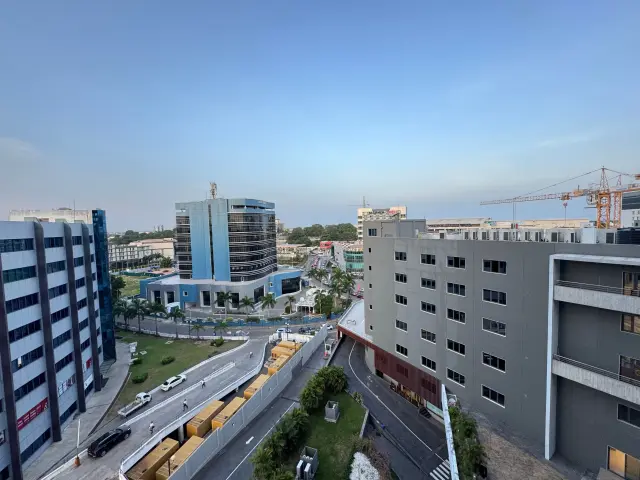
Breaking Down the Challenges in Ghana’s Mortgage Market: What Needs to Change?
Homeownership is also one of the most effective status symbols of stability, wealth generation, and generational safety. A properly operating mortgage market in most countries has been key in increasing access to housing and enhancing financial inclusion.
 In Ghana, the mortgage market is, however, small, but the population and the number of houses required are still
very large. Notwithstanding the rapid urbanization, the rising middle class,
and the rising interest in property investment, most citizens do not have access to mortgage funding.
The problems of the Ghanaian mortgage market are not in isolation; they are highly intertwined and influenced by macroeconomic factors, market regulation, land administration framework, financial sector potential, and the general socioeconomic situation.
Ghana has low levels of mortgage
penetration relative to other comparable economies and much of home
construction is being done through personal savings, remittance, or incremental
construction instead of credit.
To know what should be changed, it is important to have a
clear disaggregation of structural and systemic obstacles that inhibit the
sector. The given blog examines 6 fundamental issues of the mortgage ecosystem
in Ghana and outlines viable pathways of reform. All sections deal with a
crucial aspect of the issue and provide the strategies of change that can be
taken in action.
Macroeconomic Uncertainties and Rises in interest rates
The macroeconomic volatility is one of the biggest barriers
to mortgage development in Ghana. An environment that is conducive to sustainable
mortgage markets is one with low inflation rates, sound currency markets, and predictable interest rates. However, the economy of Ghana has undergone
sporadic periods of high inflation, currency depreciation, and fiscal imbalances, which directly impact long-term lending.
Mortgages are financial instruments that are long term; they usually have a duration of 15 to 25 years. The lenders will be required to charge loans depending on future inflation expectations and currency risk.
In
cases where the inflation rates are high or unforeseeable, the lenders will
impose high interest rates to cushion their gains. Mortgage interest rates in
Ghana have generally been way over single digits (with some rates going as high
as 20 percent). When this happens, most of the middle-income earners cannot
afford to make mortgage repayments at such levels.
Mortgage pricing is affected by high benchmark policy rates by central bank. The financial institutions normally depend on short term deposits to finance long term mortgages leading to maturity mismatches.
With
upsurge in the short-term rates, banks are expected to raise mortgage rates to
stay afloat. The overall outcome is a vicious circle whereby a high level of
inflation is followed by high interest rates which in turn diminishes the level
of mortgage uptakes, which subsequently limits the growth and competitiveness
of the market.
Currency instability makes it even more difficult. A good
number of housing materials are imported, implying that building expenses vary
with the exchange rates. Developers sell properties in terms that cushion
against depreciation, making the properties unaffordable to ordinary wage
earners. In other instances, mortgages have even been denominated in foreign
currency, exposing borrowers to exchange rate risk.
To solve this dilemma, it needs macroeconomic discipline. Long-term endeavors to check inflation, currency stabilization and fiscal prudence are the pillars of the development of the mortgage sector.
In volatile
economic conditions, it is almost impossible to have long-term fixed-rate mortgage products. Macroeconomic stability in Ghana has to be given
priority before the expansion of housing finance.
Furthermore, the policymakers might promote the establishment of the secondary mortgage markets, where loans might be securitized and sold to investors. This would enhance circulation and possibly lower the cost of funding.
Long-term capital available to pension funds and insurance companies could contribute more to the financing of mortgages, provided there are regulatory frameworks in place to help that.
Finally, in the
absence of macroeconomic stability, no structural change in the mortgage sector
will attain sustainability. Stability is not an economic goal only; it is a
housing affordability policy.
Difficult Access to Long-Term Financing
The second significant limitation in Ghana's mortgage sector
is the lack of availability of long-term funds. Mortgage lending needs to
have stable, patient capital that corresponds to the long tenure of housing loans.
Nonetheless, the banking industry in Ghana is heavily financed by short-term deposits from customers. This brings an imbalanced structure in assets and
liabilities.
Banks face a high liquidity risk when they are employing
short-term deposits to fund long-term mortgages. In case deposits are withdrawn, or interest rates increase, the banks might not be able to remain profitable.
This has made most financial institutions give short-term commercial loans
instead of mortgages, which commit their funds over a period of decades.
This is further worsened by the lack of a deep secondary mortgage market. In the more advanced markets, the lenders can sell the
mortgages to specialized institutions, or they can package them into securities
to sell to institutional investors. This liberates capital to make new loans.
Such mechanisms are not properly developed in Ghana and the scope at which
banks can increase mortgage portfolios is constrained.
Pension funds are one of the possible solutions. Over the past few years, Ghana has experienced tremendous growth in its pension industry that administers billions of long term pensions.
But there have been regulatory
restrictions and risk concerns that have limited massive investment in mortgage-backed instruments. Mortgage bonds or housing finance vehicles would be able to
direct pension capital into the housing sector in a safe and sustainable manner
should they be properly structured and regulated.
Financial institutions that are involved in development
finance, as well as multilateral organizations, have been involved in the
financing of housing finance programs. However, external funding will not
replace the strong domestic capital market. Ghana must strengthen its bond
market and build investor trust and develop bonds that match long-term housing
finance requirements.
Promotion of savings products that are
homeownership-specific may also be useful. In other markets, it has worked
through contractual savings programs where an individual pays a certain amount
on a regular basis towards a future mortgage down payment. Through such
programs, credit risk is minimized and a stable funding base established.
Finally, the long-term funding gap can be resolved with
joint changes in financial regulation, capital market development, and
institutional investment framework. The mortgage growth will not be able to
grow unless access to long-term capital is affordable.
Complexity of Land Tenure and Title Registration
Land administration has continued to be one of the most long-lived issues of the mortgage market in Ghana. Mortgage lending is based on secure property rights since lenders need to have clear, legally binding collateral.
The land tenure in Ghana is however complicated as it is a
combination of customary ownership, family lands, stool lands and state lands.
It is not unusual to have several claims on one piece of
land. Boundary and property tussles may take years to be solved in courts. This
legal uncertainty is risky to the lenders. The banks are hesitant to give
mortgages on premises whose titles are not clean and properly registered.
The very procedure of land title registration may be long
and bureaucratic. Documentation delays sluggishly mortgage approvals and raise
the cost of transactions. In other instances, borrowers have been living in
properties over years without having their ownership registered and hence they
cannot use the property as a security.
Land records should be digitalized. This would go a long way
in enhancing confidence of the lenders in the modernization of land registries,
processing time reduction, and enhancement of transparency. There should also
be an improved set of clear dispute resolution mechanisms so that the property
rights can be enforced within reasonable periods.
Education of the people on the need to have proper land
documentation is also imperative. Most people do not appreciate the importance
of formal registration until when they are after financing. Making the process
smoother and decreasing the fees involved in the process may be an incentive
towards compliance.
Land reform is not an easy topic and small steps to improve
the administration can lead to high returns. Ghana can access a bigger mortgage
lending and more private investment in housing development by removing the
uncertainty regarding ownership of property.
Poor Incomes and Unskilled Work
Mortgage systems operate well in situations where there are
known and recorded sources of income by the borrowers. Ghana however, has a
large percentage of the workforce in the informal sector. Small business
owners, artisans and traders usually do not have formal pay slips or audited
financial statements although some of them might be earning enough.
Banks are dependent on the formal documentation in order to
determine credit worthiness. Potential borrowers are often rejected in mortgage
application without verifiable records of income. This leaves out a significant
portion of the population of the formal housing finance.
Demand is also restricted by low average income levels.
Mortgage products require down payments and monthly payments that many
households cannot afford even when mortgage products are in the market. The
issue is exacerbated by the increase in the price of urban property.
Innovation of finances is required. Other credit scoring
systems that examine mobile money transfer, utility payment, and savings
profiles have the potential to expand access. In this respect, the emerging fin
tech sector in Ghana has potential instruments.
There is also a need to focus on affordable housing
development. Mortgage accessibility will be restricted in case property prices
keep increasing at a rate that is greater than the wage. The building of
cheaper units of housing consistent with realities of income can be facilitated
by the use of the public- private partnerships.
The potential borrowers would also be empowered by expanding financial literacy programs. People do not know much about mortgage procedures, calculations of interest, and long-term financial planning.
Fear can be
mitigated and confidence developed in the formal lending systems through
education. Financial institutions can increase its customer base and still
take care of the risks by aligning mortgage products with the employment
structure and income distribution in Ghana.
Expensive Construction Costs and Housing Supply
Unless there is sufficient supply in housing, there will be
no rise in mortgage demand. Constructions in Ghana are also very expensive
since they are dependent on imported materials, including cement additives,
steel, tiles, and fixtures. These costs are also inflated by exchange rate
fluctuations.
Lack of infrastructure also adds to costs of development. In
most cases, developers cover the expense of roads and drainage network, water
supply and power conduit. This ends up being transferred to the consumer in the
form of higher prices of homes.
Importation dependency could be decreased by the local production of building materials. Promotion of local production and other building technologies can reduce the expenses in the long term.
Prefabrication
and modular housing technologies present efficiency benefits that are
synonymous to consider. The zoning efficiency and land servicing will also have
to be dealt with by government policy. Red tape building permit systems and
infrastructure investment can cut down developers' delays and costs.
The problem of housing supply increases the price levels,
thus, decreasing mortgage availability. It is essential to supply the
various income groups to grow the mortgage market.
Gaps in Regulatory and Institutionalism
The last challenge is the issue of regulatory and
institutional coordination. The housing policy overlaps with finance, land
administration, urban planning, and social protection. Agencies fragmentation
may lead to inefficiencies.
The national housing strategies should be clear and in line
with regulation of the financial sector. The procedure of mortgage foreclosures
must be clear and effective to mitigate the risk on the lenders and safeguard
the rights of the borrowers. Long foreclosure puts a deterring effect on
lending.
The consumer protection frameworks also have to be
reinforced in order to develop trust. Lack of transparency in terms of
mortgages, and increases or decreases in interest rates, and charges may
increase trust in the system.
Capacity building of institutions is important. Housing
finance special institutions and credit bureaus should be efficient. The
quality of data collection and reporting should be enhanced to be used to make
evidence-based policymaking.
Reformers of the government ministries, financial regulators
and the stakeholders of the private sector should be coordinated. A whole-person approach will be more effective in comparison with individual initiatives.
The Role of Government Policy and Public–Private Partnerships in Strengthening Ghana’s Mortgage Market
Without a conscious and concerted government intervention, no mortgage market is going to develop sustainably. Although the origin and administration of mortgage loans are mainly controlled by private financial institutions, the larger ecosystem through which housing finance is supported is mostly influenced by public policy.
In Ghana, the government has influence on regulation, taxation, land administration, housing development, and
macroeconomic management. However, against the background of numerous
initiatives, fragmented policy and the lack of consistent enforcement of policy have curtailed the effectiveness of state-driven measures in the
mortgage sector.
The government's policy matters a lot as housing is not a commercial product only; it is a social and economic need. An effective mortgage system has led to the creation of employment, improved infrastructure, a growing capital market, and the stability of society.
The
impact of poor performance of the housing finance system spreads throughout the
economy, further increasing inequality and restraining urban growth. Hence,
there is a need to have a powerful and well-organized policy framework.
A consistent, never-implemented national strategy on housing has been one of the fundamental failures in the housing finance ecosystem in Ghana. Despite the various administrations having launched housing programs, others have been either short-lived or they were poorly financed.
This
inconsistency negatively affects investor confidence and continuity in the
delivery of housing. To have fully developed mortgage markets, it is necessary
to have stable and predictable policies that are not dependent on the political
cycles.
Conclusion
The mortgage market in Ghana is at a crossroads. Blistering urbanization and population explosion cause immense housing pressures, but formidable structural obstacles persist in restricting access to formal mortgage finance.
The difficulties are complex, which includes macroeconomic
instability and lack of funds, complications of land tenure, informal jobs,
expensive construction, and regulatory weaknesses.
The sector needs long-term macroeconomic stability, more
capital markets, land administration reform, all-inclusive credit assessment
models, increased supply of affordable housing, and enhanced institutional
coordination to transform the sector. There is not one reform that will do;
development must be worked at on various fronts.
When these changes are being sought in a strategic manner,
then Ghana can open up the potential of its housing finance industry. Not only
would an active mortgage market increase home ownership, but it would also
boost economic growth, provide jobs, and enhance financial inclusion. The
course ahead would require dedication, innovation, and teamwork, yet the
benefits for Ghanaian citizens and the economy would be drastic and
long-lasting.
To summarize, the government is critical to the development of the mortgage market even though it is strongly dependent on the role of private lenders and developers. Ghana has an opportunity to develop an enabling environment for sustainable mortgage growth through consistent policy frameworks, specific incentives, modernization of the regulatory landscape, and effective public-private partnerships.
The mortgage sector transformation is
not just a matter of money; it is a national development imperative that would have
to be acted upon, political will, and a long-term perspective.




-shtTqaPktk.jfif)








LEAVE A REPLY