

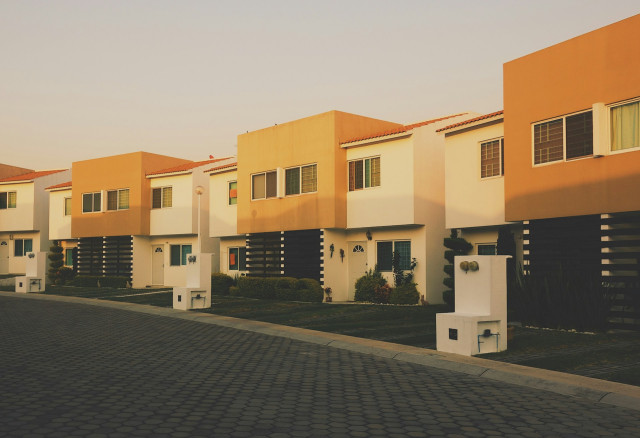
From Tax Relief to Loans: Dissecting Pakistan’s FY26 Affordable Housing Package
The FY26 federal budget of Pakistan enters the scene when cheap housing is not a policy niche dream any more but a socioeconomic necessity. Due to the interaction of escalating urbanization, chronic national housing shortage often measured in the millions of units, and stifling affordability differentials between low/middle income households, this has combined with fiscal constraints imposed by an International Monetary Fund (IMF) reform program that requires a wider tax base and a more open disclosure of economic activity.
It is against this backdrop that in the FY26 Finance Bill, the government tabled (and subsequently brought to enactment through parliamentary negotiation) a series of tax measures that overhaul the tax levy on property transactions, and strengthen the focus on non-filers, redesign capital gains and withholding tax frameworks, and bring provincial incentives into line with federal concessions. Renewed focus of housing finance is also being indicated by the package by way of offering of concessional credit financing facility, specific schemes to modest sized units, and various steps designed to lure the banks in to a deeper mortgage market that lags behind its peers in South and Southeast Asia.
Whether reforms make a difference is no question, but whether the blend of tax relief, compliance pressure, valuation and loan-facilitation that are woven into FY26 are properly adjusted to unleash scale in the long-stagnant affordable housing sector in Pakistan will now remain to be seen.
The fiscal year of Pakistan is Jul-Jun; therefore, the FY26 will start on Jul 1st, 2025 and end on Jun 30, 2026. The FY26 budget (presented in June and funded in a pre-Ramadan treat the next week after parliamentary debate) is as much prepared to ride out the storm as it is a development accelerator: the government is promising itself, real GDP growth above 4% against inflation weariness, heavy accumulation of domestic interest expenses, and a rise in defense expenditure that reduces the fiscal space to make direct subsidy claims.
To some extent within those limits, the affordable housing agenda relies a great deal on how taxes are structured, with the aim of minimizing friction in transactions where it is politically acceptable to do so, broadening the base of filers on its restriction of access of non-filers to property, and prodding capital in the direction of documented and supply-financed housing. The interventions have been placed alongside continued though discontinuous attempts like the Naya Pakistan Housing & Development Authority (NAPHDA) and legacy mortgage support lines which will have to be financed through donor trust and domestic revenue mobilization in FY26.
Tax Architecture: What Changed for Property Transactions in FY26
The FY26 Finance Act redefined various cost points that have influence on affordability, liquid secondary trading, and inducement to document the transactions. A title change came in the form of a lowered withholding tax (WHT) on the purchase of properties by buyers of all values, from lower in the chain to top levels of value, which ease the initial cash outlay at transfer and raising affordability of first-time and upgrading buyers.
The previous brackets (3 4%) were reduced to a sliding scale starting as low as 1.5 % on the lowest level and with the highest level approaching 2.5% in nearly all the common residential brackets of the compliant payers, but the higher punitive rates still exist to compel documentation among non-filers. It is expected that the government will widen the wedge of WHT by reducing the WHT and will attract more transactions within the formal net, diminishing the incentive to under‑declare, and mobilize household liquidity to complete or connect utilities or early payments on a mortgage.
Going hand in hand with WHT reform, the federal government eliminated some remaining Federal Excise Duty (FED) category that had existed (and applied, variably over time, in particular between 1976 and 1982 and depending on the type of transaction occurring, such as transfer of some types of real estate and development activity). Although the amounts were not large, in the context of the entire indirect taxes, the developers had said that the duty made project cash flows complicated and that it also occasionally caused markups in costs to cascade in a multi stakeholders projects.
Its repeal in FY26 is positioned more as a quasi-sacrifice of revenue than an unnecessary flag of formalization to counteract compliance fatigue caused by more stringent non-filer provisions contained elsewhere in the bill. On paper, lower composite transaction friction might also reduce the motive to hold wealth in undocumented, speculative plots and adopt, instead, build-and-sell or build-and-lease housing supply.
Also appearing on the agenda were property valuation tables, a permanent source of under‑reporting. The Federal Board of Revenue (FBR) was in the process of updating of so called DC rates and bringing those more in line with market values in the big cities and this is a multi-year exercise. In FY26, the Finance Act gives the authority to make periodic upward review and to come closer to the provincial registries so that there is a less significant divide between the declared prices and the actual prices as was historically large which led to the induction of cash side payments and made the progressive tax brackets lose their credibility.
Combining valuation tightening with a modestly reduced rates of WHT, to raise the level of compliance and fuller documentation instead of a narrower base could over time increase the volume of evidence of municipal planning, and facilitate evidence-based housing policy.
Provincial stamp duties were out of scope, but news of one high‑profile change reverberated in the national debate: an earlier reduction of the Islamabad Capital Territory to a 1 per cent rate of stamp duty (rather than 4 per cent) was still being referenced on budget hearings, with proponents of reform suggesting similar concessions in Punjab and Sindh only to lower‑value residential instrument transfers.
Although the complete harmonization was not possible in time to pass the FY26 federal budget, the political attention has already had a tendency to push provinces into reviewing their time frame, and policy analysts claim that the coordination in compressing the stamp duties had a good chance to considerably bridge the affordability gap in lower-ticket housing. The extent to which provinces will sustain their own FY26 budget alterations will have a material effect on the actual consequence of federal reforms on the affordability of end users.
The last tax architecture lever relates to a capital gains tax (CGT) on a disposal of property. In the FY26 package, a holding-period logic remains: fast flips are subject to higher tax, and rates are decreasing as an asset is held over a longer period. This poses a paradox to the affordable housing supporters. This will on the one hand make development land pricing to be consistent since speculative churn discouraged. And on the other the increased CGT on short‑term sales can decrease the secondary liquidity of new schemes for affordable housing where households occasionally must exit early because of an income shock or an internship.
The tapered nature of the Finance Act, which is steep in year one and eases over a multi-year hold, will aim at a happy medium, but the final impact will depend on compliance and efficient provision of reliefs on primary residence status being afforded.
Compliance Pressure, Filer Status, and the Affordable Housing Equation
The advent of a stark distinction between tax filers and non-filers cannot pass without being mentioned when discussing the housing package of Pakistan in FY26. On the same tradition as the subsequent cycles, the Finance Act strengthens the axes: non-filers will be prohibited or subject to heavy taxation when purchasing immovable property beyond modest amounts, and matching bans on both opening bank accounts and registering vehicles.
To the government, the logic is simple, when it comes to high-value transactions, it makes sense to tie it to tax registration and thereby expand the base. To the affordable housing strategists, the implications are even more complicated as large sweeps of the population still are not within active range of the filing crowd, and blanket prohibition may drive the existing transactions underground or cause the lower-income end of the market to lock in ownership mobility. FY26 is thus an achievement kite as well as a stress test of the inclusiveness to which the documentation push can be taken without grinding formal low-cost supply to a halt.
Practicality of the filer status is directly associated with the affordability. When nominal taxes are reduced the administrative burden of providing records, using e securities, using e-filing systems, finding an agent, may keep low literacy or informal work families away.
Budget critics during hearings found that, the combination of tax relief with more severe non linkage penalties had the incidental effect of subsidizing the upper end buyers already in the tax net, and bestowing a privilege of untaxed home buying at rates that would exclude the same households used as grist in the affordable housing mill.
According to FY26 debate summaries, suggestions were made of simplified on-boarding levels: temporary filer IDs using national identity numbers (CNIC), tax payments through mobile wallets, and auto-withholding options imbedded in mortgage finance requests. Although it is not outright legislated in the FY26 Act, the Ministry of Finance agreed to discuss with FBR and the State Bank on the digital channels that would lessen friction during compliance in the upcoming cycles.
Homebuyers among the lower income segments have long been a stock in trade of developers who have been able to offer bulk land aggregation and staged release schemes to their buyers, who may not have banks to make payments in full. These models are to be restructured under stricter filer rules. There have been mutterings in some FY26 commentary by construction associations proposing escrow style structures where the developer, as a compliant filer entity temporarily holds the beneficial interest until the end buyers complete the filing of filer status, at which time title can be transferred at the reduced WHT rates.
Some had supported government subsidized affordable housing registries which pre‑qualify income groups and auto link the filer status to subsidized rates. These mechanisms are not coded in the FY26 Act and its means of enforcement, the teeth in compliance, have sparked industry experimentation more rapidly than if left entirely to industry.
One of the connected aspects of compliance is valuation reporting. In the past, under-declaration enabled buyers and sellers to reduce their exposure to duty and taxes; however, this isolated them when it comes to building credit sections because banks use recorded values to underwrite. The incentive in lifting valuations closer to market reality in FY26 and cushioning WHT is that policymakers believe better documentation will eventually open the door to formal lending.
This pivot is the base of affordable housing in rupees: when sound and documented assets can be leveraged through the intermediary, the state-paid subsidy collected in rupees goes further. The trade-off is, however, associated with the bang to a change (a shock) to adjustment to higher declared values on a transfer by households in contending with increases in value expressed in absolute tax rupees, even in lower rates in case the base values peak by a high bang. The FY26 implementation guidance suggests updates in phases to make it easier, but the fate will differ in each city.

Housing Finance, Credit Lines and Search of Scale
Without credit, even the best developed tax incentives will not enable Pakistan to deal with its affordability gap. The level of mortgage penetration relative to GDP in Pakistan has long been stuck in single digits well behind the regional peers. The FY26 policy discussions thus place new importance to facilitate long-tenor housing finance by creating a window through which a government will guarantee housing loans, refinance at concessional rates, pilot micro-mortgage programmes, engaging State Bank of Pakistan (SBP), commercial banks, Islamic finance entities as well as development partners.
Budget briefs pointed out the intentions to rearrange legacy subsidized markup systems (some left over as of the Mera Pakistan Mera Ghar time) into more precise lines, targeting subsidies to smaller unit size and income-verified buyers, and capping windfalls to profiteering buyers.
Naya Pakistan Housing & Development Authority (NAPHDA) is the institutional vehicle to continue to facilitate low-cost house provision, although this has not been in proportion to previous projected budgets because of budget and finance stumbling blocks, land acquisition delays, and contractor capacity issues. NAPHDA, under the FY26 umbrella, is currently set to shift in its mantra of large centrally managed build programs to partnerships: the NAPHDA offerings serviced land parcels, credit enhancement, standardized design templates to the interested private developers that have entered into an agreement of selling units with restrictions on price and profiteering.
The addition of these to tax-free transfer and means-tested mortgage pre‑approvals should reduce project cycles and increase take-up by working-class households. There will need to be governance to make it work; slow disbursement has been noted previously as well as inconsistencies between build quality at different locations.
FY26 further entails the banks to get larger affordable housing books by reducing the charges of capital levied when the loans are granted in the forms of legitimate low-income schemes with partial risk-sharing. The previous refinance facilities provided by SBP to offer banks cheap liquidity to extend loans to priority sectors have been re-evaluated to be re-calculated to adapt to prevailing interest rate conditions following the 2025 monetary policy eased cycle.
Having lower policy rates causes the fiscal burden of subsidized markups and, hence, to sustain this effort, streamlining of operations is essential that ensures that the time taken to get the loans processed is less than the cycles of constructions. Comments made in a budget window industry briefing indicated that in most occasions, households got allotments, yet waited months on end to get loaned undermining the trust factor. A FY26 technology adaptation was also suggested, which included digital underwriting pipelines linked to tax filer databases and biometric CNIC checks.
The Islamic housing finance has been particularly relevant to the affordability sector in Pakistan. Reduction of Musharakah and Ijarah-based transactions, where the bank and the borrower progressively co-own the asset, is also culturally acceptable, and can be compatible with uneven income flows that can be characteristic of the informal sector.
Notes taken during policy consultations held with the financial sector on fiscal year 2026 showed an increase in interest by Islamic banks to increase issuance of such products should documentation challenges settle and valuation information of property records get better. Casting a net to peri‑urban and small town markets that Shariah -compliant loan registries are often unaffordable, and mortgages to them rarely available, can be achieved through attaching low transaction tax to loan registry linkages. Such a matchup of tax-relief on transfer with culturally resonant finance could be one of the most powerful conduits of scale so long as administrative stagnation is alleviated.
Conclusion
The most accurate way of characterizing Pakistan FY26 affordable housing package is as an exercise in structural pivot--not literally a magic bullet, but an interlocked sequence of fiscal and financial reform to establish property activity in the recorded economy, reduce transaction friction on willing participants, and set the foundation for housing finance which can be expanded to scale. Lowered withholding taxes and eliminated attempts at enforcing particular federal responsibilities reduce consumption prices at the edge and the valuation normalization and greater strict non‑filing constraints drive the market in the direction of openness.
Concurrently, new mortgage and refinance models and NAPHDA partnership arrangements, along with debate over micro-housing credit and green upgrade incentives, indicate a coming of age in approach to the higher-end of the affordability tool kit.
The utility of that toolkit will be determined by coordination: provinces will need to harmonise stamp duties; banks will need to rationalise underwriting, FBR will need to make filer onboarding easier; and policymakers will need to ensure reforms are insulated against regress during fiscal strains. At its best, FY26 will represent the year when Pakistan moves on to an integrated, finance-powered, data-based affordable housing plan with the capability to bridge an enormous national shortfall and enhance the lives of more people across income levels. The journey is not easy-the reward is that there are safer, brighter, more resilient homes worth millions.
ALso Read: Urbanization and Housing: Addressing the Growing Demand for Affordable Homes



-3dkuLgKhRD.jpg)
-49HupTvwDD.jpg)








LEAVE A REPLY