

Strategies for Financing Green Affordable Housing Projects
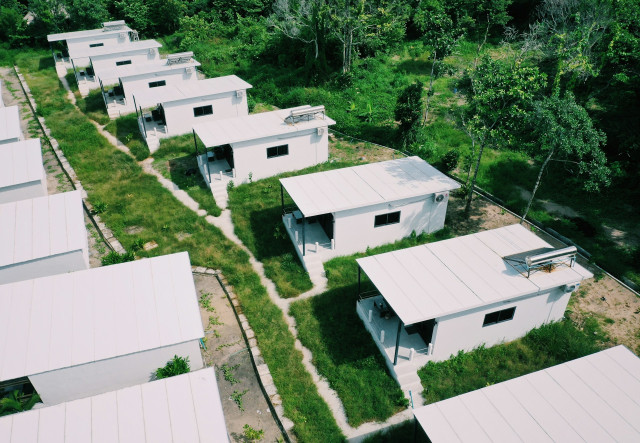
The necessity of combating the housing crisis is still increasing in dimensions and difficulty. The world is experiencing the lack of affordable housing in both the urban and rural realms where the urgency of climate change is increasing the demand of environmentally friendly development. The two issues are very closely related although they are distinct. Affordable, yet unaffordable housing can condemn vulnerable people to spend high costs in the long term in utility payments, environmental hazards, and health problems. On the other hand, affordable housing which is over-priced impedes inclusiveness as low income groups miss out on green infrastructural and resilient urban planning. It is against this background that green affordable housing concept has been developed as one of the critical means to realize equity and sustainability in tandem.
Green affordable housing is equalized as to be accessible to low- and middle-income households and to be designed of limited impacts on the environment in the form of energy efficiency, sustainable materials and climate adaptive infrastructure integration. The challenge with such projects however is financing. Conventional affordable housing is already hard to finance because of low returns and the use of subsidies. The extra cost of using green technology and sustainable design may complicate the situation. The challenge is finding financing mechanisms that manage to balance affordability, environment resource management, and financial viability.
This blog discusses five of the major strategies in funding green affordable housing projects which governments, as well as the private investor, the non-profit organization and the international organization are gearing towards. By studying emerging solutions to affordable housing, including green bonds, blended finance, public-private partnerships, microfinance, and policy-based incentives, we can seek to learn what affordable housing can become a way of the future in terms of sustainability, inclusion, and scalability.
Green Bond and Sustainable Investment instruments
Green bonds and the like are one of the most notable changes in funding sustainable infrastructure, including housing. These are bonds that are issued by the government, city or corporations with specific projects that provide environmental benefit designated to them. Green bonds offer an additional opportunity to generate low-interest capital on a large scale, a feature that can be used in financing affordable housing, in addition to attracting interested parties in aligning their investments with sustainability.
Green bonds enable housing authorities or commercial developers to tap long-term capital to realize projects that line renewable energy systems, energy efficient building materials or structures and low-carbon materials. An important consideration is that investors are progressively being prepared to accept a marginally diminished rate of yield on those bonds due to the environmental and social imperative they provide. This puts finance markets in rare harmony with the dire necessities of housing policy. In particular, the European Investment Bank and other Asian development banks have issued specifically green bonds in order to finance green urban infrastructure, including housing.
In addition to bonds, sustainability-linked loans and impact investment funds are also available, the interest rate or returns of which are also linked to impact measurement of sustainability-related outcomes. An example is a developer that will save on energy consumed in the construction of affordable housing by a specified percentage as a condition to enjoy reduced repayment requirements. This motivates ongoing gains, as opposed to a one-off compliances.
The challenge though is how to make sure green financing tools are within reach of affordable housing developers who do not usually operate on large budgets. Most of the green bonds being offered now can assist in large infrastructure developments and ignore smaller housing projects at the community level. Broadening eligibility qualifications, developing pooled financing, and providing technical assistance to the local housing authorities will help to fill this gap. With the priorities of green affordable housing shifting towards environmental, social, and governance (ESG) criteria in the eyes of global investors, green bonds and the like will continue to form the core financing strategy of the green affordable housing.
Blended Finance/Multilateral Support
Blended finance which is the combination of the public, philanthropic and private funds have become another strong instrument in ensuring green affordable housing projects become viable. The reasoning behind this is straightforward, many smaller-scale private investors are holding back on getting into the affordable housing system due to the perceived risk and relatively poor returns. Development institutions and public agencies may alleviate this with startup funds, risk guarantees, or via loans at concessional rates of interest to provide the project with greater appeal to the private sectors.
Development banks, destined to deal with the issue more significantly, have also started to use blended finance to fund climate-wise and socially oriented projects. In affordable housing, blended finance can enable national governments to spend less money out of their own budgets at the same time as mobilising vastly larger sums of money. The attraction of the investment to the other investors by absorbing some of the risks is a catalyst to the other investors who will then make an input.
As another example, concessional loans could subsidize the extra expense of green construction infrastructure, -solar panels or rainwater harvesting facilities, etc. to allow the core construction and management to take place through the arrays of the private developers. In other instances grant funding may be provided by philanthropic organizations to cover the cost of technical assistance or capacity building so that affordable housing developers have the skills and training on how to integrate the practice of sustainability practices.
The most outstanding strength of blended finance is that it is scalable. Compared to the pure subsidy-type models, blending finance motivates long term investments by various sources. It is also able to produce innovation since the efficiency and skill and ability are boosted by the private players and the inclusivity and the relevance of being innovative in terms of sustainability is vested with the government. Nonetheless the effectiveness of blended finance is limited by the quality of its governance and how it is held to account so as to ensure abuse or green washing. The continuous monitoring of the process, as well as an honest report on environmental and social results is a crucial component to perpetuate trust in this type of approach.
Ultimately, blended finance has the potential of converting the affordable housing sector, which is high risk low return, into an interesting investment destination with prospects of achieving a set of social and environmental goals, as well as being financially feasible.

Sustainable housing Public-Private partnerships
Green affordable housing Public private partnerships (PPPs) have been around a long time in infrastructure development, but their use is increasingly being applied to green-affordable housing. In this model, officials work with the developers to achieve affordability and sustainability housing projects. The roles of governments and private developers differ as the governments usually provide land, subsidies, or tax breaks, whereas the latter supply know-how and innovation and capital.
The efficiency in PPPs in green housing is one of the significant benefits. The costs of projects may be cheaper and faster by the involvement of the private developers, more so than what government agencies alone can do. Governments should, simultaneously, employ the regulatory framework to make sure that these projects are within reach of low- and middle-income families. Green integration into design as buildings (energy efficient, waste reduction systems, green transit services connectivity) becomes to be a common goal, with a collective funding.
Effectively working PPPs in housing are already evident in other countries such as Singapore where the Housing and Development Board engages in dealing with private developers to provide quality and environmental friendly products to the people in the form of houses. Likewise, in Latin America PPPs have been adopted to improve informal habitation by providing them with green infrastructure and affordable housing units, financed by both, the state and the expertise.
PPPs in themselves are not free of dangers. Agreements that are not drafted well may end up with projects, which only focus on generating high profits instead of affordability or sustainability. Governments have to spell out the affordability specifications, environmental and long- term maintenance requirements as a way forward. Communitization is also vital in ensuring that the needs of the population are actually met by the projects instead of marginalization to the vulnerable groups.
PPPs are fair when they are organized properly. They allow a government to create the optimal utilization of partial budgets, at the same time ensuring that business factors play its role in achieving the common objectives of the society. PPPs can be agents of innovation and delivery in respect of green affordable housing, covering the divide between aspiration and delivery.
Micro finance and Community based approaches
In the other end of the financing spectrum is microfinance where individuals and communities are empowered to bring affordable housing solutions to gain ownership. The businesses that have the most relevance in developing states include microfinance institutions, which lend small money amounts to low-income households usually left out of other banking systems. These lending programs help families to construct, renovate or retrofit homes to have sustainable improvements like better insulation, efficient stoves or even solar source of light.
Microfinance to green housing is more than just access to credit. Most of the organizations also offer technical support services, trainings and mobilization of the community to make sure sustainable practices are also put in place. As an example, South Asian and African programs have aided in the building of homes that households can afford because they are built using local and environmentally friendly material. Not only are these homes less expensive, they are also better adapted to local climates, thus reducing maintenance and energy costs in the long-run.
Savings groups located within the community and housing cooperatives are another aspect of this strategy. By sharing funds, communities can fund green housing programs together and since they have accomplished economies of scale, they can access them. Such model encourages ownership and solidarity on the part of the individuals who also feel safer as lenders. Governments and NGOs have in other cases provided grants to these groups in the form of matching funds or even technical assistance thus improving their effectiveness.
The virtuousness of microfinance and community based programs is that they are inclusive. They target the most neglected groups such as women, women living in the rural areas and those in informal employment, among others who are usually left behind during mass construction of housing projects. The problem, however, is that microfinance can never overcome the enormity of the housing shortage spread across the world. It has to be embedded in wider financing systems that will also incorporate both the public and private capital.
Still, being a bottom-up approach, microfinance is necessary to prevent that green affordable housing becomes the privilege of the elite but rather turns into a reality of people who are in need most of all.
Incentives and regulatory frameworks Policy-Based
There is not a financing strategy that can ever work without a supportive policy framework in effect. It is in the hands of the governments to produce that environment where green affordable housing becomes feasible and appealing both to developers and investors. Regulatory frameworks and policy-based incentives are therefore at the center of the equation of financing. One of the essential areas would be tax incentives the governments may give taxes reductions, low interest rates, or faster depreciation to developers willing to invest in green affordable housing. Equally, subsidies also have the ability to subsidize the incremental additions associated with sustainable technologies and thus make them affordable to low-income consumers.
The other effective instrument is the land use policies By giving land at subsidized prices or by focusing on the affordable housing in the zoning codes, governments can reduce one of the highest costs to affordability. Also, building codes that incorporate stipulations toward energy efficiency and sustainability guarantees that all new developments are a part of the environmental agenda.
Regulatory frameworks may also be of assistance in accessing international climate finance. By coordinating housing policy with global sustainability commitments, states will have a chance to secure the financing of funds like the Green Climate Fund. Not only does this offer monetary support, it also puts the track of affordable housing in the broad context of climate adaptation and mitigation.
Lastly, an inclusive policy must be given supremacy in Public policy. The housing policies must then make allocation of subsidies and incentives to those who need it the most instead of the people with higher income appropriating it into their hands. Transparency, community outreach and engagement, and community planning are key elements to green affordable housing achieving the potential it purports.
International Climate Finance as a Catalyst for Green Affordable Housing
Green affordable housing finance is becoming an important strategy in accessing the international climate finance mechanisms. Institutions like the Green Climate Fund (GCF), the Global Environment Facility (GEF) and regional development banks have allocated billions of dollars to projects that reduce carbon emission, increase climate resilience and promote social equality. Projects involving low-cost housing development that incorporates sustainable buildings and renewable energy systems, and climate resilient designs will be great candidates of such funding.
In a number of developing nations, international climate finance also forms the much needed linkage between high ambitions to delve into housing and tight domestic funding. By placing green affordable housing as a social and environmental priority, governments are able to access grants, concessional loans, and technical assistance which reduces the cost of a project overall. Moreover, climate finance is commonly associated with capacity building, i.e., assisting local real estate developers, planners, as well as financial institutions, in learning how to design and scale sustainable housing concepts and projects.
To access such funds, countries need a well-established governance system, open reporting, and consistency with the national climate plans. Countries that shall factor in affordable housing in their mitigation strategies of climate change policies are bound to benefit the most. By doing so, not only the construction itself can be facilitated by international climate finance, but also the long-term sustainability of such construction can be bolstered via building the institutional capacity necessary to secure a long-term priority of the green affordable housing in the country in question.
Conclusion
Green affordable housing financing is one of the most perilous and complicated issues of the modern age. It demands a trade-off between social equity and sustainability of the environment at a time when both are under siege. However, the resolutions are within reach as this discussion demonstrates. Green bonds and other forms of sustainable investors open up global capital markets and facilitate participation of potential investors; blended finance and multilateral support mitigate risks, enhancing scale and PPP finances icebreaker, enabling efficiency and innovation, microfinance is a powerful tool to empower communities and policy-based incentives make everything happen.
Combined, these approaches can be considered a road map to turning affordable housing into a key to sustainable development. They show that affordability is not mutually exclusive with sustainability but can in fact mutually support each other. The adoption of alternative financing schemes puts governments, investors and municipalities on a path to affordable housing; not just a roof over one Keeps head but a basis of dignity, strength and environmental responsibility.
Over the next few decades, global housing systems will be judged on the same basis: the more houses created, the more people should be able to live sustainably and be inclusive in their habitats. Funding green affordable housing is thus certainly not an economic or technical issue, it is a moral one. The approaches laid out here will map out the path to fulfilling that goal, so that housing is a key element in the construction of a just and sustainable world.
Also read: How Green Building Standards Are Shaping Affordable Housing Policies




-bsBmIgEW58.jpg)
-5yCS4OoVBg.jpg)







LEAVE A REPLY