

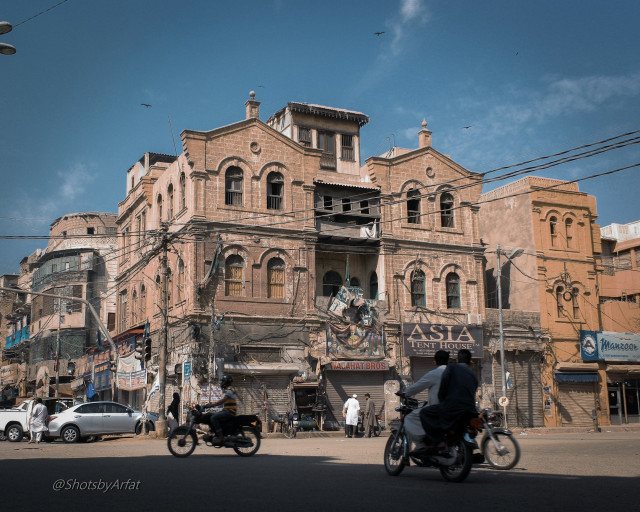
Lesson from the 2025 Karachi Building Collapse: Ensuring Safety in Affordable Housing
The collapse of a building in Karachi in 2025 struck not only Pakistan, but all who anywhere care about affordable housing. Hundreds of families were displaced, dozens of lives were lost, and the event prompted government, developers and communities to reconsider the delicate trade-offs between affordability and safety in construction of housing. Although accessible housing is a necessary need in fast urbanizing countries, but the Karachi incident highlighted the dangers of neglecting structural safety, regulatory compliance and long-term sustainability.
This tragedy was not a one off— it revealed systemic failures of urban planning, regulatory supervision, and short-term affordability over long-term resilience. Here are six lessons we can draw from this disaster about the future of housing policy and development.
Lesson One: Building Safety Must Be Non-Negotiable
The Deal Must Be Non-Negotiable Safe Congregate Building Is the price of shelters/transitional homeless housing going to be reputable buildings with no need for remediation with 24/7 on-site security measures?
The collapse in Karachi offered a brutal reminder that shortchanging construction can have deadly results. In this rush to cut costs, many affordable housing projects scrimp on construction materials and labor quality — let alone on the application of engineering standards. In Karachi, it was reported that substandard concrete was used with insufficient steel reinforcement and a lack of adherence to the load-bearing requirements. These omissions turned what were supposed to be safe homes into ticking time bombs.
Safety in homes cannot be traded off or considered second to financial savings. The home that can’t stand tension is no home. Regulatory agencies must enact and enforce tougher safety codes, making sure that new construction of all kinds meets basic resilience standards. Secondly, regular on-site checking should be compulsory and any non-compliance would be harsh enough to discourage such negligence.
Globally, disasters like Karachi’s have shown cities that safety does not cost so much when compared with the value of human life and rebuilding. So affordable housing needs to be safe housing. Governments, developers and engineers need to treat safety as an asset, not a liability. The first and most important lesson is straightforward —even elementary— but has deep implications: affordability should not be achieved at the cost of people’s lives.
Lesson Two: The Particular Role of Regulation and Enforcement
The Karachi tragedy has exposed construction deficiencies and regulatory gaps. A failure to enforce building codes, corruption in the approval process and a lack of oversight led to dangerous slum buildings filthying up overpopulated urban spaces. Without competent governance, there can be no good housing policy.
Affordable housing is not just a product of subsidies or efficient design: It also requires vigilant oversight to make sure that developers are playing by the rules. Here’s 5 specific areas where government needs to step in: There should be transparent licensing processes, routine site inspections are not open for negotiation and worker whistle blower protections must exist similar to those available when a workers blows the lid on unsafe practices on a construction site.
Lack of accountability was one of the biggest problems in Karachi. Building permits were signed off without scrutiny, and enforcement officials turned a blind eye or were underfunded to take action. For affordable housing to become a durable reality, regulation can’t amount to little more than symbolic kabuki; it must be muscular, fair and aggressively enforced.
This teaching has a global reverberation, particularly in countries with high urbanisation rates that outstrip the country’s ability to regulate. The collapse in Karachi should serve as a wake-up call: weak enforcement is no less deadly than weak construction. Policies of affordable housing must have enforcement built into their framework to guarantee real safety and equity.
Lesson 3: Community Comprehension and Involvement
The Karachi tragedy suggests another neglected lesson with respect to the housing safety architecture, namely that of local community knowledge and vigilance. People who lived in the fallen building and their relatives had said they had worried about cracks and structural flaws before the disaster, but they lacked the know-how, resources and a platform to demand accountability. Poor people in too many neighborhoods feel they cannot push back against landlords, developers, authorities — even when their lives are at stake.
In order of being considered, affordable housing policies have to involve the community process from day zero. Residents, too, need to have a say in how safety is policed and reported, and shape the design of residential buildings. There are ways to prevent such disasters in the future: Training communities to recognize warning signs, establishing hotlines for reporting unsafe conditions and enforcing tenants’ rights.
When people know their rights and have power, they can become the first line of defense for unhealthy housing. By including local communities in safety walks and participatory planning we ensure that policies are based on people’s lived experiences, not dictated to them. The Karachi catastrophe highlights that affordable housing cannot flourish unless the communities themselves are empowered to protect their rights and surroundings.
So housing safety is not just a technical or regulatory matter — it is also a social one. Residents, educated as well as organized and empowered, can help stave off tragedy before it strikes.

Lesson 4: Trade off Cost against Durability
The Karachi building collapse is also a product of bogus economy in housing development. Developers saved money with cheaper materials and labor — but the consequences have led to disastrous financial and human suffering for decades. What had appeared to be a “budget” building would soon become the most expensive type of failure: a botched building that took lives, left families homeless and became an enormous financial sinkhole?
The price of affordable housing should not be “dirt cheap.” Rather, it needs to weigh upfront cost against durability and long-term value. Sturdy, permanent housing built of superior materials may cost a little more initially but lasts for decades and provides safe shelter while also lowering maintenance costs and liabilities. On the other hand, shoddily constructed housing may seem low cost but can become more expensive because of repairs, instability or collapse.
Governments can play a key role by subsidizing durable material, incentivizing sustainable building practices and advancing technologies such as prefabrication, which have a potential to pare down costs without sacrificing high quality. The Karachi collapse serves as a reminder: “cheap” isn’t the same thing as “affordable.” Real affordability is counted in safety, durability and resilience.
“If we have one lesson, it is this: durability is not a luxury; it is equity and sustainability.” This should reposition the global discussion on affordable housing.
Lesson 5: Mainstreaming disaster preparedness in house design
Karachi, like most large cities, is susceptible to natural and man-made disasters — earthquakes, flooding and now structural collapses. The tragedy underscored how unprepared housing systems are for sudden shocks. In affordable housing in particular, disaster preparation tends to be neglected as a costly “extra” rather than an ingredient of good design.
The collapse instructs us that disaster resilience must be built into all policies involving affordable housing. The buildings should be built to resist seismic jolts, fire risks and flooding. Urban planning should concentrate on safe sites and avoid soil valley floors, gullies or about existing landfills.
Countries such as Japan and Chile, which are exposed to frequent natural disasters, have shown how affordable housing can still prioritize safety by integrating disaster preparedness into building codes. The collapse of Karachi shows that without such integration, cities leave their most vulnerable citizens subject to the gravest dangers.
Disaster readiness in affordable housing means not just survival, but its dignity. Families who live in these homes should not have to wonder whether the place protecting them from a life-threatening public health emergency will withstand the next one. This is the fifth, and possibly the most pressing, lesson: Safety needs to be future-proof.
Lesson Six: Affordable Housing as a Human Right
Beneath the Karachi catastrophe lingers a simple fact that must never be dismissed: Housing is not a commodity; it’s a human right. There is no reason why low-cost housing has to be unsafe, undignified or temporary living. What it ought to signify is safe, strong and fair homes for all. When buildings collapse because of neglect or greed, it’s not just a matter of structural failure but an affront to human dignity and right.
Viewing housing as a human right changes the discussion about policy options. And it challenges not only those in development but also governments and societies to provide safe housing for all citizens, irrespective of their income. Global frameworks like the UN’s Sustainable Development Goal 11 emphasize “safe, resilient and sustainable cities.” The descent of Karachi portends how much farther we have to travel in order to reach this vision.
Because the right to housing is being treated as such, governments have an obligation to establish minimum standards and enforce them, fund subsidies and make things equal. And it gives communities the ability to demand accountability as a matter of right, not privilege. And hence the ultimate lesson: affordable housing isn’t charity, it’s justice.
Lesson Seven: The Economics of Prevention versus Recovery
What is clear from the shocking aftermath of Karachi’s collapse is that the economic burden of rebuilding is far greater than that of relatively modest costs of prevention. In the wake of the disaster, millions of dollars were appropriated for emergency relief, compensation and rebuilding work — not to mention the incalculable loss of life and livelihoods. This simply pointed out one truism: prevention is always cheaper than reaction.
All that investment in safe building methods, stringent inspections and high-quality materials may seem costly up front, especially for low-cost housing builders. But the eventual economic savings are enormous. Good building allows for many generations of safe, secure habitation with minimal maintenance; bad building is expensive to fix (if it can be), falls down and has to be re-replaced.
Economically, governments and developers have to change their mentality from short-term affordability to long-term resiliency. International financial institutions and development banks could to stimulate this trend by providing low-interest loans or grants as an effort to support safety-compliant affordable housing projects. That the government helps with earthquake-resistant materials, flood defenses and safer designs would provide even more encouragement toward durability.
And prevention have broader social value. Safe, sustainable housing promotes economic stability as communities less vulnerable to displacement are able to keep people at work and in school. It creates confidence in the community, creates investment, and permits urban economies to flourish without constantly lingering under the pall of imminent disaster.
The Karachi collapse is an object lesson in this, a reminder of just how counterproductive allowing your water system to deteriorate can be: cycles of dynamic destruction and recovery that punish both public budgets and private households. This kind of proactive, preventive strategy will safeguard affordable housing to be genuinely affordable over time, and protect both human dignity and economic stability.
Lesson Eight: Global Cooperation and Exchange of Knowledge
The Karachi disaster also serves as reminder that we need to cast a wider net for a solution. Urban housing crises are not an exclusively Pakistani phenomenon — they exist worldwide, especially in fast-urbanizing nations in South Asia, Africa and Latin America. Tragedies such as the Karachi collapse present valuable chances for global collaboration and exchange of expertise.
Countries that have confronted similar challenges — Mexico with its earthquakes, Bangladesh with frequent floods — have designs for affordable housing that include safety and resilience without adding hugely to the cost. These lessons are transferable and shouldn't just be because its sage advice. International NGOs, research institutions, and multilateral organizations such as the UN-Habitat or the World Bank can have crucial roles in dissemination of best practices, funding innovative projects, or developing local capacities.
Cross-border cooperation can also play a part in closing the technical skills gap. In most developing countries, low-cost housing is constructed by staff with limited training in structural safety. Vocational education in these countries could be funded by international partnerships, and new construction technologies like prefabrication or 3D printing could also be introduced — in addition to the establishment of regional hubs for housing innovation.
Another component of cooperation is funding. Global development funding and climate adaptation finance could be directed toward safe affordable housing, particularly in climate-exposed areas. The house collapse in Karachi is a reminder of the way that unsafe housing exacerbates disaster vulnerabilities, and the importance of international financial solidarity.
The spirit of international collaboration is rooted in the concept that housing safety is a collective global imperative. We need the flow of knowledge and resources across borders, such that lessons learned from disasters like Karachi avert other ones elsewhere. In an interconnected world, no country should need to solve housing problems in isolation.
Lesson Nine: Technology and Innovation as Tools for Safer Housing
The Karachi collapse served as a reminder of how slipping through, under and around inadequate practices and lax oversight can have lethal consequences — but also as an invitation to consider what role modern technology might play in preventing tragedies like this one. “Today, technology is not a luxury — it is a critical tool that can make affordable housing safer, more resilient and more efficient..
Innovations in construction like prefabricated units and 3D-printed homes can also help affordable housing projects. They also limit informal labor exposure, reduce human error and facilitate strict quality control. Costs can be reduced while safety is preserved, which makes them particularly appropriate to low-income housing projects.
What’s more, geospatial data and AI-enabled urban planning can also help governments steer clear of unsafe construction sites. For example, satellite pictures and predictive models can point out areas that are likely to flood, erode or shift in an earthquake. That way, planners can steer affordable housing projects clear of unsafe zones and future tragedies, like Karachi’s collapse, can be prevented.
Technology also empowers communities. Mobile applications and the web can enable residents to report structural problems directly to country’s authorities, not through corrupt middlemen. This enhances transparency and accountability, making citizen voices accessible in real time.
Certainly, making use of these innovations costs money and also requires training and political will. But the Karachi disaster showed the price of inaction. Through technology embedded in affordable housing, governments can provide not only cheaper homes, but smarter, safer and more sustainable communities. The lesson is clear: Innovation is not a luxury but a must to make sure that low-income housing protects lives rather than endangers them.
Conclusion
The 2025 Karachi building collapse was not just an accident; it was a systemic failure, which exposed the gap between affordable housing policy, planning and practice. From lax safety standards to enforcement, from disempowering communities to false economies of penny-pinching, the disaster exposed as never before the need to rethink how affordable homes are designed and built.
The six lessons from this calamity – safety as non-negotiable, effective regulation, community led development, building for long term (but factoring in costs), integrating disaster preparedness and human right based housing approach – is just the roadmap that our future housing policies should follow. They emphasize that affordable housing is more than just roofs over heads; it must be safe, durable and dignified shelter that strengthens communities rather than puts them at risk.
If the world listens to Karachi’s lessons, that tragedy can become a turning point — ensuring that not only is future affordable housing accessible but its also safe, sustainable and just. We must build a future in which no family has to worry that the very walls meant to protect them may come tumbling down.
Also Read: Safety and Health Factors of Malaysian Low-Cost Housing



-shtTqaPktk.jfif)







LEAVE A REPLY