

Energy-Efficient Public Housing: Can Smart Tech Cut Living Costs?
Increasing prices of energy, soaring climate risks, and the spread of the energy poverty issue has shoved energy efficiency into the international limelight. Millions of low-income citizens live in public housing, where the utilities are very expensive due to relying on old-fashioned energy systems unrelated to modern solutions. One can change that narrative today with the help of smart technology. The retooling of energy efficient retrofit systems could save money dramatically, enhancing the comfort of life, and reducing the environmental burden by combining the aspects of sensors, intelligent controls and data-driven systems.
Simple changes such as intelligent thermostats, LED lights, and automated ventilation can be small but come with big savings altogether, both household-wise and in the public budget. In addition to economics, smart tech advances monitoring in real-time, predictive maintenance and occupant involvement, into healthier, safer, and accommodate responsive living. But on a large scale the implementation of these technologies in public housings has logistical, financial and social drawbacks.
This is why in this blog, we will look at all this picture of smart energy efficiency of mass housing: its potential, viability, and subtle dangers that it might bring. We will examine the ways in which various methods to retrofit existing buildings and install more comprehensive systems in newly constructed housing can benefit the communities in a sustainable way, starting with low-tech solutions which allow the people to take control over their energy consumption.
We are set to unravel on whether these innovations, in fact, can effectively create change that is sustainable or are you heading towards becoming exclusive experiments, very expensive ones but with little touch points. We will even assess the overlapping qualities of such technologies with policy regimes, affordability targets and climate pledges. Finally, the ultimate question of the blog is, is smart housing more than a trend--can it be a real avenue towards a more resilient, inclusive urban future where housing can be not only a shelter, but a smarter, supportive system that actually improves the lives of the masses?
Cost Inefficiency of Non-Optimal Public Housing
Energy expenses are unreasonably high amongst tenants and management agencies because public houses are usually dependent on old-fashioned heaters, insufficient insulation, and old-fashioned lighting. A considerable number of households living in such communities use well above 10 percent of their earning on utilities, which is not sustainable to families, who are already strapped financially. These expenses are not monetary alone and stress out the inequality, thus putting low-income residents even more out of the advantage of convenient and efficient housing. At the national level, public housing energy inefficiency leads to unnecessary CO 2 emissions and fails to allow agencies to spend the resources in their improvement.
Maintenance of critical systems are delayed when budgets are to be tightened and a cycle of decay begins. Useless windows, old heating and cooling infrastructure, and incandescent lighting was something that was ignored in favor of being a symbolic of compromises. However, in the era of climate concern and the unavoidability of technology, such levels of compromise increase an already vicious cycle of social and ecological damage.
The cycle can be ended by switching to smart energy solutions and focusing on improvement with the biggest impact in the areas of insulation, lighting, heating, and ventilation, where a reduction in energy consumption and an improvement in comfort levels are staggering. It is not a question of whether efficiency should be employed, but how to introduce it on large scale in an equitable, sustainable and financially viable manner.
Smart Thermostats and Smart Heating Regulations
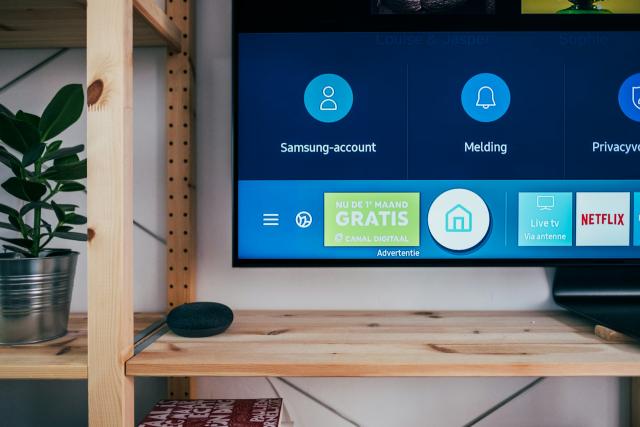
Heating and cooling systems are responsible almost half of the energy consumption in a home because of this they are a good target of smart interventions. Connected zoned heating utilised with smart thermostats enables the residents to regulate the room temperatures in a granular way in an automatic manner. In a scenario of the smart systems being used in the public housing, many settings can be altered according to the presence of people, weather, and time of the day.
Preferences may be configured by smartphone interfaces or minimal wall displays, and an automated algorithm can optimise with respect to both comfort and savings. Social housing estates pilot schemes declared up to 25 percent energy savings, which translates to the direct savings on the part of the tenant and room within the housing budget.
Fault detection is also possible with smart heaters as they alert when HVAC units need maintenance, eliminating the waste of energy and breakdown of the system. To the public agencies that have thousands of units under their management, this automated system monitoring eliminates the daily inspection visits and the number of emergency repair requests.
Other systems also incorporate district heat grids, further allowing the optimal heat to distribute several buildings. Although the installation costs have to be considered, the long term payback, in the form of energy, maintenance cost saving, and equipment life, may repay the investment. And with the enhanced comfort and quality of indoor air, this makes the smart heating controls a well-rounded solution to your health outcome.
Smart Lighting: LED Lighting, Motion Sensors and Controls
Lighting is one of the easiest, but least recognized ways in which energy leaks occur in the public housings. There are numerous houses that are still using incandescent bulbs leaving the lights on in vacated areas due to inefficiencies. The LEDs can save 5080 percent in lighting energy compared to their replacements, and they also have increased light quality and less maintenance, because LED has long life. The technological layer, i.e., motion sensors, and automated dimmers increase efficiency even more. Occupancy sensors are provided in hallway, stairwells and common rooms, switching lights on when people are present and switching on other lights when daylight becomes available by lighting control using daylight harvesting.
Smart lighting systems implemented into resident apartments also offer personal control, through mobile phones or wall controls, offering additional flexibility and control over how they use their lights, and reducing the resources they waste. Usage trends and notifications of faults can be monitored by central management platforms. On more substantial properties, back-end data-driven lighting management software can be used to allow blind maintenance, which removes the guesswork and makes maintenance the same energy performance across a portfolio. The aggregate LED and smart light savings on a scale of a housing stock can support more improvement initiatives. Besides, their installation, labeling of bulbs, copying sensors, and changing fixtures is unobtrusive, and it can be accomplished even within inhabited properties.

Smart Ventilation, Indoor Air Quality, and Health
Poor ventilation and the corrosion of window structures are some of the more frequent causes of indoor air pollutants building up in poor performing public housing. Intelligent ventilation: the use of humidity sensors, heat recovery, CO 2 sensing helps to create healthier indoor living conditions and is used to control energy consumption. Demand-controlled ventilation the automatic control of fan speeds or the dampers is dependent on occupancy or air quality and thus ventilates when necessary, and hence saving heat when ventilating is unnecessary.
Ventilation Heat-recovery ventilators recycle the heat in waste air to fresh air, and ventilation becomes a climate neutral habit. There are also some units that have filters to lower the particulate matter that will enhance the respiratory performance of residents. Integrated systems trigger warning when maintenance or replacement of filter is required, in order to avoid the performance to deteriorate.
The housing providers benefit by having lower wear and tear of the buildings and fewer health complaints. Notably, an increase in the quality of air contributes to educational and productivity improvements, particularly, in those families that have older or younger members who are susceptible to asthma, allergies, or infections. To retrofit ductwork is time consuming, but the associated health dividends in the population and the energy savings explain why smart ventilation is a high-impact intervention.
Monitoring, Analytics and Predictive Maintenance
Agile data is the real strength of smart tech. When lighting, heating, water, and air are linked to centralized communications pegs, the property administrators can identifying the performance, identifying unusual movement, and even anticipating the damage of the equipment before occurrence.
As an illustration, the sudden rise in the level of humidity in the entryways can lead to the occurrence of a mold risk notice, and the early remediation can be provided. HVAC can tell technical teams when there is a reduction in the efficiency of the system which signals some inspections of filters or checking the refrigerant levels. Predictive maintenance minimizes emergencies repair, equipment life, and constant service. Energy monitoring dashboards provide a clear representation of various tenants and allow them to remain involved and motivated.
On a broader level, the portfolio-wide analytics can assist the agencies in benchmarking buildings, identifying waste, and making the most critical rescue where required. In the case of grant applications by funders or agencies, on behalf of the performance measurements, the control will be measured whereas energy and cost savings are reported. Other systems also can connect to grid demand-management platforms and allow them to reduce peak loads and resilient grid. Although this tech implies initial investment and training of the staff, it leads to considerable savings in the long run and improvement of the operations.
Behavior Change and Engagement of the Residents
Even the best systems have to be met with occupant buy-in to be effective. PHAs need to engage the inhabitants’ right at the inception level- ask them their suggestions on the controls, supportive interfaces need to be clear, and educational courses need to be proposed. In some agencies, installations are done alongside energy literacy programs to enhance information on how to use energy in a conscious manner. A transformation in behavior occurs when people know that a minor gesture such as turning a thermostat down a few degrees is capable of cooling the temperature in their homes and saving them some money in their bill as well as decrease the number of carbon emissions.
Collective action can be encouraged by gamification and by the provision of incentives, e.g. monthly contests between buildings to save on energy. Inclusivity is achieved by multi-lingual communications, walkthroughs and help desks. Where the occupants of the building are elderly or disabled, the systems should include accessible controls easy to read large buttons, voice staging, or simple displays. The existence of feedback loops, in which the tenants are allowed to report faults or discomfort, promotes trust as well as constant upgrading. Open sharing on how cost and clearly defined improvements benefit residents builds pride and enables residents to take more ownership of their homes to reduce vandalism and speed up the adoption process.
The Financing Puzzle: How to Fund Smart Public Housing Retrofits
Although the prospect of providing public housing with energy-efficient smartness is indeed enticing, financial limitations of such retrofits on large-scale housing stocks is a central issue of concern. The presence of cost limitations, insufficient federal funds, and competitive procurement rules are frequent to the public housing authorities.
Yet, novel finance mechanisms are opening up the box: energy performance contracts (EPCs), green bonds, and public-private partnerships (PPPs) are becoming available. In EPCs, the savings generated by energy-saving upgrades are financed by the private energy service companies (ESCOs), repaid over time by guaranteed payments by the housing authorities with a minimal financial risk on the part of the housing authorities. In the same way, green bonds have also been used effectively as an avenue by which municipalities can raise funds that are specifically used in the retrofitting of existing buildings to be built as environmentally sustainable ones.
On the federal level, such programs as the Energy Innovation fund provided by the U.S. Department of Housing and Urban Development (HUD) and Inflation reduction Act incentives provide grants or low-interest loans specific to decarbonization and electrification. Nevertheless, deployment can be hampered by bureaucracy, slowness in the release of funds and institutional apathy. This cannot be resolved through merely capacity building but should be measured in terms of success, i.e. in energy savings, emissions cut, and satisfaction by resident.
An important step to expanding smart retrofits to the most vulnerable housing layers will be aligning financial incentives with social outcomes. Finally, it is essential that a change in approach by housing authorities is necessary, whereby the energy upgrades longer-term investments on the operations efficiency, tenant well-being, and climate resilience and no longer associated with costs.
Lessons of International Smart Housing Projects to Go Global
A clear demonstration of the revolutionary power of smart public housing can be achieved through case studies of countries that currently explore the possibility of massive smart retrofitting. Amsterdam has had a smart city project, including energy sensors, rooftop solar panels, and smart water meters in a number of low-income housing units, delivering a 20-plus percent decrease in utility bills. The Housing and Development Board (HDB) in Singapore installs smart energy tracking, waste tracking, and community-cooling systems into a huge network of public housing, which illustrates how large-scale planning of cities can incorporate sustainability on a grand scale.
In Germany, the Energiesprong program is net-zero-retrofitting prefabricated retrofits of Energiesprong social housing with prefabricated facades and solar tech, reducing energy bills and emissions by more than 90 percent. Meanwhile on South Korea, the Digital New Deal has introduced many investments on IoT infrastructure on the elderly residential towers, specifically their own vulnerable urban communities. Such cross-border initiatives demonstrate the value of the governmental responsibility, popular confidence, and the ability to think long-term.
They also implicate the need of integrated design in which architecture, engineering and digital technology is put in phase with one another starting in the early stages. Contextual issues vary of course, but the lesson is manifest: daring planning, resident participation, and financial inventiveness can transform even the most obsolescent of housing stock into a peep at the future of living. In the case of the U.S., the models offer more than a benchmark, they offer the roadmap to affordable, intelligent, and climate-conscious public housing.
Conclusion
By fitting smart energy efficiency systems inside its public housing facilities, a ray of hope can be born changing these fossils of the past into machines of sustainable development, saving money, and living in healthy communities.
In addition to significantly lowering utility bills, these devices are also more comfortable, healthier, and empowering: They range anything from smart thermostat and LED retrofitting to data-informed maintenance and smart ventilation. Its investment on hardware, software, and capacity building are overshadowed by long term dividends to minimized energy consumption, resilience in operation, and negating environmental degradation. With the focus on residents, the agencies will be able to make sure that their smart technology makes more than buildings smart; agencies ensure it makes lives smarter.
Governments needs to continue to refocus, to the smart public housing revolution as a long-term fixing choice to merging crises of housing, affordability and climate change. This model is not scalable only, it is also inclusive providing a possibility to ingrain sustainability in the daily life of low-income and vulnerable groups of people. Unless the energy performance is a deluxe item in future developments, it ought to be a standard provided in every housing development, preferably both public and privately. Intelligent solutions such as energy management system, solar incorporation, energy efficient appliances, and big data related utility services can substantially decrease energy use and living expenses.
This way, they are able not only to promote the environmental targets but also to lower the economic pressure put on households, including those that are already overwhelmed by the inflation and rental costs. Intelligent systems that serve people and the planet become the future of housing. Seen as a civic priority, energy-efficient public housing is an equity, resilience, and national economic growth tool.
Also Read: Parametric Urban optimization by balancing energy



-3dkuLgKhRD.jpg)
-49HupTvwDD.jpg)


LEAVE A REPLY