

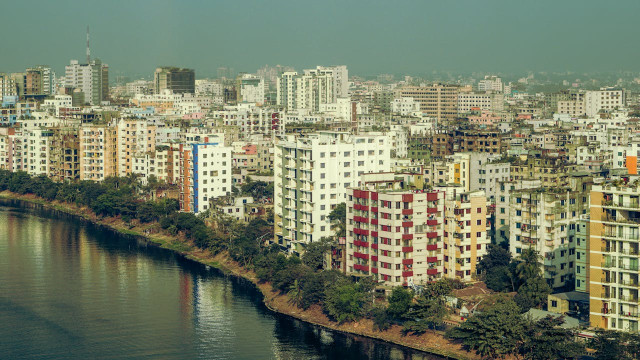
DAP Dilemmas: Is Dhaka’s New Zoning Slowing Affordable Housing
Dhaka is one of the hottest spots of the growing megacities, and such development brings a dire necessity of organization in city building. The Detailed Area Plan (DAP) 20222035 was presented to facilitate the growth of the city as well as land utilization and a blueprint to lead a sustainable urban life. Superficially it will offer the structure that Dhaka is crying out to have.
However, with the plan now getting implemented, it is beginning to emerge that some of the key provisions being made by the plan are actually helping to compound an existing deplorable situation of affordable housing in the city. The prospect of improved planning is being cast doubt on by the developers, the citizens, and the urban professionals. It is being argued that formal housing is not better because of the zoning restrictions, limited building approvals, and apathetic attitude towards lower-income homes but because of a much higher cost. Its current problem is not whether it is getting bigger or not, but whether that growth is equitable, affordable, and able to house people at all income levels.
FAR Restrictions Are Driving Up Housing Costs
Among the best results of the DAP is the decrease in Floor Area Ratio (FAR) in huge portions of the city. This implies that developers are now able to put up fewer floors on plots of the same area that they used to before. This has rendered apartment projects unviable to many medium and small sized developers. Add to that scenario a deceased buildable space but not the cost of land and materials and every square foot is more expensive. It is inevitable that this rise in expenditure is to be transferred to the homebuyers.
What this will effectively do is the restriction of supply of new houses, especially new houses targeted towards middle income buyers. The developers who were formerly targeting the mid-range units are currently moving to high-end segments that have higher and safer margins. In the meantime, the middle-class people who want to become house owners are being forced out of the market completely, with new apartment constructions becoming less available at the price range they can afford.
Furthermore, the restriction placed on FAR deters renovation of older property. Land owners are not willing to invest in new buildings since they could get less returns when the rebuilding is complete, so they are either waiting or selling. This slows down urban renewal and decreases the supply of new liveable housing stock in most of the older part of Dhaka. In its efforts to control density, DAP perhaps ironically might be limiting the ability to build houses in just those areas of the city where more houses are desired the most.
Low-Income Housing Gets Little Space in the Master plan
Although the DAP is out to influence the future of Dhaka after a period of more than one decade, the issue of low-income housing is not addressed very well. In a city, with most of the population as the low- and lower-middle income population category, the plan provides too little areas that will be covered with affordable housing. This discrepancy between populated demand and land-use attention is very abusive.
Many poor families, who are also the main workforce of Dhaka, are being marginalized in the story of formal housing in Dhaka urban area. They have no prospects attached to them, lack earmarking of lands or any room within the housing programmes incorporated into DAP to accommodate them, and hence, they are being crowded into the informal settlements and slums. Failure to acknowledge or embrace the vision of inclusive housing virtually marginalizes a huge number of the population.
This notion that the private sector can just step in this gap, is certainly not realistic, but also rather hazardous. The poor are not served by the formal housing market since the economics does not work unless it is policy supported or there are incentives by the public to the private sector. Until the government steps in preferably through subsidized lands or cross-subsidized projects, low-income housing will remain a fallen field. The fact that DAP does not mention these tools implies that the party will do little to eliminate existing housing inequities but will instead entrench them.
Low income zoning in Favor of the Rich
The other dimension of the issue of zoning in Dhaka is that the regulations vary in different neighborhoods. Some wealthy zones have maintained or increased their land rights developmentally through DAP. The neighborhoods also boast of higher FAR values and have lax regulations where the developers are at liberty to erect taller buildings and make more returns. Other areas of the city which are in many cases more densely inhabited and in more need of redevelopment have instead been allotted much more restrictive building boundaries.
This forms a zoning unfair city. Developers will find richer areas more appealing and this will see the concentration of high quality development in only a few zones. At the same time, major sections of the city are in decay. The small plot owners cannot come up with economically viable moves under the new regulations. Sometimes the property values fall yet the development is still not obtainable due to cost-to-gain fluctuations.
The outcome is that the housing market becomes unbalanced, with some places growing fast and others ossifying in underinvestment. This entrenches spatial differentiation and social disparity. It is also indicative of the bigger problem: that the over-representation of elite interest or pressure groups of a city with zoning policy results in making the rest of urban folk pay the price.
Developmental gridlock and Market distortion
The direct effect of DAP on housing market is already reality. This is because developers are shelving projects with the constraints given as a key factor discouraging construction. Faced with diminished possibilities of unit numbers, increased compliance expenses and unpredictable cycle times, many projects are simply failing to begin. This building stagnation is having a spill down impact on the housing value chain- raw materials to labor market to allied services.
Specifically, new supply disappears making available property more costly. The value of apartments that have already been constructed has already soared in a number of neighborhoods and it is not because of the quality or demand that it has surged but rather due to a lack of choice. There is also an encroachment in terms of rental prices and families will find it difficult to secure affordable housing opportunities.
Meantime, they increasingly expand informal settlements. As the formal housing becomes scarcer and capital intensive, the urban poor in the city are left with little option but occupy slum or unstable rental accommodation in poor states. This is not a housing issue; it is a potential bomb in the form of a public health, social stability and urban management issue.
Trying to harness the development of the city, DAP is potentially creating the reverse effect: causing housing to enter the informal market, promoting speculative landownership and preventing thousands of people to become homeowners at all.

Private Developers Struggle to Stay Afloat Under New Planning Constraints
The construction industry in Dhaka has traditionally relied on the activities of private developers particularly those dealing with apartments at middle income range. It was a simple formula that these developers had used for years: buy small to medium sized plots, construct multi-shop stories and sell unit or rent them out to the people who wanted to have a home in the city. With the introduction of the Detailed Area Plan (DAP) this model is broken in its very core resulting in a large number of projects which used to be viable becoming economically unviable and even driving the real estate market into a downturn.
The new zoning policies, especially lower Floor Area Ratios (FAR), have significantly increased the difficulty of the developers to gain a profit on investment. A plot which could build a six story building comprising 12 to 18 apartments, can now be built with 4 or five stories with smaller number of total units. Land and construction prices are not going down, which puts the developers in a scenario where they cannot afford to loss-cut even to embark on new projects. It is more so in the non-premium business regions of Dhaka where the demand is relatively high yet the purchasing power is low.
This setting has seen most developers stalling plans. Others have ceased buying new land. Others are awaiting amendments to the DAP until they make up their mind to make new investments. The slowdown is characterized by slower work on the construction site and the decrease in projects launching. The real estate business also has contractors, suppliers and service providers who are also being affected and this has resulted to loss of jobs and cash flow issues within the value chain.
Developers who do not stop the construction have started focusing on the high-income developers and the luxury customer. They still are building in localities where FAR is still higher allowed-such as in Gulshan or Baridhara- but it is niche or mass market. This movement is intensifying the crisis of affording. Middle-class and lower middle-class purchasers, who form the larger part in Dhaka, could not have new stock in their value groups.
The DAP was intended to address congestion and increase livability which are noble objectives. However, when there are no enabling mechanisms such as incentives to vertical enhancement within areas of accessible transport or ease of approvals of affordable housing, the existing policy framework is compromising the capacity of the construction industry to cater to those that need homes the most.
Dhaka real estate ecosystem has to be accompanied by a zoning policy, which Dhaka needs to match with flexibility, equitability along with reality. Otherwise, the same players who construct most of the urban housing in the city (i.e. small and middle scale private developers) will keep on withdrawing and the housing crisis in Dhaka will only be further aggravated.
Informal Housing Is Filling the Vacuum Left by Formal Failures
With formal housing market shrinking due to pressure of zoning restrictions, informal housing is expanding in place of formal housing. It is not surprising. The languishing informal growth in Dhaka has witnessed decades, but the recently emerged fact is that the further rise of its pace of growth is more prominent, particularly in peri-urban localities and urban outskirts. That is, however, not temporary slums anymore or transitional housing: it is the emergence of permanent, highly occupied, self-managed neighbourhoods. And they are increasing since the formal sector cannot provide what the majority of the population can afford.
At the times, when the prices on houses rise because of a reduction of FAR, a lack of buildable land, and increased building costs, the urban poor and the lower-middle classes cannot even get a formal chance at ownership or rent. They have no realistic chance to move into new housing, so they have to do with either illegal shacks on government land, rooms in tin-shed colonies, or illegal rentals in multi-family buildings without permits or utilities.
Slums have turned out to be the housing framework by default of tens of thousands of Dhaka dwellers. They provide what the formal sector fails, which is namely low rent, flexible solutions, and its closeness to work. These benefits however are costly in nature. People usually have to dwell in congested areas, there is no water, sanitation and above all, eviction is so possible. Still in most of the cases, these settlements are constructed using land that is prone to floods, are associated with structural unsoundness or the lands are environmentally decayed.
Informal housing expansion is the result not only of a failed supply; a failed vision. These communities are still regarded as anomalies in the urban planning of Dhaka instead of being viewed as alien necessities of the city. They are however, a part of its economics and social life. The urban informal dwellers are the laborers in the factories, households, shops, and transport sectors, that are lifelines of a city. This disregard to their housing needs is unjust in addition to short-sighted.
More than zoning lines must be the answer of the urban policy. There should be a positive response to the development of informal settlements as opposed to the erasure. They should be regularized with regard to land tenure, improved with regard to services and brought into city planning. Meanwhile formal housing should be brought within reach through cross subsidized projects, vertical housing with cheap permissible units and government backed rentals.
Provided that Dhaka follows the same route, the gap between informal and formal housing will be only deepened. Modern development will be like islands with oceans of neglect in the city. That course can only be changed by a conscious, participatory change in policy, one which places housing as a right, rather than a commodity.
Conclusion: A Plan That Needs Rethinking before It’s too late
The Dhaka Detailed Area Plan was a well meant, narrow attempt to introduce order to disorderly urban environment. However, intentions should be complemented by a broad-based implementation. The ground situation has become clear: housing affordability is being deteriorated, the construction is being slowed down, and zoning is somehow tilting towards a select few. It is not a pure technical issue but socio-economic. Shelter is not a choice; it is a pillar of stability, opportunity and dignity. Should the zoning policy of Dhaka strangle the potential of harboring the vast majority of its inhabitants, then the city is not going to the future, but planning on exclusion.
We must bring huge improvements to the existing Detailed Area Plan (DAP) unless we want its effects to be irreversible. Equalization of Floor Area Ratios (FAR) across zones so as to develop the broader, more inclusive mode of urban development is one of the most pressing ones. The existing unequal balance serves the interests of few districts and exclusive developers, and tends to take the other part of the city to the verge of stagnation and under-investment.
The discussion on zoning needs to leave the technical aspect and have a people oriented outlook. Low-income housing plans should not be undetermined promises covered in long-term policies. They have to be unambiguous, doable and practicable with measurable outcomes. Affordable housing is not any secondary consideration; it must be a pillar of urban planning.
Also, communication should become more inclusive and not restricted only to the influential members or political elite and deal with the middle-income families, small developers, and the informal laborers of the city. These are the people whose voices are most prejudiced by the zoning decisions, but they are generally the least heard.
Dhaka is in a cross-road. The zoning system in DAP may be an instrument to construct a more integrative, equitable and resilient metropolis, or the zoning system may become a downward pressure that will increase inequality boosting more population into informal unsafe arrangements. This destiny of the city shall be determined by the extent to which it is prepared to reassess its priorities, reallocate the right of development equitably, and re-plan with the emphasis on affordability and accessibility to all. The vision of Dhaka should not be made to suit only the few people but should be made to cater to the needs of everyone.
Also Read: Role of planning mechanisms in affordable housing delivery- Inclusionary zoning



-shtTqaPktk.jfif)






LEAVE A REPLY