

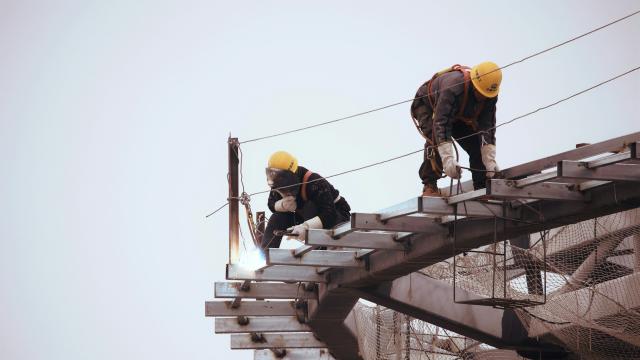
Construction Workforce Skills: The Missing Link In Housing Affordability
Affordability of housing is usually a land price or interest or zoning issue or developer issue. Although these factors are important indeed, one of the most significant contributors to the price of housing is often not very visible in policy discussions; it is the degree of skill of the construction workforce.
In most nations, the housing crunch is not due to the
lack of clarity in demand or the inability to be able to fund the housing, but
rather due to the fact that the industry has insufficient skilled laborers to
develop homes effectively and safely as well as on large scale. In most
economies, construction productivity has been stagnant or decreased in decades
yet the housing demand has been increasing drastically. The core of this
productivity divide is a poorly trained, aging, and unheeded by the education
system and labor policy workforce.
This blog claims that land policy, finance, and regulation
cannot play an exclusive role in housing affordability. One more aspect not
valued critically is the level of skills of the construction work force. Poor
labor supply, sluggish adoption of modern methods of building, low
productivity, and low workmanship are all the results of the insufficient
training and weak skill formation. These problems raise the cost of
construction, slow down the project, and restrict supply of housing. The
housing policies will never be complete and will never be able to sustainably
provide affordable housing in the long term unless the governments and industry
invest directly in creating a skilled, flexible, and inclusive construction
workforce.
Constructing Productivity Crisis
One of the least productive areas in the contemporary
economy is construction. Even though manufacturing and agriculture have
realized the dramatic productivity increase due to technology and the
development of skills, construction has been lagging behind. Compared to
decades ago, it is now more expensive and time consuming to construct a home in
most countries considering inflation. Such stagnation is not only a
technological issue, but a skills one.
Low productivity is due to inefficiencies in job-sites,
ineffective coordination of trades, error and rework related to mistakes, and
delays as a result of lack of skills. Untrained workers increase the length of
work done, errors, and wastage of materials. Such inefficiencies compound
through the projects and increase the overall cost of construction. The
response of the developers is to develop fewer homes or stress more on higher
margin projects and cut down the supply of affordable houses.
Another reason that prevents the use of modern construction
methods is the skills gap. Prefabrication, modular construction, and digital
technology, such as Building Information Modeling, demand specialized skills
which are not always available to many workers. Consequently, the industry is
stuck in manpower-heavy ways that are incapable of scaling effectively. The
unfortunate part is that technology is in place to lower the housing prices but
in the absence of skilled labor it will be poorly utilized.
This crisis of productivity directly impacts the aspect of
affordability. Each additional day on a construction site incurs labor,
financing and overhead. These delays increase the cost of goods and services to
the buyers and renters when the same is multiplied by thousands of units. It is
also incomplete to deal with housing affordability and not with workforce
productivity.
Skill Shortages and the Shrinking Construction Labor Pool
The workforce in the construction industry is dwindling at a
time when its capacity is supposed to be on the increase. In most areas,
experienced trades workers are growing older and they are retiring and the
youthful generation is not keen on pursuing construction jobs. The job
discourages new entrants because of negative attitudes towards construction
work, low social standing, physical exertion, job insecurity. Meanwhile, the
vocational education systems have been left behind, in favor of university orientated
avenues.
Lack of skills is experienced throughout the housing
delivery stages. This will result in slowing of the project and competition of
skilled masons, carpenters, electricians and plumbers. The increase in wages is
not due to productivity increase, but to increased scarcity. These increased
labor prices are transferred to the prices of houses.
The matter is worsened by the migration policies.
Construction is intensive in the use of migrant labor, most of which is
semi-skilled or informal, in some countries. In the event of tightening of
migration rules or breaking of labor mobility, the capacity of construction
plummeted drastically. The absence of homegrown training pipelines to offset
this will make housing supply very susceptible to changes in policies.
The lack of supervisors and managers of sites is especially
harmful. Competitive leadership is needed to organize complicated projects,
implement quality criteria, and time management. Even talented employees work
less than they could do when there are few and experienced supervisors. This
skills deficiency in the role of management increases inefficiencies and pushes
costs higher.
The impact of housing affordability is not related to the overpayment of construction workers, but with the lack of skilled workers, who are able to construct efficiently and in large quantities. Lack of skills increases the time required to complete projects, the number of errors, and material wastage and all these contribute towards the high construction cost.
It is not possible to increase the labor force and enhance the quality of
skills because it is not a solution but allows fixing the issue of low productivity
and inefficiency. A large number of untrained workers will only contribute to
the wastage of time and increase costs instead of making it affordable. The
reduction of the cost of housing needs to be sustainable by ensuring specific
investment in skill development, training, and productivity, rather than by the
reduction of wages or employment of unskilled workers.
Informality, Low Skills, and Costly Inefficiencies
Informal labor has dominated construction in most housing
markets particularly in developing countries. Little training or certification
is required of workers as they learn on the job through trial and error. As
long as informality holds down wages, it also establishes inefficiency,
incompetence and hazard.
Poor skill leads to frequent construction defects, such as
unbalanced masonry, inappropriate installations, poor structural joints, etc.
and this necessitates a re-work which is quite expensive. Raw materials to
build are wasted, schedules are extended and structures usually cost more to
repair in future. Such hidden costs are not very evident when proper housing
prices are given out but they are incurred by home owners in the long run.
Accountability is also restricted in informality. There are
no standardized skills or certifications and hence it is hard to enforce
quality standards and hold an individual accountable of the defects. Developers
make up by over-engineering structures or taking a buffer in terms of excess
materials and this costs more. These inefficiencies can render the project
uneconomical in affordable housing, where the margins are very small.
The informality is here to stay, a failure on the part of
the policy. Governments tend to be more concerned with governance of completed
structures and not with the human resource that constructs them. There are lack
of training systems, disjointed or absent certification of skills.
Consequently, there is no way out of the low-skill, low-productivity trap that
the industry has found itself trapped in.
Formalization of the skills will not imply any rejection of
workers; it is merely a process of upgrading them. Informality will persist in
weakening the quality and affordability of housing unless a conscious effort is
put on skills development.
Training Systems and Their Disconnect from Industry Needs
Training systems are usually incompatible with actual
construction requirements even in situations where they are available.
Curriculum can be out of date, too theoretical or not in touch with current
building methods. With the certificates in their hands, graduates are not in a
position to perform in the context but employers have to train them within
their premises.
This mismatch is time-wasting and resource wasting. The
developers are reluctant to employ the freshly trained employees, choosing
those who have experience even in rare cases. On their part, training
institutions exist as isolated entities without any industry feedback to break
the cycle. The consequence is the unemployment of trainees and the lack of jobs
in the construction industry.
In the case of apprenticeship system, it is either
small-scaled or not well controlled, which decreases their efficiency. It is
especially problematic since construction skills are practical in nature and
cannot be developed entirely in the classroom. Learning on the job is a key
requirement, though, unless a training framework, explicit standards, and
proper supervision, it will be unstable and inconsistent. Trial and error
learning are informal forms of learning that improve at a low pace and cause errors.
Apprenticeships that are properly designed to combine on-the-job training with
formal training are essential in producing a skilled workforce that can produce
housing in a cost-effective, safe, and efficient manner in the long term.
Innovation is also blocked by the failure to modernize
training. With the change in construction practices, the workers require
constantly to upgrade themselves. Dynamic housing markets cannot be supported
using the statistic training systems. This inflexibility is reflected in the
increased expenditure incurred in cases where new methods will need an external
professional, which is expensive, instead of an internal one.
The issue of harmonizing training with the needs of the industry is not a technical issue; it is an institutional issue. The absence of a relationship between the governments, training providers and employers would make the skills of the workforce a bottleneck in housing provision.

Safety, Quality and the Cost of Poor Skills.
Untrained employees are not only inefficient, they are
unsafe. The construction business is among the most dangerous businesses in the
world and accidents cost a colossal amount of money. Injuries cause project
delays, high insurance cost and legal liability. The expenses eventually
translate into the house prices.
Other than safety, lack of skills undermines the quality of
the building. Poor workmanship causes water leakages, power cuts and building
weaknesses. The increased maintenance expenses with the homeowners and the cost
of regulating and retrofitting the unsafe buildings to governments. These are
downstream expenses which are hardly included in the housing affordability
debate.
The affordable housing is also eroded by quality issues. The
public will not support the large-scale housing programs in case poor
construction is linked to low-cost housing. In response, the policymakers exert
more controls that only add to the expenses but do not effectively solve the
underlying issue of skills on the workforce.
Safety and quality are enhanced through investment in
skills. Experienced employees do their jobs by doing them right the first time,
minimizing the number of re-work and time wastage. In the long run, the
increased efficiency will manage to reinvest higher wages, increasing the
affordability of housing instead of reducing it.
Technology, Skills, and Future of Affordable Housing
Technology is usually offered as the answer to the problem
of affordability of housing yet technology without ability does not work.
Editing programs, prefabrications, and automatization need workers who can
utilize them. Technology can be deemed as a very costly add-on instead of a
solution that saves costs without the assistance of skilled operators.
The lack of proper training of the workforce through the
introduction of advanced construction techniques is the reason behind the
failure of many affordable housing programs. The failure of workers to ready
themselves to use new technologies or systems results in slowing down of
projects, increased costs, and frequent delays. With the loss of trust in
developers, workers and policymakers, stakeholders fall back to their
traditional strategies. The result of this backlash is the reinforcement of low
productivity, inefficiency and reliance on old ways of doing things. Innovation
turns out to be a curse instead of a remedy without similar investments in
skills development and affordable housing programs will not reach the desired
magnitude, efficiency, and long-term effectiveness.
The future of affordable housing is in both powerful skill
development and proper utilization of technology. Construction workers should
not only be trained to carry out a certain job, but also to change and develop
as the methods and conditions evolve. This adaptability is required in a
business where urbanization is happening at an alarming rate, climatic
conditions are evolving and building requirements are ever changing. Technology
is a real facilitator of efficiency and not an impediment when it is within the
capabilities of the workers to learn and unlearn as well as upgrade skills.
Innovation and affordability of housing cannot be maintained in the long term
without flexible and constantly qualified employees.
Gender, Inclusion, and Untapped Skill Potential
Construction is still too male dominated with a significant
portion of the possible labor force shut out. Women are generally bound by the
cultural standards, lack of training opportunities, and unsafe or hostile
working conditions. Not only does this reinforce inequality, but it exacerbates
labor-shortages within an already troubled industry in terms of its ability to
keep housing demand. The construction industry also restricts itself by
excluding women, making it incapable of producing homes in large quantities.
Increasing safe and inclusive women training and job opportunities would
enhance supply of labor, productivity as well as contribute significantly
towards enhancing provision of affordable housing.
The inclusive training programs can increase the
construction workforce as well as enhance productivity. It has been
demonstrated that different teams can work more effectively, and they are more
attentive to quality, coordination, and safety. The industry will be able to
get more talent because a broader pool will enable them to reduce labour
shortages without compromising on performance. The exclusion should not be
neglected as it is not only the socially wrong way but also inefficient
economically, because it deprives the skills and reinforces the existing
restrictions on housing supply. Inclusive training is an egalitarian
requirement and an effective approach to providing housing in a more efficient
and affordable way.
The strategy to unlock this potential that has not yet been
exploited takes a conscious effort through the policy. In its absence, the
issue of affordability of housing will remain under the artificial limitation
of labor.
Conclusion
The land policy, finance and regulation cannot solve housing
affordability. Fundamentally, people construct housing and the skills of the
people define the speed at which it can be constructed, how well, and at how
low a cost. The skills gap in the construction workforce is not a peripheral
problem, but it is a core limitation to the supply of housing.
Failure to take note of this fact results in policies that
aim at addressing symptoms instead of causes. The escalating costs, delays and
quality issues are still in place since the workforce is ill-prepared to face
the modern housing needs. Skills are not a social appendage, but an economic
necessity, to be invested in through coordinated training systems,
non-discriminatory labor policy and coordination of industries.
In case governments are concerned with housing affordability, they should consider construction skills as an important infrastructure. No policy zeal would turn into affordable homes unless there are skilled hands to build them.
Also Read: A Holistic Approach to Supporting Resilient Reconstruction in Remote Fiji











LEAVE A REPLY