

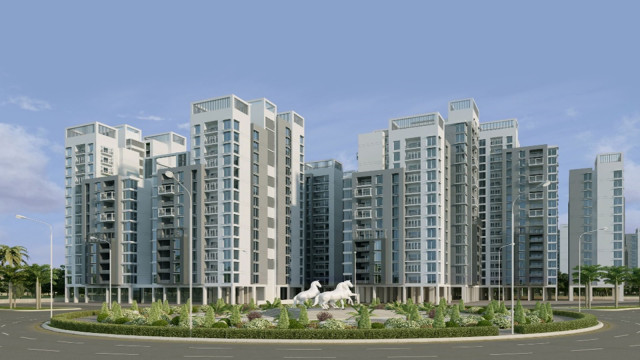
From Blueprint to Brick: Construction Progress of Globe Residency Towers (2024–2025)
There are high demands in affordable housing in Pakistan due to increased population, urbanization, and the lack of servicing in the middle-income group. As a result, the real estate sector has started changing to abandon the classical chains of speculative development. Among the projects that are associated with this shift is the Globe Residency Towers Naya Nazimabad, Karachi a venture that was commenced in Pakistan through the first listed housing REIT.
The nine-tower project reached the crucial stages of the construction process in 2024-2025 that prove that the housing projects managed by professionals, financed by the government and supported by institutions can be effective in terms of their viability. The blog follows the real-life events of taking Globe Residency through paper to structure by writing about the architectural planning of the project, its construction process, and investor confidence regarding the project, its compliance to the various regulations and looks to the future of the project.
Setting the Foundation: Planning, Financing, and Site Preparation
Globe Residency is a product of thoughts, which started way before the laying down of the first brick. Its work began with the comprehensive planning of the Arif Habib Group based on the experience of the initial stages of the development of the Naya Nazimabad, who adapted this experience into a vertical housing scheme able to accommodate more than 1,300 apartment units in a range of nine residential towers. The stage of planning incorporated the architectural vision into local housing demand and local community needs, so a balance between affordability and livability in cities was achieved.
On the financial front, the project was extraordinary because it is a Real Estate Investment Trust (REIT) - to be precise, the Globe Residency REIT (GRR). In sharp contrast to conventional developer-funded investments, GRR raised both its equity (via a public listing on the Pakistan Stock Exchange PSX) and its structured debt with institutional investors. As an example, Meezan Bank made a Musharakah Agreement to co-finance the construction of 3 towers and make Islamic mortgage solutions begin to assist the buyers in their financial limitations.
In late 2023, construction started with heavy equipment moving in and the ground being cleared and basic infrastructure established. They were in phase with the larger Naya Nazimabad master plan through infrastructure such as road access, water supply and drainage. Notably, trustees (CDC), auditors (PwC/A.F. Ferguson), and consultants commissioned by SECP monitored all work performed at every stage, and each stage was done by reference to regulatory structures and disclosure requirements of investors. The fact that Globe Residency was by no means a mere project but rather the trial of how the publicly traded, regulated and institutionalized housing construction should be run on the mass scale was apparent at the conception.
Tower by Tower: Real-Time Construction Updates and Milestones (2024–2025)
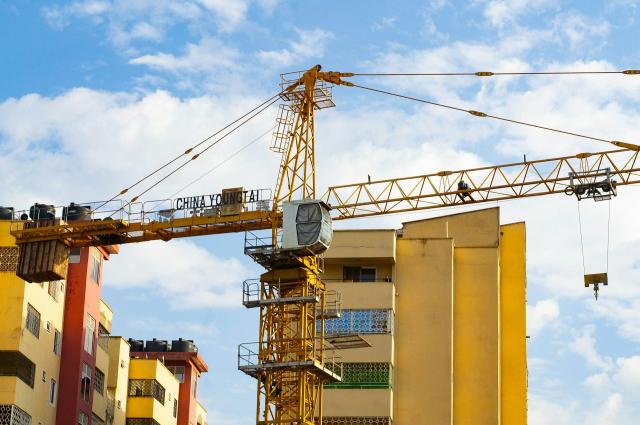
By the beginning of 2024 initial excavation and piling work started on the first buildings of towers. The priority was on Tower A, B, and C who were three of the nine towers of the Musharakah partnership with Meezan Bank. All of these towers consist of several stories having the modern, compact apartments planned in order to be as efficient as possible without any sacrifice of dignity or style. It took 12 months to complete the construction of these towers floor-by-floor and superstructure completion is expected to happen in Q1 2025.
At the same time, tower D, E and F were added to the construction pipeline in the middle of 2024, with both framework and concrete pouring going at a speedy rate owing to prefabricated modular prefaces being deployed by subcontractors under Arif Habib Real Estate Development Company. The uniformity in both the layout as well as the materials and sequencing eliminated the time wastage characteristic of the piecemeal housing developments.
During the years 2024 and 2025, GRR investors received regular progress reports indicating percentages of completion, site photographs and milestone validations signed by third-party consultants. This openness brought trust in the market and led to such impressive pre-sale rates of almost 642 units sold before the end of 2024, as indicated by the public filings and the investor circulars (Appendix 57-2).
Tower G, H and I construction work started at the end of 2024 and marked the last phase of structural work. Roof slabs, external plastering and ducting of utility became the center, and the interior works including tiling, fittings and paint were being carried out in towers A and B since mid-2025. Notably, no serious construction lag time was recorded until the half of the year 2025, which is quite an incredible achievement on a residential set in stone real estate akin to Pakistan.
Regulatory Compliance, Audit Trail, and Risk Mitigation
One facility of the Globe Residency project is that it has a strong compliance and governance system. Being a REIT registered with SECP, each of the construction milestones was open to validation by the independent engineers and auditors. CDC acted as trustee and retained control of both funds and payments and A.F. Ferguson, an audit firm that is part of PwC Global, audited the financials and reports on progress prior to shareholder reporting.
This layered control sufficed that no downstream could be made without verification of the project in place, which effectively safeguarded the investors against delay in construction or delivery which, the history of Karachi housing projects has shown, befalls them as well. The fund of Rs. 2.8 billion was used with accuracy and the costs were adjusted against specific expenditures in real-time.
In addition, the Sindh Building Control Authority (SBCA) gave out construction permits and collaborated with the architectural team of the project to maintain the zoning requirements, fire safety and earthquake resistance of the buildings. They already had water, gas, and electricity connections through the larger Naya Nazimabad infrastructure master plan which eliminates lengthy waiting time before getting final service availability.
There was also insurance cover extended to the contractors and buyers in the construction process. Risk mitigation measures, such as worker safety audits, environmental impact assessment, etc were all in full swing. Consequently, investor confidence was great as evident as volume of trading in secondary market of GRR units in PSX revealed continuous appreciation and great demand by both retail and institutional investors.
Community Integration and Buyer Response
At the close of the year 2025, Globe Residency not only took the shape, but also emotionally, with hundreds of families looking forward to taking possession. Finishing was realized at towers A-D and certificates of possession were ready to hand-over units early. This was a first time venture of home ownership to many of the individuals in a built-up and regulated community.
The response of buyers was very positive. Consumer satisfaction on quality of construction, possession schedule, and the convenience of payment by installments especially with regard to clients being provided with Islamic finances facilities by Meezan bank was above 85 percent in surveys carried by independent consultants and on-ground agents. Word-of-mouth among the Naya Nazimabad community also enhanced credibility leading to additional buyers to towers that were still under constructions.
Community infrastructure was a key in this satisfaction. Nearness to schools, hospitals, playgrounds, and mosques were also appreciated by the residents, which also included the experience of daily life into the Globe Residency experience. The fact that there was special parking, elevators, 24-hour security and even the possession of a boundary wall contributed to the feeling of security and modern lifestyle.
The next success factor was developing the concept of common areas in the towers: rooftops, landscaped courtyards, and community halls that would encourage peoples socializing. It made Globe Residency more than just a real estate investment trust. It was also a lifestyle advancement with little extras that separated it and cookie-cutter apartments.
Looking Ahead: Legacy, Replication, and Policy Impact
With construction in all nine towers finishing at the end of 2025, the Globe Residency REIT is already influencing the discussion of the future of real estate and public finance. To begin with, the project has demonstrated the availability of mid-income housing on time, within budget, and within the confines of the usual public regulatory structure, which skeptics, rest assured, always assumed was out of the question in the Pakistan contextual setting.
Its success provides the context to reproduction. Vertical housing is already on the scope of future REIT listing with Arif Habib Group projected to target Lahore and Islamabad. Musharakah could also be the financing model that encourages other Islamic banks to look into partnerships with listed REITs bringing together social impact and financial returns. At the policy level, the success of GRR has led to SECP and the Ministry of Finance investigating REIT-friendly changes such as less stringent requirements of listing, tax preferences, and digitized retail investor onboarding.
In case of capital markets, GRR has proven how real estate will develop to become a viable asset type- independent of speculative land investment and into income-generating, regulated financial instruments. Its effect on the PSX has been physical and it has attracted new investors on board and enhancing liquidity on the REITs segment.
Globe Residency has changed views, it is no longer only people who would afford high down payments, who would become homeowners. Middle-class Pakistanis can use listed REITs to acquire respectable accommodation as they build the economy that requires formal, scalable, and transparent development patterns. Globe Residency is about nine towers welcoming a new era to the families as they open the page of financial inclusions to infrastructure and the regulations thus bring trust.
Financing the Dream: How GRR Makes Homeownership Attainable
Globe Residency REIT (GRR) has set out to be a groundbreaking form of finance that is re-establishing the approach to home ownership amidst the mid-income families of Pakistan. The conventional route to home ownership has been marred with problems--scarcity of funding, unstable developers, under the table expenses and legal grey areas. GRR, a listed REIT, has challenged this tradition by bringing an alternative in the form of transparent, regulated, and professionally managed REIT.
The most important aspects of the GRR financial model is the pooled capital between the public and institutions. In contrast to entirely developing equity or just pre-booking by selling developers, raising equity by utilizing Pakistan Stock Exchange is viable under the REIT structure. The IPO of the GRR was accompanied by the share issues by the retail investors, institutional funds, and other Islamic financial institutions, which diversified the financial base and made it accountable. This democratic method allows the investors to have a say in the project as well as finance the construction of the project without causing excessive burden through the debt on the developer.
Partnership with Meezan Bank is perhaps one of the most remarkable innovations because it entered into a Musharakah agreement to co-finance three of the nine towers. This partnership meant that GRR could be able to provide lower cost installment-based offerings to the purchasers who had the ability to acquire Shariah-compliant housing finance. The entry became much easier to hundreds of middle-income households because of fixed monthly payments and low rates of markup.
In addition, GRR established trust by being financially disciplined. All outgoings of every rupee were checked by a third-party trustee (CDC) and audited by A.F. Ferguson, and a report was made to investors once a month. This got rid of the doubt prevalent among the unregulated schemes of housing under which funds get siphoned off or delayed delivery takes place. So to speak GRR was not only financing buildings, but dreams.
It achieved a system through the co-alignment of the necessary things like investor capital, Islamic financing, and regulatory oversight, where the flag of a secure, transparent, and affordable homeownership dream could fly through and within the reach of the average Pakistani family. With increasing number of REITs in Pakistan, GRR financing model will be written as the forerunner model of how housing and investment should be perfectly structured together to achieve social as well as financial objectives.
A Smart Investment: Why GRR Appeals to Both Residents and Capital
Although Globe Residency is mainly into housing, it has been turning out to be one of the most preferred investment tools in the Pakistani capital markets. GRR is a REIT listed in the stock market hence a hybrid value, duration residential utility to the home owner, and the consistent revenue to the investors. This two-fold attractiveness is what makes it a true unique asset group, more so in a nation where, development of the real estate is not always trusted.
The value of GRR to the residents is distributed delivery regulated, arranged possession deadline, and incorporated infrastructure. It has been the trust factor as the families are aware that their investment gets checked by SECP, authenticated by CDC, and constructed by Arif Habib, one of the most reliable business groups in the country. As compared to speculative land buying, buyers of GRR have already purchased an apartment unit that is built, or is close to being built which lowers the risk or uncertainty.
Conversely, GRR has been adopted well by capital markets as a reliable and income-earning property. Regular returns are paid out by the REIT in terms of leasing and rental income availed by leasing early pre-booked units as well as subsequent post-possession leasing. The first three towers are expected to have a high occupancy rate and renters enthusiastic about renting at Naya Nazimabad are on the waitlist, thus yield visibility is good. Furthermore, the mentioned structure provides liquidity to the unit holders, as they can easily leave or re-distribute using PSX- something that the traditional real estate lacks.
The strength of compliances also makes GRR favorable with institutional investors. Its governance framework which is anchored by professional auditors and third- party validators removes the veils that are usually attached to property development. GRR units provide income in the present and growth in the future as the urban profile of Naya Nazimabad continues to rise in the future.
Finally, Globe Residency REIT has even developed itself into more than a place to live or a property solution as it is also an all rounded financial product. It lies between the residential field and capital market and provides the secure, transparent, and profitable way to attract home-seekers and investors who would like to choose the safe, seeing path and have the profit. GRR will become a model to future listed residential REITs in Pakistan, as it grows in the country.
Conclusion
Globe Residency Towers is not only a landmark, in terms of both bricks and mortar, but in terms of how real estate, as we know it, can and should be developed in Pakistan. It is an effective case study of how regulatory discipline fits with construction schedules, investor protection with access to the market, community issues with financial models. Blueprint to brick, the project has continued to perform as envisaged earning the project not only the trust and liking of the market, but also that of the general populace.
As Pakistan shifts into emerging towards a more urbanized vision, projects such as Globe Residency would be used as the model that teaches us how housing, investment, and transparency would be integrated to produce higher and more democratic, resilient, and economically powerful cities.
Also Read: Global-REIT-Survey


-3dkuLgKhRD.jpg)
-49HupTvwDD.jpg)




LEAVE A REPLY