

Comparing Housing Deficits in Punjab Vs Sindh Vs Balochistan
The shortage of adequate housing in Pakistan is one of the most urgent development issues of the modern age, although it has very diverse shapes throughout the country. As the populations are still on the rise, it is accompanied by fast urbanization, climate change, economic disparity, and all these issues have influenced the needs of housing and thus sufficient, affordable, and safe housing have become central in recent years.
The three provinces of Pakistan (Punjab, Sindh and Balochistan) face various problems and pathways in the race to overcome housing shortages in their own ways. Even as Punjab boasts of bigger infrastructure and a more powerful governance apparatus in comparison with the other states, the state is experiencing an urban congestion with the population and the rural housing facilities are not of the better quality in many cases.
The province of Sindh, with its urban center of Karachi as an urban center of attraction, has an opposite phenomenon of enormous slums and rural settlements which are poorly planned and maintained in regard to quality housing. In the meanwhile, Balochistan has experienced chronic underdevelopment, widespread underdevelopment of infrastructure, and geographical seclusion which worsens its housing crisis both in cities and in rural areas. This blog tries to dismantle such realities by making a comparison of the lack of housing in the three provinces. Based on the statistical trends, policy implementation, socio-economic factors and environmental limitations we will discuss similarities and differences in the experience and management of housing problems across provincial boundaries.
We also observe the government responses, the efforts of communities and the implication that further inactions or intelligent investment results in. By doing that, the goal is to place housing under a different light rather than construe it as a structural necessity to human beings, but as a human development requirement with close attachment to well-being, economic opportunity, and crisis resistance. When we put the housing deficits into perspective of real on the ground conditions of each province we can better understand how dire the need of such change really is, and how solutions that were locally contextually informed are vital.
Punjab failure to meet Housing Deficit
The most populous and economically active province in Pakistan, Punjab gives a multidimensional and multilayered housing shortage image. It has good access to infrastructure and services on one side and its urbanization and growth scenario have seen the drawbacks of increasing housing shortages in low income urban regions. Demographic growth such as in Lahore, Faisalabad and Rawalpindi cities is enormous and greatly exceeds the ability of the housing authorities and the private developers.
The result is a constantly expanding habitat of slums or katchi abadis with millions of people living lacking clean water, sanitation, electricity or clear land title. In rural Punjab, it is not to the extent of the population density of the city, still housing quality is a matter of concern.
The houses mostly constructed by the owners are poorly constructed, or rather, not even constructed according to any precautions of safety in their built or durability as most of the time they would be exposed to the worst weather or rather would be in ruins. Such houses are usually not ventilated, does not have toilets and hygiene facilities and this is more the case with south Punjab which continues to be marginalized economically.
Agricultural land pressure is also rising in Punjab which is further causing the land to become tighter within the authorities housing modification plans. Although many policies have been implemented such as the schemes of the Punjab Housing and Town Planning Agency or the Naya Pakistan Housing Program, due to a high level of bureaucracy and insufficient focus in target subsidies, they have not been beneficial to the most vulnerable groups.
Affordability has to be another stratum to the Punjab housing crisis. The informal housing options force the urban poor to take the informal housing opportunities due to the rising costs of land because of real estate speculation in the formal housing market. Increase in rent has been highly witnessed in urban areas where even middle income families are under pressure financially.
Although the construction of houses has been boosted by the private sector, it mainly targets the higher and middle classes, and there is an overwhelming deficit in terms of the public-private partnership that is oriented towards low cost housing. Spatial planning integration is also not commendable and this has led to inefficiencies of infrastructural development where new housing colonies are usually constructed in places that are distant to places of work thus causing transportation problem and further marginalization.
In general, the housing shortage in Punjab cannot be solved by applying the cookie-cutter solutions. It requires policy frameworks in its urban centres in which informal settlements are integrated within the formal economy by means of regularization, improvement of infrastructure and social protection provisions. The rural areas need another approach, assistance in improving the quality of housing, better opportunities in getting the basic amenities as well as enhancing the community-based development of the construction. Housing crisis in Punjab is essentially about quality as much as quantity and affordability and access, and its solution must be based on a coordinated approach that is inclusive, long-IV-term vision.
Housing shortage in Sindh
Sindh is the second most populous province of Pakistan and experiences a severe problem of housing shortage, which is of a metropolis and isolated nature. Karachi, the biggest city and the business hub of the province is what dominates the province attracting migrants within the entire Pakistan.
This in-migration, though very rapid and sustained, has stretched the housing system in the city to its limits resulting in the mushrooming of informal settlement areas many of which are built on communal land, or the land that is under dispute. Most of the people of Karachi, according to different surveys, reside in slums or haphazard colonies, many of which do not provide clean drinking water, sewer connections, garbage collection and tenure security. Even though Karachi usually steals the show when it comes to the housing issue, rural Sindh is not unscathed by this problem
There has also been a lot of families that use temporary or semi-permanent huts that are made out of mud, straw, or thatch that are prone to wear in the event of floods, heat waves, and storms especially in the areas of Tharparkar, Umerkot, and Badin. Monsoons often displace or destroy houses and patterns of eviction and reconstruction are established. The housing crisis is further exacerbated due to lack of proper infrastructure, poverty, and access to land ownership. The housing crisis in Sindh is of great urgency because Sindh is susceptible to climate change.
The coastal erosion is getting frequent, along with floods, drought, and heatwaves, and the province has no climate-proof housing options. Non-governmental organizations such as the Heritage Foundation or the Gul Bahao have experimented with inexpensive and sustainable housing, e.g. made of bamboo or constructed in a modular form using recycled material, but these experiments exist in a vacuum and are not reflected in provincial policy.
Concerted efforts of the Government housing sector in Sindh have not been very successful in catering to demand. The regularization of the informal settlements has been a problem that Sindh Katchi Abadis Authority has been facing; bureaucratic inefficiency and political instability have been counter products to the execution of massive housing projects. In the meantime, there has been a staggering development of real estate that comes privately, and they almost exclusively address high-income groups, which results in spatial inequality and gentrification.
In Karachi rent has climbed high and ownership of properties is becoming unaffordable to the working poor. Other issues affecting the housing sector in Sindh are doubtful land records, unlawful occupations and speculative purchases, making it difficult to plan and implement inclusive housing projects.
It all gets complicated by the presence of land mafias and political patronage in land allocation in the urban areas. It is necessary to not only increase the number of homes to solve the housing problem in Sindh, but also transform land governance, enhance disaster resistance, and develop partnerships with the state and the private sector, which combine social protection. It is essential to use available and sustainable local material and listen to the voices of communities in planning. Unless a change of priorities and policy coherence is made, Sindh will further worsen its housing shortage, with disastrous consequences to the health of the population, their economic and social mobility, and social justice.

Balochistan Deficit in housing
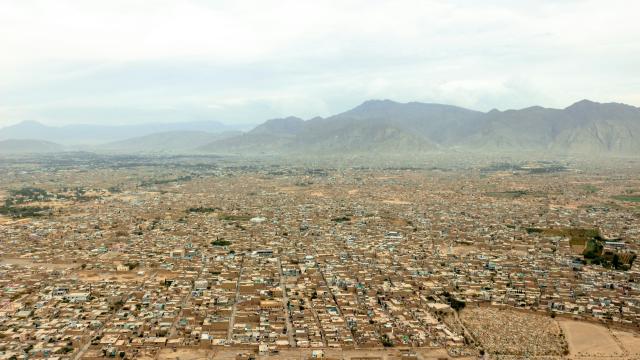
Pakistan Balochistan: Located in the South Afghanistan border, Balochistan is the biggest yet least populated province of Pakistan that is characterized by housing shortage and persistent lack of development, geographic remoteness, and social/political isolation. Its small population density on large and most of the time rough land makes it difficult to provide houses logistically and financially.
Most settlements in Balochistan are in a scattered form and most of them have limited services and consequently such rural setting greatly restricts any investments in housing whether it is public or privately invested. These new settlements are mostly unplanned or disabled and many urban centers such as Quetta and Gwadar show little housing growth over the past few years although this is grossly insufficient in comparison to population demands.
Housing structure in the rural Balochistan is basically at grass root level, made of mud, stones or any other material found in the area. Although those structures fit in the locally environmental requirements and are mostly sustainable, they are no longer appropriate with the increase in temperatures, droughts, natural disasters like earthquakes, and flash floods. The issue of housing in Balochistan is not only the question of numbers but of quality, safety, and resilience.
Recent flooding and the earthquake in 2005 demonstrated that current housing stock is not resistant to disasters which is why disaster-resistant construction is acutely needed. The population density is not very high as is the case in Punjab or Sindh, so the housing schemes should be decentralized and localized as in Balochistan. Nevertheless, these strategies are not always considered in national and provincial planning because of the disregard that is paid to the province in political importance.
Balochistan lacks infrastructure development as compared to the other provinces, and it becomes hard to establish sustainable housing systems. Other public facilities such as roads, electricity, water and communication systems are usually not available in the rural livelihoods, increasing the cost and complexity of housing interventions. In addition to this, legal housing developments and land rights are some of the problems where there is tribal ownership of land and there are also no formal records of the land.
Efforts to institute housing programs are usually met with opposition to local practices, distrust to government and logistical challenges. Provincial housing authorities have largely failed especially because of budgetary constraints and political instability as well as lack of technical knowhow. Nevertheless, some examples of alternative models being tested by NGOs and local community groups can rely on seismic-resistant houses, shelter powered with solar lights, and houses adapted to the climate.
These projects are modest in nature but they indicate the potential of solving the challenges that are unique to the region. There are opportunities as well as risks that Gwadar will offer under the China-Pakistan Economic Corridor (CPEC). Although it has the potential of fuelling housing and infrastructural development, matters of displacement and exclusionary measures with respect to local indigenous residents are also concerned. Unless coordinated in an inclusive manner, the benefits can end up being received by individuals who least require housing. Essentially, housing shortage in Balochistan is indicative of more systematic negligence, as it needs not only housing solution but structural controls, local ownership, investment in infrastructure and services.
Policy Gaps and Institutional Responses
In the whole of Punjab, Sindh and Balochistan, the housing shortage is characterized by common incidents, one of them being that the policy response is not adequate and that these policies are ill-equipped in terms of implementation due to institutional shortcomings. Even as the housing crisis rages out of control, the available policy frameworks tend to be at variance with on-ground conditions, and the institutions charged with the delivery of these interventions themselves have strewn mandates, corrupt practices, and are underfinanced. At the same time, despite the announcements of multiple housing schemes in Punjab, especially within the Naya Pakistan Housing Program, the interest has been biased in favor of the urban middle classes and their housing needs.
Those most needy, the informal work force and the urban poor tend to be left out of the eligibility grouping. In addition, implementation is delayed by land acquisition issue and court cases, and local governments have no capacity to monitor execution. The policy of housing in Sindh is highly reactive and not comprehensive with lack of a master plan to coordinate housing across transport, environment and disaster resistance. Development projects have a tendency to fall in the trap of political wrangles or be delayed by red tape.
There is no digitized system of land records in any of the urban centers in the country such as Karachi, and this adds ambiguity of the legal abdication besides encouraging land grabbing hence discouraging any legitimate effort towards delivery of fair housing. Moreover, the inability of incorporating the housing policy with a cycle of urban planning has led to sprawling of the poorly serviced peri-urban settlements.
The houses of Balochistan are the least developed during the three provinces. The budgetary allocationallocation of the province to housing is minimal and most of the province is not covered by major government schemes since they are not sufficiently populated with good infrastructure.
Housing authorities are mostly dormant and lack technical labor force to come up with localized models of housings. Any policy that lacks an understanding of the socio-cultural and geographic positions of Balochistan will be bound to fail. Lack of co-ordination of different levels of government, federal, provincial and local, is another noticeable loophole in all provincial cases. Housing is a cross-sectoral problem in itself with land, water, sanitation, energy, transport and livelihoods but a wall has been created between institutions to prevent it being handled as a whole issue.
Conclusion
To illustrate the gap in the development process and governance capabilities of the provinces in Pakistan, the housing shortage in Punjab, Sindh, and Balochistan highlights the problem of gross imbalance in the processes of development. Although the challenges are both in nature and magnitude, the common element shared by them is that, there is an urgent need to have strategic, inclusive, and sustainable housing solutions.
The housing limits have been created due to high urbanization rates and unaffordability in Punjab, urban anarchy and rural discrimination in Sindh and the overall exclusions and geographical isolation in Balochistan. These are not mere structural shortcomings: this is a failure of policy, social inequality, and lack of long-term perspective in the state-planning enterprise. It is necessary to treat them in a sophisticated manner keeping in mind the specific conditions and not just by constructing houses.
It comes in with the reform approaches to land governance, the incorporation of climate resilience, the participation planning process, and the housing accommodation to the wider developmental functions. The contrast among the provinces demonstrates that there is no magic model which suits everyone but it is possible to share the lesson and adjust it. Punjab can take a lesson in imaginative non-governmental work, Sindh can make use of Punjab infrastructure investment and Balochistan could appeal to a specific policy recognizing the distinct environment.
Arguably, housing becomes a right and not a privilege. It is a platform to health, dignity, security, and opportunity. In the event that the country would like to head towards an increasingly equitable and sustainable future, then closing its provincial housing disparities should be made a national cushion of the government.
Also Read: A New Approach to Estimate the Adequate Housing Deficit within and Across Emerging Economies




-shtTqaPktk.jfif)





LEAVE A REPLY