

Community-Led Housing: How Ghanaians Are Taking Control of Their Housing Needs
The housing industry in Ghana has been struggling over the decades with the high rate of urbanization; population increase and the scarcity of government resources contributing to high housing shortage. There are numerous city dwellers who can hardly afford safe, decent, and cheap housing.
 With the continued growth of cities like Accra, Kumasi and Tamales,
housing demand has easily surpassed the supply. This unbalanced situation has
led to the development of slum areas, congestions in living, and the rising
cost of houses which has pushed the low and middle-income earners to the brink.
With the continued growth of cities like Accra, Kumasi and Tamales,
housing demand has easily surpassed the supply. This unbalanced situation has
led to the development of slum areas, congestions in living, and the rising
cost of houses which has pushed the low and middle-income earners to the brink.
The conventional housing delivery systems in Ghana are usually dependent on the government programmes or the individual developers. These strategies, however, have been unable to entirely address the housing requirements of the population, particularly to the lower-income earners.
Consequently, the various communities have embarked on seeking alternative
methods of housing development that will enable the residents to have ownership
of their housing solutions. Community-led housing is one of such methods.
Community-led housing is a kind of housing program where the communities are the designers, developers, and managers of these housing programs, which may have the assistance of local organizations, non-governmental organizations, and government agencies.
The model puts more
emphasis on collaboration, participation and decision making that involves
residents so that they can meet their housing needs in a manner that captures
their unique social, economic, and cultural realities.
Community-based housing projects are becoming a topical
problem in Ghana as an effective solution to the housing crisis. These programs
enable the communities to combine funds, collect information, and jointly come
up with affordable and sustainable housing projects. Residents can develop
housing solutions that better meet their needs by sharing land, using
cooperative models and including certain people in the planning process.
This blog discusses the fact that community-led housing is
now becoming an effective solution to the housing problems facing Ghana. It
discusses the emergence of community-led housing, its impact on empowering
communities, and how it can be used to achieve sustainable urban development.
The discussion seeks to show how the concept of community-led housing can be
utilized to remodel the housing situation in Ghana by addressing its potential.
The Housing Crisis in Ghana and the Need for Community-Based Solutions
Housing deficiency in Ghana has become one of the hottest
social and economic problems of the country today. The housing demand is vastly
overpowered by the supply due to the lack of housing units which is estimated
to be in the millions. The significant cause of this crisis is rapid
urbanization because people leave villages to come to cities in search of
employment, education, and improved living standards.
Cities like Accra and Kumasi have been in high growth of
population over the past decades. The current growth in housing development has
not however been in line with this. Lack of sufficient land supply, increase in
construction costs and complicated land tenure arrangements make the
development of affordable housing at large scale an uphill task. This causes
several city dwellers to either stay in slum areas or in homes which lack
proper maintenance.
Public housing schemes and collaboration with private developers have been the efforts of government housing programs to deal with this shortage.
Although such programs have brought about certain outcomes, they
do not always address the needs of low-income families. There are a lot of
housing units that are developed in formal programs, which are still
unaffordable by the most in need.
This disparity in housing provision has contributed to the
emergence of informal settlements, in which the inhabitants construct houses
progressively using the materials at hand. Although such communities are
resilient and flexible, they do not have access to simple services like clean
water, sanitation and even access to dependable electricity. In such places,
life may not be easy without proper planning and infrastructure.
Community-based housing is an alternative that has prospects
in comparison to the conventional housing delivery mechanisms. This strategy
enables the residents to design solutions that are cheap and culturally
sensitive since communities have a central role in the development process and
are able to easily see their needs and devise solutions. Communities are no
longer passive observers in their housing futures because they have to rely on
their own efforts and not on outside forces.
Community savings groups, cooperatives, and joint ventures
with local organizations allow residents to mobilize resources and develop
housing projects that are priorities to the residents. Such a model contributes
to resolving the problem of housing shortage, as well as to enhancing the
social cohesion and community resilience.
In Ghana, where community networks and collective action are
entrenched in cultural traditions, community-led housing is very complementary
to the pre-existing social organization. With such strengths, the communities
will be able to contribute more towards finding a solution to the housing
problems they have.
Empowering Communities through Participation and Collective Action
It is one of the greatest strengths of community-led housing
because it focuses on the involvement and action. In contrast to the
traditional housing developmental approaches where most of the decision making
process is usually undertaken by some outside forces in the development like
developers or government agencies, community-led developments/projects put the
residents at the center of the decision making process.
Participation starts with the identification of the housing
requirements in the community. The residents cooperate with each other to
evaluate their existing conditions of living, set priorities, and plan on how
they can be improved. This participatory practice will make sure that the
housing solutions are based on the actual needs and preferences of the future
occupants of the housing solutions.
The community-led housing also promotes ownership by the
residents of their projects. By taking an active role in the planning and
development, the people will have a better sense of responsibility and
commitment towards keeping their housing conditions. These feelings of
belonging may lead to more sustainable and properly repaired communities.
Housing co-operatives and savings groups can be an important
part of community-led housing projects. Through these groups, members can share
financial resources, and therefore, it becomes easy to invest in the housing
projects, and get access to credit. Communities can also be able to raise the
funds slowly to buy land, build houses or develop infrastructure, through
repeated contributions.
Collective action is also useful in the process of community
bargaining with the government and other stakeholders. Forming formal groups
would enable the residents to have more influence in the land rights,
infrastructure development, and city planning dialogue. This is able to
increase awareness of informal settlements and access to services.
Knowledge sharing is another significant community-led
housing. The communities, in most cases, cooperate with architects, planners
and the non-governmental organizations to come up with new housing designs that
are affordable and friendly to the environment. Such collaborations enable the
communities to enjoy professional expertise without losing control of their
projects.
The community-led housing projects in Ghana have proved that
collective action is capable of changing the living standards. Through
collaboration, residents will be able to eliminate the financial and logistical
marginalization that would be hard to achieve on an individual basis.
Finally, community participation does not only concern house
building, but it concerns building better communities. By uniting to solve
common issues, individuals form social networks and support systems which help
to develop the community in the long run.
The Role of Local Organizations and Partnerships in Community-Led Housing
Although communities are considered to be the main actors in
community-based housing programs, it is common to engage local organizations
and institutions to be successful. Community-based organizations,
non-governmental organizations and development agencies play a very important
role, particularly in terms of technical knowledge, monetary aid and capacity
building.
Through these organizations communities are assisted to
complex processes like acquisition of land, housing design and compliance with
law. They also in most instances, help access funding sources that the
community groups would otherwise not have been able to get.
One of the aspects of such partnerships is capacity
building. The training programs assist the members of the community to acquire
skills on how to manage projects, financial planning and the construction
techniques. With improved skills, the communities will be in better position to
handle their housing projects in a better way.
The local governments are also significant in assisting
community-led housing undertakings. Governments can promote such development by
ensuring that an enabling environment is established through the policies to
appreciate and accommodate the participation of communities in the development
of these housing. This can take the form of offering land or facilitating the
process of regulation or even as financial incentives.
Collaboration with institutions of higher learning and
research will also help in offering valuable information on housing design and
urban planning. Students and researchers tend to work with communities to work
out new housing solutions to meet the needs of the local community along with
ensuring sustainability.
Ghana has a history of effective community based housing
projects being done through the cooperation of various stakeholders. Such
alliances have the benefit of keeping communities in touch with resources and
expertise they require to make their housing plans a reality.
Community-based housing projects have the ability to address
much of the issues that surround the conventional approaches to housing
development by encouraging collaboration among communities, organizations and
government agencies.
Sustainability and Innovation in Community-Led Housing
The housing projects initiated by the community tend to
implement new methods of sustainability and environmental responsibility. Since
inhabitants are directly engaged in the planning and construction process,
there are higher chances that they would accept cost effective and
environmental solutions.
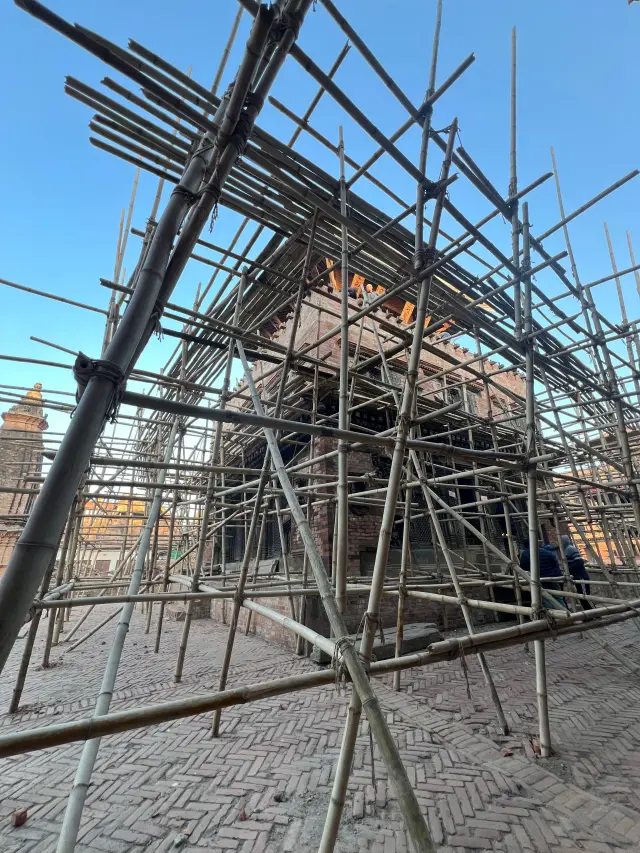
A local approach of using locally available building
materials is one of the common strategies. Earth block materials which are
stabilized, bamboo, and local timber can go a long way in lowering the
construction costs coupled with the reduction of environmental degradation.
Such materials are usually much adapted to local climates and may offer cozy
and long lasting shelter.
Another factor to be considered in community-led housing
projects is energy efficiency. Natural ventilation, solar energy systems, and
rainwater harvesting are some of the elements that communities can include to
minimize the use of external utilities and reduce the household costs.
Raising housing is also a widely used practice in
community-led efforts. Rather than having to create fully finished houses,
which are created once, the residents create their houses out of phases as the
resources they have access to. This will enable the families to build their
living conditions at a slow pace without incurring huge financial
responsibilities.
Shared space and communal facilities are also the priorities
of community led housing projects. Social interaction is promoted through
parks, community centers and common infrastructure that help to keep the
community united. These areas are significant in terms of developing the sense
of belonging and unity.
Other issues like limited land can be solved through
innovation in designing houses. An example is that communities can also take up
compact housing plans or even multi-story designs to ensure maximum use of land
and be affordable.
Through a mix of the traditional knowledge and the
application of modern design, community-based housing projects will be able to
establish an environment in which the needs of the inhabitants are satisfied
and at the same time natural resources are not depleted.
Challenges and Opportunities for Scaling Community-Led Housing in Ghana
Community-led housing, despite being a very beneficial
program, has a number of challenges that need to be resolved in its quest to
increase its influence. One of the most important hindrances is access to land.
In Ghana, land tenure systems and escalating land prices represent complex
systems that the community cannot afford to acquire the appropriate location to
build homes.
Another significant problem is financing. Although community
savings groups have the potential of raising funds to facilitate small scale
projects, bigger housing projects may need extra funding. The lack of access to
low-cost credit can slacken the development of community-based efforts.
Housing projects led by the community can also be affected
by regulatory barriers. Planning regulations and building codes are at times
made to cater to the formal developers and therefore, it is hard to meet the
requirements by the community groups. Making these regulations less complicated
and developing open frameworks may contribute to government-empowered housing
development within communities.
Nevertheless, it is possible to stabilize and expand
community-led housing in Ghana because of numerous opportunities. The growing
awareness of participatory development methods has prompted policymakers to
seek new housing strategies, which include communities more directly.
Some of the innovative financing mechanisms that could be
used to fill the financial gap of housing projects include microfinance and
community development funds. Moreover, the cooperation with the participants of
the private sector could present new partnership and investment opportunities.
Technology is now taking an even greater role in development
of housing. The community-led efforts can be facilitated by using digital
mapping applications, mobile banking, and online training materials to enhance
communication and management of resources. Through the appropriate supports,
community-led housing can be a significant part of the housing strategy in
Ghana.
Conclusion
The housing issues in Ghana can be addressed radically by
the community led housing. By placing the communities at the heart of the
development process, this model enables communities to have more control over
their housing needs and promote cooperation, creativity and sustainability
through the development.
Through collective action, communities can share resources,
share knowledge and develop solutions to the housing that could be unique to
the community. Loans to the local entities, the government agencies as well as
development agencies further strengthen these programs by providing technical
expertise and finances.
Community-led housing is also the change of attitudes concerning the approach of housing issues in the rapidly expanding urban setting. This would focus on residents of informal settlements, as opposed to passive beneficiaries of development initiatives, as people with valuable knowledge about their community.
The housing solutions are more practical, culturally acceptable, and long term when individuals are involved directly in the shaping up of their neighborhoods. In Ghana, more efforts should be put to support community-led initiatives in order to curb the housing shortage and facilitate inclusive urbanization.
The partnership among communities, policymakers, and
development partners will be encouraged to grow such initiatives and make sure
that all Ghanaians have access to safe and affordable housing.
Moreover, community-led housing can only be successful in the long term when communities and supporting institutions are committed to it. The inclusionary planning policy, tenure security of land, and easy access to finance can significantly enhance such grassroots initiatives.
When the governments are actively involved in recognizing and supporting community-based housing, they promote the environment where innovation and cooperation can flourish. Community-led housing also promotes accountability, transparency and shared responsibility among the residents which helps in building stronger and resilient neighborhoods.
With Ghana in the process of urbanization, community empowerment in terms of housing development could be one of the most viable and effective strategies of meeting the rising need of affordable and decent living places in the nation.
Also read: Community-Led Housing Vs Developer-Led Housing: Which Path Yields More For Low-Income Families?





-3dkuLgKhRD.jpg)
-49HupTvwDD.jpg)









LEAVE A REPLY