

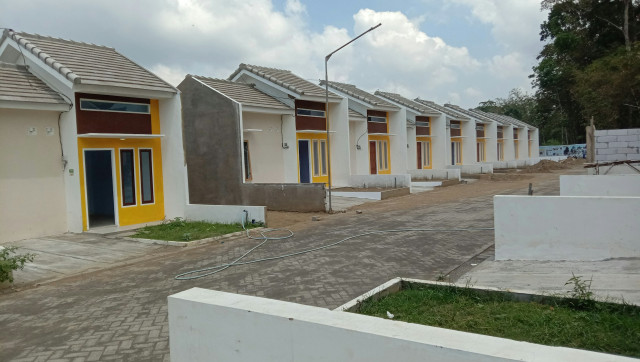
Community-Led Housing: Empowering Residents in the Development Process
With millions living while shelter insecure, unable to afford good housing in almost every major city on the planet, the housing crisis has become one of the most important problems in the world today. Often, traditional top-down housing development efforts have been insufficient to meet these needs as they focus on a profit, speed, or political agenda and not on the actual experiences of the people who will live in them. In this regard, the revival of a practice termed community-led housing, which features grassroots involvement and communal management of housing, has attracted new interest.
Community led housing (CLH) is founded on the argument that, occupants should be the most important partakers in the procurement, construction and administration of the accommodation in which they reside. It discards the assumptions of a community which is a mere consumer of housing hence supplied by governments or a privately driven developer but rather is a destination where they become co-creators of the housing they inhabit. The result is not just a physical building, but a more physically centered social development as well as long-term affordability and communities with values and ambitions held by its people.
This blog discusses in details the concept of community-led housing, its historical development, how it can respond to contemporary housing issues, the wider impacts it has on society and economy, and the challenges that stand in its way of becoming the norm, as well as the opportunities it offers in a wider picture to create an equal housing system in the future. These sections also explain together how community-led housing would give residents greater control over their homes and reorient it away from a commodity and toward a human right.
The Historical Evolution of Community-Led Housing
The history of community-led housing can be dated back many centuries to collective tradition of construction and land use. In most pre-industrial societies, the society was involved in sharing their labor and resources to build houses and villages. The habitation was not the sacrifice of the individual person nor was it an effort on the behalf of the individual but it was a communal action with communal values and an understanding of the communal responsibility. Communal knowledge particularly, in Western societies, the very concept of community is inextricably connected to housing, whether this be in rural villages in Africa or native longhouse sets in North America.
As the new Industrial period moved on during the 19th century, and cities were growing rapidly, there was the development of this communal ethos into more structured forms of cooperative housing organization. Mutual Aid Societies, worker cooperatives and tenant associations started forming in reaction to the poor conditions of the industrial urban life. In the United Kingdom, co-partnership housing-companies offered both renting and ownership to the families of the working classes. In the United States, ethnic groupings ran cooperative housing to sustain cultural retention and affordability into new landscapes of their cities.
The middle part of the 20th century saw the development of state-led housing with governments around the globe picking up the pace to house increasing numbers. Although this created large volumes of housing stock it continues to be arguably the case that top down nature of these projects rarely took into account the needs of the residents resulting in alienation, segregation and in some parts decay. Towards the end of the 20 th century, the feel at the grassroots level that these solutions were inadequate spawned additional experiments in participatory housing.
Among the most noteworthy of the innovations were community land trust (CLT), developed in the United States in the days of civil rights movement. LTs decoupled housing and ownership of the land to make it affordable long-term and controlled by the communities. Cohousing models were also thriving during this period in Denmark and Switzerland especially with a deep history of tenant involvement in defining housing as a public good.
The community-based housing practices took the shape of self-help housing and slum upgrading developments in the Global South. Those in informal settlements have formed their own associations to construct their own houses with assistance of NGOs or microfinance initiatives. These experimentations showed how communities could drive their own affordable house at a time when the government and markets were not fulfilling their roles.
Community-led housing today represents a very large number of models around the world. In Germany, eco-villages are community-owned and run, with a cooperative organization in Brazil of resident-controlled housing estates capable of triggering the beginning of the movement. The unifying aspect is that all these communities emanate out of a successful process of resident empowerment to shape their own distinctive surroundings.
Community-Led Housing as the Solution to Modern Problems
With the 21 st century, the problem of the housing crisis has reached its zenith because of urbanization, speculation in the financial markets and growing inequality. Community-led housing provides an attractive alternative in that it operates against a number of interlinked problems.
Lack of affordability is looming as the most burning problem the increase in the value of land, real estate speculation and a non-increasing wages has rendered homeownership simply impossible to millions of people. There is also pressure on rental markets and numerous households are devoting excessive proportions of earnings toward housing. Since community led housing models such as cooperatives and CLTs do not put housing on speculative markets, they maintain affordability across generations and not just to a single buyer.
Gentrification also refers to displacement, and CLH helps to overcome this issue. In cities around the world, redevelopment plans and increased rent forces long term citizens to leave the neighborhoods they have always known. CLH empowers communities and allows them to exercise direct control over housing and land; this will help them avoid displacement and maintain cultural identity. Rather than having to be pushed out, residents become stewards of their own neighborhoods.
Another serious issue that that CLH cuts back on is its environmental sustainability. Communities-initiated initiatives tend to set a greater emphasis on green building strategies, renewable energy, and resource sharing. Conversely, unlike other developments that are motivated by the short-term financial gain, CLH developments are constructed in long-term stewardship. The residents will be financial incentive to invest in energy conservation, waste, and common green areas since they will be directly impacted by the actions.
CLH is also a building that enhances social relations at the moment when urban life has become isolating. These projects engage residents in group decision-making about the use of community facilities that are accessible to residents and give individuals a sense of trust, solidarity and mutual support. This social fabric is a life-saving mechanism to the vulnerable groups like the aged, migrants or low income-families.
Lastly, community-led housing heals the structural marginalization in zoning and planning systems. Traditional planning frequently accords laggard space to local community and broadcasts to giant developers. Rather than insulating themselves and insiders, HH uses community knowledge and priorities to center planning, leading to inclusive, and equitable local developments grounded in local needs.
Community-Led Housing Social and Economic Impacts
There are more advantages of CLH beyond affordability that impacts on the society and the economy. Empowerment is also one of the most significant social effects. Involvement of residents in decision making gives them a feeling of ownership, dignity and responsibility. This empowerment helps to take charge not only in housing projects but also in life of the community streets at large. Another consequence of social cohesion is Communal determination and government keeps apart a feeling of separations and solitude and builds supportive networks. Community of belonging is the way residents often describe CLH not as a place to live but a place to belong. Such networks promote resiliency in any event of a crisis, whether an economic crisis or a natural disaster.
Economically, CLH is more stable because it cushions the residents against volatile markets. Stable, affordable housing permits households to put money into education, health, business. This will also make a local economy as individuals will likely spend in the neighborhoods, and invest in their local economies. Considering that developmental processes tend to use local labour and contractors, this further boosts the economy of the community.
In creative ways, wealth inequality is also dealt with by CLH. Albeit it does not necessarily deliver the same speculative returns as that of a privately owned house or apartment, it does offer other asset-building means as provided by the shared equity schemes. More to the point it redefines wealth as security, stability and interdependence of prosperity instead of individual acquisition of profit.
On a policy note, CLH decreases long-term burden on the states by making self-sustaining housing. Resident-managed projects are also less frequently in need of ongoing public subsidy as communities are responsible in management and maintenance. This does not only make it a socially sustainable intervention, but also a sustainable intervention in terms of its finances.

Obstacles to community-led housing
Although CLH has numerous strengths, there are serious obstacles on its way to becoming ubiquitous. One of the strongest obstacles is the access to land. In most cities land is simply too cost-prohibitive or is taken up by large-scale speculators, leaving a deficit of community-based initiatives. Communities are unable to go out and find places without the intervention of activities like the allocation of land in the public view, land banking etc. The other big challenge is in financing Conventional lenders banks may find CLH projects to be either risky or unconventional and thus may be unable to obtain loans or mortgages. Although there are alternative financing mechanisms like social investment funds, cooperative banks etc., they are also not very accessible. There is the need to compensate CLH by establishing dedicated funds to support it.
Regulatory frameworks are problematic as well in most jurisdictions, zoning and planning regulations fail to support cooperative ownership forms, or collective forms of governance. This absence of avowal by the law breeds doubt and lessens innovation. Regulations that legalize various forms of tenure are very important. Perceptual cultural issues make the adoption even more complicated In societies where private homeownership has been entrenched as the gold standard, collective models may run into doubt. It is necessary to change these perceptions, and it can be done through conducting public education and spreading successful examples of CLH that demonstrates its long-term advantages.
Finally, there is capacity barrier. There usually is a shortage of technical competencies on the part of communities in terms of planning, construction and management. Decentralization means partnerships with NGOs, universities and technical experts are important in providing support and training so that communities can effectively take control of their own housing projects.
Learning, Challenges and Future Implications of Community-Led Housing
The existence of these obstacles notwithstanding, the prospects of CLH expansions are enormous. Policy reform can have a catalytic impact in directing public land toward CLH, developing enabling financing models, and making approving of alternative arrangements. The introduction of a Community Housing Fund in countries such as the UK is an example of how government can pave the way to make this sector grow.
The promise of partnerships also exists Partnerships among communities, local governments, NGOs and the private sector actors can offer the resources and expertise that can be used to scale CLH. Such cooperation may help to fill the missing link between local efforts and institutional coordination with sustainable patterns. Innovation through technology extends still further the opportunity Modular construction, digital tools of participatory planning, and crowd investing in the construction process can increase efficiency, affordability, and replicability of CLH.
Cultural momentum also has changed Younger generations, at risk of being locked out of the conventional homeownership system, are more amenable to collective forms that are more community and sustainability-driven. With equity and inclusion shaping the current discourse of public discussions on housing, CLH is emerged as a saving aspect.
What is most important, it is CLH that allows redefining the very concept of housing. It approaches the issue of housing as a social good and a human right instead of treating it as a commodity to that speculates on. This paradigm transition has enormous implications on the way societies respond to more than housing: inequality, climate change, and community resilience.
The Role of Policy Advocacy and Resident Leadership in Community-Led Housing
The critical key characteristic of the community-led housing is the use of resident leadership, both within itself, its perimeter, and in terms of policy formation. Housing can be a powerful unifying factor in communities, and housed communities have sometimes become potent advocacy movements, seeking to transform the systemic approach to housing finance, regulation, and management. The main value of these grassroots movements is that they draw upon the realistic experience of people in their day-to-day or practical knowledge that could be fed into policymakers about what is effective and what is not.
The element of resident leadership integrated into CLH projects provides a sense of confidence as well as a sense of learning or nurturing negotiation, administration and long-run operations. This emboldening manifests itself as a political voice, such as resisting exclusionary zoning policies, advocating land trusts, and requiring development strategies to be more inclusive. In metropolises where housing conflicts merge with more socially expansive ones related to racial justice, climate resilience, and workers’ rights, CLH leaders have emerged as engines to creating coalitions that reposition housing as central to social justice.
Policymaking is also important in scaling up CLH. There can be no doubt that, without supportive frameworks, even the most successful community initiatives are isolated examples. Governments need to have specific roles in the allocation of land to be owned by the community, tax incentives and integration of CLH models into city development plans. In those situations where such support is present, as in parts of Europe and Latin America, CLH has displaced the peripheral position it has occupied in housing policy.
A mix of resident leadership and persistent policy advocacy means that CLH will not only be a short-term solution but a movement that is going to make a lasting difference. Community-led housing shifts the focus of policymakers towards equity, resilience, and the empowerment of people as it gives voice to a group of people who are the most vulnerable to the structural inequalities in housing.
Conclusion
Community-led housing is not a specialist alternative to the mainstream forms of development. It is a revolutionary solution to one of the most basic opportunities of society, shelter. Putting power in the hands of residents allows CLH to develop housing which is both affordable and sustainable, and inclusive of people with disabilities.
The history of its origins show that collective methods of housing are not new or radical but they are part of traditions in mutual support and cooperation. CLH is a solution to some of the problems in the modern-day world including affordability, displacement, sustainability, and social isolation. Its consequences go deeper than housing to support better economies, communicate social cohesion, and empower inhabitants. They faced barriers in areas of land access, financing, regulation among others; however, a significant scale-up is possible in CLH. Capacity to transform housing systems Housing systems worldwide can change when CLH becomes the norm with supportive policies and partnerships, as well as cultural momentum.
The end result of community-led housing is not so much about bricks and mortar. It is all about reconstruction of what home building and community is. Centering residents in the city-building process, CLH models one of housing that is equitable, resilient, and based in human dignity. By doing this it does more than just deal with the housing crisis; instead it also shows how a more just and inclusive future can be achieved.
Also read: Creating Inclusive Communities through Affordable Housing



-3dkuLgKhRD.jpg)
-49HupTvwDD.jpg)










LEAVE A REPLY