

Community Engagement: The Key to Effective Affordable Housing Design
Affordable housing is taking center stage in the urban centers across the globe yet the discussion revolves primarily on the financial, construction or policy frameworks. Although the specified features play an undeniable role, there is one major aspect that people often tend to forget about the role of community involvement. Development of affordable housing should be frequently done in the top-down approach and considered to be introduced without the necessary input of the people who will occupy and surround the housing.
Poorly designed housing may lack social and cultural coherence and even be rejected by the local population because of they were not consulted in the design of their homesteads. Conversely, the results can be dramatic when it is the community members themselves being informed, rather than being merely informed: local houses and local living, upbeat neighbourhoods and upbeat projects enhancing social integration in the long-term.
In this blog post, we discuss the role of community engagement that when conducted with the genuine and early approach becomes the potent instrument in the making of effective, humane, and sustainable affordable housing.
Why Community Voices Matter in Design and Planning
Perhaps the most long-standing issue facing development of affordable housing is that communities think these projects are foisted on them instead of being less developed with them. As soon as there is a feeling that the planners have left them out in the planning exercise, resistance will emerge fast. Such typical fears are the loss of property value, the emerging of traffic or social tension.
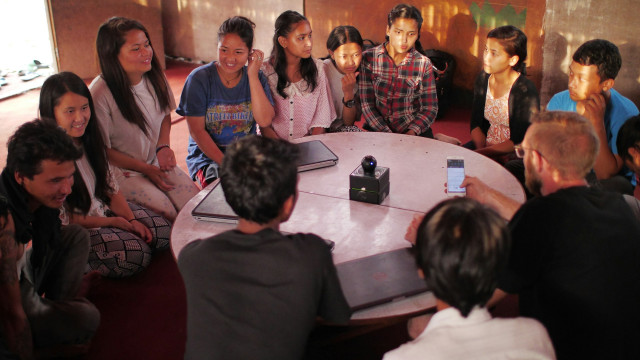
These are often fanned by the fact that in most occasions, fear comes about not because affordable housing in itself is an evil but because the citizens feel that they have been forced to take the project without their own consultation. This dynamic can be altered altogether by community engagement. When planners really settle down with the residents, terriers, homeowner, shopkeepers and potential tenants, and inquire about what they require and how they visualize their neighbourhood, a type of conversation that is uncannily different turns up.
Involving the community not only eases the way politically, but creates superior design as well. Residents are frequently well informed about local infrastructure and transportation patterns, local school needs and cultural preferences as well as issues of safety. They are aware about the problematic areas on the streets, places where children run, areas where it seems dangerous at night-time. Such are the kinds of insights one cannot get through a spreadsheet or satellite image, of the kind architects and planners need. Once that local understanding is incorporated into the design, housing will be more feasible and socially embed, to begin with.
Notably, participation leads to trust. The tradition of structured poverty or urban displacement is especially evident in low-income communities being sequestered or pushed out by urban development: slum evictions, gentrification or demolitions of public housing. Upon a new housing development, neighbors might be afraid of displacement or their inconsideration. Actual involvement, i.e. their participation in the project influences it, is a sign of respect and starts restoring trust. It fosters the feeling of unity ownership.
Even with newcomers, where they will actually live in the affordable housing, the design workshops and the neighborhood meeting activities enable them to feel strong and create sense of pride in the places they are going to inhabit. This investment is an emotional and forms part of the success of the development in the long run because vandalism is minimized, there is more attention paid to shared spaces and it creates a sense of personal responsibility in the community itself.
Societies are not homogeneous. There are children, seniors, single parents, migrants, business persons, and long stay owners in a neighbourhood. The inclusion of a large number of voices serves to make sure that a housing design is actually diverse. Devoid of that diversity of voices, developers run the risk of designing environments to suit only one demographic population well- leaving the rest ignored. Such as a family replete development without play areas, or a development inhabited by an older population that lacked clinics or footpaths nearby. The community will walk people through avoiding such mismatches because they integrate the daily demands in the housing project as early as the planning stage.

From Tokenism to Real Participation
Community engagement is not the same. Other forms of development work provide only one public consultation or meeting at the conclusion of the planning process whereby at this point, the large decisions are already undertaken. Locals can be presented with a final design and asked to comment on it but their suggestions rarely do more than marginally change the project. Such episodic participation is frustrating and cynical, and communities experience that their interest is represented not by a meaningful contribution to the decision but by a few words in the list of those consulted. Such engagement should occur early to be effective and also structured to allow the community input to make a difference.
Such real engagement may include a number of steps: listening sessions, design workshops, walking the site together, and reviewing design ideas progressively. It must consist of varying approaches to distinct populations, surveys, town halls, small focus groups, door-to-door outreach, and even bilingual/translated materials to non-English speaking populations. The thing is that each person, no matter whether he/she would or would not go to official meetings, should have an opportunity to make his/her contribution. This also demands that the planners approach people where they stand, both literally and figuratively, they are not expected to adjust to government time or technical terms of the profession.
Tenants and neighbours contribute to the development of more innovative and flexible designs when they are called upon to design projects in which they live. As an example, a community may demand versatile communal meeting rooms that can serve as child-care facilities, community meetings or events space. The parents may propose to have a space to keep strollers or bicycles. The request of older residents could be benches and shade trees turning a typical courtyard into the inviting social space. The details of design, however, are not so small that they can make the living and emotional experiences of individuals in their homes drastically different.
Involvement will also generate natural project supporters. By including residents in the design process, you end up with champions who spread the word about why the housing is a good thing, beating the misinformation or NIMBY (Not In My Backyard) syndrome before it can get out of control. They make the development more humanized -- it is our project as opposed to the government project. Such acceptance in society streamlines the approval process of new affordable housing projects, so they may not have to delay due to the loss of approvals. In the area where participation has been significant, growth tends to be assimilated into the community much sooner than some projects where there is hostility at the start line.
Engagement is not without time, money and professional skills. All teams of architects or developers are not necessarily experienced in participatory planning. There can be a need of training. However, the cost of engagement is minimal in comparison to the lasting gains that will be incurred in terms of prevention of conflicts, redesigns, and community opposition. Engagement is no luxury or check box exercise, it is an essential part of ethical and successful urban development.
Cultural Relevance, Identity, and Belonging in Affordable Housing
Disregard of culture during the creation of affordable housing does a disservice because an outsider may seem to be out of touch with what is considered an affordable housing. Community participation prevents the architecture, the layout and communal areas not to represent or be congruent with the values and the everyday life of the local people.
This may include the provision of extended units accommodating extended families, praying areas, communal gardens or artifact rooms to facilitate cultural events in the multicultural neighborhoods. The more people feel that their lives are reflected in the building of the homes that they are living in, the more they have a feeling of belonging and this can change the housing project to a community other than a mere called shelter.
Cultural relevance also implies social norms, religious beliefs and taste. On some levels, common areas where people can cook outdoors could be a priority. Others will be more concerned with the privacy between the generations or the consideration of the gendered space. By use of purely generic western housing models, architects risk coming up with housing units that will never quite get acceptable to residents. Conversely, when culture is involved in developments at an earlier stage, occupancy rates are usually much higher and resident satisfaction and repair/maintenance results are generally well above average too - not simply because residents feel morally invested in the space but emotionally, as well.
Belonging is more than culture as it encompasses identity and history of a community. The long-term residents may desire features, which show the neighborhood history, such as, murals, street names, or refurbishment of older buildings. High-quality affordable housing with a linkage to neighborhood identity can decrease the displacement which is so common with development. It is not only aesthetic, but it is symbolic, to include public art or local materials. This stipulates that this place is “created with us and not only for us.” Such behavior change will aid in countering the stigma which is normally attached to low-income housing.
This approach to community involvement in the design will help planners develop a housing project, which would celebrate diversity instead of eliminating it. It is not a uniformity that is sought, but inclusivity. By giving residents a voice in the design of their own living space, one can increase the likelihood that people will take care of it, developing communities that are successful not only as economic enterprises, but as social and cultural institutions as well. As such, cultural belongs and identity are not shallow issues, and it lies at the heart of achieving affordable housing that is habitable and sustainable.
Building Trust and Long-Term Stewardship through Resident Involvement
The potential long-term stewardship established by community engagement is one of the most under acknowledged advantages in community engagement. When individuals become part of the process of creating a housing development, it is not just to select their communal facilities, but to negotiate their future maintenance programme, they derive a sense of ownership that continues long after they have moved in. They will tend to join tenant associations, get along with neighbours, and maintain common areas clean and safe. This lowers the requirement of invasive management or on-the-ground policing. When people are not allowed to vote on the developments of their houses, in such cases the alienated or even resigned attitude can result in increased vandalism, neglect, and hostility.
Building on trust. Most poor people have bad experiences with the governmental agencies, or landlords. It is through engagement that an opportunity to earn back that trust comes through by being perceived as transparent and listening. When developers and planners are willing to express and discuss such things as budgets, schedules, and limitations, and act on the resident feedback, then skepticism subsides. The planners are no longer to citizens as distant powers but friends. This trust will lead to the continued communication even after the project has been finished. In case of a difficulty, the residents will develop the impression that they can address the housing managers or the local authorities, eliminating conflicts and crises.
Financial sustainability is promoted by long-term stewardship. Engaged communities can generate community-based programs such as community gardens, babysitting networks, tutoring groups, or local market places, without prior knowledge. Such programs enhance social capital and minimise numbers that rely on outside services. Others go as far as using cooperative housing in which residents operate and manage in a collaborative approach and reinvest savings in maintenance or refurbishment. Such ways of self-governance can only arise when people who have been engaged early are satisfied that they are allowed a voice. Put concisely, engagement sows the seeds of healthy, self-sustaining communities, and not dormant housing developments.
Toward a Future of Inclusive Housing: Engagement as a Norm, Not an Exception
The effective community engagement must be used to transform affordable housing so that affordable housing must no longer be part of special projects, but it must be a part of standard practice. The governments and the developers need to integrate engagement into the policy makers, financing, and scheduling.
This implies that they will have to use funds to pay participation staff, interpreters, meeting rooms, childcare during your workshops, and other resources that help your engagement be inclusive. It is putting schedules into place that permits iterative feedback and not blowing a design into production after only one citizen outreach. Engagement should not be regarded as an obstacle, but as the design itself or rather, a portion of the design as might be the case in engineering or architecture.
In certain cities, it has already become mandatory to include the general audience in the projects, which are funded by the government or involved in the questions which receive government incentives. However, the need hardly ever is high and the execution is insufficient. In the future more accountability is required: Has the engagement had a significant impact on the outcome? Was local input actually incorporated into the finished product? It is possible to review projects on the amount of units alone or at levels of community involvement and contentment.
A culture of involvement may be developed over time across the affordable housing spectrum. Developers may even start considering engagement as a competitive edge- creating more successful projects with greater neighborhood acceptance.
They also need to be educated and capacity-built. Members of the community usually require some assistance in order to feel comfortable to participate. This can be made more even by providing training, design literacy workshops or even time stipends. The same can be said about architects and planning personnel who have to be trained with facilitation skills and inclusive design. Building better communities is the future of the housing not necessarily the accumulation of more units. Quantity and quality are joined by engagement.
Conclusion
Engagement of the community is not just a pleasant thought in the context of the affordable housing issue but the key to its success. There are far too many housing projects destined to fail not due to a lack of political will or despite being solidly within any budget, but due to being created without real input on the part of the intended occupants. Just because a developer creates affordable housing does not mean it has been accepted, especially by the surrounding neighborhood residents. By engaging residents and neighbors throughout the entire process including early planning and post-occupancy, developers can take pride in making affordable housing not merely existing, but livable.
Engagement helps in the aspect of cultural relevance, the creation of trust, promotion of stewardship, and spaces of being observed and a part of things. It facilitates prevention of conflict, minimization of stigma, and long-term sustainability as well. With the worsening housing crisis becoming more compound in a global context, solutions could no longer be based upon solely the construction process, solutions must be embedded in the voices, stories, and local needs of communities. The low-income housing industry of the future will go to those who realize that a house is more than a building and it is a connection between individuals and the built environment and that relationship must start with the ability to listen.



-3dkuLgKhRD.jpg)
-49HupTvwDD.jpg)










LEAVE A REPLY