

Community-Driven Housing: How Resident Committees Reduce Project Failure
Housing projects in the globe often have problems of delays, cost increases, low-quality construction and eventual abandonment. Governments, developers, and non-profit organizations commit huge resources in housing projects, but most of them cannot address the actual needs of the people they are intended to serve.
 The absence of the residents in the process
of decision making has been one of the most consistent causes of such failures.
Housing developments are easily misplaced in the face of social, cultural and
economic realities when communities are considered as passive receivers but not
active participants. Another strong alternative to this top-down solution is community-driven
housing.
The absence of the residents in the process
of decision making has been one of the most consistent causes of such failures.
Housing developments are easily misplaced in the face of social, cultural and
economic realities when communities are considered as passive receivers but not
active participants. Another strong alternative to this top-down solution is community-driven
housing.
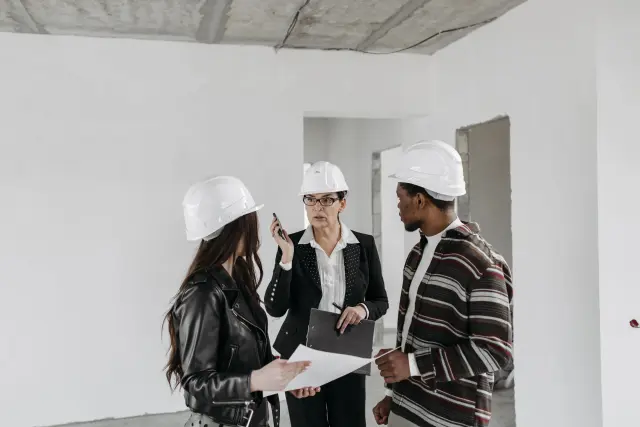
Community-driven models of housing are essentially based on resident committees: organized groups of future or present residents who are actively engaged in planning, implementation, and management.
These committees
offer a systematic process through which the community's voice can be used to
shape the outcomes of the project. Their contribution can fundamentally change
the manner of designing, governing, and maintaining housing projects as opposed
to being symbolic. Resident committees assist in determining the local
priorities, tracking progress, conflict resolution, and sustaining
accountability on all levels of development.
Knowing Community-Driven Housing Models
The community-based housing models are established on the fact that people should play a significant role in determining the places they are living. Contrary to traditional patterns of housing development, where governments, developers, or outside consultants are the highest authorities, community-based initiatives allow residents to become co-creators.
Such change
in power structure has far-reaching consequences on the success of projects.
The working components of such models are resident committees, which turn
overall communal interests into mass action and divisive discussion.
In most of the unsuccessful housing projects planners end up taking assumptions on what the residents require without having complete knowledge of the local context. This gap is filled by community-based models which involve the incorporation of resident knowledge into the planning.
The
input of the households is collected by resident committees whose members
respond to the diverse views and ensure that cultural norms, family setups, and
livelihood patterns are incorporated into housing designs. Such alignment
minimizes the chances of having unused areas, unsuitable designs, or facilities
that the residents are not in a position to take care of.
The other distinguishing characteristic of community-driven housing is common responsibility. Resident committees do not just exist as consultations but in many cases they are involved in decision-making which touches on budgeting, contractor selection, timelines and occupancy regulations.
This co-ownership leads to a higher level of emotional and
practical commitment by residents towards the project. By making individuals feel accountable to the outcomes, they would tend to defend the
resources available, report issues at the earliest, and collaborate at the
development stages of difficult moments.
Community-based housing also promotes flexibility. Work on projects hardly goes according to plan, and top-down systems are not always effective in addressing unforeseen obstacles.
The resident committees
offer a versatile feedback process, so that modifications can be made depending on the community's real-time experience. Be it design defects,
financial exigencies or social frictions, committees provide solutions that are
based on lived reality and not based on the abstract planning models.
Community driven housing builds a base of trust, relevance
and resilience through the institutionalization of participation by resident
committees. Those traits will greatly decrease the chances of failure because
housing will cease to be a singular construction project and a long-term social
ecosystem.
Role of Resident Committees in Participatory Planning.
One of the most important phases in any housing project is participatory planning and this is also where most projects fail. Projects, without the inclusion of residents in the planning process, tend to ignore the realities of everyday living like the size of a dwelling, access requirements, informal economic activities and social interaction patterns.
Resident
committees solve this dilemma directly through making sure that the planning is
based on the opinions of the people that will inhabit the development.
The resident committees are structured representatives of the community; hence, participation is organized and not chaotic. The committees use meetings, surveys and workshops to gather community feedback and put it into apparent priorities.
The process minimizes the misconceptions
between the residents and the planners and makes sure that the expectations are
realistic and common. When community consensus is incorporated in the plans, it
will become much better when it comes to resistance and dissatisfaction at
later stages.
The other important input of the resident committees is the balancing of different interests. The societies are never homogenous and opposing needs may pull projects back unless solved at an initial stage.
The
committees offer a negotiation platform, which assists in sorting out issues
associated with unit assignments, common area, or service allocation. Through
the resolution of these problems in the planning, these committees avert
conflicts that can arise in the building or occupation period.
Technical decision-making is also enhanced by participatory planning by use of resident committees. Residents are not architects or engineers, but they have a great level of contextual knowledge.
The committees
are able to spot environmental risks or seasonal challenges or gaps in
infrastructure that cannot be detected by the outsourced experts. This local
intelligence improves resilience in the design and minimizes expensive
redesigning later in the project life cycle.
Above all, participatory planning develops legitimacy. Increasing chances to adhere to the agreed rules and support the project, the residents feel that their ideas can be represented in the final plans.
This
legitimacy will be translated into the easier execution, reduced disruptions,
and enhanced collaboration with developers and authorities. Through the
involvement of communities in planning, resident committees reduce the chances
of misalignment and mistrust that lead to project failure significantly.
Enhancing Accountability and Transparency through Resident Oversight
Poor accountability and lack of transparency are some of the greatest contributors of housing projects failure. The lack of control, vague roles and lax supervision usually results in missing deadlines, excesses and poor quality.
The role of resident committees in resolving these risks is very
significant since the committees are community based supervisory bodies that
look into the project processes and decision-making.
The information is more open when residents are structured in committees. Budgets, timeframes, and contractual solutions could be disseminated and discussed with the representatives of the community and suspicion and misinformation would be minimized.
This openness will stop
corruption activities and will make sure that the resources are utilized in
their purposes. The developers and those in charge have more chances to keep
promises when they observe knowledgeable citizens eager to monitor any progress.
Accountability is also created through resident committees that provide avenues of feedback and complaints. Rather than having individual residents bring issues forward in isolation, groups of people form committees and submit issues to them formally.
Such organised involvement will complicate the process by which issues are swept under the carpet and simplify the process of taking corrective measures. Small
problems like bad workmanship
or lack of materials can be identified early enough before they can turn into
crisis affecting the entire project.
Another dimension which resident committees contribute to, is financial oversight. With community-based models, committees can be involved in budget reviews or they can say yes to some spending.
Their access to funds
even in a case that they are not in direct control adds to the scrutiny and
minimizes chances of abuse. This financial prudence is especially critical in
the publicly funded or donor-funded housing projects, where accountability is
paramount to long-term plausibility.
Transparency as well empowers the trust of the residents themselves. Rumors and conflicts are reduced when the members in the committees talk freely concerning the decisions made, and problems faced.
This trust is
internal and helps in solving problems collectively and strengthening the
determination of the community to the success of the project. Resident
committees facilitate accountability and transparency in different levels to
ensure that housing projects are maintained on schedule and they produce results
as promised.
Improving Construction Quality and Project Management
The quality of construction is a final determinant of the success of housing projects over a long period of time, but it is often undermined by poor supervision, cost reduction, or misunderstanding.
Resident
committees also play an important role in enhancing quality of construction by
providing another level of monitoring and feedback that occurs at the
construction stage.
The residents are directly interested in the construction developments and they are therefore the highly motivated as far as construction results are concerned. Constructions can be checked regularly and defects reported by committees and it is important to check that construction should always be in line with the approved plans.
This is because they ensure that the
contractors at the site avoid negligence and shortcuts since they know that the
future occupants are closely monitoring the work done. This unofficial but
regular check-up supplements official checks on the part of engineers and the
authority.
The resident committee is also an advantage to project management. Construction projects have a lot of logistical problems such as access problems, material problems, or coordination problems.
Resident
committees may offer solutions grounded on local knowledge, including finding
other ways of accessing the location or timing the construction project with
community activities. Such co-operation decreases interruptions and enhances
efficiency.
Another area that the committees are crucial is communication between the residents and revivalists. Construction is bound to create an impact in the day to day lives due to noise, dust and limited access.
The committees are used to manage expectations, by clarifying the timelines and
deal with concerns, so that tensions would not turn to protests or work
stoppage. Such mediation leads to the smooth process of construction and
safeguards the project schedules.
Quality assurance is not only physical structures but also
physical properties like utilities and common spaces. The resident committees
demand efficient water systems, adequate drainage and quality materials since
they understand that poor infrastructure causes maintenance problems in the
long term. Committees help in keeping housing well-built by demanding standards
that represent lived experience.
By actively participating in construction supervising and
project management, resident committees minimize the chances of structural
faults, project delays, and resistance by the community- the main factors that
make housing projects to fail.
Increasing Social Cohesion and Community Ownership
Housing projects are not isolated but build new social spaces
that have to work together to be successful. Lack of social integration is one
of the most ignored causes of housing failure that may result in conflict,
neglect, and subsequent deterioration. The resident committees are critical
towards building the social cohesion and creation of a sense of collective
ownership.
The committees provide an avenue of interacting and
collaborating even prior to construction because these committees bring people
together due to similarities of purpose. Such initial relationships foster
trust and acquaintances which alleviate social tensions when individuals
relocate. In a case of knowing each other and working together, residents will
tend to solve conflicts amicably and embrace group projects.
Participation is closely associated with community
ownership. By giving their time, ideas, and effort with the help of committees,
the residents will form a closer attachment to a project. This ownership will
promote responsible actions, including taking care of common areas, community
laws, and safeguarding infrastructure. Projects that the community owns highly
are less susceptible to vandalism, neglect and abuse.
The resident committees are also useful in ensuring the
setting of norms and values that inform the life of the community. Expectations
regarding cleanliness, noise, common facilities, and conflict management can be
established through talks and agreements of the committees. Such social
structures offer stability and predictability which are vital in long-term
habitability.
Resilience is also brought about by social cohesion. Strong
internal networks in communities make them more capable of managing such
problems as economic hardship, natural disasters or changes in governance. The
resident committees are the coordination centers during crises that mobilize resources and information in a short period. This group's ability
minimizes the project failure risks during stress.
Resident committees help resident developments become
operating communities instead of being disjointed collections of structures
because they foster social connections and collective responsibility. This
social basis is a strong defense against failure.
Policy Support and Institutional Recognition of Resident Committees
Although resident committees are said to be potent
instruments, they are enhanced when they are backed by policy and institutional
acknowledgement. When community participation is not formal, random, and
unacknowledged by authorities, housing projects are likely to become failed.
The status of resident committees is formalized moving them into formal project
structures and enhancing their power and authority.
The policy support may require that the residents are
involved in major phases of the project whereby committees are utilized in
planning, implementation and control. These policies ensure that the voices of
a community are not marginalized in case of times when time is of the essence
or when there are clashes. Roles and responsibilities are also clearly defined,
and this eliminates confusion and power struggles.
Resident committees can get access to institutional
recognition, resources, training, and technical assistance. With the help of
the capacity-building programs, committees can better interact with
professionals and address complicated problems. This also helps to improve the
quality of participation and loosen the chances of tokenism.
Coordination among the stakeholders also enhances through
formal recognition. In cases where the resident committees are recognized as
legitimate partners, the communication between them and developers, local
governments and service providers is more structured and productive. This
integration minimizes delays and misunderstanding which in most cases add up to
the project failure.
Notably, there is inclusivity that is achieved through
policy support. Frameworks may demand the use of committees to represent
various groups of people, such as women, youth, and marginalized groups.
Inclusive representation enhances power in the decision making process and
eliminates the elite capture, which may lead to a decline in trust in the
community.
Housing projects also enjoy a consistent and empowered
participation by incorporating resident committees into supportive
institutional structures. Such correspondence between policy structure and
community action is a necessity to minimize the failure and scale-up successful
models of community-driven housing models.
Conclusion
The concept of community-driven housing is a complete alteration of the way housing initiatives are developed and provided. The involvement of the residents in making decisions through structured committees makes the projects more responsive, transparent and resilient.
Resident
committees decrease the failure of projects by increasing accuracy of planning, accountability, quality of construction, risk of financial nature,
social cohesion and long-term governance.
Resident participation is a strategic investment and not an
extra burden or waste of time. Committees introduce local information,
collective responsibility and sustained supervision which can never be achieved
by an outsider. Their participation makes housing initiatives less frail,
top-down initiatives into life-giving systems which the people they cater to
uphold.
The experience of community-driven housing becomes more and more applicable as housing issues are becoming bigger and more complex. Giving resident committees power is not a participatory ideal, but it is a viable answer to continued project failure. Housing projects have a much better chance of success, survival and even being their home when communities are trusted as partners
Also read: Community Land Trusts Blended with Adu's for Affordability





-3dkuLgKhRD.jpg)
-49HupTvwDD.jpg)










LEAVE A REPLY