

Pakistan is on the frontlines of climatic vulnerability and
there is a shifting pattern of events of extreme weather events, which
disproportionately affect the most disadvantaged groups in the country. Since
the super floods of 2010 to the historic monsoon catastrophe of 2022 which
engulfed a third of the country, climate change ceased to be a concern in the
far-off future and became a reality that millions of people live in, which
affects the way they survive, recover, and envision their future. The geography
of the country, being glacial highlands, arid plains, as well as densely
populated river basins, makes the country very vulnerable to climate shocks
that are characterised by heat waves, irregular rainfalls, deep-seated
droughts, stronger monsoons, and floods that are more unpredictable. In these
transformations, the issue of housing becomes the place of vulnerability and
the essential way of staying strong. Pakistan has a population of close to half
which is living in deplorable houses-mud houses, slums, crammed offices or
buildings that cannot withstand the climatic pressures. These high
vulnerability homes are also most likely to be the first to fall down and the
last to be erected when disaster occurs, further breeding poverty cycles,
displacement, and insecurity.
Climate resilience is no longer affordable on its own, but
rather inextricably linked to affordable housing, which is already a burning
socioeconomic issue. It has become a necessity to design homes which are safe,
low-cost and able to withstand environmental extremes so as safeguard the
communities and cut down on the daunting economic losses which are incurred
each year in terms of disaster recovery. Affordability and climate resilience
are of particular interest in the case of Pakistan and its low-income
population, which lives on the marginal land, riverbanks, floodplains,
unregistered urban settlements, and drought-prone rural belts where exposure to
climatic risks is most significant. Culturally based traditional building
methods are becoming overstretched in new climatic conditions, and modern
construction is either unaffordable or improper to the environment. This leaves
a very sharp gap that must be packed with climate-resilient affordable housing:
solutions which are not only protective, but also long-term, culturally
relevant, economically feasible, and applicable to many areas.
It has been established that the future of climate-resilient
affordable housing in Pakistan can be discussed in terms of six main
dimensions: the structural vulnerability of existing housing, the design
solutions to the floods, heat, and monsoon intensity; the significance of local
materials and community-based models; the role of governance and policy; the
technological and architectural innovation; the socioeconomic impacts that make
the resilience not a building mandate, but a development one.
Getting to know about
Housing Vulnerability in a Changing Climate in Pakistan
The inequalities in the housing stock of Pakistan are
characterized by the fact that they precondition the ability of communities to
endure a climate disaster and their failure as soon as the pressure of any
environmental factor surpasses. Structural inadequacy is the first stage
towards vulnerability: millions of homes are constructed in an informal way,
without foundations or reinforcement and without standardized material. In the
rural areas, mud houses or adobe form the majority since they are cheap and
known culturally, but they trap water easily and are disastrous in the case of
being left to withstand the monsoon rains. The 2022 floods that were a disaster
made this weakness very clear: more than two million houses were ruined or
demolished, and people could lose their belongings within several minutes. To
families who had saved years of building simple houses using mud walls, the
damages were not just material, but emotional, and generational.
Urban areas have another form of it. The rapid urbanization
and the lack of affordable housing is what has pushed low-income families to
informal settlements or katchi abadis on the river embankments, drainage
systems, or reclaimed wetlands. The locations provide access to opportunities
but put people directly at risk of harm in case storm water gluts, sewer
overruns, or flash floods take place. Climate change increases the severity of
these risks by increasing the intensity of rain events and dumping old drainage
systems. In such cities as Karachi and Lahore, now monsoon floods have become
an annual crisis pattern revealing the vulnerability of both the housing
systems and urban planning systems.
The second significant vulnerability dimension is heat.
Pakistan is habitually ranked as one of the hottest nations in the globe, and
intense heat waves, which are higher than 50 o C have been an increasing trend.
The worst hit are poor families that stay in tin-roof houses, poorly ventilated
brick rooms or overcrowded rental units. The trapped heat combined with
inadequate insulation and absence of shading furnishes deadly indoor
temperature. Climate-inappropriate housing increases heat-related deaths, lost
productivity and diseases in the communities. Outdoor workers, children and the
elderly experience acute health risks when their houses are not able to give
them thermal comfort in their home.
Climate vulnerability is also aggravated by material
poverty. Poor families tend to construct on a resources base that they can
afford- old bricks, found wood, tarpaulin sheets and, thus, their houses may
last a month but not a century. Constant patterns of destruction and
reconstruction confine families in a chronic state of instability that consumes
savings that otherwise support the development of education, healthcare, or
livelihood. Women and children bear the social burden of displacement, disease
and lost education in disproportionate numbers.
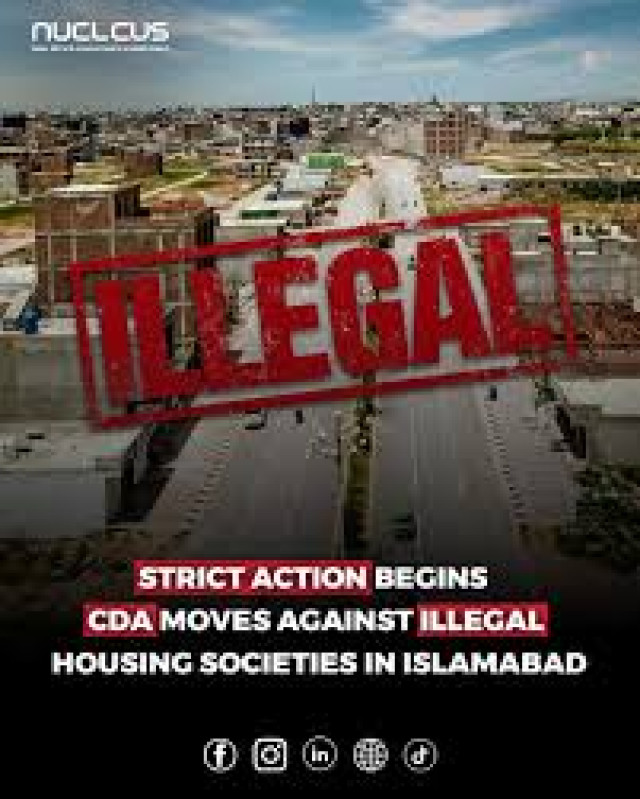
The other vulnerability that is silent yet critical is land
tenure. Most informal settlements have no legal safeguards and the residents
have no access to government assistance or provision of bank funds or
development of infrastructure. Their residence is still technically illegal,
unplanned and unregulated, establishing fissures of extreme weather hazard. Not
only the environmental risks but the legal position of the community itself has
to be met whenever there is a move to upgrade or rebuild.
The households also do not have access to valid information
on climate risks. The early warning systems do not always reach remote or
illiterate people depriving them of the knowledge to strengthen their homes,
safely evacuate, or stock up on emergency supplies. Also cultural practices,
including confinement of livestock in the home, storing of grain in places
where people live, or constructing extended family structures upward without
adequate reinforcement, may increase susceptibility in floods or storms.
In general, the housing vulnerability in Pakistan is a
compounded fact, which consists of environmental vulnerability, poverty, poor
construction, ineffective regulations, and insufficient institutional support.
These issues cannot be solved by mere construction of better houses, but by
reconsidering the manner in which people design settlements, select building
materials, shape their houses and exchange climatic data. The concept of
climate-resilient affordable housing, thus, should not be viewed as a luxury or
a niche area of architectural design representation but a pillar of climate
justice and sustainable development in Pakistan.
Planning
Water-Stressed Flood-Resistant Town Houses
Floods are the most devastating and repetitive climate risk
in Pakistan, especially in areas situated around the Indus River Basin and
other low-lying plains as well as the agricultural belts that are dependent on
the monsoons. Constructing homes that are flood resistant is necessary in order
to avoid disastrous losses. The initial guideline of flood resistant design is
elevation. Plinth building of houses, be it with earthen, brick, or concrete,
can greatly ease the destruction. The customary raised houses that were
prevalent in riverine regions are slowly becoming extinct as a result of the
limitation of costs yet the concept of raised-floor construction with recent
engineering can provide the solution of affordability and longevity. As an
example, even isolated simple plinths about 2 4 feet above ground level would
allow moderate floods to pass without entering the premises.
It is also important to have the foundational stability.
Most rural houses collapse due to the fact that they are lying on bare soil
without compacted foundations. Better foundation techniques by using stabilized
earth or lime or bamboo reinforcement can give structures that withstand
erosion as well as long soaking. When processed to be durable, bamboo is both
flexible and strong which allows the structures to stand the lateral force of
floodwater. In coastal and delta areas such as the Keti Bunder in Sindh where
the soil is saline, other foundation material is becoming increasingly
significant, such as cement-stabilised blocks or prefabricated footing.
Homes are also said to be resistant to floods depending on
their shape and structure. The circular or polygonal houses are more even in
terms of water pressure compared to the rectangular houses hence the level of
collapsing of the wall is reduced. In the meantime, the upper structures (made
of treated bamboo, wood or fiber-reinforced panel) can be lightweight to permit
the waters to move through them without destroying the base. Openings in
ventilation and breakaway panels may release a high intensity flood of water
before catastrophic structural collapse.
Durability depends on the choice of materials. Conventional
adobe walls can cripple when wet, but stabilized compressed earth blocks (CEBs)
combined with either lime or cement are cost effective and do not lose cultural
understanding and offer greater water resistance. Where there is a high level
of dampness, the use of hybrid wall systems can be used to ensure protection in
such areas, but the cost remains affordable when CEB bases are used with
lighter upper materials. Fired bricks, stone or reed mats that are locally
available can be developed using methods that help in inhibiting cracking,
erosion or growth of molds.
The design of roof also helps in flood resilience. The
sloping roofs are also useful in draining rain, as the structure does not
require a lot of weight in case of heavy downpours in the monsoon season.
Stronger roofing sheets are used, which is anchored using windproof fixtures to
ensure that the roofs cannot be torn off by the storms. Small lofts within the
house are a safe place to store the belongings in case of flood where the most
important things like documents, seeds, medicines are saved.
Flood resilient homes are enhanced at the community level.
Community centers are elevated, storm shelters are shared, water are raised
higher, and sanitation systems are secured such that the resilience of housing
is a life-saving measure to whole villages. When the ground supplies
contaminate, rainwater harvesting channels constructed at elevated levels are
capable of supplying clean water.
The key issue is affordability. Prototypes of low-cost
involving raised plinth, stabilized earth wall, bamboo truss and modular
roofing designs are less expensive than other traditional rebuild cycles. NGOs
have proven that communities could build flood resistant houses with local
labor boasting of proper training thereby making them less reliant on outside
contractors. The role of women in construction activities, both as masons,
plasterers, or supervisors, contributes to the social resilience and also makes
sure that the homes are built in accordance with the home demands.
Policy, Innovation
& Governance Pathways for Scaling Resilient Housing Nationwide
To make climate-resilient housing a national fact and not a
scattered system of pilot projects, Pakistan needs effective governance,
enabling policies and innovative funding programs. Resilience in housing should
be seen as an investment in national security, economic stability and welfare
of the people.
Policies policy-wise must be urgently modernized in terms of
building codes. The current policies tend to address urban and formal
construction but do not address rural and informal settlements where most of
the damage caused by climate is witnessed. National and provincial housing
codes should incorporate climate adaptation criteria including high plinths,
waterproof surfaces and ventilation measures. The enforcement should, however,
be flexible to its local situations and income levels.
Climate resilience should be given priority in government
housing schemes such as low-cost housing schemes. Adoption can be hastened by
subsidies of materials that are climate-friendly and tax incentives of
resilient construction as well as grants to retrofit vulnerable homes.
Rebuilding in the post-disaster state should be based on the principles of
build back better as opposed to recreation of the homes prone to future
disasters.
The local governments should be at the center of it.
Decentralized planning will enable districts and municipalities to design
housing solutions to local hazards. As an illustration, flood prone regions
should have elevation standards and heatwave prone regions should have
guidelines, which are more centered on cooling. Local officials, engineers, and
masons are also handled through capacity-building programs to make sure that it
is effectively implemented.
Housing resilience can be changed through innovation.
Prefabrication is cheap, 3D-printed housing parts and modular construction may
be fast and efficient. Digital mapping aids in finding the areas that are at
risk, land-use planning, and settlement relocation. Settlement planning should
be informed by GIS-based hazard assessments to deter the construction in
hazardous floodplain or unstable land.
Financing is a major barrier. Even when families know the
importance of resilient construction, most of them simply cannot afford it.
Microfinance schemes supported by the government, insurance schemes that are
designed to meet the low-income households, and climate funds offered by international
partners can be of the necessary support. Insurance of housing, which is
virtually absent in Pakistan, should be increased to ensure that vulnerable
families do not suffer economic devastation in the case of disasters.
Innovation can be expedited through the use of
public-private partnerships (PPP). Building companies, tech companies,
organizations that produce materials, and non-governmental organizations can
work together on scalable prototypes that would integrate resiliency and
affordability. Universities and research institutions are able to design and
produce context-specific designs and materials that are in line with the
climate of Pakistan.
Government needs the involvement of the people. When the
policies are developed without involving locals, they do not win the trust of
the locals. Resident participation in planning, design and monitoring creates
ownership and makes the solutions culturally suitable. An additional important
area where leadership in women should be given priority is the fact that, women
are the major decision makers in the household management, and they are mostly
the first respond to climate crisis.
Lastly, there should be governance on land tenure. Families
must have secure land rights in order to invest in resilient housing. The
vulnerability cycle can be broken through legalization of informal settlements,
planned move-out of the high-risk areas, and clear-cut land allocation
policies. Even the most innovative housing programs will not work without the
security of land.
Conclusion
It is not just that climate-resilient affordable housing is
an architectural dream of Pakistan but it is a nationalism that has to be
structured according to the realities of floods, extreme heat, and
unpredictable monsoons. With the growing impact of climate change, the most
vulnerable people still end up bearing the highest cost in terms of loss of
lives, destruction of livelihood, and recurrent displacement cycles in the
community. This blog has discussed how housing vulnerability in Pakistan can be
caused by inappropriate structures, poverty, bad governance, and exposure to
the environment and how re-modeled, strong housing can eliminate this vile
cycle.
Solutions exist. Through adopting flood-, heat-, and
monsoon-resilient, relying on local materials and empowering community-based
models, as well as enhancing the policy frameworks, Pakistan will be able to
create homes that can save instead of harm people. Climate-resistant houses
minimize the losses during disasters, enhance health, empower the local
economies, and foster social dignity. It is in line with environmental
sustainability as well as economic justice.
The way ahead needs to be shared: government policies that
focus on resilience, architects and engineers that innovate in a responsible
manner, communities that are engaged, and financial institutions that promote
inclusive growth. It is only through this kind of cooperation that Pakistan
will be able to build a housing ecosystem that is resistant to the changes of
the climate in the future.
Ultimately, climate-resilient housing is not a technical
solution, but it is a guarantee of safety, stability, and hope to millions of
people. It is the basis with the help of which Pakistan will be able to create
a more sustainable, equitable, and climate-safe future.






-shtTqaPktk.jfif)




LEAVE A REPLY