

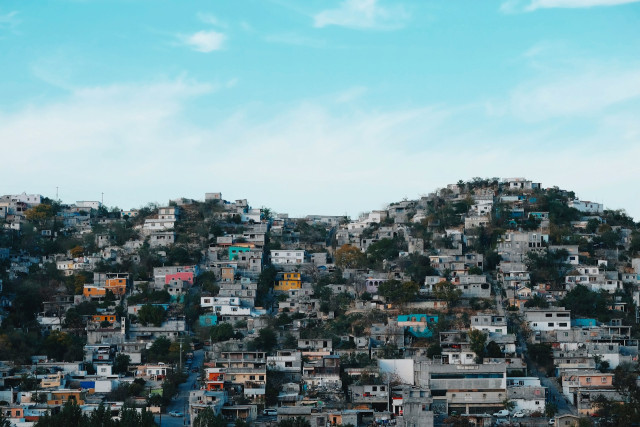
Ciudad Bolivar Bogota Slum and its History
The southern part of Bogotá named Ciudad Bolívar exists as an area where conditions sharply vary from one to another.
The district experiences severe economic challenges but maintains well-known social resistance together with advancement-oriented thinking.
This urban district of Bogota now represents one of its largest diverse neighborhoods following a history that included both rural inhabitants and rapid expansion and periods of internal conflict.
The settlement of Ciudad Bolívar began when families who were displaced came to find better opportunities and it has since transformed into a packed urban territory.
The district’s rapid expansion produced various difficulties which include poverty rates combined with inadequate infrastructure and restricted access to healthcare along with education and sanitation.
In the face of enormous hurdles the community members strive toward progress with both grassroots projects and local development initiatives.
The blog examines Ciudad Bolívar's historical growth together with details about what residents currently endure in the community.
The paper discusses both the meaningful works of local community organizations as they lift their residents and explains Bogotá's forthcoming growth plans to better incorporate Ciudad Bolívar into the city's wider metropolitan structure.
Origins and Growth of Ciudad Bolívar
The expansion of Ciudad Bolívar became possible because of the established urbanization methods that developed throughout Colombia.
During the middle part of the 20th century Colombia witnessed extensive rural migration caused by violent conditions in countryside regions while people sought better economic chances inside cities.
The number of displaced people directed to Bogotá as Colombia’s capital city led to an increase in informal communities throughout the city.
During the 1950s and 1960s rural people migrated to settle in the Bogotá outskirts and created the city of Ciudad Bolívar.
Before it took shape the area remained without even simple necessities such as roads and electricity together with facilities for sanitation.
The residents constructed homes haphazardly with available materials they could find. Lack of urban planning caused uncontrolled urban sprawl of neighborhoods because developing steep sloping land proved especially hard.
During the 1980s and 1990s Ciudad Bolívar experienced rapid growth to become one of Bogotá’s largest districts with extremely dense population distribution.
Official city incorporation of the area led to inadequate service availability while basic facilities remained behind those of other Bogota districts.
The government progressed slowly in housing reform and infrastructure development which compelled residents to implement neighborhood construction through community organizations.
The area became a thriving neighborhood despite challenges where inhabitants brought their cultures through spoken languages and strong spirit to the area.
All types of people dwell in the district today which forms an essential part of its identity.
Challenges Facing Ciudad Bolívar
The city of Ciudad Bolívar has endured multiple generations of social and economic as well as infrastructure difficulties.
Even though progress has happened, the district maintains high levels of poverty together with unemployment issues and security risks.
The biggest struggle Ciudad Bolívar faces at present is poverty. Residents from Ciudad Bolívar sustain themselves through informal employment types such as vending and small businesses as well as manual labor activities.
The unstable nature of employment access prevents families from securing fundamental requirements including housing, healthcare along with education.
Poor residents of Ciudad Bolívar experience severe economic disadvantages compared to those who live in more prosperous regions of Bogotá thus exposing the vast inequalities that exist in the city.
Violence along with crime have proven to be constant problems throughout the city.
Gang presence along with drug cartels and criminal organizations discovered their foothold in Ciudad Bolívar because of its history of population movement and societal exclusion.
Security improvements from local authorities have proven insufficient to prevent young people from turning towards criminal behavior due to the lack of available opportunities.
Several community organizations continue to offer educational and sports activities along with social programs that serve as alternatives to improper behavior.
Quality healthcare together with quality education continues to pose significant difficulties for residents in Ciudad Bolívar.
The inadequate funding along with high enrollment causes public schools across Ciudad Bolívar to serve few students without proper educational resources.
Healthcare facilities fail to administer sufficient services because high patient need meets insufficient funding capabilities.
The obstacles obstruct the way for residents who wish to escape poverty while seeking better living situations.
The infrastructure of Ciudad Bolívar has made progress since its establishment although major parts of the district require proper roadways combined with structured public transportation and adequate sanitation facilities.
The district's mountains create barriers during construction work while unregulated housing growth spreads across the area because of absent urban planning processes.
New developments in the TransMilenio system have boosted connectivity between Ciudad Bolívar and Bogota however the district requires added funding to achieve complete network integration.
Community Initiatives and Resilience
The residents of Ciudad Bolívar possess incredible abilities to face challenges head-on.
Community groups together with grassroots organizations have effectively improved residential standards across the community as they break down social isolation while enabling residents to take control of their lives.
Education along with youth programs establish themselves as one of the major successful initiatives within community action.
Residents can access better opportunities by joining after-school programs and receiving scholarships as well as vocational training which are both offered by local community organizations in Ciudad Bolívar.
Children and teenagers access cultural activities and sports training and leadership development through community centers established by non-profit groups along with religious organizations.
The district of Ciudad Bolívar uses art together with cultural practices as effective Agency for societal transformation.
Residents utilize street artwork, musical performing arts and theatrical entertainments to express how they feel and display their district heritage while fighting past misconceptions about their community.
Through graffiti and murals public spaces have experienced a transformation which created animated displays of neighborhood personality along with artistic expression.
The construction of community resilience through grassroots activism plays an important role in its development.
Local residents have started various groups that work together to pressure authorities for enhanced public services and better security while demanding economic development possibilities.
Social transformation in Ciudad Bolívar depends on the tireless efforts of women's groups together with neighborhood associations and youth-led organizations who focus on domestic violence reduction as well as education equality maintenance while fighting for environmental sustainability.
Local communities have launched three noteworthy programs such as urban gardening projects and cooperative businesses which support local markets to foster entrepreneurship.
Different initiatives developed economic possibilities and enhanced food security for families who reside in Ciudad Bolívar.
The development of El Mirador de la Estrella cable car system stands as one of the most inspiring projects in recent years because it connects Ciudad Bolívar to the rest of Bogotá.
The transportation system appears to have cut down travel duration between locations making job and service access more convenient.
Ciudad Bolivar benefits from the cable car as both a transportation advancement and a representation of inclusive development.

The Future of Ciudad Bolívar: Development and Hope
The development of Ciudad Bolívar depends on successive financial investments together with official government strategies and community-determined development initiatives.
Progressive indications throughout the district bring optimism for an improved tomorrow despite its ongoing problems.
The optimal development of Ciudad Bolívar depends heavily on proper urban planning practices. The transformation of the district depends heavily on making housing accessible while upgrading public areas together with developing infrastructure.
Government initiatives devoted to formalizing slums alongside infrastructure enhancements constitute essential methods for delivering basic services to all people who live there.
The development of Ciudad Bolívar into its future form will heavily depend on investment in education.
Investing in quality education from schools to vocational training and higher education will enable young individuals to escape poverty.
The job market transformation in Bogota requires additional technological investments which will provide residents with needed digital competencies.
The district can establish sustainable income opportunities through economic initiatives which focus on small business aid programs and entrepreneurship training.
Investment in local businesses alongside cooperative development initiatives will establish economic growth in Ciudad Bolívar thus reducing casual employment.
Improving safety measures represent essential requirements for Ciudad Bolivar's development path.
A reduction of violence in the community along with safer living conditions for residents will happen through investments in crime prevention programs and community policing and additional youth opportunities.
To develop Ciudad Bolívar into a successful future all parties including residents and both government agencies and private organizations need to work together.
The municipal authorities and residents of Ciudad Bolívar can create an exemplary model of urban development through appropriate policies while sustaining community participation.
The Role of Migration in Shaping Ciudad Bolívar
Thousands of people originating from rural territories and other parts of Colombia migrated to Ciudad Bolívar during multiple decades.
The continuous migration has left a major imprint on Ciudad Bolévar's population statistics and economic structure alongside its traditional heritage.
The expansion of Ciudad Bolívar resulted mainly from three main factors: violence, poverty and improved possibilities.
Rural-Urban Migration and Displacement
The middle part of the twentieth century brought extensive violence across Colombia that stemmed from La Violencia (the Liberal-Conservative civil conflict) as well as battles between the FARC and ELN guerrilla groups.
Numerous rural households were compelled to abandon their houses because of violent conflicts. The country's economic hub-capital Bogotá received many displaced families from all parts of Colombia.
The arrival of many migrants in Bogotá happened under difficult circumstances because housing opportunities were limited.
The uncontrolled growth of homes in Ciudad Bolívar started when residents built humble shelters in what had previously been an inexpensive and untamed urban perimeter of the city.
Informal settlements popped up throughout the years becoming rapidly larger since they lacked urban planning together with basic sanitation services and essential infrastructure.
Economic Migration and the Informal Economy
The violence that occurred in Colombia forced many people from their homes but Ciudad Bolívar developed into a residential area for individuals who moved there for work opportunities.
The city received populations from countryside areas because their traditional farming and agricultural practices had become unprofitable.
The residents who migrated from smaller towns came because unemployment and minimal opportunities drove them toward employment possibilities in Bogotá.
The swift unexpected growth pattern of Ciudad Bolívar caused formal employment to remain extremely limited.
Most migrants forced themselves into work that paid in cash by working in construction, performing domestic chores and operating street vendors and small businesses.
The temporary jobs managed to generate money but failed to offer any security or fair compensation or social protections.
Cultural Diversity and Adaptation
The diverse population forms one of the main attractions of Ciudad Bolívar.
People from different regions throughout Colombia including Pacific coast residents Amazonians Andean peoples have chosen Ciudad Bolívar as their residence.
Every ethnical group that settled down there introduced its unique collection of customs and lifestyle conventions.
The combination of various cultural traditions in the area has formed a vibrant heritage which manifests through musical styles melody and food dishes festivals and artistic traditions.
The Afro-Colombian groups residing in Ciudad Bolívar introduced Pacific musical rhythms along with dance traditions from their region.
Native peoples have sustained many elements from their traditional heritage such as artisan techniques and garments as well as speaking their mother tongues.
The diverse population of Ciudad Bolivar fashioned its communal personality while building a distinctive social framework.
Challenges of Rapid Population Growth
Fast population expansion in Ciudad Bolívar presents multiple difficulties such as:
- The rising population exceeds the capacity of area infrastructure so multiple families hold residency in small living spaces.
- The heightened population demand has exceeded the capacity of public institutions to provide services at schools and hospitals and via public transportation.
- The construction of many residential properties in an informal manner resulted in dangerous building structures.
- The combination of financial difficulties with unmet opportunities leads to rising criminal activities across specific sections of the city.
The population growth through migration has also enabled Ciudad Bolívar to develop resilience as a city.
The new residents established their settlements through their ability to work along with their personal drive and cultural traditions to build shared identity and community spirit.
Innovative Solutions and Future Prospects for Ciudad Bolívar
The district shows both signs of progress beside its numerous difficulties because local community leaders implement innovative solutions.
Various initiatives from government programs and non-profit organizations together with local community support have improved both infrastructure and education facilities and living standards of residents in the area.
Urban Renewal and Housing Projects
The Colombian government runs settlement formalization and improvement programs across Ciudad Bolívar in order to tackle informal housing issues.
Some of these initiatives include:
- Many residents constructed their houses on land which they had no legal ownership rights to the property. Government programs execute title transfers for properties which provide citizens both legal possession rights and ability to obtain credit.
- Public facilities received vital improvements as the authorities developed new roads and drainage systems while designing public spaces.
- Government-supported definitions of affordable housing create public programs that supply residents with secure and inexpensive housing options.
The TransMiCable innovation represents Bogota's most influential infrastructure development as it provides aerial transportation between Ciudad Bolívar and the city's other districts.
The neighborhood lacked a proper connection to Bogota until the construction of the TransMiCable.
Through its implementation the cable car system provides faster transportation that allows residents to reach employment areas together with healthcare destinations and educational facilities.
Technological Advancements and Digital Inclusion
The advancement of technology has driven multiple organizations to work on digital inclusion projects throughout Ciudad Bolívar.
- Places known as Public Wi-Fi Zones have begun providing absolute internet access without cost to support students alongside workers who need network access.
- Digital Literacy Programs provide educational instruction to teach residents basic skills for computer usage and internet-based tasks to find jobs and pursue educational goals.
- The internet has enabled educational platforms to provide coding and business education opportunities and professional training for local youth population.
Public Transportation Improvements
Siembamba is not the only public transport advancement since Bogotá expanded its transit infrastructure to serve Ciudad Bolívar better.
The City has expanded TransMilenio bus system routes throughout Ciudad Bolivar which reduced travel times at lower transportation costs.
Future transportation projects include:
- The City of Ciudad Bolívar strives to upgrade all its road networks which lead to other parts of the district.
- More Bus Rapid Transit (BRT) Lines: Expanding fast and reliable public transport options.
- Safe bicycle paths together with eco-friendly promotion will foster cycling infrastructure throughout the city.
Sustainability and Environmental Projects
Fast-paced development of Ciudad Bolívar has introduced two major ecological difficulties which are forest depletion and improper disposal of waste.
Multiple environmental programs have been established to respond to this situation.
Conclusion
The city of Ciudad Bolívar demonstrates how its inhabitants retain their determination together with their creativity to show resilience.
The district holds onto a vibrant community bond because residents dedicate their collective efforts towards bettering their environment along with establishing new growth prospects.
Current poverty problems along with crime rates and poor infrastructure present barriers yet collective efforts between community-led and government-led organizations work toward brighter opportunities ahead.
The investments in education infrastructure and economic development will enable Ciudad Bolívar to emerge as a successful district within Bogotá.
History demonstrates both intense difficulties and positive prospects in the district which serves to show communities unify for building a better future even through adversity.
Also read: 10 Biggest Slums in the World: Understanding Urban Poverty










LEAVE A REPLY