

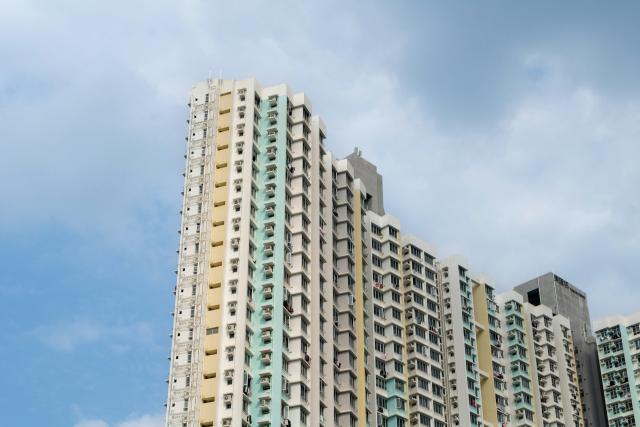
Challenges in Delivering Affordable Housing Amid Rising Construction Costs
Housing affordability is one of the most vexing worldwide problems in the 21st century. It is not just an economic issue, but one of deep social consequence that will affect untold millions of families seeking a path to stability, dignity and opportunity. A home is not just a roof over your head — it’s the foundation of healthy communities, social inclusion and human well-being. But around the world, this foundation is becoming more and more unaffordable for many. Escalating costs of construction have only made the problem even more challenging, and this gap between what people need for housing and the capacity to build that housing is widening.
Policymakers, developers and city planners have spent decades trying to bring affordable housing to cities through subsidies, public-private partnerships and land-use changes. Nevertheless there has been a run-up in building costs in recent years because of inflation, material scarcity, labor bottlenecks and gyrations in energy prices. These have fundamentally changed the mathematics of building houses. That which was possible only 10 years ago is today unworkable and involves more risk because many private players cannot take part in affordable projects.
Meanwhile urban populations are exploding. Cities continue to attract millions searching for better chances of earning a livelihood, getting an education and accessing services, but housing stock hasn’t kept up. The result; skyrocketing costs, slums expanding and gaps between people increasing. Rising construction costs have become a double-edged sword: National report More News New Canaan woman, 39, is latest death in coronavirus pandemic Stamford official and builder debated aloud whether to stop school work during the outbreak.
This blog post explores the challenges in providing affordable housing in an era of increasing construction costs. From raw material inflation and labor shortages to financing bottlenecks and regulatory inefficiencies, we’ll unpack the components that make affordability a moving target. Each section also offers insights on possible avenues forward—how innovation and collaboration, policy reforms can address these challenges.
Affordable housing is not a policy goal, but a societal one. Confronting the economic justifications for escalating construction costs is the first step to developing real solutions that work — not only for developers and investors, but also for millions of families who dream of having a home that they can afford.
Escalating Building Material Costs and the Implications for Affordability
She said one of the most pressing and visible obstacles to affordable housing provision is an unrelenting increase in construction material prices. To build a house in today’s market is much more costly than even five years ago, with the rise driven by disruptions to the global supply chain, inflationary pressures and high demand for raw materials. And the prices of things like cement, steel, aluminum, glass and timber have also spiked as they experience scarcity, higher transportation costs and trade restrictions.
For affordable housing developers, who work on razor-thin profit margins, even a slight change in material costs can be the difference between completing an entire project or not. When steel prices spike by 20 percent or cement is 15 percent more expensive, for example, those costs can’t be absorbed easily. Developers will either have to sacrifice quality, diminish the amount of units or pass on the cost to buyers — all having a negative impact on making housing more affordable.
The COVID-19 pandemic exposed the brittleness of global supply chains, as factory closures, shipping bottlenecks and lack of key materials caused a ripple effect in other industries. Those who suffer the most is the housing industry, working as it does on 'just in time' logistics systems was a very significant casualty. And even after the pandemic ends, there are still disruptions tied to geopolitical tensions, climate-related events and shifts in trade. For example, countries that rely on imported steel or construction aggregates are subject to such cost volatility that projects can be feasible one month and infeasible the next.
In addition, power costs quietly come into play. Processes such as cement production, steel manufacturing and material transportation require a lot of energy. When worldwide fuel prices spike, it also raises the global input cost of every building material. These unseen cost layers add up over the life of a project, taking the total cost well beyond original expectations.
In the emerging markets where affordable housing demand is greatest, the situation is exacerbated by a slide in currency and reliance on imports. For developers in markets with weaker currencies, import bills are rising, throwing the spotlight on locally produced, sustainable substitutes. But that supply of locally-sourced input materials, like recycled aggregates or eco-bricks that can be produced on-site, are still in a proto stage.
Some developers are resorting to innovation to deal with higher material prices. Prescient have proven prefabrication and modular materials can reduce waste, save time and value-engineer the project. These capabilities allow builders to fabricate parts in controlled conditions, reducing waste and rework. These approaches can be more expensive to set up initially, but the increased efficiencies and economies of scale rapidly pay for themselves.
In the end, rising construction material costs aren’t just an economic issue — it’s a social one. Each uptick in the price of building supplies moves affordable housing farther and farther out of reach for those who most need it. It is a problem that will only be solved through policymakers, industry and researchers working together to put resilience into our housing supply chain. There is a balance to be struck between cost-efficiency on the one hand, and sustainability, innovation and long-term strategic planning for future growth.
Land, Regulation, and the Urban Affordability Dilemma
As increasing costs of materials remain a significant barrier to affordable housing, the question of land is as — if not more — important. For most urban homes, land costs represent a substantial share of the overall cost of a dwelling, and in some cases can even account for 40 to 60 %. Urban land is so expensive because of all the other things governments demand from it that it’s almost impossible to build truly affordable housing right where we most want it: in city centers. Instead, many projects are shunted to the peripheries, cutting off residents from jobs, schools and health care and reinforcing cycles of inequality.
In Mumbai, London or New York land has become exorbitantly expensive because of a mix scarcity, investment speculation and restrictive ways we have zoned our cities. But when land is financialized and no longer socially available, the driving force behind its allocation moves from social needs to profit. Developers vie for a scarce number of parcels, increasing the price and making affordable housing infeasible without government subsidies or land grants.
Regulations are another layer of complication. Long approval processes, out-of-date building codes and inflexible zoning laws regularly delay housing projects, drive up costs and inhibit smaller developers from entering the market. For example, maximum building heights or limits on how densely land may be put to use can thwart the most efficient use of land in high-demand locations. Hell, even the best-intentioned shit to protect our environment ends up costing us when not accompanied by offsetting incentives or less-costly alternatives.
The irony, of course, is that while regulations are intended to maintain quality, safety and sustainability, many also introduce bottlenecks that constrain affordability. A lag of just a few weeks getting environmental clearance or land-use approval can lock up capital for months, even years, creating cash-flow headaches. Developers also must pay interest on loans and retain costs for labor and equipment, which are eventually passed along to buyers in the form of higher prices.
Land-use plans are often based on outdated colonial-era policy that does not recognize modern urban realities in many countries. Land titles are fragmented, records too old and ownership disputes frequent. This lack of clarity leaves investors in the dark and is strangling affordable housing development. Some cities have tried to tackle this by making land registries digital and using geographic information systems (GIS) to map, confirm and authenticate the landholdings. These changes not only reduce corruption and lawsuits, but also make the development process more predictable and efficient.
Public land is the crucial part of this equation. Given that most land in urban centers is owned by governments, a considerable amount of it remains under utilised or vacant. Strategically utilized for affordable housing, that land could bring project costs dramatically down. Agency inertia, politics and a lack of coordination between agencies often get in the way of putting land to good use. Good models—whether the HDB in Singapore or Vienna’s system of public land lease—are proof that state-directed land policies can reconcile affordability, quality and inclusiveness.
Innovative co-operations are coming to grips with the land-cost problem. Land pooling, in which a number of property owners collateralize their land to form a bigger development project with the guarantee of getting back a share of the developed land or proceeds. The method can save on investment cost and guarantee the fairness of performance absorption, which meanwhile realizes comprehensive planning. Inclusionary zoning, which requires a certain number of apartments in new buildings to be set aside for less affluent residents, is also one answer to making sure affordable housing is built into how cities grow.
The issue of urban affordability is not just a question of economics — it’s also about the right to the city. When working-class families are priced out of cities, the diversity, productivity and cultural vibrancy that make them great is stripped away. And even these who are right now deemed “essential” workers — be they teachers, nurses or delivery drivers, say — must travel long distances to work, increasing congestion and diminishing quality of life. Affordable housing, must therefore be considered a key piece of infrastructure alongside roads or public transport, and be treated as such in the land use planning process.

Labor Shortages and the Human Capital Challenge in Housing Construction
Land and material costs take center stage in discussions about housing affordability, but the construction industry’s labor crisis is just as significant — one that has an impact on the speed of affordable housing creation, as well as its cost. A scarcity of skilled workers, an aging workforce and unpredictable patterns of getting hired are raising the price and upending the system for delivering new housing.
In both developing nations and developed ones, the construction industry has become one of the most difficult to staff. Young men tend to shun it because wages are too low, safety standards are non-existent and hard physical labor is thought of as not very appealing compared with modern service jobs. This demographic transition alone has meant a near-continuous loss of skilled masons, plumbers, electricians and carpenters — the essential workforce to each unit of housing. Timelines stretch when you have fewer workers building, productivity declines and costs go up.
The pandemic has only exacerbated this crisis. Migrant laborers, who make up the bulk of construction workers in many countries, were among the hardest hit. In India, tens of thousands of construction laborers, for example, fled their construction sites during lockdowns for many months. And even after restrictions lifted, many had yet to return —whether out of health concerns or because they found better jobs elsewhere. Similar trends took place throughout Europe and North America, where aging workers would disappear from the labor force early on in their retirement years, while new entries to the work force failed to make up for their departure.
Labor scarcity only compounds affordability. For one, scarcity sends up wages, which increases project costs. Second, the absence of professional supervision causes low quality so after several years, it needs a high cost for repairing and maintenance. Third, when developers don't complete projects on time, financing costs rise, meaning they continue paying interest on the money they borrow and have to pay overhead. Such dual pressures frequently combine to push developers toward high-margin luxury projects, where there’s more cushion in higher prices to absorb the costs swings — instead of affordable housing.
But the issue is not just one of numbers — it’s also about who makes up the construction industry. Informal labor is, for the most part, still highly prevalent in all but a few markets. Workers are seldom trained, certified or insured, nor do they have access to secure contracts or social protections. This instability decreases motivation and productivity, and it inhibits the process of embracing new technologies that could make housing more efficient. Without human capital investments, our dream of affordable homes at scale is not fulfilled.
Technology also plays a role here, surely. Technologies such as prefabrication, 3D printing and modular concepts require less work on site but bring greater consistency to the build and faster construction. In both Japan and the United Arab Emirates, the construction period of prefab houses has been reduced by at least 50%. But implementing such technologies means retraining workers to use sophisticated equipment and work from digital blueprints, an investment that most small builders resist. Without public and private sectors coming together, these opportunities could fit into only to a small number of high-end projects.
In addition, it cannot only be about how to deal with labor challenges — it has to be about dignity and security. If we want projects like affordable housing to really represent social inclusion, they cannot be built upon exploited or under-paid labourers. Governments and developers should work to promote fair wage policies as well as safe working conditions, healthcare, and housing for the laborers constructing their projects. Ironically, the people who build homes for others often live in temporary, substandard shelters on site. And addressing this injustice is not just the right thing to do morally; it also makes good sense: happy and stable workers work harder and more consistently than those who are unhappy.
Conclusion: Reimagining the Path to Affordable Housing in a High-Cost Era
Building affordable housing in the face of rapidly rising construction costs is one of the more complicated policy and economic puzzles anyone could imagine. OMA/IMAGES — It lies at the nexus of material inflation, labor shortages, financing gaps and land scarcity — all exacerbated by a fast pace of urbanization and changing population trends. But beyond these economic and logistical difficulties is a more fundamental one: the question of how societies value shelter as a human right, not simply a market good.
The cost of building material like steel, cement, energy and logistics has gone up, as has the cost of skilled and semiskilled labor. Combined with global supply-chain disruptions and the shutdowns of the pandemic, it all makes homes dramatically more expensive to build than just a few years ago. And every percentage point increase in input costs pushes the dream of homeownership farther from reach for millions of low- and middle-income families. In such an environment where developers are stuck between cost pressures and affordability issues, they tend to withdraw to high-margin segments, with overhang in the affordable segment too low. Governments, meanwhile, have the unenviable task of attempting to balance incentives for developers and preservation for consumers.
But the affordability story is not just a tale of shortage — it’s also one of innovation and resilience. Around the globe, a new mindset is starting to influence policy and how we can provide homes. Modular construction, green building materials and digital project management are rewriting notions of how homes can be built faster, cleaner and more economically. In the pursuit of following their heart (and yet, still earning a living), various countries like Singapore, the Netherlands and India are actually trying out Public-Private Partnerships (PPPs) that harmonise social mission along with commercial efficiency. These examples show that even if the price tag rises, creativity can carry us over the cost chasm.
Also Read: A Review Of Low-Cost Housing Delivery In Port Harcourt: Issues And Challenges



-3dkuLgKhRD.jpg)
-49HupTvwDD.jpg)






LEAVE A REPLY