

The Challenge Of Upgrading Slums In Ghana: Can Public-Private Partnerships Deliver?
Urbanization is one of those most predominant trends of the
21 st century especially in the developing nations in Africa. Due to population
increase and economic opportunities being concentrated in urban centers,
millions of rural citizens relocate to urban areas in search of improved
livelihoods, education and healthcare. This trend is not an exception to Ghana.
In the recent past, the cities of Accra, Kumasi, and Takoradi have undergone
high urban growth. Although this expansion has helped in economic growth and
modernization, it has also posed some major problems to the urban planning and
housing systems.
Among the most urgent challenges that are related to the
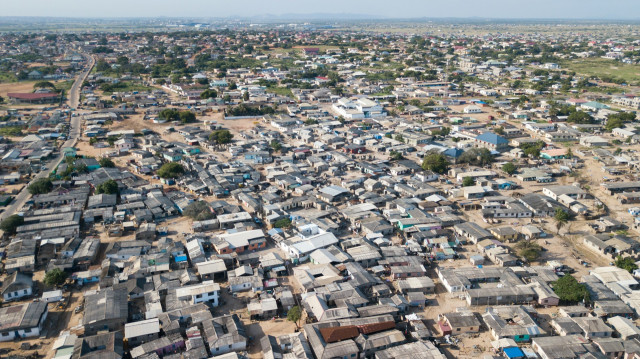
rapid urbanization in Ghana, the development of the informal settlements, often
referred to as slums, should be mentioned. Such communities are often marked by
crowded housing, poor sanitation, water supply, poor infrastructure as well as
poor access to basic public services. The people living in most of them do not
own the land they are living in legally, and hence they can easily be evicted
and cannot invest in the permanent housing developments.
The slums are usually perceived in the perspective of
poverty and city decay, yet they are also a symbol of resistance and
flexibility of communities that are trying to live in unfavorable conditions.
To a great extent, many residents provide contribution to the economy of the
city with informal business, trade, transportation and work. The communities
continue to be marginalized in the city planning processes despite their
contribution to the economy.
As a country, Ghana has also learnt to consider the problem
of slums as a major challenge to tackle by policy producers, development
agencies and planners. The conventional methods that include the demolition of
informal settlements or moving the residents have often not achieved any
sustainable solutions. Rather, there has been a growing interest in the slum
upgrading strategies emphasizing on the enhancement of the living standards of
the existing communities. The approaches are meant to give improved infrastructure,
sanitation, housing and services and leave the residents to stay in their
areas.
Nevertheless, slum upgrading consumes a lot of financial
means, technical skills, and institution. The governments usually have budget
and administrative limitations whereby it becomes hard to effect large scale
urban improvement programs independently. Consequently, public-private
partnerships (PPP) have become the topic of discussion among numerous
policymakers and development professionals that seek to recruit more resources
and expertise to facilitate slum upgrading programs.
Public-private partnerships refer to government
organizations and private sector organizations working in order to finance,
construct as well as operate infrastructures or development projects.
Theoretically, such collaborations can be a synthesis of the positive sides of
both industries: the ability to regulate and social responsibility of the
government, and the innovation, effectiveness, and capital of corporations.
In this blog, one analyses the difficult problem of slum
upgrades in Ghana and examines whether there is a viable solution to such
problems by using public-private partnerships. It touches upon the reasons
behind the development of slums, the significance of upgrading projects, the
opportunities and risks of the PPPs, and the alterations of the policy that
should be made to make sure that such collaboration can be helpful to
vulnerable groups.
Slum Development in the Urban Ghana landscape.
The slums development in Ghana is directly related to the
urbanizing phenomenon in Ghana. Ghana has been faced by a high rate of rural to
urban migrations in the last few decades. Accra and Kumasi are some of the
cities that have attracted job seekers, students and other entrepreneurs in
search of improved life. This continuous arrival of migrants has dramatically
boosted the population of the urban centers putting strain on the housing
market and the urban infrastructure.
Regrettably, the availability of affordable houses has not
been increasing in line with the demand. Most of the formal housing projects in
Ghana are skewed towards the middle- and high-income families and these
households allow low-income families little opportunity to access secure
housing. The cost of renting a house has also been rising tremendously in the
urban regions and the newly migrated workers and low-waged individuals cannot
afford a decent house.
Consequently, this has made a lot of individuals to live in
informal settlements whereby houses can be built at low costs and in a short
period of time. These settlements tend to construct in areas which are not
properly planned as residential, such as in wetlands, riverbanks and
undeveloped government land. Although these places allow space to get shelter,
they may not have the right infrastructure and basic facilities.
The informal settlements in Ghana are subject to change in
size and structure, however, they mostly have some common features. Bricks are
constructed with materials that are easily available like wood, corrugated
metal sheets and plastic. The streets can be small and unpaved, and it can be
hard to transport and provide emergency services. Clean water and sanitation
facilities are often not available and the residents are forced to use common
or informal facilities.
There is also the effect of complicated land ownership
systems on the development of these settlements in Ghana. The property can be
individual, familial, traditional, or governmental. This may become tricky to
control land use and even carry out urban planning policies.
Although this is the case, the informal settlements continue
to play crucial roles in the urban economies. A large number of the residents
are involved in small enterprises, employment in local markets, or in the
delivery of basic services like transportation and construction services. These
economic activities aid in supporting the residents as well as the city at
large.
Nevertheless, the further development of slums may pose
severe social and environmental problems, unless appropriate planning and
investment opportunities are considered. Poor sanitation, overcrowding, and
poor infrastructure increase the chances of diseases outbreak and deterioration
of the environment. To solve these problems, there must be holistic solutions
of urban development that will emphasize on affordable housing and inclusive
planning.
The Importance of Slum Upgrading for Sustainable Urban Development
Upgrading of slums has become one of the strategies of
raising the living standards in informal settlements without rendering these
settlements external to the residents. Slum upgrading is based on the
enhancement of infrastructure, housing, and communal facilities in the
neighborhoods contrary to the traditional methods that are based on demolition
and relocation. This strategy acknowledges that informal settlements are the
places where lively communities are living and established effective social networks
and economies.
The common types of improvements that are made during the
upgrading of the programs include installation of water supply systems,
construction of sanitation facilities, drainage infrastructure, paving roads
and upgrades of the housing structure. These additions may greatly contribute
to the improvement of the quality of life of the inhabitants and minimise
environmental and health hazards.
Among the primary positive effects of slum upgrading is the
fact that the slum dwellers in such places are close to their livelihood. The
income of many citizens of informal settlements is based on closeness to
markets, transport centers, and business centers. The relocation programs
usually interfere with these economic networks and thus families face more
challenges in maintaining their lives.
Social stability in cities can also be enhanced by upgrading
slums. Residents will have more chances to invest in enhancing their living
conditions when they feel safe at home and even in their communities. This may
result in slow housing betterment and infrastructural betterment of the
neighborhoods.
The other valuable benefit of upgrading programs is that
they will facilitate inclusive urban development. Incorporation of the informal
settlements into the larger urban planning system can also enable the cities to
make sure that every citizen has access to the fundamental services and
opportunities. This is beneficial to fair and sustainable city development.
Nevertheless, slum upgrading programs are costly in terms of
funding and technical skills. The governments have to organize various
industries, such as housing, water supply, sanitation, transportation and
environmental control. This complexity may complicate the process of upgrading
projects and thus render them hard to plan and carry out.
The successful upgrading initiatives also require community
participation. The residents need to participate in decision making process so
that the projects can accommodate their needs and priority. Projects might not
meet the actual issues of people when they are not involved in planning
processes.
Understanding Public-Private Partnerships in Urban Development
Public-private partnerships are partnership arrangements
where the government institutions and the organizations of the private sector
participate in the finance, construction, and management of development
projects. The infrastructure projects that are usually aimed at using these
partnerships include roads, airports, power plants, and residential
developments. PPPs have also been looked at in recent years as urban renewal
and slum upgrading project.
The primary concept of PPPs is the fusion of the strengths
of both industries. Governments offer regulatory bodies, policy guidance and
social control, whereas the companies of the privatized system offer financial
resources, technical knowledge and management effectiveness. This distribution
of responsibilities and risks will help the two sectors to do what may be
challenging to do on their own.
With respect to slum upgrading, the PPPs have a potential to
fund the infrastructure, housing and service delivery. The construction of
affordable housing units, development of sanitation systems, or community
buildings may be done by the private developers. Governments can ease such
projects through offering land, policy assistance and regulatory licenses.
Among the merits of PPPs, it is possible to note the fact
that PPPs are able to attract large volumes of capital that can be invested in
development projects. Developing countries have governments that have a tight
budget that restricts their finances to support large infrastructure projects.
This can be filled by the investment by the private sector.
New technologies and management practices that make projects
efficient can also be introduced by PPPs. The private firms are usually
involved in construction, engineering and project management and this might
assist in ensuring that the projects are done on time and budget.
But nothing comes easy as far as PPPs are concerned. The
motive of profit is the major motivation of the private companies hence it may
not serve the social goals of the slum upgrading programs. In the absence of
robust regulatory structures, there is also the possibility of projects
focusing on monetary gains at the expense of the needs of the vulnerable
communities.
In PPP arrangements it is therefore important to ensure transparency and accountability and community participation. Governments should have concrete guidelines that safeguard the rights of the residents and have projects that would result in substantial changes in living standards.

Difficulties and pitfalls of utilizing PPPs in Slum upgrading.
Although there are good potentials in the creation of
public-private partnerships, there are also major challenges posed by the same
when used in slum upgrading projects. Among the chief issues, the possibility
of the mass displacement of low-income residents in the event that
redevelopment projects are driven by commercial interests, rather than
community needs, may be mentioned.
The developers might be the individual developers who will
be attracted to the projects that will have good financial benefits like luxury
dwellings or commercial development. When slum upgrading efforts are planned as
commercial projects, then there can be a possibility that the current dwellers
will be forced out of the areas.
The other problem is the land tenure in the informal
settlements, which is very complicated. Development projects that involve
redeveloping many of the areas can result in legal challenges due to the lack
of formal land titles by many residents. These are the problems that have to be
resolved with the help of negotiation and policy reforms.
The PPP projects may also have complex financing structures.
Contracts should explicitly specify the roles of each partner such as
investment, sharing of risks and long-term management. Incompetent contracts
may contend with project failures, delays or even disagreements.
Another critical factor is the community trust. People
living in informal settlements might be distrustful of such redevelopment
programs especially when they have a record of eviction or broken promises. In
the absence of a localized engagement with the community, projects may be
resisted or not supported by the community.
Devising Techniques to have Slum upgrading using PPP successful.
To ensure that the slum upgrading process in Ghana is
achieved through the involvement of public-private partnerships, a number of
strategies need to be adopted. First, the governments need to come up with
clear policies that put more emphasis on social outcomes as well as economic
goals. The projects must be aimed at uplifting housing standards,
infrastructure and accessibility of services to the existing residents as
opposed to redeveloping the land to make a profit.
There should also be legal frameworks that prevent the
eviction of residents, provide fair compensation or relocation, as needed.
Safety in land tenure or occupancy is able to motivate residents to invest in
the development of their homes and neighborhoods.
The other significant measure is to enhance institutional
capacity of the government agencies. Project management, open procurement and
robust regulatory controls are all needed to help make PPP initiatives deliver
their desired benefits. Every upgrading program must focus on community
participation. Residents should be engaged in the planning, designing and
implementation projects to ensure that projects meet their needs and
priorities.
Financial models ought to be developed in a way that they
strike a balance between affordability and sustainability, as well. Governments
can offer subsidies, tax benefits or land assistance to motivate the engagement
of the private developers in affordable housing and infrastructures. The
international development organizations as well as non-governmental groups can
also be significant providers of technical support, funds and policy
orientations.
Conclusion
One of the urgent issues in Ghana is the upgrade of slums in
the country which has been experiencing a high rate of urbanization. Thousands
of people have settled in informal settlements and they are involved in the
urban economies with much input but they are normally in deplorable conditions
with no avenue of obtaining proper houses, sanitation and infrastructure.
The conventional strategies based on eviction or relocation
have not yielded any results in ensuring that the cause of slum expansion is
dealt with. Rather, sustainable solutions should be grounded on enhancing
living conditions in existing communities and also help inclusive urban
development.
The use of the public-private partnerships is a viable
avenue of resources, experiences and innovations mobilization in slum upgrading
programs. PPP can also be used to finance and execute massive infrastructure
and housing improvements, by merging the capabilities of the government
institutions and the organizations of the private sector.
The success of such partnerships however is subject to
effective regulatory frameworks, good governance and effective community
involvement. The lack of these safeguards means that PPP projects will be prone
to pursuing profit at the expense of the vulnerable population.
Ghana can utilize the potential of the public- private partnership to develop safer, healthier, and more sustainable communities in the informal settlements through proper planning, inclusive policies, and good collaboration between stakeholders. With the continuing urbanization, a fair urbanization will be necessary in the investment towards the creation of a prospective future whereby everyone in the city can enjoy decent housing and a chance to prosper.





-3dkuLgKhRD.jpg)
-49HupTvwDD.jpg)







LEAVE A REPLY