

Lessons from the 2025 Karachi Building Collapse: Ensuring Safety in Affordable Housing
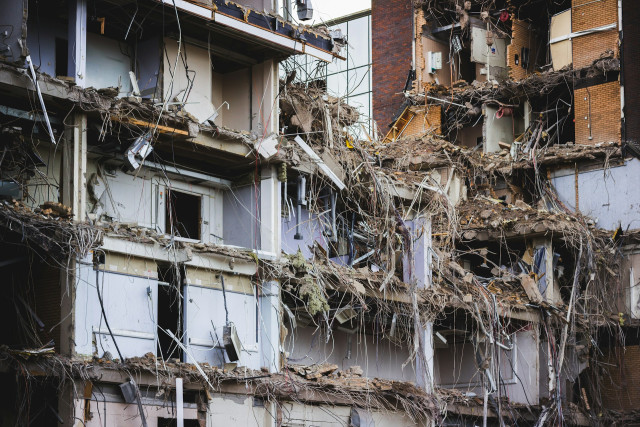
The deadly collapse of a multi-storey residential building in the heart of the city both shocked the nation and took lives, rendering hundreds homeless. It was not just an accident; it has been a chilling reminder of the fissures — both literal and figurative — that run through the affordable housing system.
With more than 20 million people living shoulder to shoulder in Karachi, the city had long suffered from a housing crisis. Millions live in slums or are lodged into semi-formal housing structures, as the formal developments have struggled to meet demand. Amid this context, all too often the lure of affordable housing occurs in the form of a dangerous tradeoff — cost savings over safety. The 2025 disaster showed that cost effectiveness only in terms of monetary value isn’t sufficient affordable because affordability needs durability, resilience and security.
The disaster served as a reminder of how poor regulatory systems, corrupt practices in the granting of construction approvals and the use of low-quality materials, combined with a lackadaisical approach toward overseeing buildings already in existence can coalesce to produce conditions that set the stage for catastrophe. The people who lost the most were those least able to absorb loss: families of modest income or means that had put their savings into what they thought was a secure home. Instead, their dreams fell apart in the most literal sense.
This blog delves in to the lessons learned from Karachi 2025 collapse. We will also consider some of the systemic breakdowns leading to such a tragedy; the potential for governance and regulation to prevent disasters like this; the power of communities engaging with their buildings, particularly affordable housing stock; opportunities presented by innovation in safe construction; how financing strategies may incentivize resilience over fragility; and broader global lessons affordable housing programs can learn from one another. By contemplating these questions, we hope to shift the conversation around affordable housing — from cost as an isolated factor and toward a whole systems vision in which safety is paramount.
The systemic failure revealed by Karachi collapse
The Karachi collapse was not a lone event but the result of systemic failures built up over years. The failure to provide adequate affordable accommodation in a very rapidly growing city lies at the heart of the issue. In a city of millions who flock to Karachi every year, the space for housing has been in short supply and so desperate developers and contractors have put up homes hurriedly, inexpensively. Along the way, safety regulations were sometimes overlooked.
Poor workmanship was widely implicated in subsequent probes of the collapse. There were reports that shoddy material was used, including inferior grade cement and steel reinforcement not in compliance with minimum safety standards. The foundations were poorly constructed, and the building was underpinned regardless of structural engineering principles. To the surprise of no one in the know, given that experts have been warning about the risks of cutting — literal and financial — on affordable housing projects for years.
Another the second major failure was in the monitoring and accountability. Regulators, already spread thin, were not inspecting regularly enough or cracking down to ensure compliance. Corruption also played a role, officials turned a blind eye to violations, and unsafe buildings were allowed to stand. The absence of scrutiny fostered a culture in which developers could value profit over people’s lives.
And the Karachi tragedy also highlighted the overall urban planning crisis. The affordable housing complexes were often being built in places with no infrastructure, poor soil and no convenience to emergency services. Without the integrated planning, such housing projects were not only vulnerable to collapsing, but also to flooding, fires and other urban menaces.
For residents, the fall was cataclysmic. Families who had scrimped and saved to own their homes were left with nothing. In addition to losing their property, they suffered enormous psychological trauma. Survivors expressed the sense of betrayal that they felt — having believed that owning a home was a symbol of safety and security, only to have that dream come crashing to pieces both literally and figuratively.
In the end, the collapse demonstrated something many feared: infrastructure that is affordable because it neglects safety is not a bargain. When homes are unsafe, they’re not assets, they’re liabilities that risk lives and cost governments and communities far more in recovery than it would have taken to prevent the loss. The tragedy reinforces that systemic reforms are needed, from stronger building codes and monitoring to rethinking the fundamentals of what “affordable housing” truly means.
The Role of Governance and Regulation in Housing Safety
Politics is the key to safety in public housing. It laid bare the brittleness of regulatory systems run in large part by maverick politicians who had failed to govern effectively. Theoretically, Pakistan has building codes and standards of safety. In theory, all prescriptions were to be issued pursuant to health regulations drafted in accordance with law. But in practice lax enforcement, bureaucratic inertia, and corruption made such rules meaningless.
One of the most important lessons from the spill is the pressing need for robust, transparent and accountable regulatory regimes. Building regulations must not only be postulated on the pages but should be strictly enforced. All ways of construction is qualified for unannounced check by the authorities that it will be in the every process of building, the material, method and framework design must follow with safe regulations. There must be brutal punishment if violations happen to avoid more negligence in future.
It also raised the issue of independent oversight. Depending purely upon the local powers-that-be, who could be influenced by considerations political or economic, is problematic. (3) Independent third-party auditors/engineering bodies should be allowed in review and certifications of building works – especially for low income communities.
The governments should play a more active role in planning urban areas. We cannot entrust the supply of low and affordable housing to the private developers who might put low line first before long term sustainability. Instead, the governments ought to offer detailed frameworks that make sure that the affordable measures are as safe and long lasting as they can be workable. States that have a tight control of PPPs can serve as a force multiplier and assist in scaling housing projects without compromising the quality.
Crucial is the representation of community in governance. Those who will be living in those homes must have ways to express grievances, monitor construction and demand accountability. There could be mechanisms through housing committees or grievance redressed forums fixed to see that the community has a say.
The tragedy in Karachi reveals that governing is not just about drafting laws; rather it is more about effectively implementing them, and ensuring they work for the benefit of the people - especially the weaker sections. Sound governance, effective regulation and real accountability are not a ‘nice-to-have’ – they’re an imperative if we want to prevent catastrophes like the one that’s laid 79 people dead or injured in Bowbrique St this week and restore trust in systems of affordable housing.
Community Engagement as a Safeguard in Housing Development
The collapse in Karachi showed once again that housing is about people and communities, not just buildings. Far too frequently, projects of affordable housing are planned, approved and built without any real input from the very neighborhoods they’re intended to serve. This exemption renders citizens helpless and incapable of sounding the alarm when either their safety or quality begins to suffer. One of the clear lessons, then, is that community involvement is key to avoiding tragedies.
When housing development is done with the active participation of communities, the latter becomes a natural watchdog. Residents can be the first to see cracks in walls, wrong building methods or safety features that are missing. Given accessible channels to provide feedback and report, they can keep developers accountable before shit fucks up a lot. Such councils and housing commissions could be put in place to advocate for local residents throughout all phases of a construction project, from conception through post-completion monitoring.
Training and education are another crucial component of community engagement. A lot of people in affordable housing developments are first time owners, and may not know their rights, safety requirements or maintenance obligations. Such awareness campaigns about how to spot shoddy construction, demand certificates or report violations can enable them to protect their interests. This effect can be multiplied by training local leaders or establishing neighborhood associations - to create strong collective voices.
Participatory planning models have been among the more successful examples of affordable housing projects globally. There are examples of this already taking place in places such as Latin America and parts of Africa, where slum-upgrading efforts have shown that when communities work together with governments and developers to co-create housing solutions, the results are safer and more sustainable — they’re also better suited to what people need. Housing governance and citizen participation Karachi and cities like it have much to gain from this approach, by incorporating this form of participation in the governance model of housing.

New Ways of Building Safe and Affordable
A silver lining to the Karachi tragedy is its renewed focus on innovation in construction. Low-cost housing should not be a synonym for dangerous or substandard buildings. Between clever design, new materials and technological progress, we can do affordable housing that is also safe.
Pre-fabricated, modular construction is a case in point. Manufacturing building components in controlled environments and shipping them to be assembled has been around for decades. This minimizes the possibility of poor workmanship, cuts material waste and means we have higher quality. In addition, prefab homes can be assembled quickly and for a lower price to create affordable housing.
Materials innovations are also improving housing safety. High-strength, low-cost alternatives to conventional concrete and steel — geopolymer concrete or bamboo-based reinforcements, for example — are being tried out around the world. These are stress-tolerant materials, more environmentally friendly and where the costs would be reduced significantly. Through the use of sustainable construction methods, not only is durability guaranteed, but also the affordable dwellings are kept in line with sustainability objectives.
Karachi collapse must be the now-or-never moment for the housing industry to view innovation as a need instead of luxury. Safe, affordable and inclusive housing is attainable — if innovation becomes central to development strategies.
Safety-First Financing Models
The financing of affordable housing is almost always presented only as a question of lowering costs for buyers and for developers. But the tragedy of Karachi is a reminder that financing models sacrificing safety for affordability aren’t sustainable. The tension is to have housing that is not either accessible but poorly made or built well and expensive.
One is to bring about subsidized financing for safe construction. Developers who follow certified safety standards will be able to get cost advantages like lower interest rates or longer loan payback periods from governments and banks. Likewise, financial institutions could develop specialized loan products to be used by buyers that obligate developers to prove they are meeting building codes before giving them funds.
Insurance-enabled financing can make a similarly transformative difference. Housing loans that are incorporating compulsory structural insurance thereby guarantee safety in the risk identification process. Developers would have to adhere to tight safety standards – insurers would refuse coverage for projects that don’t meet certain milestones. This offers financial protection for both lenders and homeowners.
Public-private partnerships (PPPs) represent an additional source of funding. PPPs And with Risk sharing and resource pooling, a PPP makes provisions for the funding of massive affordable housing projects while keeping it under strict check. Governments can enforce safety rules by the book, and private developers help to deliver those innovations quickly. When transparently implemented, PPPs deliver both value-for-money and quality.
Microfinance and other community-based savings approaches also hold potential, especially for poorer households. Pooling resources and acquiring smaller, more agile loans will enable communities to self-finance housing projects while holding developers accountable. This bottom-up approach tends to stress trust and surveillance among peers, which can reduce the chances of dereliction.
There should also be funding for continued long-term maintenance in the financing ecosystem. Affordable housing projects too often deteriorate over time when not maintained. Over the medium term, we need to build in mandatory reserve funds for repairs and safety upgrades of buildings which will help to maintain our buildings as livable and secure.
Affordable Housing after Karachi Lessons from Around the World
The Karachi building collapse may have taken place in Pakistan, but country’s lessons in this regard stretch well beyond its borders. “What is peculiar about this case, which we want to understand and refute or confirm according to the evidence,” he said, “is that it occurs in one of the riskiest cities for housing construction.” Cities from London to Sydney grapple with how to provide affordable housing as fast-growing numbers of people pour into urban centers during a period of unprecedented urbanization. And Rule said they all face similar safety risks.
In Lagos, Mumbai and Mexico City, demand for housing outstrips supply and developers often cut corners that compromise safety. The Karachi disaster is a sobering lesson from which to learn: Shortcuts in affordable housing have deadly human tolls. For global policy makers, affordability and safety must be viewed as two sides of the same coin.
There are lessons here to be learned from the successful affordable housing models in other countries. Singapore, for example, has developed an extensive system of public housing in which tight safety standards are nonnegotiable. One of the success stories in Brazil’s “Minha Casa, Minha Vida” program is one example of the significance of state-led financing and community participation. In Japan, where decades of experience in earthquake-resistant design has led to models for how resilience could be made mainstream in affordable housing.
One other thing stands out: the importance of international cooperation. World institutions like the World Bank, UN-Habitat and regional development banks can assist countries in setting safety standards and in financing projects against those standards. It would create a decenture type knowledge-sharing platform for cities like Karachi to benefit from global best practices and localize them.
Conclusion
The Karachi building collapse of 2025 was not just structural failure, but also a failure of morality. It made us remember that affordability might lead to loss of life as long as it is done in an unsafe manner. However, in this tragedy, there is the chance to rethink affordable housing not only as a place to stay. To be able to serve its purpose, housing should be safe, resilient and empowering.
Through the experience of the systemic failures in Karachi, governments can build more robust regulatory frameworks, impose building codes with integrity and look to incorporate safety into financing and planning models. The communities should be given the power to be actively involved in the development of their housing conditions, and the developers and financiers should be innovative and responsible.
The crash is an eye opener and a wake-up call across the world. All of the nation’s struggling with urbanization and affordable housing have the question to answer: Are we creating homes to last the test of time, or are we creating a disaster waiting to occur?
The Karachi experience can be used to change this tragedy in the future should policymakers, builders, and citizens adopt the lessons. It has the potential to make affordable housing not only the transient remedy but also the basis of long term security, dignity and opportunity. By so doing, we do not disrespect the memory of our deceased compatriots, but rather we give their plight a purpose, and they will experience safer lives many years in the future.
Also Read: SME_The_informal_Safety_Nets



-3dkuLgKhRD.jpg)
-49HupTvwDD.jpg)



LEAVE A REPLY