

Africa is at a crossroad in its urban development. As
population is booming, cities are growing, and as more people need quality
housing, the continent is facing a huge burden: how do we create affordable
housing at the levels that will fulfill the increasing demand without reducing
the sustainability and inclusion criteria? In Africa, the process of
urbanization is faster than in almost all other regions, but the housing supply
is falling at a slower rate, which means millions of people do not have decent
housing. The amount of informal settlements is increasing at alarming levels,
infrastructure is straining and developers are finding it difficult to balance
the cost, quality and accessibility. This context demands some new methods
without the use of the conventional frameworks of construction.
Luckily, there are few nations globally, who have
effectively come up with scalable and affordable housing systems which can be
emulated by Africa. Countries like Singapore, India, Brazil, Mexico, and China
have constructed millions of affordable houses employing measures that comprise
effective governance, novel financing, effective building technologies and
community-based planning. These solutions in the world provide good tips to the
African governments, developers and policymakers who aspire to overcome the
housing deficit.
In this blog, we discuss what Africa has to learn in these
global experiences, practical approaches that can help in supporting the vision
of the continent inclusive, sustainable, and scalable housing system.
Based on the experience of the Singaporean
Integrated Public Housing Approach.
Singapore is widely regarded as one of the best examples of
mass delivery of affordable housing. The government, via the Housing and
Development Board (HDB) was able to offer housing to over 80 percent of its
citizens. Singapore has important lessons to offer Africa, where the key factor
is the strong political commitment, long-term planning, and efficient
management of the land. The HDB model incorporates the land that is purchased
by the government and is developed into mixed-income neighborhoods with affordability
being ensured by subsidies, grants and structured financing facilities. This
makes the cost a burden less to the citizens and also provides high quality
housing.
The other important factor is the insistence of integrated
neighbourhoods in Singapore. The residential buildings will be developed with
schools, parks, medical and commercial spaces, which will make communities
active and habitable. The transport centers are well located to minimize the
commuting time and enhance connectivity. These factors show how effective
institutional systems can be used to deliver housing in a consistent and
sustainable manner. In the case of Africa, such strategy may involve empowering
local housing authorities, enhancing land-use policies, and mixed-income
communities, which reinforce social cohesion.
Minha Casa Minha Vida
and Mass Housing Delivery in Brazil.
The Minha Casa Minha Vida (My House, My Life) program by
Brazil presents a compelling example of how to provide housing at the scale of
low- and middle-income families. The initiative that was launched in 2009
provided millions of homes by creating partnerships between government, private
developers, and financial institutions. This model can be exploited by Africa
and it will show how the partnership between the government and the economy can
help expedite housing production without compromising affordability. The
government of Brazil offered subsidies and tax credit, which meant that the
poorest earners could own houses.
A key lesson to the African continent is that it is
important to customize housing solutions to suit different income earners and
not use a one-size-fits-all strategy. Brazil had managed to do this by dividing
people into various income groups and financing outlets were provided to the
groups according to their ability to stay. The other important lesson is the
inclusion of local industries in the production of the materials which reduced
the construction cost and created job opportunities. This ecosystem can be
repeated in African countries, most of which already possess powerful informal
markets of building materials. As the experience of Brazil demonstrates, mass
housing delivery can be both sustainable and feasible with the formulated
policies and specific subsidies.
India - Affordable
Housing Partnerships and Land Value Capture.
The affordable housing model of India has some strategic
lessons to the African urban planners and developers. The country embraced a
multi-pronged strategy, which is, incorporating a combination of public-private
joint ventures, building infrastructures, and new financing techniques. Land
value capture is one of the major plans of India where the growth in land value
created due to the presence of public infrastructure is going back to the
affordable housing programs. It is such a way that it allows development that
is beneficial both to the people and investors.
Another incentive in encouraging the involvement of private
sector is also in India where tax breaks, hastened approval and easy access to
cheap financing are encouraged. These policies were such that they encouraged
developers to invest in low-income housing projects that they would not
otherwise have been profitable. Africa can follow the same steps by simplifying
the flow of regulations, cutting bureaucratic chains and providing incentives
to developers that are based on affordability and sustainability.
Besides, India has adopted cost effective construction
technologies like prefabrication, modular housing, and local sources of
materials. These inventions made the construction time and costs very short. To
African countries who are interested in having scalable housing solutions, the
example of India makes it clear why policy reform, technological innovation,
and market-driven partnership is a solution towards housing demand.
Mexico: INFONAVIT:
Worker-Centered Housing Finance Model.
The case of the INFONAVIT (Institute of the National Housing
Fund of Workers) of Mexico offers one of the most successful EHFs in the world
based on the employee. This program involves the forced employer contributions
to establish a sustainable housing fund which workers can access at a low rate
of interest. This system has funded millions of houses thereby making it an
influential model to countries that have a huge formal and informal workforce
such as the African ones.
Africa can emulate what INFONAVIT has resorted to in
developing long term and affordable financing programs which are not dependent
on commercial banks only. When governments incorporate housing savings plans
into the employment arrangements they are able to establish foreseeable and
ready funds towards low income earners. Moreover, INFONAVIT develops
infrastructural amenities in the community, which means that the developments
do not occur without proper transportation, schools, and clinics, which are missing
in most African housing estates.
Monitoring and evaluation systems that make houses to be
constructed to standard and in areas with economic opportunities are also
incorporated in the model. Africa can follow these systems to improve the
housing quality and avoid urban sprawl. Mexico model may assist African
countries to grow their access to mortgages and to cover populations that would
have been locked out of conventional financing because of the worker-centered
finance model.
Construction of
High-Volume Housing: The Industrialized Construction of China.
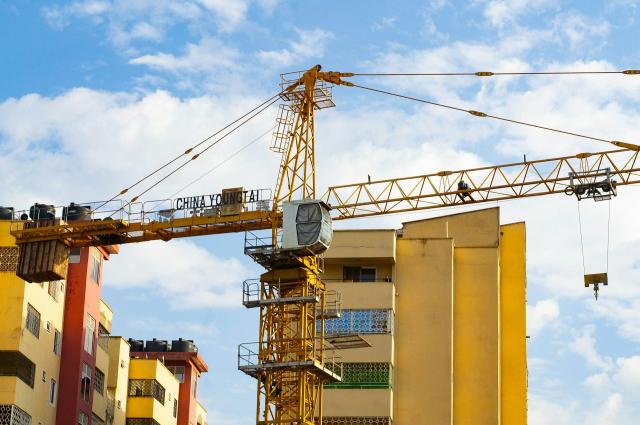
This massive growth of human settlements was as a result of
rapid urbanization of China, which resulted to one of the largest housing
building booms in history that yielded millions of units in a few decades. One
of the elements that have made China successful is industrialized construction-
the prefabricated elements, modular component and mass production processes.
This method would cut down the time used in construction significantly besides
enhancing the quality and uniformity of the buildings. It can be of great
benefit to Africa which mostly relies on labor-intensive methods and implement
similar technologies.
Prefabrication and modular housing provide the possibility
to reduce expenses, waste, and standardization of designs, and mass housing
production becomes more efficient. The Chinese model too focuses on building
codes, streamlined approvals as well as high involvement of the state, all
which facilitate quick implementation. To African countries, the implementation
of industrialized construction would assist them to address the housing deficit
more vigorously.
Furthermore, China invested in training to enable the
workers have specialized skills required in the industrialized building
methods. The young population in Africa offers a massive chance towards
developing a talented pool of labor that favors a contemporary housing
industry. In conclusion, the experience of China demonstrates that the growth
of the housing production demands technological breakthroughs, inter-agency
policies, and the capacity-building projects.
RDP Housing: South
Africa Lessons in Social Inclusion and Scale.
The Reconstruction and Development Programme (RDP) in South
Africa is among the biggest government-based affordable housing programmes in
the continent of Africa. However, it has not been without its challenges as it
has been able to offer millions of homes to low-income earners. The high level
of social inclusion that the RDP model has is one of its key strengths as it
gives a lot of emphasis to vulnerable populations, including women-headed
families, the elderly, and disabled people. This humanistic model is a
significant lesson to other African countries that seek to implement massive
housing projects.
Although the RDP model has been successful, it equally
articulates on the dangers of pursuing quantity, rather than urban integration.
Most of the projects were out of the reach of economic centres, thus causing
them to commute long distances and access few services. African countries can
emulate this by focusing on the proper placement of land, where the housing
constructions are close to the transport hubs, school, and economic hubs.
The case of South Africa also shows the significance of the
community involvement in the housing process. Housing developments will be more
sustainable when the residents are involved in planning, maintenance and
upgrades. In the case of Africa, the integration of the social provision of RDP
and better planning standards may go a long way in supporting future housing
projects.
Affordable Housing
Program: A Local Blueprint that is Gaining Traction in Kenya.
The Affordable Housing Program (AHP) of Kenya is starting to
become a new manifestation of housing development in the light of global
experience as well as local realities. The AHP incorporates both the
collaboration of other parties and the use of tenant-purchase scheme and
innovative fund structures in developing affordable units to the low and the
middle-income earners. Africa can study the commitment shown by Kenya to
financial innovation, especially the National Housing Development Fund which
promotes regular savings to acquisitions of homes.
Kenya has also embraced mixed-income models of development
in order to make sure that there is integration and sustainability of social
lives. Through the combination of subsidized and market-rate units, developers
get returns and provide affordable opportunities to low-income households. This
would be one of the ways that can lead to other African nations that want
repeatable and scalable models.
Another strength of Kenya program is technological
innovation. Having alternative building materials, e.g. expanded polystyrene
panels, prefabricated elements, will save money and time on constructions. The
infrastructural facilities of the community, such as green space and
accessibility to transportation, are also a priority in Kenya so as to develop
complete and habitable neighborhoods. The program is a very effective roadmap
that African nations should consider in filling the housing shortages in a responsible
manner as it grows.
Condominium Housing
and Cooperative Models in Ethiopia.
The Integrated Housing Development Program of Ethiopia,
especially the condominium model, has a lot to learn with regard to
cost-cutting and community-based housing. Ethiopia provided hundreds of
thousands of units to low and middle-income households via cooperative savings
schemes and financing that was supported by the government. The ability of the
program to wield big masses of citizens to rescue, donate and get involved in
the process of construction is a strength of the program.
Condominium model focuses on the vertical development, and
it utilizes urban land efficiently as it is scarce. Other African cities
experiencing an increase in the rate of densification can also find this
approach particularly helpful. Also, the Ethiopia approach of local production
of materials such as cement and steel contributed to the stimulation of local
industries and minimized the reliance on imports.
Nevertheless, the model of Ethiopia also stresses on the
role of effective project governance. The transparency, quality control, and
fair distribution should be ensured to keep the people confident. African
countries following similar strategies of cooperation or savings-based ones
might develop more inclusive housing policies that empower the poor populations
and mitigate the bottlenecks in construction activities.
Slum-Upgrading and
Inclusive Urban Transformation in Morocco.
The Cities Without Slums program in Morocco is one of the
most successful cases of African nations in terms of changing informal
settlements with the help of inclusive and strategic planning. As opposed to
settling the people in remote housing properties, Morocco focused on in-situ
renovation, which meant that people stayed in their known habitats even at the
time of renovation. This strategy involved land regularization, improved access
to services, and building of necessary infrastructure like roads, water and
other communal facilities. The program ensured economic stability, social
network protection and minimized livelihood disruption by retaining residents
at their areas of residence.
Participatory planning was highly exercised thus community
voices dictated the process assisting in the creation of solutions that were
realistic, culture fitting and acceptable by many. Combined efforts of the
government and collaboration between the government and the non-government
allowed a very streamlined response which has contributed enormously to the
living standards. The experience in Morocco has shown that inclusive upgrading,
as opposed to displacement, is the core of establishing stable, healthier, and
more resilient urban communities.
Africa will be able to emulate the focus on including the
residents in decision-making experienced in Morocco. Engagement on community
level allowed solutions to be culturally relevant, economically viable and to
be in line with the local requirements. Social amenities such as schools,
clinics, and commercial districts were also incorporated in Morocco in order to
convert the informal settlements into operational communities.
The success of the program was facilitated by strong
government coordination and association with the private developers. Morocco
applied flexible financing instruments, including micro credit and subsidized
loans, to allow families to invest in the upgrading. In the case of Africa, the
experience of Morocco is that it is possible to enhance the communities that
already exist and achieve almost as much as constructing new houses, with more
social benefits.
Conclusion
The affordable housing models discussed in this blog across
the globe have shown a great deal of possibilities to the housing future of
Africa. In the integrated planning of Singapore, the innovative financing of
India, the industrialized building of China, and the upgrading-based community
in Morocco, both models present important lessons of what it takes to build at
scale. The theme is quite straightforward: extensive housing provision
presupposes the sound political will, effective land management, diversified
funding, and involvement of communities.
Africa boasts of a young workforce with lots of land in most
areas and the rising urban markets. Through localization, by modifying global
best practices to the local situations, but not replicating them, African
countries can develop affordable, equitable and sustainable housing systems.
The future of housing in Africa will be sustained by radical reforms, strategic
coalition, and a desire to make sure that all citizens have access to a decent
house. At scale is not only achievable but actually affordable with the right
policies and innovations.




















LEAVE A REPLY